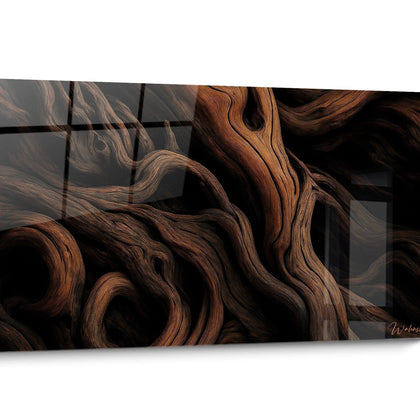
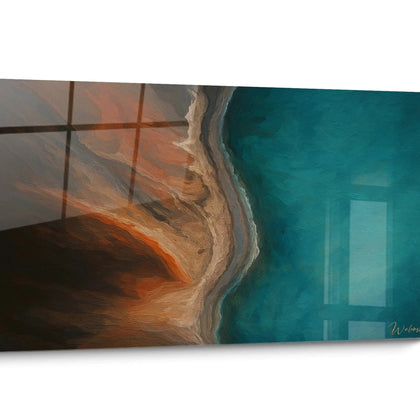
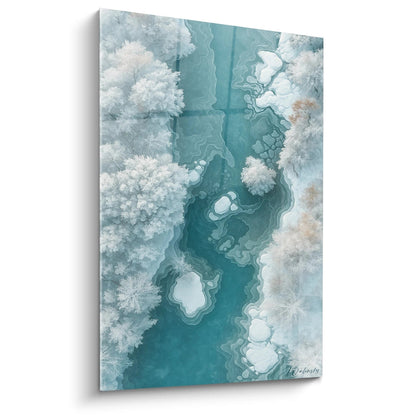
An aerial geological view wall art reveals the deep structure of our planet through a striking bird's-eye perspective. These large-format compositions capture rock formations, mineral strata and tectonic features in their natural majesty, transforming your space into a genuine visual laboratory where science meets contemporary aesthetics.
Decryption of Earth Formations Through Aerial Photography
Acquiring an aerial geological view wall art radically transforms the perception of premium professional and residential spaces. These monumental representations of terrestrial structures reveal differential erosion processes, mountain folding and crustal fractures with remarkable scientific precision. Chromatic nuances capture mineralogical diversity: ferruginous ochres, slate greys, calcareous whites create a naturally sophisticated palette.
Which geological formations offer the greatest decorative impact?
Plunging views of stratified formations expose millions of years of geological history compressed into spectacular horizontal bands. Synclines and anticlines generate organically curved patterns particularly sought after for architects' offices and Earth science-dedicated spaces. Angular discordances, these contacts between geological layers of different ages, create visually dynamic compositions impossible to reproduce artificially. Like aerial canyon view wall art, vertical scale amplifies the temporal depth inscribed in rock.
Stratigraphic analysis as an architectural element
Large-format installations metamorphose company halls specializing in geology, civil engineering or mineral exploration. The readability of different lithostratigraphic units allows visual identification of sandstones, shales, conglomerates and volcanic formations. These representations function as genuine pedagogical tools while maintaining a premium aesthetic dimension. Variations in weathering alteration create subtle gradations particularly valued in contemporary minimalist environments.
Mineral zonation and natural chromatism
Aerial geological compositions capture contact metamorphic halos, magmatic intrusions and secondary enrichment zones with their distinctive colorations. Iron oxides generate deep reds, altered copper produces malachite greens, while evaporite salts create brilliant whites. This 100% natural chromatic diversity harmonizes with raw materials favored in contemporary architecture: polished concrete, brushed steel, natural stone.
Scientific Cartography and Structural Interpretation
A monumental aerial geological view wall art reveals fault systems, tectonic deformations and sedimentary basins with rarely accessible clarity. These orthogonal perspectives enable identification of structural lineaments, these geomorphological alignments that betray deep crustal fractures. The orientation of dipping layers, visible from this height, documents the compressive stresses that sculpted the landscape.
How to identify major tectonic structures?
Major transform faults appear as linear scars traversing different geological units. Ductile shear zones generate characteristic foliated textures, while normal faults create particularly graphic scarps. Thrusts and thrust sheets superimpose formations of distinct ages, producing striking chromatic juxtapositions. These tectonic accidents confer a narrative dimension: each line tells a precise geodynamic event.
Sedimentary basins and depositional architecture
Aerial views expose the spatial organization of ancient depositional environments: fossil deltas, fluvial systems, carbonate platforms. Lateral facies variations translate into progressive chromatic transitions ideal for spaces requiring visual fluidity. Fossilized meandering channels create organic sinuous patterns, while aligned sedimentary bars generate sophisticated parallel rhythms. This paleogeographic reading transforms your wall into a temporal window onto disappeared environments.
Magmatic intrusions and contact metamorphism
Dykes and sills appear as dark lines cutting across lighter host formations. Granite plutons exposed by erosion reveal their characteristic granular textures. Metamorphic halos surrounding these intrusions display concentric zonation with progressive mineralogical modification. These phenomena generate naturally occurring radial compositions particularly sought after for central installations in rotating spaces or circular halls.
Visual petrographic analysis from this perspective also reveals hydrothermal veins, these mineralized networks cutting through host rock. Their irregular trace and contrasting hues bring exceptional visual complexity to large-format compositions.
Spectacular Vision of Geomorphological Features
Installing a monumental aerial geological view wall art completely redefines the atmosphere of professional spaces linked to geosciences. These representations capture differential erosion morphologies where resistant rocks form protruding reliefs while soft formations create depressions. Karst landscapes with their sinkholes and poljes generate hypnotic repetitive circular patterns, particularly valued in environments requiring concentration and reflection.
Why do erosion structures fascinate so much?
Badlands expose their complex ravine networks sculpted in unconsolidated sediments, creating textures of infinite visual richness. Mesas and isolated buttes stand out like monumental natural sculptures. These forms result from millions of years of climatic action, conferring vertiginous temporal depth to your decor. Solifluction flows and other periglacial processes generate characteristic lobed patterns of ancient or current cold environments.
Volcanic structures and eruptive morphologies
Collapse calderas form spectacular circular amphitheaters, while aligned cinder cones reveal eruptive fractures. Frozen lava flows display surface textures varying according to their chemical composition and cooling rate. Pillow structures of submarine lavas exposed by tectonics create organic bulbous patterns. These manifestations of volcanism offer dynamic compositions ideal for creative spaces and environments requiring stimulating visual energy.
Hydrographic networks and structurally controlled drainage
Waterways preferentially exploiting zones of structural weakness draw revealing angular traces. River captures and sharp bends document complex geomorphological evolution. Staggered alluvial terraces testify to successive incision-sedimentation cycles. These hydrographic elements bring a directional linear dimension that naturally guides the eye through composition, creating sophisticated visual journeys for installations in corridors and galleries.
Is aerial geological view wall art suitable for residential spaces?
Absolutely. Beyond scientific professional environments, these compositions find their place in contemporary residences privileging raw materials and mineral aesthetics. Personal libraries, home offices and reflection spaces particularly benefit from this visual connection with fundamental terrestrial processes.
How to choose between different represented geological formations?
Favor formations presenting marked lithostratigraphic contrast to maximize visual impact. Transition zones between distinct geological domains offer the greatest textural and chromatic diversity. Also consider structure readability at your chosen scale: some phenomena require very wide views while others reveal their complexity at more reduced scales.
Which orientation to favor for aerial geological view wall art?
Orientation depends on dominant structures: horizontal tabular formations function in landscape format, while vertical structures like dykes or subvertical faults can justify portrait format. Compositions presenting radial or concentric elements accommodate square formats that respect their natural symmetry.


 Earth Veins Canvas - Aerial View Abstract Edition233,90 €
 The World's Veins Artwork - Aerial View Abstract Edition233,90 €
 Painting The Song of Canyons - Aerial Abstract Edition233,90 €
 Azure Bark Painting - Aerial View Abstract Edition233,90 €
 Dance of Relief Wall Art - Aerial View Abstract Edition233,90 €
 Archives of Silence Wall Art - Aerial View Abstract Edition233,90 €