


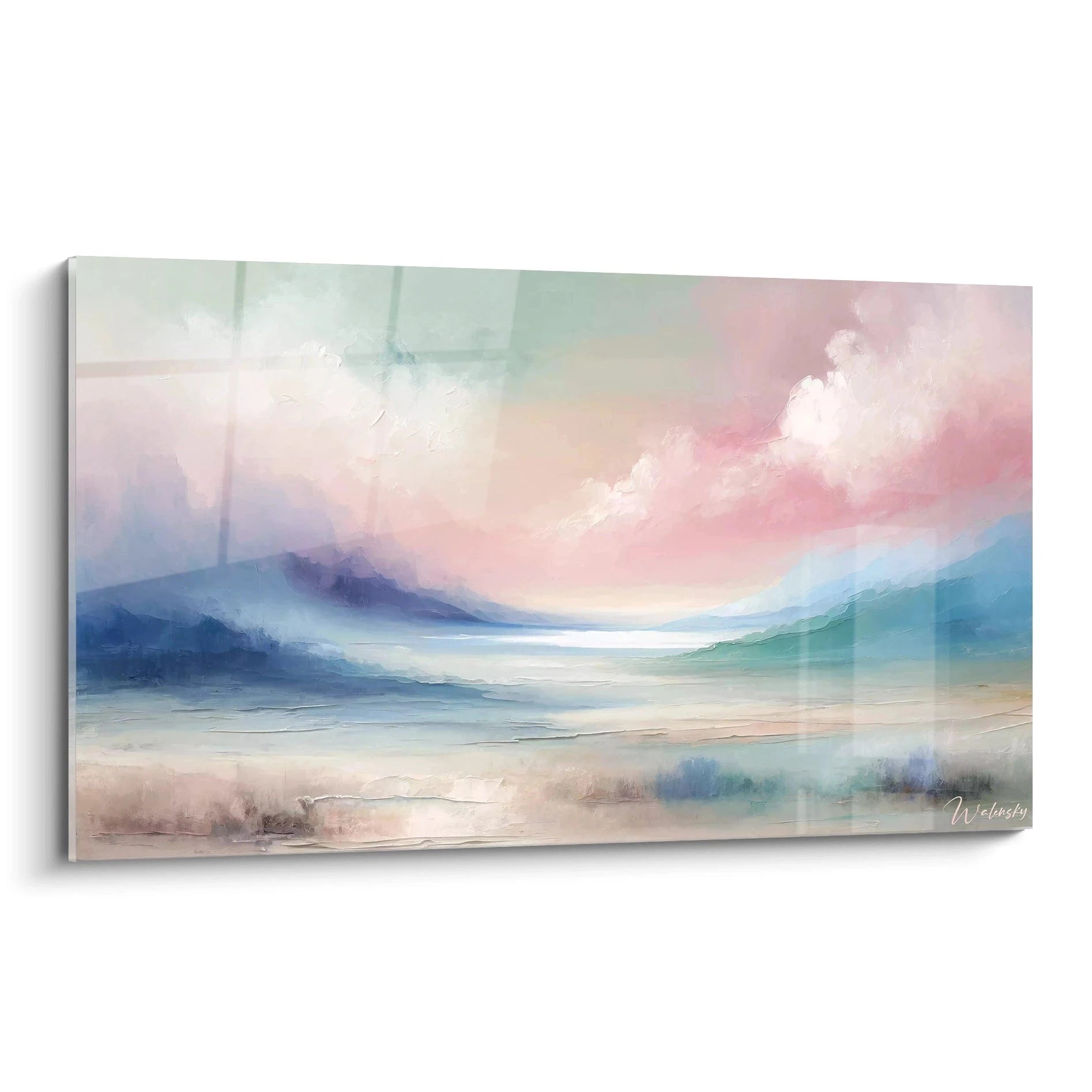

Do Mountain Artworks Evoke the Stability Sought in Yoga?
December 8, 2025 · 8 min read · by Walensky
When I installed my first yoga studio in the Alps in 2014, one thing became obvious: the mountains framing my bay windows created an immediate sense of stability. My students would enter, look up at those peaks, and their breathing would naturally slow down. Today, after supporting hundreds of practitioners in their quest for balance, I observe this same phenomenon with mountain depictions in urban practice spaces.
Here's what mountain artworks bring to your yoga practice: a visual anchor that facilitates concentration, a constant reminder of the qualities of stability you cultivate on the mat, and a powerful symbolic connection with the inner stillness sought in each posture. You may be looking to create a yoga space at home that truly promotes focus, but you don't know which visuals to choose without falling into cliché. Rest assured: the millennial symbolism of mountains in yoga is not a decorative trend, it’s a concrete help that I observe daily in my practice and teaching. I will share with you how these mountain representations become real tools for mental and physical stabilization.
The mountain in yoga: much more than just an image
In the yogic tradition, Tadasana – the mountain pose – constitutes the foundation of all standing postures. This asana literally embodies the stability we seek: deep rooting in the ground, perfect vertical alignment, external stillness masking a vibrant inner awareness. When I teach this fundamental posture, I always ask my students to imagine an unshakable peak facing the winds.
Artworks depicting mountains then become permanent visualization supports. Each time you unroll your mat in front of this image, your brain automatically activates the associated qualities: firmness, patience, elevated perspective. I have observed that practitioners who have a mountain representation in their yoga space more easily find their own grounding in balancing postures.
The universal symbol of conscious stillness
Mountains cross the seasons without moving. They observe storms without reacting. This quality of conscious stillness – which yoga names sthira – is exactly what we cultivate on the mat. A mountain artwork in your practice space visually reminds you of this aspiration: to remain stable facing mental turbulence, to maintain your posture despite fleeting discomfort.
In my studio, I installed a large-format photograph of Mont Blanc on the horizon. On days when my students go through demanding postures like chair or warrior III, I invite them to turn their gaze towards that peak. The stability of the image helps them find their own inner stability.
How mountain representations influence your nervous system
Beyond symbolism, neuroscience sheds light on the real impact of mountain images. Research in environmental psychology demonstrates that massive natural landscapes activate the parasympathetic nervous system – responsible for relaxation and recovery. When you practice yoga facing a painting depicting mountains, your body receives signals of safety and permanence.
I have particularly noticed this effect during restorative and yin yoga sessions. Postures held for long periods require mental letting-go that mountain paintings naturally facilitate. The horizontal lines of the mountain ranges create a soothing geometry for the eye, reducing the mental agitation often accompanying physical tension.
The verticality that elevates your practice
Mountains also offer inspiring verticality. In my classes, I notice that practitioners positioned facing paintings of towering peaks naturally lengthen their spine. This vertical aspiration – fundamental in all schools of yoga – finds a visual echo in these representations.
Unlike marine landscapes which evoke fluid movement or forests which suggest horizontal density, mountains offer this valuable double quality: deep rooting in the earth and elevation towards the sky. It is exactly the energetic dynamic we seek in postures like the tree or the mountain itself.

Which mountains to choose for your yoga space?
Not all mountain paintings generate the same quality of stability. After years of experimentation in different studios, I have identified certain visual characteristics particularly favorable to yogic practice.
Snow-capped ranges evoke purity and mental clarity. The white of the peaks creates a soothing focal point that does not fatigue the eye during long posture holds. In my personal space, I favored a representation of the Himalayas at sunrise – the soft hues of pink and gold add a warm dimension without agitating the mind.
Mountain silhouettes at dusk offer this perfect contemplative quality for meditative practices. The gradations of blue and violet activate centers of calm in our visual perception. I installed this type of painting in the final relaxation area where my students practice savasana.
The composition that anchors the gaze
Favor artworks where the mountain occupies a central and stable position in the composition. Diagonal perspectives create dynamism – interesting for a living room, less suitable for the stillness sought after in yoga. Frontal representations of massifs, with a clear horizon line, establish this geometry of stability that your brain instinctively recognizes.
I also avoid mountain scenes that are too cluttered with elements – hikers, chalets, ski lifts. The mountain itself, in its stripped-down majesty, is quite sufficient. This visual simplicity corresponds to the mental purification we seek on the mat.
— Our selection


Integrating mountain artworks into your practice ritual
A mountain artwork truly becomes effective when you consciously integrate it into your practice. Before starting your sequence, take a few breaths facing the image. Observe the stability of the summit, its quiet permanence. Mentally invite these qualities into your body.
During standing postures, use the painting as a drishti – point of visual focus. In yogic tradition, drishti stabilizes the mind by fixing visual attention. An immobile mountain constitutes a perfect support for this technique. I often teach the tree pose by asking my students to fix their gaze on a specific point on the painting – usually a particular summit. Their balance improves instantly.
Meditation facing the immobile mountain
During your seated meditations, the mountain painting becomes a powerful support for cultivating mental stability. A practice I particularly enjoy: observing the image for a few minutes, then closing your eyes while maintaining this inner visualization. The mountain then becomes a mental refuge – a stable place to return to whenever thoughts stir.
This technique, which I learned from a Himalayan master, transforms the painting into a true meditative tool. It is no longer simply decoration, but a focusing support that deepens your contemplative practice.

— You may also like


Mountains as a reflection of your inner journey
What fascinates me most about this relationship between mountain paintings and yoga is their profound symbolic resonance. Each practitioner is an inner mountaineer, patiently scaling the peaks of their own consciousness. The mountains depicted on your wall visually embody this vertical journey.
On days of discouragement – and we all know them – the painting reminds you that summits remain immobile even when clouds temporarily mask them. Your inner stability always exists, even when emotions obscure it. This living metaphor becomes a silent teaching available with every glance.
I have accompanied practitioners who, after months of yoga facing their mountain painting, develop an almost affectionate relationship with the image. It becomes the silent witness to their progress, the immutable guardian of their sacred space. This visual constancy creates a valuable sense of continuity in our fragmented modern lives.
Transform your practice space into a sanctuary of stability
Discover our exclusive collection of paintings pour centre de yoga that will transform each session into a deep grounding experience.

In the same vein
Alpine Watercolor Landscape - Mountains in the Clouds - The Alps Edition
232,90€
Discover this artwork →Create your inner mountain, one look at a time
After all these years of teaching, I am convinced that paintings depicting mountains do not simply decorate our yoga spaces – they actively participate in our transformation. Each time you unroll your mat facing these immutable peaks, you activate a bodily memory of stability. Your nervous system recognizes the signal: here, now, we cultivate grounding.
Imagine yourself in six months, a year. Your practice has deepened, your balance has refined. You hold postures that seemed impossible to you. And this mountain painting, silent witness to each small victory, reminds you that stability is not built in a day – it is cultivated with the patience of a summit that traverses millennia. Choose your mountain. Install it facing your mat. And begin building your inner stability, one breath at a time.
Frequently asked questions about mountain paintings in yoga
Does a mountain painting suit all styles of yoga?
Absolutely. Whether you practice dynamic vinyasa, restorative yin yoga, or rigorous ashtanga, mountain artworks support your practice. The stability they evoke is a universal quality sought in all yogic traditions. I've found them effective in both my morning power yoga classes and evening meditative sessions. The mountain adapts to your energy of the moment: it can represent strength during demanding sequences, or tranquility during moments of rest. The key is to choose an image whose colors and atmosphere resonate with your personal practice intention.
Where is the ideal place to position a mountain artwork in my yoga space?
The optimal placement is facing your mat, at eye level when you are standing. This position allows you to use the artwork as a natural focal point during balancing poses. In my studio, I installed the main representation about 1.50 meters from the floor, which corresponds to the horizontal gaze in most standing asanas. If your space is small, prioritize the wall that you see from your seated meditation position. Avoid placing the artwork directly behind you during practice – you want to be able to observe it easily. Ideally, create a clear line of sight between your mat and the image, without visual obstacles that would fragment your concentration.
Do the colors of the mountain artwork influence the quality of practice?
Yes, significantly. Cool tones – blues, purples, silver grays – promote mental calm and are particularly suitable for meditative and restorative practices. Mountains with warm tones – sunrise oranges, twilight pinks – bring a softer energy, ideal for morning practices that gradually awaken the body. I generally avoid overly saturated or contrasting colors which can overstimulate the nervous system. Snow-covered mountain artworks with their palettes of whites and pale blues create an atmosphere of purity particularly conducive to concentration. Observe your instinctive reaction: does the image immediately soothe you? This is the best indicator for your personal practice space.


