

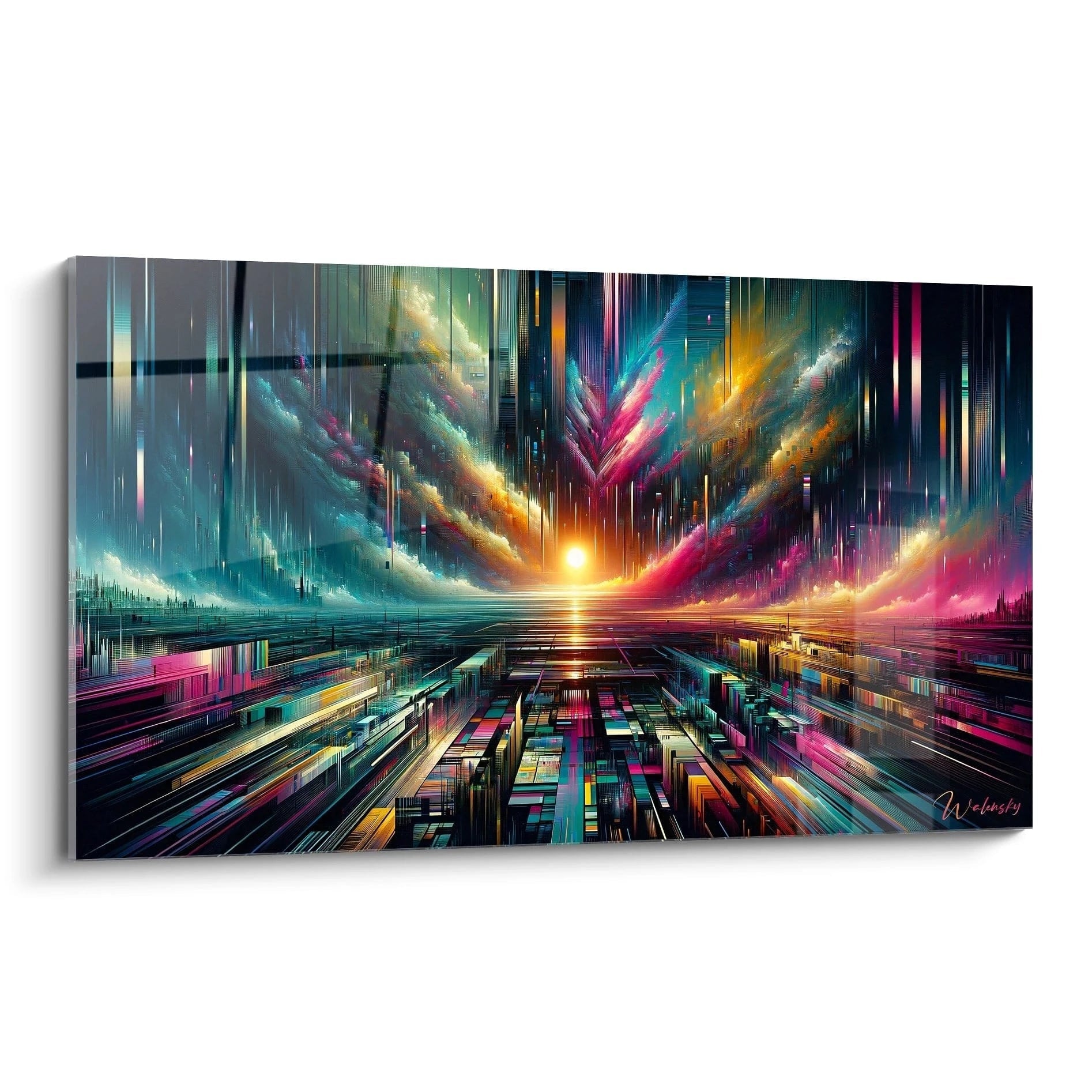
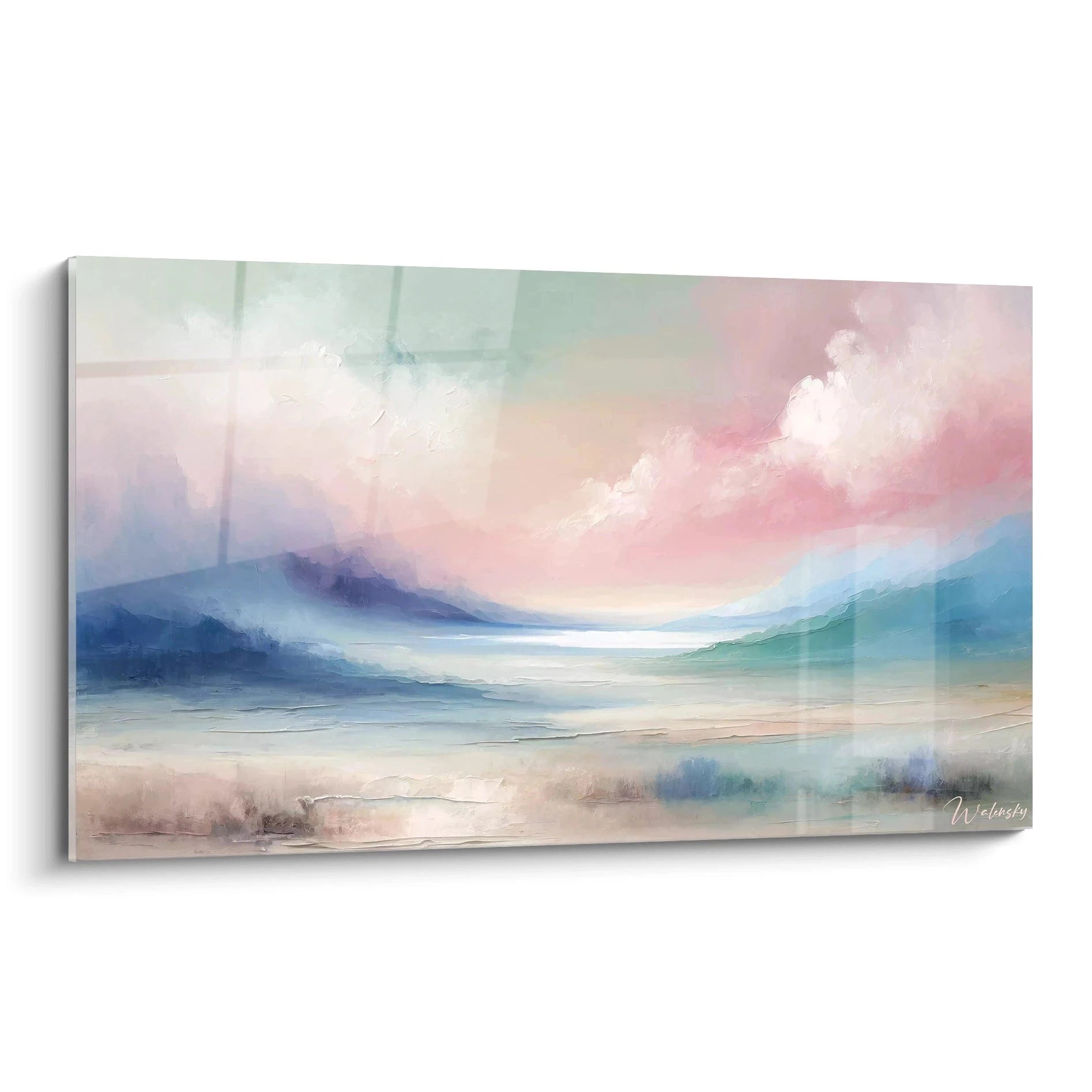

Street art and graffiti paintings: urban art within your walls
11 October 2025 · 18 min read · by Walensky
You've been staring at your blank walls for months, telling yourself that it lacks that touch of authenticity that would make all the difference. You dream of a decor that truly represents you, that tells your passion for urban culture, but you don't know how to integrate this energy without falling into cliché.
Every time you enter your home, you feel that emptiness on your walls. That sensation that your interior lacks character, soul, that particular vibration that makes you feel truly at home. You crave vibrant colors, dynamic shapes, that street energy that makes you vibrate in the street.
You may have already tried some posters, cheap reproductions that peel off, or posters that look like a "teenager's room". The result: you end up with a bland decor that doesn't represent you, and that persistent frustration of not having found the right formula.
That's perfectly normal! The problem isn't your taste or your budget. The real difficulty is that authentic urban art requires quality supports and a thoughtful approach to reveal all its decorative power without betraying its rebellious essence.
By the end of this article, you will know exactly how to choose and install street art paintings that will transform your interior into a modern urban gallery, and you will finally be able to create that authentic atmosphere you dream of.
Why has urban art become the must-have decor of 2025?
Urban art is no longer just a street expression: it has become the decorative language of those who reject standardization. In 2025, as our interiors become increasingly connected and aseptic, integrating street art works becomes an act of creative resistance. It's like planting a wild garden in a perfect lawn: you create a space of freedom and authenticity.
🎨 Decor tip: Sarah, an interior designer, recently explained to me: "My clients are increasingly asking me for pieces that tell a story. When I installed this large colorful graffiti painting in their modern living room, the atmosphere completely changed. It was as if the room had started to breathe."
Conversation with a decor expert
The golden rule of urban art decor: A street art painting authentically transforms the energy of a room because it brings that controlled spontaneity that is lacking in overly perfect interiors. You will see the difference from the first week: your guests will immediately notice this change in atmosphere.

What's really behind your hesitation
You might recognize yourself in these situations: you wander around decor stores without finding anything that really speaks to you, you scroll through Instagram admiring those interiors with character but without knowing how to do the same, or you have that blank wall that's been taunting you for months.
What's really happening is that you're looking for something that doesn't exist in classic decor: urban authenticity. The problem isn't your indecision, it's that most of the solutions offered to you don't capture the essence of what you love about street art.
It's like trying to reproduce the atmosphere of a concert with headphones: technically it works, but it lacks that vibrant dimension that makes all the difference.
First cause: the confusion between reproduction and creation
Most people think that printing a photo of a graffiti is enough to have urban art at home. But that's confusing the soul and the copy. A real street art painting is an original creation that captures the energy of the movement without mimicking an existing work.
Imagine the difference between eating reheated food in the microwave and the same dish freshly cooked: the ingredients are the same, but the experience is totally different.
This confusion makes you miss out on the emotional impact that a real piece can have in your interior. Instead of having decor that energizes you, you end up with something flat that doesn't inspire you on a daily basis.
✨ Quick test: Look at the last street art image that marked you on social media. Try to describe what you feel in 3 words. If it's "energy", "freedom", "authenticity", that's exactly what a real painting can bring to your home.
The trap of standardized formats
Many believe that a painting must respect classic proportions to integrate into an interior. But urban art lives from its unconventional formats, its overflows, its way of occupying space differently.
It's like trying to fit a skateboard into a bicycle garage: it doesn't work because it's not meant for that.
By looking for "safe" and predictable things, you deprive yourself of that visual surprise which is the whole point of urban art and which will awaken your decor.
The mistake of "it won't go with my style"
You might think that urban art can only be integrated into a loft industrial or an ultra-modern apartment. It's forgetting that contrasts create harmony. Marie, owner of a Haussmannian apartment, installed a series of small street art formats in her living room: "It's exactly this dialogue between classic and contemporary that makes the whole thing so lively."
You can spot it in your home by observing where your gaze gets bored: those areas that are too "perfect" which lack creative tension.
This self-censorship prevents you from having a decoration that truly resembles you and that tells your complex personality, not just your good taste.
3 signs that your decor lacks urban art:
- You don't take any more photos of your interior: subconsciously, you know that something is missing to make the space photogenic
- Your guests compliment your "sure taste": translation: it's pretty but predictable, it lacks that little madness that marks the spirits
- You avoid certain angles of view: there are walls or corners that you find "dull" and that you avoid looking at
The trigger factor: emotional authenticity
What really makes the difference is when you find a work that makes you feel the same way as when you discover a new piece of music that speaks to you instantly. It's this emotional connection that transforms a simple decor purchase into a true artistic crush. You'll recognize it because you'll want to look at it every day, not just when you're cleaning.
Rule of authentic emotion: If a street art piece makes you want to smile or gives you a little adrenaline rush when you look at it, it carries that urban energy that will energize your space. Test it by closing your eyes and opening them again: your first reaction is always the right one.
| ❌ Printed reproduction | ✅ Original creation | 💡 Why this changes everything | 🎯 Benefit in your home |
|---|---|---|---|
| Frozen image without relief | Living materials and textures | Each viewing angle reveals details | Your decor evolves with the light |
| Standardized colors | Unique and personalized nuances | The artist adapts his palette to your world | Natural harmony with your interior |
| Format imposed by printing | Proportions thought for the space | The work dialogues with the architecture | Perfect integration without forcing |
| Same image in thousands of people's homes | Unique piece that belongs to you | You own a piece of art history | Pride and emotional attachment |
— Also to discover


The 3-step method to succeed with your urban gallery
Rest assured: creating your street art table collection is not complicated once you understand the logic. It's like learning to ride a bike: at first it seems impossible, then everything flows naturally. We will proceed in stages: first define your artistic identity, then choose your masterpieces, and finally create the perfect setting.
🎯 Overview of your transformation: Step 1 helps you define your personal style (the DNA of your gallery), Step 2 teaches you how to select your favorites (your flagship pieces), Step 3 reveals how to showcase them (the setting for your works). Result: an interior that tells your story in 3 weeks.
Step 1: Define your street art identity
Before you splurge on the first artwork you like, you need to understand what type of urban energy really attracts you. It's like choosing the music for your playlist: you need consistency in diversity to create an atmosphere that resembles you. This step will prevent you from making impulsive purchases that don't go together.
Street art universes to explore
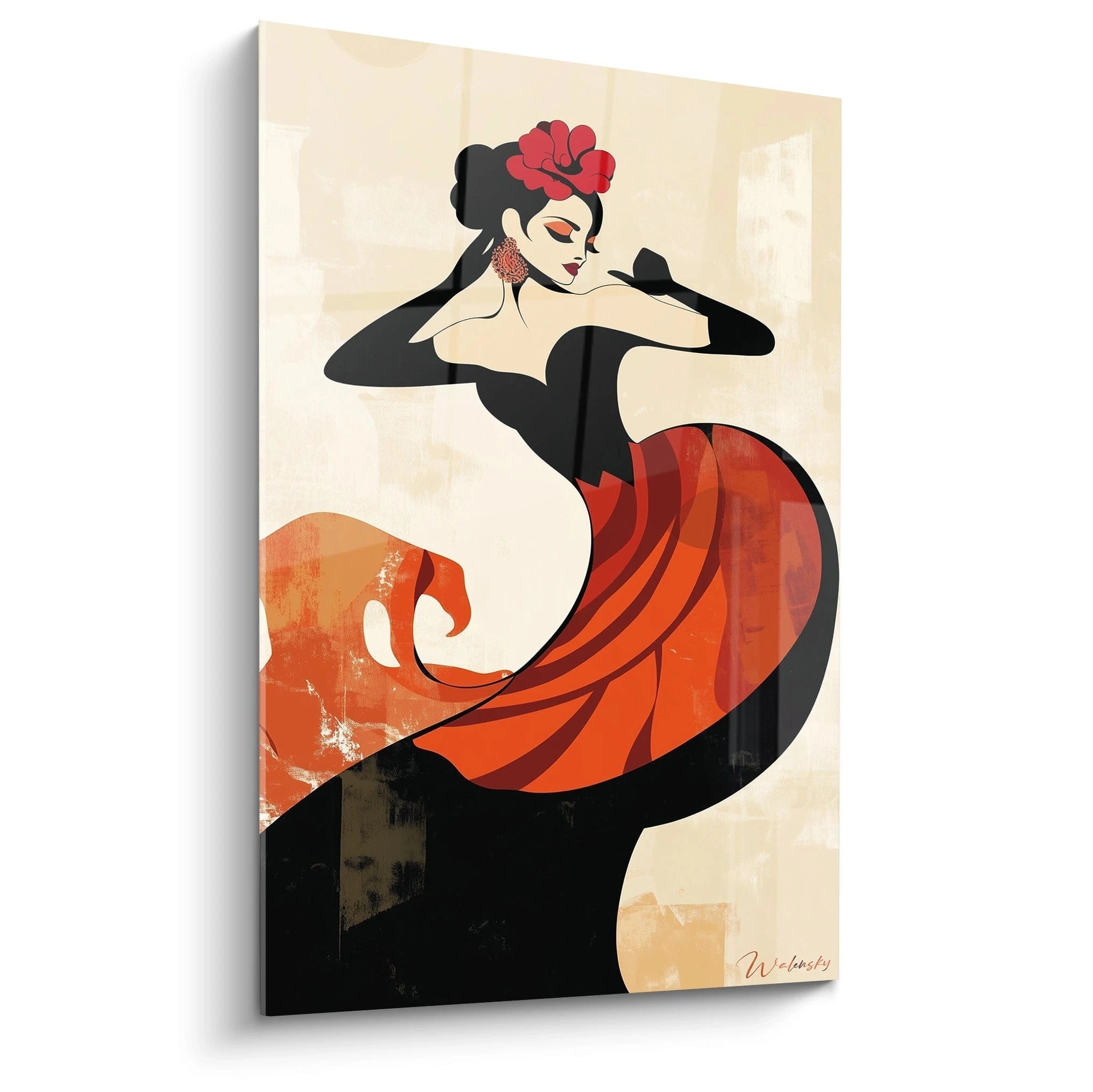
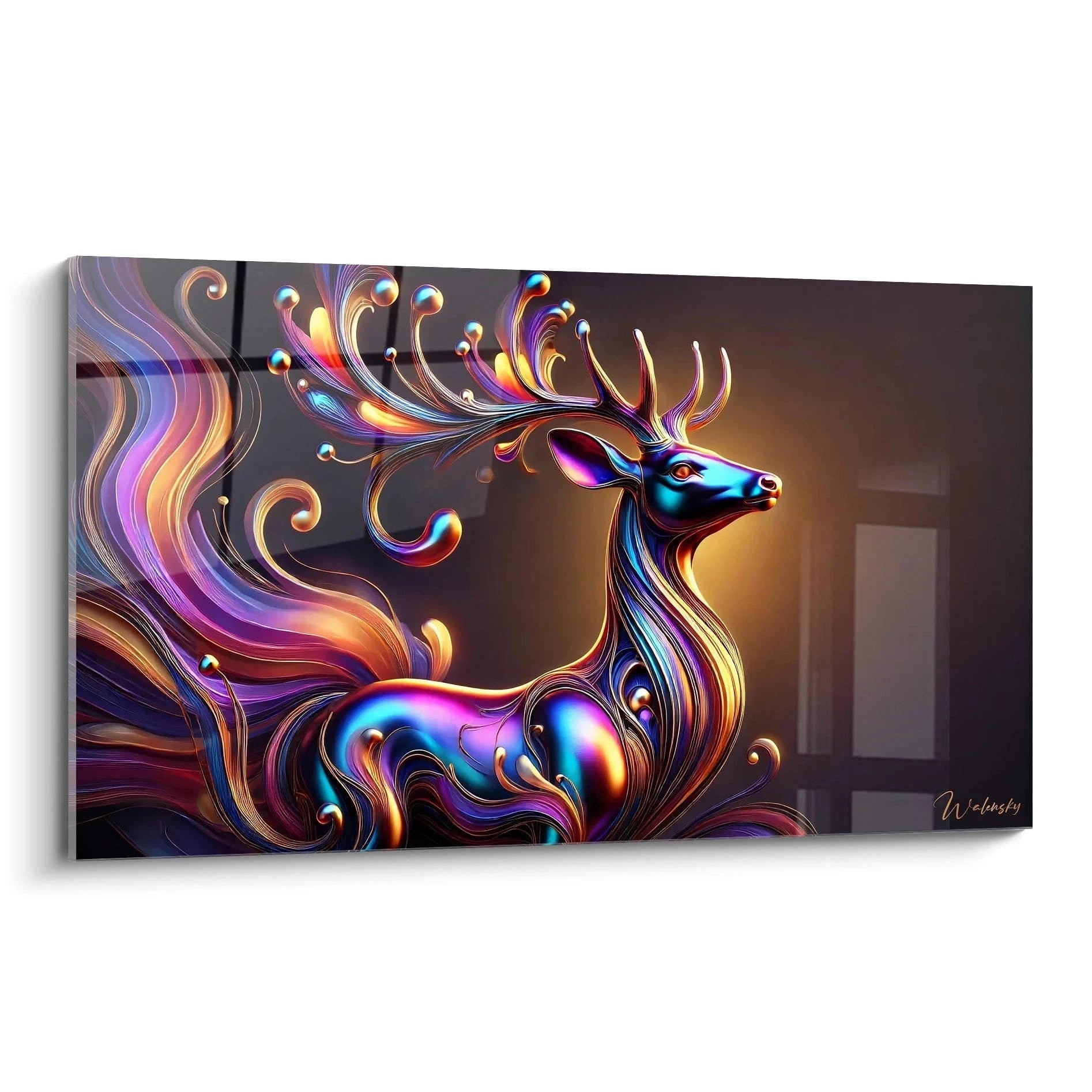
- The colorful graffiti dynamic: round shapes, bright colors, explosive energy - perfect if you like optimism and movement. You can find it with contemporary artists specializing in urban art. Quality criterion: the gradients must be smooth without cuts. Avoid "too clean" versions that lose the spontaneous essence.
- The minimalist graphic street art: clean lines, black and white contrasts, impactful messages - ideal for a sophisticated and modern approach. The principle: less color but more visual impact. Recognize quality through fine details and sharp contours. The impact: urban elegance without clutter.
- The stencil and stencil style: cut shapes, play of light and shadow, mysterious side - for those who like winks and conceptual art. The key element: the precision of the cuts that creates stunning depth effects.
Now, let's move on to practice to discover your natural preference
Art personality test (15 minutes)
Create your instinctive mood board: For 10 minutes, save all the street art images that attract you on Pinterest or Instagram, without thinking. The principle: let your instinct speak rather than your logic. Important: also include photos of interiors that inspire you, even if they don't have urban art.
⏱️ Time: 10 minutes | ✅ Success when: you have 15-20 images saved | ⚠️ Attention: don't censor your tastes, even if they seem "too flashy" - that's often where your true personality is hiding
Analyze your recurrences: Look at your selection and note the common points: color dominances, types of shapes (round/angular), overall atmosphere (explosive/zen/mysterious). You will discover your natural "signature". The trick: the colors that come back most often are the ones that re-energize you.
⏱️ Time: 5 minutes | ✅ Success when: you identify 2-3 recurring characteristics | ⚠️ Attention: don't look for perfection, look for consistency - even subtle
✨ Validation of your artistic direction: You should be able to describe your style in a sentence like "I like urban art [dominant characteristic] with touches of [secondary element]". If it's blurry, retake the exercise focusing on what makes you vibrate rather than what is "déco-correct". Your artistic instinct is more reliable than you think!
Step 2: Select your masterpieces
Now that you know your artistic DNA, it's time to choose the works that will structure your collection. This step is more strategic: you will learn to spot pieces that have that extra something, those that transform a wall into a focal point. It's the equivalent of choosing the solo instruments in an orchestra.
The criteria for winning pieces
- Narrative strength: the artwork tells a story, conveys an emotion or a palpable energy - not just "it's pretty". Test it by asking yourself if you could describe what it evokes in you. Where to find it: with artists who have a process, not just a technique. Avoid "decorative" creations without soul.
- Support quality: stretched canvas on wooden frame, high-definition print on noble materials, careful finishes. The principle: the artwork should age with elegance. Check the corners and fixings. A quality street art artwork retains its visual impact for years.
- Format adapted to your space: neither too small (shy effect), nor overwhelming (oppressive effect). The rule: the artwork should occupy 60 to 70% of the width of the furniture or available wall space to have character without dominating.
Foolproof selection method
The immediate emotion test: When faced with a work, note your first emotional reaction in one word. If it's "wow", "energy", "freedom" or any strong positive feeling, that's a good sign. If it's "nice" or "correct", move on. Urban art should provoke, not just politely please.
⏱️ Time: 30 seconds per artwork | ✅ Successful when: you feel an immediate connection | ⚠️ Attention: don't rationalize too quickly - emotion takes precedence over decor logic
Visualization in your space: Take a photo of your wall and use an app to overlay the artwork image (or cut it out of paper to the correct size). The trick: the artwork should seem "obvious" in that location, as if it had always been meant to be there.
⏱️ Time: 5 minutes per test | ✅ Successful when: the integration looks natural | ⚠️ Attention: be wary if you have to "force" it mentally to work
Step 3: Create the perfect staging
You have your favorites, now it's time to reveal them! This final step transforms your purchases into a true personal gallery. This is where you go from amateur to informed collector, capable of creating those atmospheres that everyone remembers.
The amateur gallerist's equipment
- Directed lighting: adjustable LED spotlights or wall sconces with a 3000K color temperature - avoid cold neon lights that kill colors. Principle: the artwork should be illuminated without reflections, like in a museum. Impact: your colors regain their true intensity.
- Professional hanging system: rails with cables or invisible fixings for heavy artworks. Important: both safety AND aesthetics. Quality criterion: nothing should be visible once the artwork is in place. The effect: the illusion that art floats on the wall.
- Sufficient viewing distance: minimum 1.5 times the width of the artwork between the viewpoint and the wall. This is the distance that allows you to grasp the whole without effort. Neglect this and you spoil the visual impact.
Installation like a professional
Positioning at eye level: The center of the artwork should be between 1m45 and 1m60 from the floor, depending on your height. Mark with a pencil before drilling. Gallerist's tip: in a hallway, place slightly higher as you look while walking.
⏱️ Time: 10 minutes of measurements | ✅ Successful when: gaze is naturally drawn without effort | ⚠️ Attention: too high = "decorative" effect, too low = "placed there" effect
Creating ambient lighting: Install your directed lighting 30° from the artwork to avoid reflections. Test the intensity in the evening: the artwork should be highlighted without being blinding. The goal: create a point of light that structures the space.
⏱️ Time: 20 minutes of installation | ✅ Successful when: the artwork "radiates" in the room | ⚠️ Attention: poor lighting can ruin the most beautiful artwork
Rule of progressive revelation: Start by installing a strong piece, live with it for a week to see how it transforms the space, then gradually add the other elements. This patience avoids clutter and helps you create a harmonious ensemble that breathes.
You now have the keys to a collection that resembles you. But a few professional secrets can make the difference between a beautiful decor and a truly memorable atmosphere. These details make your guests remember your interior long after their visit.
🎨 Tip from an experienced collector: Create "visual echoes" by subtly repeating a color from your main painting in a discreet accessory (cushion, vase, book). This professional technique unifies the space without making it "matchy" and gives the impression that everything has been thought out together, even if you collected your pieces at different times.
"What if my guests don't like it?"
"I'm afraid that some people will find it too... urban for my bourgeois living room"
I understand this apprehension, it's very human to want everyone to feel comfortable in our home. But think: do you want an interior that pleases everyone or an interior that resembles you? Quality urban art, well integrated, always inspires admiration because it reveals an assumed personality. My clients regularly tell me that their street art artworks have become the favorite topics of conversation at their parties.
🧪 Stress test: Start with a medium-sized piece in a space where you feel most comfortable (your office, your bedroom). You will quickly see the positive effect on your mood and confidence, and it will give you the assurance to dare in the common areas.
— In the same spirit


The 5 mistakes that ruin everything (and how to avoid them)
After years of supporting urban art enthusiasts, I have identified the recurring pitfalls that turn an enthusiastic project into disappointment. These mistakes are so common that I see them in 8 out of 10 people, but they are easily avoidable when you know them.
- 🚫 Choosing the "safe" format out of fear: You opt for a small format thinking it's easier to integrate, but urban art needs space to breathe and impose its energy. A small graffiti is like whispering a battle cry: it loses all its meaning. Alternative: start by measuring your wall and aim for 60% of its width.
- 🚫 Multiplying styles without coherence: Trying to please everything that shines and mixing graffiti, minimalist street art and contemporary art without a guiding thread. Result: a patchwork that fatigues the eye instead of nourishing it. How to avoid: define your guiding line in 3 words max and test each new acquisition.
- Neglecting artwork lighting: Installing a beautiful piece under an office fluorescent light or in a dark corner. Urban art plays with light and shadow; without proper lighting, you lose 50% of the impact. Easy to fix: invest in a directed spotlight, it changes everything.
- Seeking unanimity instead of authenticity: Choosing "gentle" works that don't offend anyone rather than those that resonate with you. Urban art without character is disguised decoration. Test: if the artwork evokes no strong reaction (positive or negative), it probably lacks personality.
- Installing everything at once without perspective: Transforming your living room into a gallery overnight without allowing each piece to reveal its natural place. The "showroom" effect replaces harmony. Be patient: add one piece, live with it, then gradually complete it.
Early warning system: Check each week: does your gaze naturally gravitate towards your artworks? Do you want to show them to your guests? Do you feel more inspired in your space? If the answer to any of these is "no", identify what's wrong before adding anything.
— Other selected pieces


Our selection
Memory of the Wall Painting - Graffiti Street Art Edition
233,90€
Discover this painting →Your most frequently asked questions about urban art decor
Allow 3 to 4 weeks for a complete transformation, installing a main piece the first week and gradually refining it. The trick to optimizing: start by photographing your space from different angles to identify the wall that will have the most impact. Concrete example: Julie transformed her living room by starting with a large format above her sofa, then adding two small complementary pieces 15 days later. Result: chic urban atmosphere in less than a month.
You can create a significant decorative impact from 150-200€ for a quality main piece, then gradually complete it according to your preferences. Budget optimization: prioritize a beautiful piece rather than several average ones. A single authentic street art painting transforms the atmosphere more than three reproductions. Winning strategy: start with your "statement piece" (the artwork that defines the atmosphere) and then build around it.
With the right tools, it's simpler than you think! For drywall: heavy-duty molly bolts (up to 30kg). For masonry: expansion bolts. Pro tip: always use a minimum of two fixing points, even for medium-sized formats, for stability. Essential tool: a stud finder to locate load-bearing structures. If you're not a DIYer, a professional installer costs 50-80€ and guarantees a perfect result.
Absolutely! It's often the most successful. The contrast between classic elegance and urban energy creates a very sought-after modern sophistication. Approved technique: choose artworks with colors that dialogue with your existing decor rather than creating a brutal clash. Example: Marie-Claire installed a series of black and white street art in her Haussmannian living room with beige tones. The effect: respectful modernity that enhances the architecture without competing with it.
Three undeniable criteria: detail sharpness (zooms without pixelation), color richness (visible depth and nuances), and support quality (stretched canvas, clean corners, neat finishes). Quick test: a quality artwork reveals new details with each observation. If you "take it in" in 30 seconds, it probably lacks artistic depth. Beware of prices that are too low: authentic urban art requires creation time and noble materials.
Your new daily life with your personal urban gallery
In a few weeks, when you cross the threshold of your door, you will feel that discreet pride of entering a space that truly resembles you. Your walls will tell your story, your passion for authentic urban culture, and this positive energy will naturally be transmitted to all those who visit you. You will never see your walls the same way again.
But the impact goes far beyond decoration: you will have developed an artistic eye that will serve you in all your future aesthetic choices, this confidence in your tastes that will allow you to take risks in other areas, and above all this daily satisfaction of living in an environment that inspires and energizes you.
Now you know exactly how to proceed, you have the method and the keys to avoid common mistakes. The hardest part was understanding how urban art can transform an interior without denaturing it. Your first action? Define your style by creating this 15-minute mood board. That's where it all begins, and you're going to love discovering your true artistic personality.
🚀 Your mission, should you choose to accept it: Within 48 hours, create your mood board and identify the wall that will host your first masterpiece. You already have everything you need within you to succeed, all that remains is to let express that part of you that vibrates for urban authenticity. Your future will thank you for daring!
Also to read: 🎨 Discover all artistic styles for paintings
Explore our collections


