I spent ten years in the workshop of a Parisian art printer, the one who reproduced the greatest fashion photographs for couture houses in the Golden Triangle. Hundreds of prints intended for Dior showrooms, concept stores and private collections have passed through my hands. I learned to recognize, at first glance, what separates an exceptional giclée print from a mediocre copy. This expertise changes everything when you invest in a fashion artwork.
Here's what a quality giclée print brings: black depth that captures the intensity of a model's gaze, color fidelity that restores the brilliance of a Valentino red, and longevity that preserves your investment for decades.
The problem? Faced with two seemingly identical prints, most buyers feel helpless. How to justify a price difference of 200 to 800 euros? How to avoid paying a high price for mediocre quality? This uncertainty hesitates, pushes back the purchase, generates frustration.
Rest assured: identifying the signs of quality in a giclée print does not require advanced technical knowledge. It is enough to know where to look. In the lines that follow, I share the seven criteria that I used daily in the workshop to validate a print before delivery. Simple, observable criteria that will transform your gaze.
The texture of the support reveals the artistic intention
Approach the print and observe the canvas. A quality giclée print always uses a cotton or linen canvas, never polyester. Gently run your hand over the surface: you should feel a natural, slightly irregular, almost living texture under your fingers.
The weight makes all the difference. Professional canvases weigh between 320 and 410 g/m². This density guarantees that the canvas will not relax over time, that colors are deeply embedded in the fibers. A canvas that is too thin (less than 280 g/m²) allows light to shine through if you place it in front of a window – a simple but revealing test.
I have seen too many buyers disappointed by fashion prints on synthetic supports. After a few months, the colors fade, the surface becomes unevenly shiny, the work loses its soul. The support is not a detail: it is the very foundation of durability.
The weave tells a story
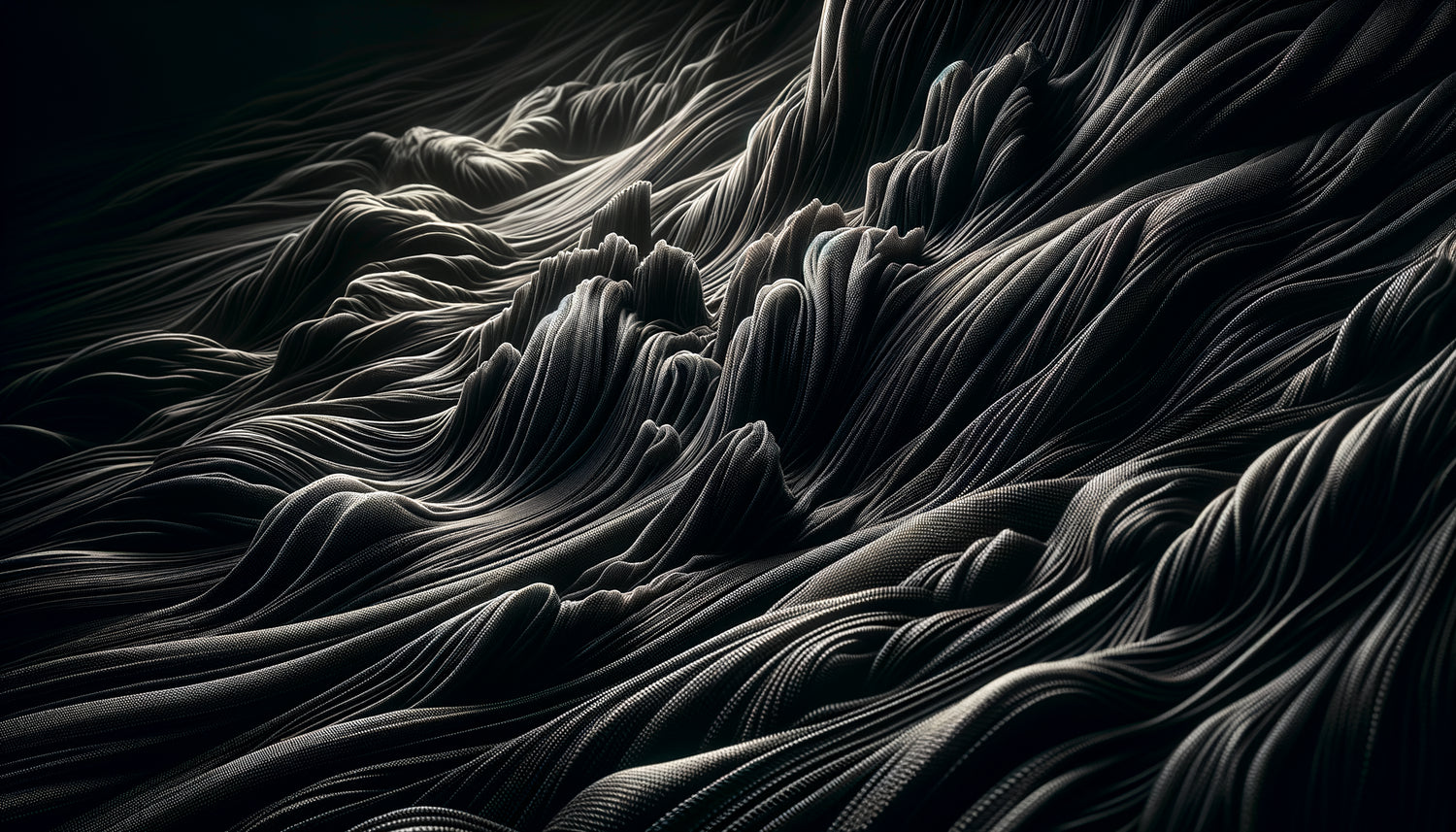
Examine the weave closely. A quality canvas for giclée printing has a regular, tight weave with no visible knots. This weave creates a stable base for pigments, allowing subtle gradations essential to fashion photographs – those delicate transitions between shadow and light on a face, between the folds of a silk dress.
The depth of blacks betrays the printing technology
In the workshop, we had an infallible test: observing the deep black areas of an image. A professional giclée print produces dense, rich, almost velvety blacks. No grayish tint, no density variation. These blacks result from the use of carbon-based pigment inks, not dyes.
Why does this matter for a fashion work? Because fashion photography constantly plays with contrast. An Yves Saint Laurent black suit, a model's graphic eyeliner, the dramatic darkness of a studio: these blacks must be absolute. A print with faded blacks instantly kills the visual impact of the artwork.
Compare several prints side by side if possible. The one that presents the deepest blacks probably uses a 12-ink giclée technology rather than a 4 or 6 ink technology. This technical difference translates to a palette of over 16 million shades versus just a few thousand.

Gradients reveal print resolution
Here's a revealing exercise: look at a progressive transition area in the image – a background that transitions from white to gray, the skin of a face, draped fabric. On a quality giclée print, this transition must be perfectly smooth, without visible bands, without a stair-step effect.
These bands, called posterization in jargon, betray insufficient print resolution or poor source file quality. A professional print works at a minimum of 1440 dpi (dots per inch), often 2880 dpi for fashion works where every detail counts.
I have often received clients who had bought seemingly beautiful fashion prints online, but discovered these defects once the artwork was hung. From normal viewing distance (2-3 meters), these imperfections remain discreet. But approach within 50 centimeters: the illusion is broken.
The sharpness of details never lies
Observe the fine details: a model's eyelashes, the texture of a tweed, the seams of a garment. These elements must remain sharp, precise, without smudging. A professional giclée print captures these micro-details because it starts with a high-resolution file and uses precision print heads.
Color fidelity separates craftsmanship from industry
In our workshop, we use calibrated color charts to verify each giclée print. The general public does not have access to these tools, but your eye can detect major problems. Reds must be vibrant without turning orange, blues deep without shifting towards violet, skin tones natural without artificial green or pink hues.
A quality fashion print maintains chromatic consistency across the entire surface. No variation in tone between top and bottom, or between edges and center. These variations reveal a faulty printer calibration or a non-existent quality control.
The ultimate test? Compare the print under different lighting – natural light, warm LED, cool LED. A print with archival quality pigment inks retains its chromatic balance regardless of the lighting. Low-end prints, using unstable dyes, radically change appearance depending on the light source.

The certificate of authenticity guarantees traceability
Every professional giclée print is accompanied by a certificate detailing: the title of the work, the name of the artist or photographer, the number in the limited edition, the type of inks used, the support, and the printing date. This document is not a marketing gimmick: it's the guarantee of your investment.
A serious printer signs this certificate, sometimes even stamping the print itself. This traceability protects the value of your fashion artwork over time. Without a certificate, you are essentially buying an upgraded poster, not a collectible piece.
I have seen collectors lose hundreds of euros at resale because they could not prove either the authenticity or the limitation of the edition. In the world of fashion art, this documentation is an integral part of the artwork.
The numbering reveals exclusivity
A true limited edition bears a handwritten numbering (example: 15/100), indicating the number of this copy and the total number of prints. Beware of vague mentions like 'limited edition' without a specific figure – it limits nothing at all.
The finishing protects your investment
A high-quality giclée print consistently receives a UV protection treatment. This invisible varnish, applied in a thin layer, extends the lifespan of the artwork by 75 to 100 years under normal exposure conditions. Without this protection, fashion prints begin to fade after 5 to 10 years, even without direct sunlight.
Always ask if the print has received this treatment. A seller who cannot answer or minimizes its importance is likely selling unprotected prints. For a fashion artwork intended to last through the decades, this treatment is not optional.
The canvas stretching also reveals the care taken. The edges must be neatly folded, staples positioned on the sides (never visible from the front), the solid wood frame with strong corner joints. A low-quality frame will warp with humidity changes, distorting the print itself.
The price reflects the value chain
Let's be direct: a high-quality fashion giclée print on canvas, medium size (60x80 cm), cannot cost less than 150-200 euros. Below this threshold, compromises become inevitable – synthetic canvas, low-end inks, no UV protection, unlimited edition.
This price reflects undeniable realities: the cost of archival pigment inks (10 to 15 times more expensive than standard dyes), depreciation of professional printers costing 50,000 euros, color calibration time, premium canvas, solid wood frame, UV treatment.
I have printed enough fashion artworks to know that you cannot cut corners on these fundamentals without the final quality suffering. An abnormally low price always signals a compromise somewhere – it's up to you to decide if this compromise is acceptable for your project.
Transform your interior with a work of art that stands the test of time
Discover our exclusive collection of fashion wall art that combines professional printing quality and timeless elegance.
Your eye becomes your best ally
After ten years of evaluating thousands of giclée prints, I can state this: quality is felt as much as it is seen. An exceptional print exudes a presence, depth, and intensity that mediocre reproductions cannot simulate. Your criteria are now clear: natural texture of the support, depth of blacks, fluidity of gradients, color fidelity, complete documentation, protective finish.
Never rely on an online photo to judge a fashion print. Ask for samples, visit showrooms, compare physically. Your investment – financial and emotional – deserves this diligence. A quality fashion artwork does not simply decorate a wall: it tells a story, creates an atmosphere, resists the test of time.
Start by applying these criteria to your next acquisition. Touch the canvas, scrutinize the details, check the certificate. Your transformed gaze will never settle for compromises again. And in ten years, when your giclée print still shines with its initial brilliance, you will fully understand the value of these signs of quality.
Frequently Asked Questions About Giclée Print Quality
What is the actual lifespan of a quality giclée print?
A professional giclée print using archival pigment inks and UV treatment retains its colors intact for 75 to 100 years under normal exposure conditions (indirect light, stable temperature). I have personally restored works from our workshop that are 15 years old and have not lost any chromatic intensity. In comparison, standard dye-based prints begin to fade visibly after 5 to 10 years. This longevity fully justifies the initial investment in a quality print, especially for a fashion work intended to become a signature piece of your interior decor. The key? Always check that the seller explicitly guarantees the use of pigment inks with lightfastness certification.
Can you really see the difference between a 1440 dpi and 2880 dpi print?
Yes, but it depends on the viewing distance and the size of the artwork. For a fashion print in large format (80x120 cm or more) that you will view up close – for example in a hallway or above a console – the difference between 1440 and 2880 dpi becomes perceptible in fine details: texture of fabrics, sharpness of facial features, definition of hair. At 50 centimeters, the eye clearly distinguishes the superiority of the 2880 dpi. For medium formats (60x80 cm) viewed from 2-3 meters, 1440 dpi is quite sufficient. In the workshop, we reserved 2880 dpi for prints intended for galleries and luxury showrooms. My advice? Always prioritize ink and support quality before focusing on print resolution.
How can you verify that a limited edition is truly limited?
A true limited edition giclée print has three verifiable elements: a handwritten pencil numbering (example: 23/150), a signed certificate of authenticity mentioning the total number of copies, and ideally registration with an artwork traceability organization. Beware of printed numbers (easy to forge) and vague mentions without precise figures. A serious seller can show you the certificate before purchase and confirm how many copies remain available in the edition. In the world of fashion art, limitation creates scarcity that preserves value. I have seen too many buyers discover that their 'limited edition' was actually printed on demand, with no real limit. Always ask the question directly, and if the answer remains vague, move on.