The first time I contemplated a suspended Egungun mask in a collector's workshop in Lagos, I realized that I was facing something far more than just a decorative piece. These Yoruba textiles, composed of hundreds of superimposed fabric strips, vibrant with colors and history, literally transformed the space. Each thread tells a connection to ancestors, each layer bears witness to ancestral craftsmanship that now finds its place in our contemporary interiors.
Here's what the textile art of Egungun masks brings to your wall decor: unparalleled cultural depth that transforms an ordinary wall into a spiritual portal, an explosion of textures and colors impossible to reproduce with conventional works, and a constant conversation between Yoruba tradition and modern aesthetics that captivates every visitor.
You may have already explored ethnic paintings, mudcloth fabrics or frozen masks, but something is missing: this vibrant presence, this frozen movement in the textile that makes your walls breathe. You are looking for a piece that truly tells a story, that possesses a palpable soul.
Rest assured: incorporating the textile art of Egungun masks into your wall decor does not require extensive knowledge of Yoruba culture or radical transformation of your interior. It simply involves understanding the power of these ritual textiles and learning how to showcase them.
In this article, I reveal how these Yoruba ceremonial costumes become fascinating wall artworks, what their unique characteristics are, and above all, how to integrate them harmoniously into your decor to create a space that breathes authenticity and cultural elegance.
The spiritual heritage of the Egungun: when textile becomes a bridge between worlds
Egungun masks are not mere decorative objects in Yoruba tradition in Nigeria and Benin. They represent the materialization of ancestors returning among the living during sacred ceremonies. The term Egungun literally means bone or skeleton in Yoruba, symbolizing the very essence of those who preceded us.
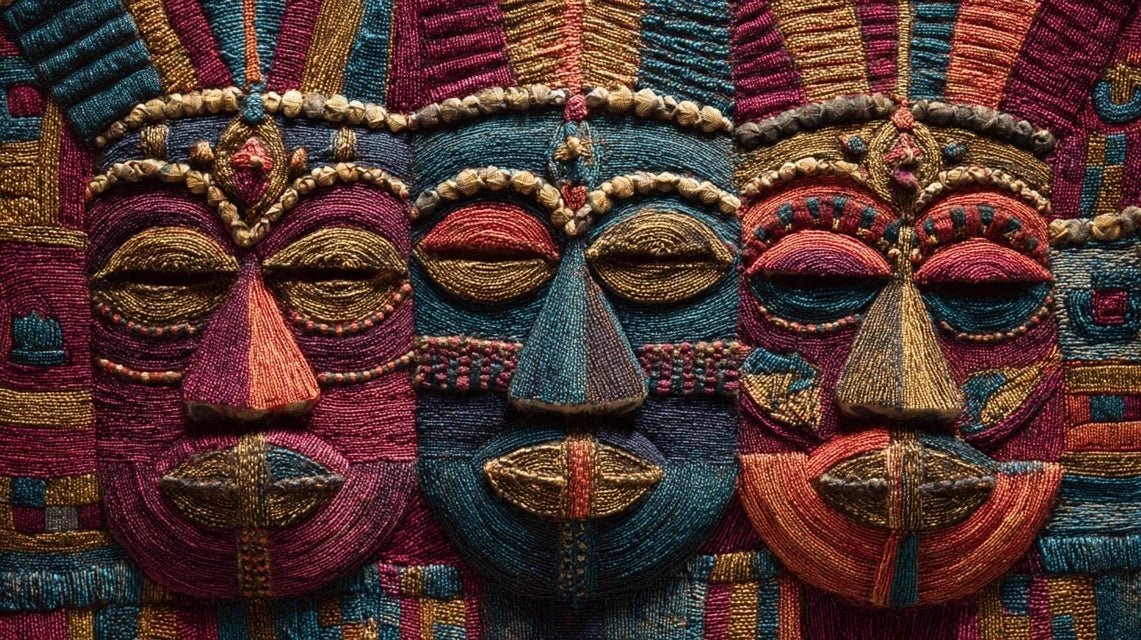
What makes these textiles exceptional for Yoruba wall decor is their unique construction: hundreds, sometimes thousands of fabric strips sewn in successive layers. Each cloth added has its own history, offered by members of the community over generations. This stratification creates a visual and tactile depth impossible to reproduce.
When you hang an Egungun textile on the wall, you are not simply suspending a colorful fabric. You are installing a textile artwork that captures movement, ritual dance, ceremonial energy frozen in time. The fringes dangle as if they have just stopped whirling, creating perpetual dynamism in your space.
The materials that tell a thousand stories
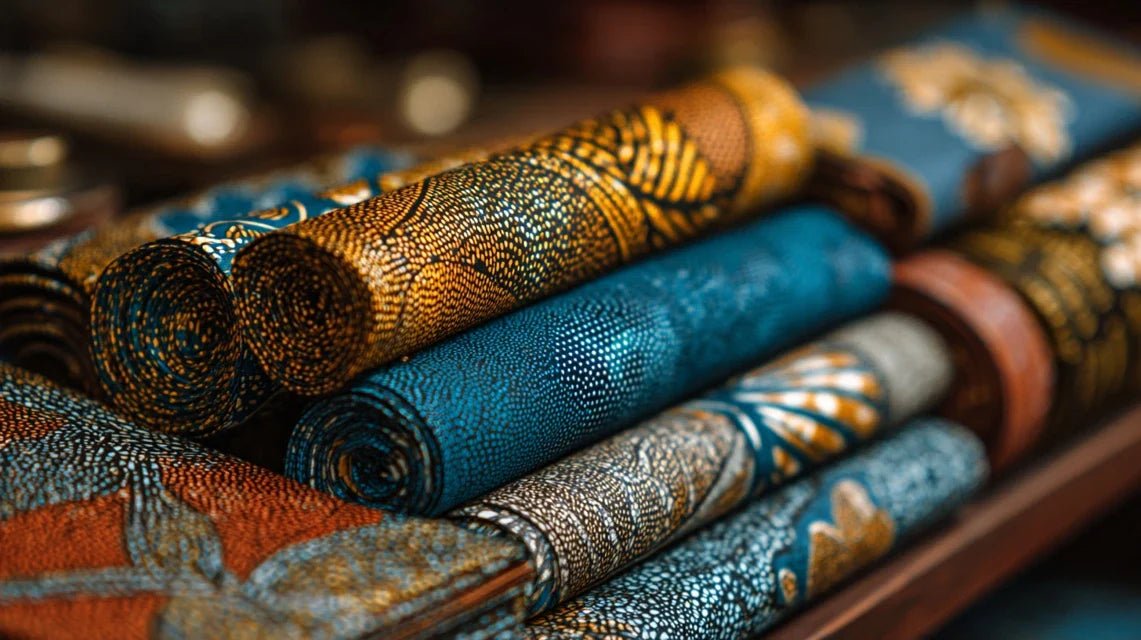
The textiles of Egungun masks assemble fabrics from various origins: local indigo-dyed cottons, wax-printed fabrics with geometric patterns, precious velvets, shiny satins, and sometimes even fragments of Western fabrics integrated over time. This material diversity creates exceptional chromatic richness.
The dominant colors - deep reds, indigo blues, vibrant yellows, emerald greens - are never chosen at random. Each shade has a meaning in the Yoruba cosmology. Red evokes power and protection, blue symbolizes ancestral wisdom, white represents spiritual purity. Your wall becomes a carrier of silent but powerful messages.
How to transform an Egungun textile into a statement wall piece
Hanging an Egungun art textile requires a different approach than conventional paintings. These three-dimensional pieces need space to breathe, so that their multiple layers can be perceived in all their complexity.
Favor a statement wall : a large expanse of plain wall, ideally white or in neutral tones such as beige, light gray or sienna. The contrast allows the vibrant colors of the Egungun textile to truly explode. Avoid walls that are already loaded with patterns or competing colors which would dilute the visual impact.
For fixing, forget simple nails. An Egungun textile can be heavy and bulky. Use a solid wooden or metal rod that you will fix securely, distributing the weight over several anchor points. Some collectors opt for a custom-made raw wood frame which keeps the textile taut without altering it, creating a window into Yoruba culture.
Play with light to enhance textures
Lighting radically transforms the perception of an Egungun mask wall. The multiple layers of fabric create shadows and reliefs that evolve according to the angle and intensity of light. Install indirect lighting with adjustable spotlights that skim the textile, accentuating its sculptural dimension.
Natural light works wonderfully with these Yoruba textiles, making the colors vibrate throughout the day. However, avoid direct sunlight exposure which could alter natural dyes in the long term. A position perpendicular to the main window is the ideal compromise.

Discover this inspiring artwork
Creating a dialogue between Yoruba tradition and contemporary aesthetics
A common mistake is to overload the space around an Egungun textile with other ethnic objects. This accumulation creates a cabinet of curiosities effect that detracts from the centerpiece. Instead, adopt a minimalist approach in the immediate environment.
An Egungun mask textile art pairs wonderfully with modern furniture with clean lines. Imagine a natural linen sofa, a Scandinavian rustic wood coffee table, solid-colored cushions in tones that subtly pick up a color from the textile. The contrast between the textured wall and the simplicity of the rest creates a fascinating aesthetic tension.
Natural materials amplify authenticity: rattan, jute, terracotta, untreated wood. They establish a material bridge with the artisanal origins of the Egungun mask without falling into thematic reconstruction. Your interior then breathes a sophisticated cultural elegance rather than a frozen ethnic decor.
Composing a wall gallery around the Egungun textile
If you want to create a more elaborate composition, the Egungun textile must remain the absolute focal point. Arrange around it, at a respectful distance, black and white photographs of Yoruba scenes, African botanical engravings under simple frames, or small traditional pottery on discreet shelves.
Respect the rule of thirds: the Egungun mask occupies at least two-thirds of the visual wall space. Satellite elements complement the narrative without competing with it. This clear hierarchy naturally guides the eye to the centerpiece while creating narrative depth.
Maintenance secrets to preserve your Egungun textile
An authentic Yoruba textile art requires special attention. These pieces, often antique or created using traditional methods, feature fragile fabrics and natural dyes that are sensitive. Their preservation ensures they last for decades in your home.
Regular dusting is the primary maintenance. Use a low-power vacuum cleaner with a soft brush attachment, maintaining a distance of a few centimeters. Gently pass over the outer layers without pressing, in the direction of the fibers. This monthly operation is sufficient for most Egungun textiles.
Humidity is the main enemy. These layered fabrics can develop mold if the air is too humid. Maintain a relative humidity between 45% and 55% in the room. Absolutely avoid hanging an Egungun mask in a bathroom or kitchen where hygrometric variations are significant.
When to seek professional help
If your Egungun textile has tears, significant discoloration, or insect infestations, consult a specialist restorer in ethnographic textiles. These professionals master techniques for consolidating the cultural and material integrity of the work.
A thorough cleaning should never be attempted at home. The natural dyes used in Yoruba textiles may be water-soluble or react unpredictably to modern detergents. A restorer will assess each layer of fabric and adapt their intervention accordingly.

Discover this inspiring artwork
Where to find authentic and ethical Egungun textiles
The authenticity of an Egungun mask intended for Yoruba wall decor raises important ethical questions. These objects have a sacred dimension in their original context. Favor pieces specifically created for the art market or antique textiles whose ceremonial cycle is complete.
Galleries specializing in African art generally offer Egungun textiles accompanied by documented provenance. This traceability guarantees not only authenticity but also respect for the creator communities. Be wary of offers that are too cheap, which often signal industrial reproductions or questionable acquisitions.
Yoruba contemporary artisans also create textiles inspired by Egungun masks specifically for interior decoration. These creations honor traditional techniques and aesthetics while being designed for wall use. They represent an ethical alternative that directly supports artisan communities.
Transform your walls into a captivating cultural journey
Discover our exclusive collection of African paintings that celebrate the artistic richness of the continent and give your interior that cultural depth you are looking for.
Your wall transformed into a living cultural portal
Imagine yourself in your living room, a cup of tea in hand, your gaze naturally falling on this Egungun textile that now inhabits your main wall. The layers of fabric catch the late afternoon light, creating nuances you hadn't noticed in the morning. Your guests consistently stop in front of this piece, fascinated, asking you about its origin and meaning.
You don’t just own a Yoruba wall decoration - you have installed a permanent conversation between your living space and centuries of artistic tradition. Every day, this textile reminds you that an interior can be both contemporary and deeply rooted in human history.
Start today: identify the wall in your home that deserves this transformation. Measure it, imagine the colors that would dialogue with your existing furniture. Then embark on a quest for Egungun mask textile art that will resonate with your sensibility. Your interior will never be the same - it will now breathe with the vibrant soul of Yoruba culture.