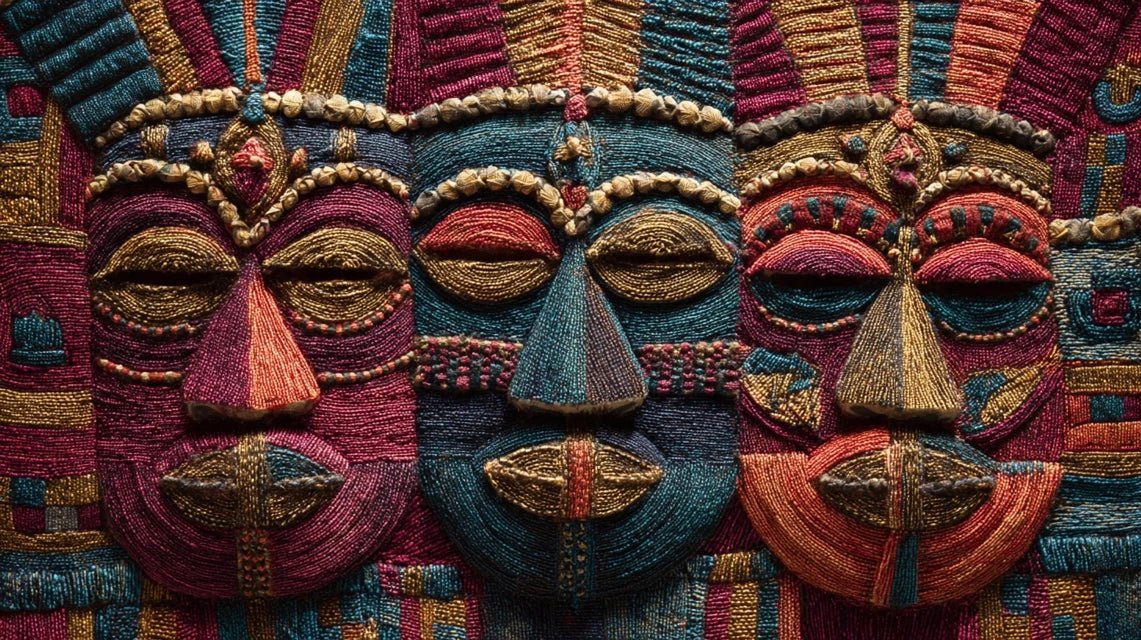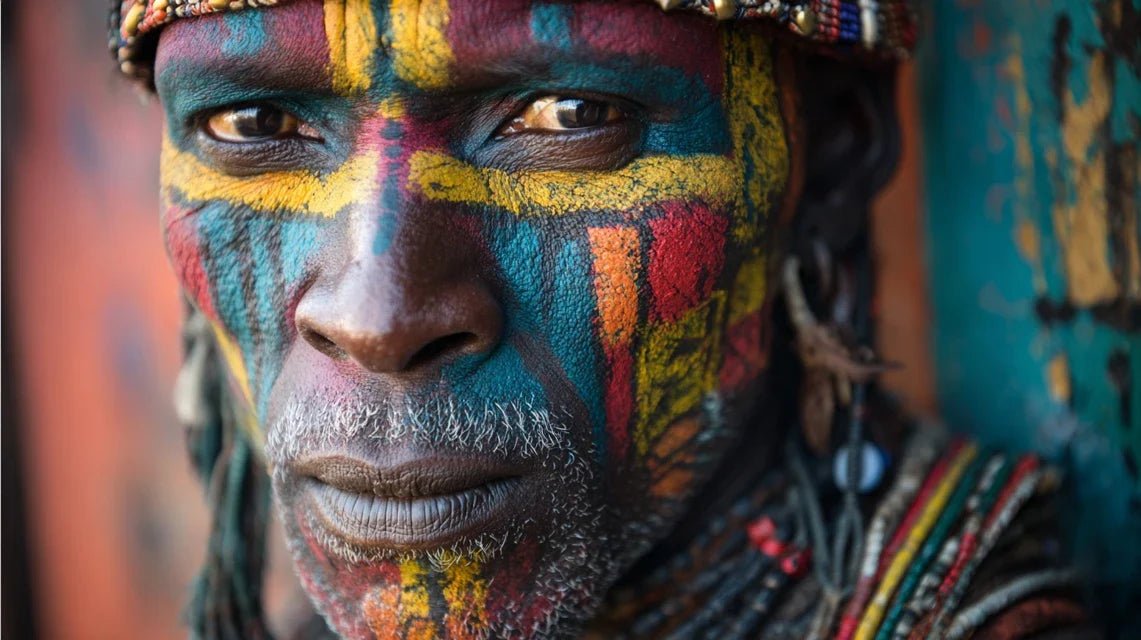
The first time I observed authentic kente cloth in the workshop of a master weaver in Kumasi, I was struck by the density of geometric patterns that seemed to tell a silent story. Each Akan symbol engraved, woven or painted carried within it centuries of wisdom. These cosmogonic emblems are not mere decorations: they constitute a true visual language that expresses worldview, moral values and the mysteries of the universe according to the Akan philosophy of Ghana and Côte d'Ivoire.
Here is what the Akan symbols of cosmology offer you: a deep understanding of the universal forces governing existence, a timeless system of values applicable to your daily life, and a powerful aesthetic connection with millennial wisdom. Many admire these patterns without grasping their spiritual and philosophical scope. They see them as nice ethnic graphics, when they embody a complete cosmology where each shape, each curve dialogues with the fundamental principles of creation, destiny and harmony. Rest assured: this symbolic richness is accessible to all, and understanding these signs will transform your view of African art. I propose you an initiatory journey into the heart of this ancestral visual grammar that continues to inspire designers and seekers of meaning.
The Akan cosmology: when the universe is drawn in symbols
In Akan thought, the universe results from the action of Onyame, the supreme Creator, a distant but omnipresent entity. This cosmology structures the world into three interconnected spheres: the celestial world where deities and ancestors reside, the earthly world inhabited by the living, and the underworld linked to primordial forces. The Akan symbols visually translate these complex relationships between visible and invisible, material and spiritual.
The Akan symbolic system revolves mainly around Adinkra, these ideograms traditionally printed on funeral and ceremonial fabrics. Each cosmogonic symbol encapsulates a proverb, a philosophical concept or a universal truth. Take the Gye Nyame: this circular motif literally means 'except God', affirming the supremacy of the divine and the eternity of the Creator. Its presence in an interior is never insignificant – it recalls humility in the face of forces that surpass us.
The three pillars of the Akan cosmic vision
The Akan cosmology is based on three interconnected principles that symbols constantly express. First, universal interdependence: nothing exists in isolation, everything participates in a cosmic balance. The symbol Nkonsonkonson, representing a chain of links, illustrates this fundamental solidarity.
Next, complementary duality: light and shadow, masculine and feminine, life and death are balanced rather than opposed. The Dwennimmen, with its ram horns forming a spiral, evokes strength in humility, controlled power.
Finally, the circularity of time: Akan cosmology conceives existence as a perpetual cycle where ancestors influence the living who will become ancestors in turn. Spiral or circular patterns reflect this cyclical temporality, so different from our Western linear conception.
Decoding major symbols: your initiation guide
Among the hundreds of Akan symbols, some particularly carry the cosmogonic vision of the people. The Nyame Dua, or 'tree of God', represents the divine presence on earth. This symbolic altar, often depicted as a forked post, served as an intermediary between terrestrial and celestial spheres. In your interior, this symbol creates a spiritual focal point, a reminder of the sacred verticality that connects earth and sky.
The Sankofa remains one of the most recognizable cosmogonic symbols: a mythical bird turning its head back to retrieve an egg on its back. Its meaning – 'return and fetch it' – transcends simple advice. It expresses a cosmological truth: the future is built by integrating the lessons of the past, time is not a forward flight but a constant dialogue between yesterday and tomorrow. I have seen this motif transform spaces into places of contemplation, inviting reflection on our own trajectory.
Lunar and solar symbols in Akan cosmology
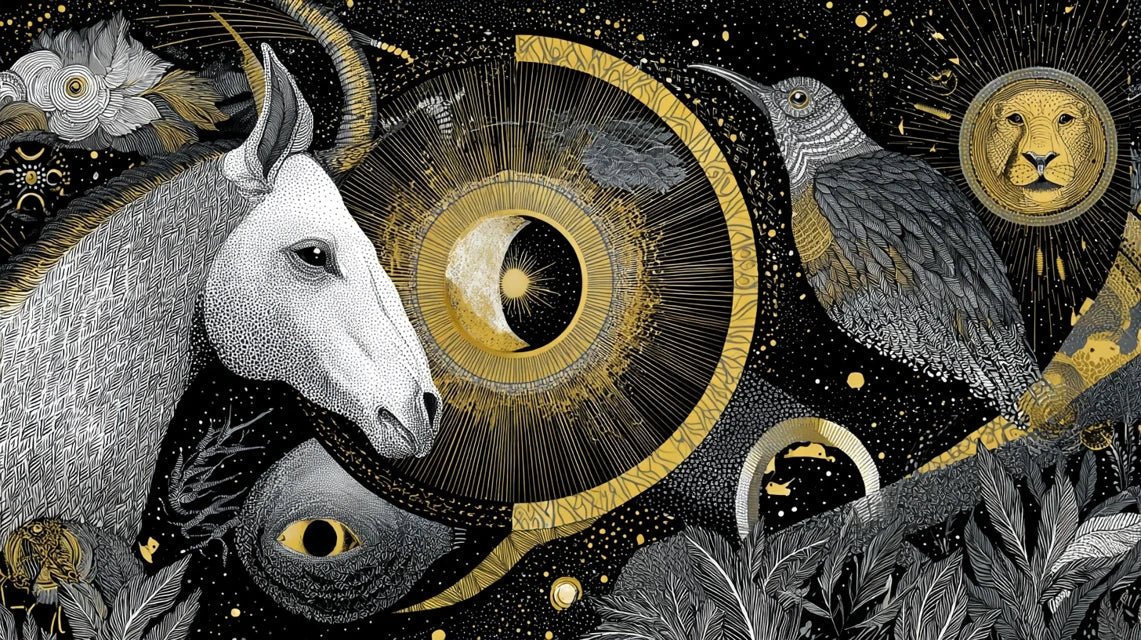
The stars occupy a central place in the Akan cosmic order. The Osrane symbol represents the moon, associated with sacred femininity, natural cycles and fertility. In cosmology, the moon governs ritual time, influences births and guides agricultural activities. Integrating this symbol into a space promotes harmony with natural rhythms.
The sun, Owia, embodies vitality, daily rebirth and the constant presence of the divine. Some Akan solar symbols show the star with stylized rays, others represent it as a perfect circle – this geometric perfection evoking the cosmic order established by the Creator. These motifs bring an incomparable luminous energy to contemporary interiors.

Discover this inspiring artwork
When symbols tell the creation of the world
According to the Akan cosmogony, creation unfolded in successive stages, each associated with specific symbols. The Nkyinkyim, with its intertwined spirals, represents the tortuous but necessary process of initiation and, by extension, that of creation itself. The complexity of this motif reflects that of the emergence of the cosmos from primordial chaos.
The symbol Eban, representing a palisade or fence, evokes the protection and security that the Creator establishes around his creation. In Akan cosmogonic thought, the universe is not a hostile space but a protected home where each being occupies a defined place. This architectural symbol resonates particularly in our interiors: it transforms a simple space into a sanctuary, a place of spiritual safety.
Plant symbols like Aya (fern) celebrate resilience and endurance – essential qualities of the earliest forms of life in the cosmogonic narrative. The fern survives in difficult conditions, regenerating after brush fires. It embodies the persistence of life in the face of adversity, a fundamental principle of the Akan cosmic order.
Symbols of destiny and divine predestination
The Akan cosmogony accords an important place to the concept of nkrabea, the destiny that each soul receives before birth. The Nkrabea symbol itself represents this destiny, reminding us that our life is part of a larger cosmic plan. Far from being fatalistic, this vision encourages fulfilling one's existential mission.
The Mmere Dane, symbolized by a wheel or gear, means 'times change'. This motif expresses the dynamic nature of cosmic existence: nothing is fixed, everything evolves according to predictable cycles. In the Akan vision, understanding these cycles allows us to navigate with wisdom rather than passively endure. I have observed how this symbol, placed in an office or reflection space, inspires adaptability and patience in the face of life transitions.
Cosmic balance according to symbols of wisdom
The Mpatapo, reconciliation knot, embodies harmony restored after conflict. In the Akan cosmogony, conflict is not an aberration but a necessary phase of the cosmic cycle – what matters is the ability to reconnect. This symbol radiates a remarkable calming energy in shared living spaces.
Bi Nka Bi ('no one should bite the other') represents the prohibition of oppression, an ethical principle rooted in the cosmic vision of a just universe. Two fish biting each other's tails illustrate the absurdity and danger of mutual domination. This symbol reminds us that cosmic balance requires equity among all beings.

Discover this inspiring artwork
Integrating Akan cosmogonic symbols into your world
Understanding the meaning of Akan symbols radically transforms their decorative integration. It's no longer just about exoticism but consciously inviting philosophical principles into your space. A painting representing the Gye Nyame in a living room becomes a daily reminder of transcendence, far beyond a simple graphic element.
Textiles adorned with cosmogonic symbols – cushions, tapestries, rugs – create specific energy zones. A plaid featuring the Sankofa in a reading corner invites reflection and introspection. Curtains printed with Nkyinkyim suggest that your home is a place of transformation and personal evolution.
The arrangement of these symbols also counts. In Akan tradition, certain cosmogonic motifs are not placed anywhere. Symbols related to ancestors and memory naturally find their place in intimate spaces, while symbols of welcome and community radiate in reception areas. This symbolic geography creates a true spiritual mapping of your interior.
Transform your interior into a space of ancestral wisdom
Discover our exclusive collection of African art that embodies the authenticity of Akan symbols and brings spiritual depth and timeless elegance to each room.
The living heritage: when cosmogony inspires the present
Akan cosmogonic symbols are not relics frozen in a bygone past. In Ghana and Côte d'Ivoire, they remain omnipresent: on commercial signs, institutional logos, contemporary jewelry. This vitality testifies to their unchanging relevance. International designers revisit these ancestral motifs, creating bridges between cosmogonic wisdom and modern aesthetics.
This ongoing transmission ensures that the Akan worldview – its understanding of universal forces, its ethics of balance, its embodied spirituality – continues to permeate contemporary culture. Understanding these symbols means accessing a living philosophy, not a museum piece. It is recognizing that other civilizations have developed sophisticated answers to eternal questions: where do we come from, what is our place in the universe, how do we live in harmony with forces beyond us.
Imagine your interior transformed into a space of cosmic resonance, where each symbol dialogues with your own quest for meaning. Visualize yourself explaining to your guests the depth of the Nyame Dua adorning your wall, sharing the wisdom of the Sankofa woven on your cushions. Akan symbols of cosmogony offer you much more than decoration: they propose a framework for understanding the world, a daily reminder that we all participate in a larger order, an invitation to align your life with timeless principles. Start by choosing the symbol that resonates most with your current moment in life, and let its millennial wisdom enrich your everyday.
Frequently Asked Questions About Akan Cosmological Symbols
Can I display Akan symbols in my home without belonging to that culture?
Absolutely, provided you approach these symbols with respect and genuine understanding. The Akan themselves consider their cosmological wisdom universal, applicable to all humans. The essential thing is to avoid superficial aesthetic appropriation. Find out about the precise meaning of the symbol you choose, understand its role in Akan cosmology, and consciously integrate it into your space. This approach transforms the decorative act into an enriching intercultural dialogue. Akan artisans and creators generally appreciate that their symbolic heritage is honored and shared, rather than confined or forgotten. Prioritize authentic works or those created by artists connected to this tradition.
What are the most powerful Akan cosmological symbols?
The Gye Nyame undoubtedly takes first place: it affirms the supremacy and eternity of the Creator, the very foundation of Akan cosmology. The Nyame Dua, tree of God, then comes as a representation of the earth-sky connection. The Sankofa carries a particular power because it expresses the cyclical conception of time, a pillar of Akan cosmological thought. The Dwennimmen, with its ram horns, embodies the balance of opposing forces necessary for cosmic harmony. Each of these symbols serves as a gateway to a deeper understanding of the universe according to Akan philosophy. Their 'power' lies less in an objective hierarchy than in the resonance they create with your own spiritual path.
How to Distinguish an Authentic Akan Symbol from an Approximate Commercial Reproduction?
Authentic Akan symbols feature precise and balanced geometry, the result of centuries of refinement. Each line, each curve has a meaning: nothing is arbitrary. Approximate commercial reproductions often simplify these forms, add decorative elements with no cultural relevance, or mix symbols from different African traditions without coherence. To verify authenticity, look for the documentation accompanying the work: the Akan name of the symbol, its precise meaning, the associated proverb. Serious creators share this information. Favor pieces created by Ghanaian or Ivorian artists, or by Western artists who have deeply studied this tradition. Museums and Akan cultural institutions publish directories of symbols that are excellent references to verify the accuracy of a motif before integrating it into your interior.