






What precautions should you take before hanging a heavy artwork above your bed?
October 20, 2025 · 9 min read · by Walensky
I witnessed the accident happen. An ordinary Monday morning, my client called me in a panic: the large baroque mirror she had so wanted to install above her bed had collapsed during the night. Thirty centimeters lower, and we would have been talking about a drama rather than a simple emotional shock. This story could have been avoided with a few basic precautions.
Hanging a heavy artwork above your bed requires three fundamental guarantees: fixation suitable for the weight and type of wall, a secure hanging system in case of impact, and regular stability checks. These measures transform a decorative element into a reassuring presence rather than a nocturnal threat.
You've probably already spotted that monumental painting, that wall sculpture or that imposing mirror which would give your bedroom that ultimate touch of elegance. But one question plagues you every night: What if it falls while I sleep? This legitimate anxiety prevents too many people from daring to decorate as they truly desire.
The good news? With the right techniques and a methodical installation, hanging an imposing piece above your bed becomes perfectly safe. Even the most massive works can find their place safely, provided certain fundamental principles are respected.
Here's how to transform your bedroom with a majestic artwork, without ever compromising your peace of mind.
The actual weight: start by weighing your artwork
First common mistake: underestimating the weight of the work you want to install. That large-format painting that seems so light in your hands can easily weigh 15 to 20 kilos once framed. Mirrors are even more deceptive: the glass alone weighs about 8 kilos per square meter.
Use a scale to get an accurate measurement. Weigh yourself first, then with the artwork in your hands. The difference will give you the exact weight to support. This information will determine your entire fixing system.
For works weighing over 10 kilos, I systematically recommend a double hanging system: two independent fixing points, each capable of supporting the total weight. This principle of redundancy ensures that in case of failure of one point, the second keeps the artwork in place.
The nature of your wall dictates the installation method
Not all walls are equal when it comes to the weight of an imposing artwork. Knowing precisely your support is absolutely crucial before considering any installation above your bed.
Solid walls: concrete, brick, stone
Solid structures offer the best load capacity. A concrete or solid brick wall can support works of 30 kilos and more with the appropriate anchors. Favor metal expansion anchors for concrete or chemical anchors for extreme loads. The latter create a molecular bond with the material and can support up to 50 kilos per fixing point.
For stone, use percussion-specific bits and proceed slowly to avoid cracking. Patience when drilling will prevent you from creating cracks that compromise the anchoring's solidity.
Partition walls and drywall: solutions exist
Drywall walls require a different approach. Plaster alone can only support a minimal weight (2-3 kilos maximum), but modern technical solutions allow you to hang heavy artworks even on these seemingly fragile supports.
The ideal method is to fix directly into the metal studs that structure the partition wall. Use an electronic stud finder to locate them precisely. A screw anchored directly into a metal rail can support 15 to 20 kilos without any problem.
If the studs do not correspond to the spacing of your hanging points, opt for Molly or toggle anchors. These systems deploy behind the drywall and distribute the load over an enlarged surface. A professional-grade Molly anchor can support up to 12 kilos on standard 13mm drywall.

Our favourite
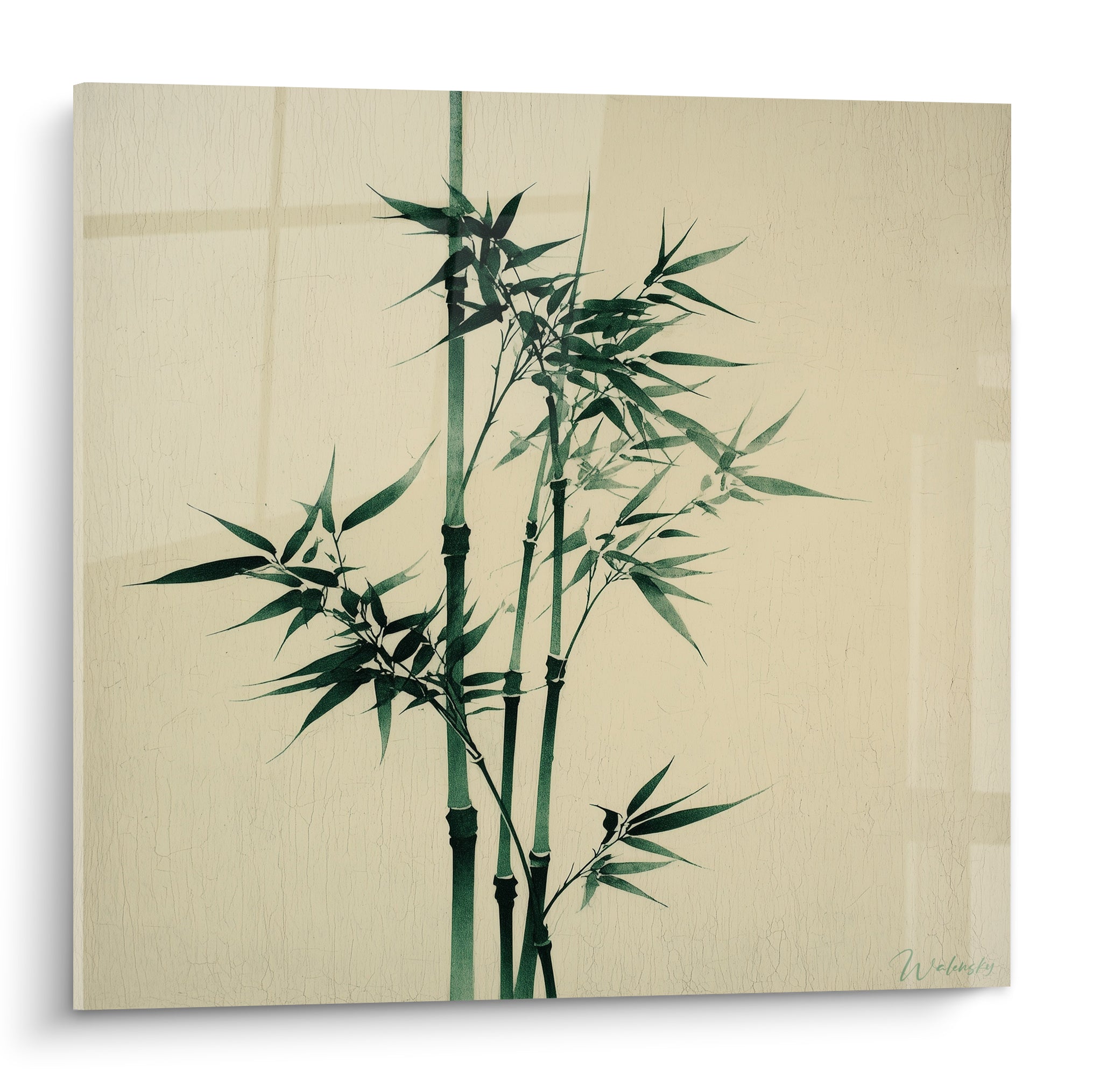
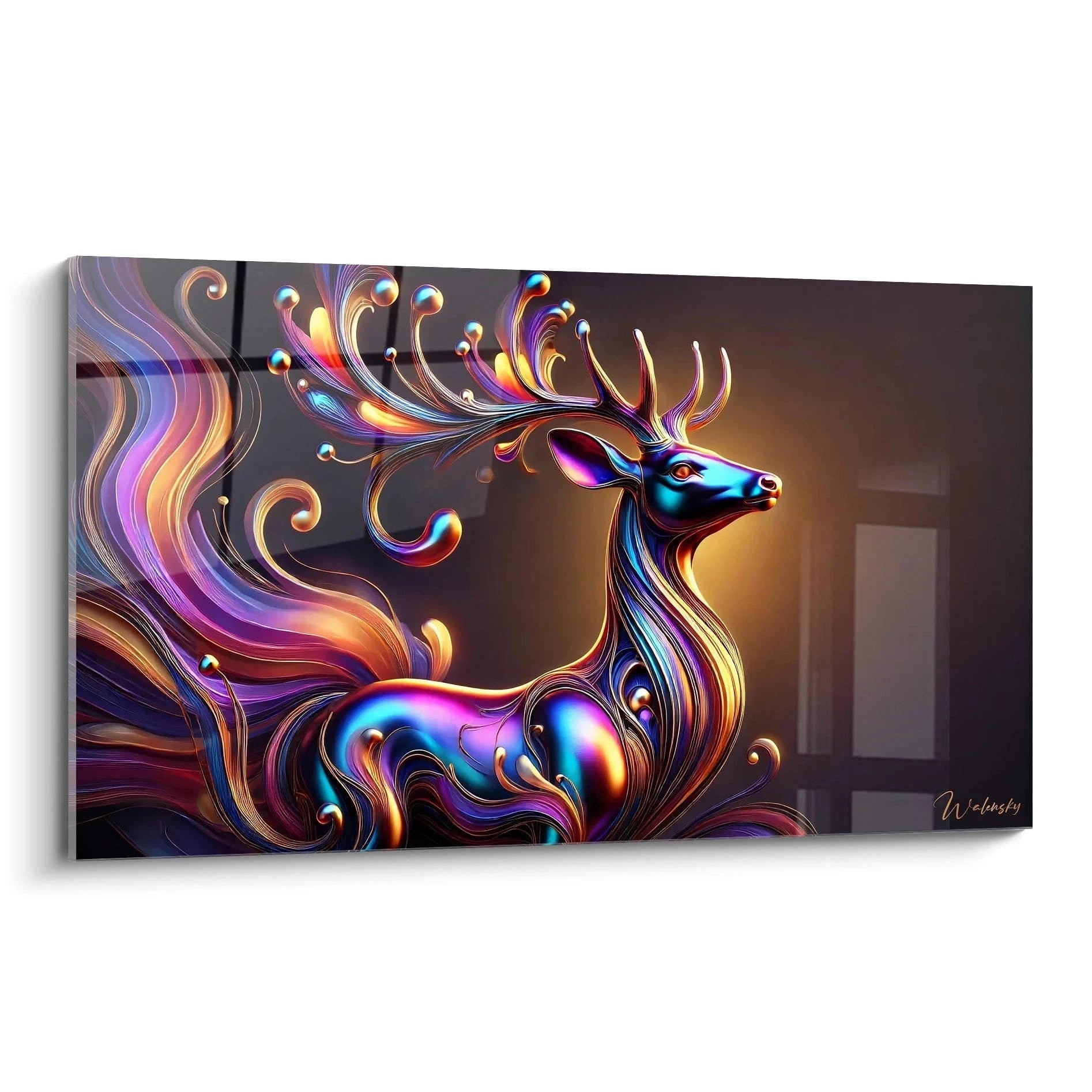
Abstract colorful explosion painting - Crystalline light - abstract painting style edition
213,90€
Discover this artworkThe hanging system: your nighttime insurance
Beyond the wall fixing, the system that connects the artwork to the wall determines your real security. For an installation above a bed, I never use simple hooks or basic fasteners.
The cable system with cable clamps represents my favorite solution for artworks weighing more than 8 kilos. A 2mm braided steel cable, fixed to two points of the frame and secured by professional cable clamps, offers exceptional resistance. Even in case of a significant shock (earthquake, abrupt handling), the cable absorbs vibrations and keeps the artwork stable.
For very heavy pieces (over 20 kilos), I install wall brackets that support the base of the frame while maintaining an aesthetic distance of 2-3 centimeters from the wall. This system combines maximum security and enhancement: the shadow cast gives depth to the artwork.
Absolutely ban adhesive systems for any artwork placed above a bed, regardless of the weight announced. Variations in temperature and humidity in a bedroom gradually weaken adhesion, creating an unpredictable risk.
Height and distance: protect without sacrificing aesthetics
Even when perfectly secured, a heavy artwork requires careful positioning. I recommend maintaining at least 20 centimeters between the top of your headboard and the bottom of the frame. This distance creates sufficient buffer in case of sudden movement and paradoxically improves the visual perception of the artwork.
The ideal range is between 20 and 40 centimeters of clearance. Beyond 50 centimeters, the artwork loses its visual connection with the bed and the decorative effect diminishes. Find the point of balance where the artwork dialogues with your resting space without overwhelming it.
Also consider the lateral spacing. An imposing piece should never exceed the limits of your bed. Visually, the artwork should represent between 60% and 85% of the width of the headboard to create a harmonious composition. This proportion also ensures that in case of an unlikely incident, the artwork falls on the mattress rather than beside it.
— Our selection


Post-installation checks that save the day
Installation doesn't end with the last hammer blow. A heavy artwork above a bed deserves a systematic verification protocol.
Immediately after installation, test the solidity by exerting a progressive downward and then sideways traction. The artwork should not show any movement, creaking or play. If you perceive any displacement, repeat the installation with a superior fixing system.
Perform a second check 24 hours after placement. This delay allows the chemical anchors to fully polymerize and materials to stabilize under load. Visually inspect the fixing points: no cracks should appear around the anchors, no sagging of the frame should be visible.
Then, establish a monthly control ritual. A simple glance and a light touch of the frame are sufficient. This way you check that no progressive loosening occurs, particularly if your bedroom experiences significant temperature variations.
— You may also like


Additional safety devices
For perfectionists or artworks of exceptional value, additional security systems provide absolute peace of mind.
So-called anti-theft security cables, originally designed for galleries, work wonderfully well to secure a heavy artwork. A thin steel cable, almost invisible, connects the frame to a lateral wall anchor point. In case of primary system failure, this safety net prevents any sudden fall.
Anti-tip brackets, small discreet corner braces attached to the bottom of the frame, prevent it from pivoting forward. Particularly useful if you tend to lean against the headboard, they absorb accidental bumps without compromising aesthetics.
For collectors, miniaturized shock detectors, discreetly mounted on the back of the frame, can alert you on your smartphone in case of abnormal vibration. This technology, once reserved for museums, is now accessible and offers permanent monitoring of your valuable pieces.
Your bedroom deserves an exceptional artwork in complete safety
Discover our exclusive collection of wall art for bedroom that transforms your relaxation space into a private gallery, with professional hanging systems included.
When to call a professional
Installing a heavy artwork above a bed remains accessible to experienced DIYers, but certain situations justify the intervention of a specialist.
If your artwork weighs over 25 kilos, if your wall has unusual characteristics (old plaster, friable stone, cellular partition), or if you have any doubts about the solidity of your fixing, consult a professional installer.
The cost of expert installation (generally between 80 and 200 euros depending on complexity) represents a negligible insurance compared to the value of your artwork and, above all, your safety. A qualified installer has the detection tools, professional wall plugs and experience to adapt the solution to your specific situation.
Some framers and galleries also offer this service when purchasing. Don't hesitate to negotiate installation in the overall price of your acquisition: art professionals fully understand the stakes and often have trusted installer partners.

You are now sleeping under a work of art, not under a threat
This customer whose mirror had collapsed finally dared to reinstall an even more imposing piece above her bed. This time, with appropriate fixing, a secure cable system and regular checks, she sleeps peacefully under a magnificent contemporary triptych that is the admiration of all her visitors.
Hanging a heavy artwork above your bed is not a reckless risk: it's a powerful decorative gesture that simply requires method and rigor. By weighing your piece precisely, adapting your fixing to your wall type, choosing a professional hanging system and performing regular checks, you create an environment that is both spectacular and perfectly safe.
Start this weekend: weigh the artwork that makes you dream, identify your wall type, and equip yourself with the appropriate hardware. In a few days, you will fall asleep under a majestic artistic presence, with the absolute certainty that it will remain exactly where it should be: on the wall, and not in your nightmares.
FAQ
What is the maximum weight I can safely hang above my bed?
There is no absolute limit, it all depends on your wall type and fixing system. On a solid concrete or brick wall with chemical anchors and a double hanging system, you can go up to 40-50 kilos without any problem. On a plasterboard partition, I recommend staying below 15 kilos even with the best toggle bolts. The key is to always oversize your fixing: if your artwork weighs 10 kilos, choose fixings designed for at least 20 kilos. This safety margin absorbs unforeseen events and material aging. If you are unsure about your wall's capacity, have a load test carried out by a professional: he will insert a witness anchor and precisely measure the pull-out resistance.
How do I know if my wall is strong enough to support a heavy artwork?
Start with a simple test: tap your wall with your knuckles. A full, muffled sound indicates a massive wall (concrete, brick, stone), ideal for heavy loads. A hollow sound reveals a plasterboard partition, which will require specific techniques. To go further, drill a test hole of 6mm in a discreet area: if the bit passes quickly with little resistance and produces fine white dust, you are on plaster. If drilling is difficult and produces compact gray or red dust, you have concrete or brick. Then use an electronic material detector (around 30-50 euros) which will precisely identify the nature of the support and locate the metal studs in partitions. This preliminary investigation avoids unpleasant surprises and allows you to choose the fixing perfectly adapted to your situation.
How often should I check the stability of my installation?
Establish a three-step verification schedule. First, systematically check your installation 24 hours after mounting: this is when any potential fixing defects become apparent. Secondly, visually and tactilely inspect your artwork once a month for the first six months: gently touch the frame to detect any play, examine the fixing points to identify any cracks or sags. After this settling-in period, if everything remains perfectly stable, switch to a quarterly check. Note that certain events justify an immediate verification: after moving heavy furniture which vibrated the walls, following work in your home, or if you notice cracks elsewhere in the room (possible sign of building movement). This vigilance may seem tedious, but an inspection takes less than 30 seconds and guarantees you absolute peace of mind.
Explore our collections


