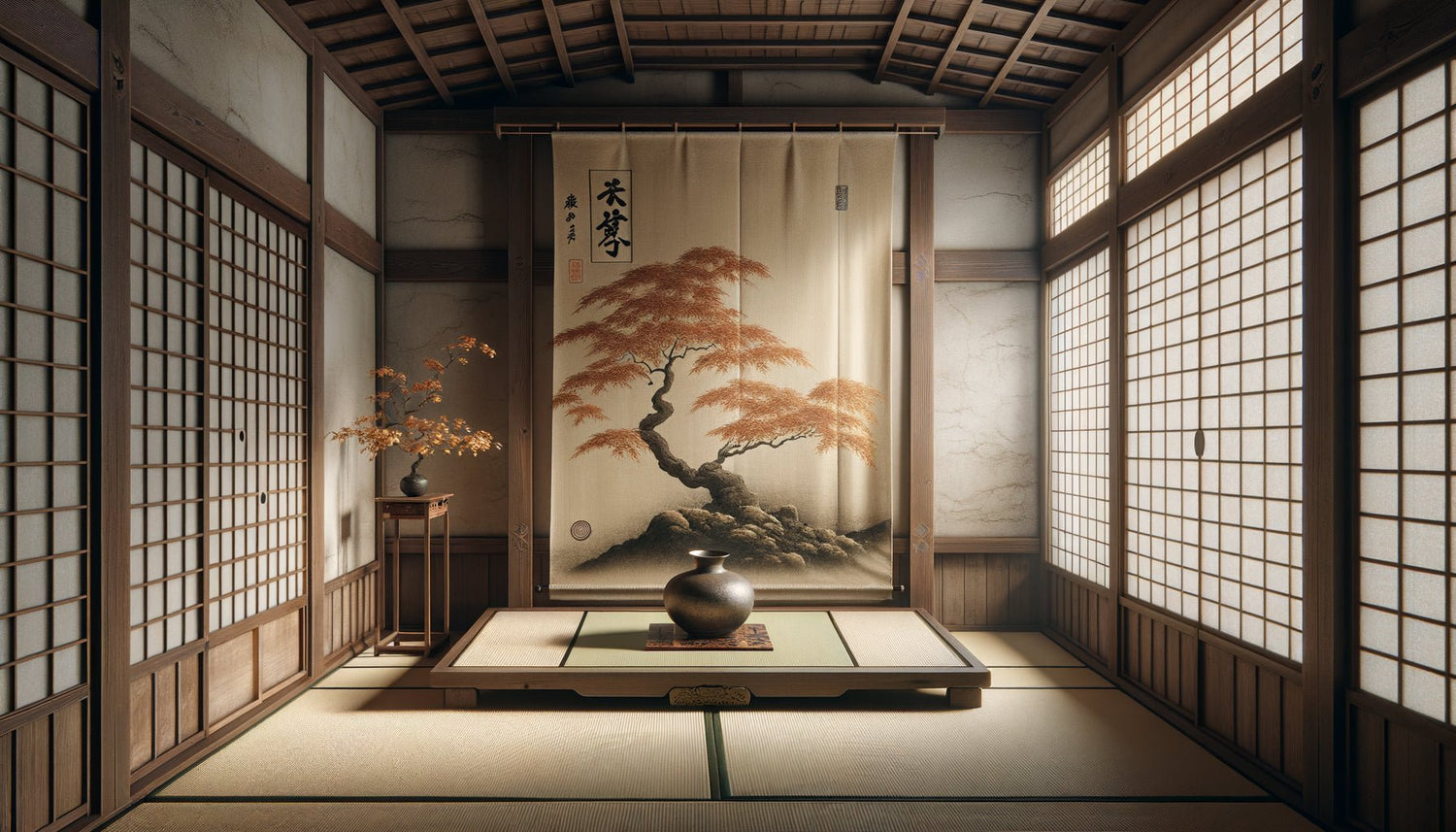
In a traditional Kyoto home, a friend collector showed me what changed my perception of art at home: her tokonoma, this elevated alcove where a simple bouquet of plum branches and calligraphy evoking the nascent spring reigned. "I change the composition every month," she explained to me with the same simplicity as if she were talking about changing her sheets. This rotation fascinated me: what if our walls weren't condemned to decorative immobility?
Here's what the tokonoma brings to your interior: a sacred space that breathes in time with the seasons, a gentle discipline that renews your view of your decor, and an ancestral philosophy that transforms the act of decorating into a meditative ritual.
You may hang your paintings once and for all, letting your gaze glide over them without really seeing them. This decorative blindness awaits us all: our works become invisible through familiarity. Rest assured, there is a tradition dating back five centuries that has solved this problem with disarming elegance.
I'm going to reveal how this Japanese alcove invented the revolutionary concept of seasonal art rotation – and how you can adopt this wisdom to make your interior breathe.
The alcove that revolutionized interior decoration
The tokonoma appears in the 15th century in the homes of the Japanese warrior class, during the Muromachi period. Originally, this elevated architectural niche of about 10 to 15 centimeters served to accommodate Buddhist religious objects. But under the influence of the tea ceremony and Zen aesthetics, the tokonoma transforms into a true domestic art scene.
What makes this alcove unique? Its slightly raised tatami floor, its precious wood posts (often cryptomeria), and above all its exclusive function: unlike the rest of the room, one never walks in a tokonoma. It is an untouchable space, reserved for pure contemplation.
Japanese architects traditionally positioned the tokonoma facing the entrance to the main room, so that visitors' gaze was immediately directed towards this artistic composition. This architectural staging makes the tokonoma much more than a shelf: it is the spiritual and aesthetic heart of the home.
The three sacred elements of the tokonoma
The traditional composition of a tokonoma rests on a carefully balanced artistic trinity. In the back, against the wall, one hangs a kakemono (掛物) – this vertical scroll in silk or paper that can represent calligraphy, a landscape painting, or a poetic work. In front, on the floor of the alcove, an ikebana (flower arrangement) is arranged to dialogue with the mural artwork. Finally, a work of art sometimes completes the scene: Buddhist statue, precious ceramics, or remarkable natural stone.
This composition is never fixed. It is precisely there that lies the genius of the tokonoma.
Seasonal Revolution: When Art Breathes in Time with Nature
Here's the innovation that changes everything: in Japanese tradition, one never keeps the same composition for more than a month in their tokonoma. This rotation follows the Japanese lunar calendar which divides the year into 24 micro-seasons (sekki), each associated with specific natural symbols.
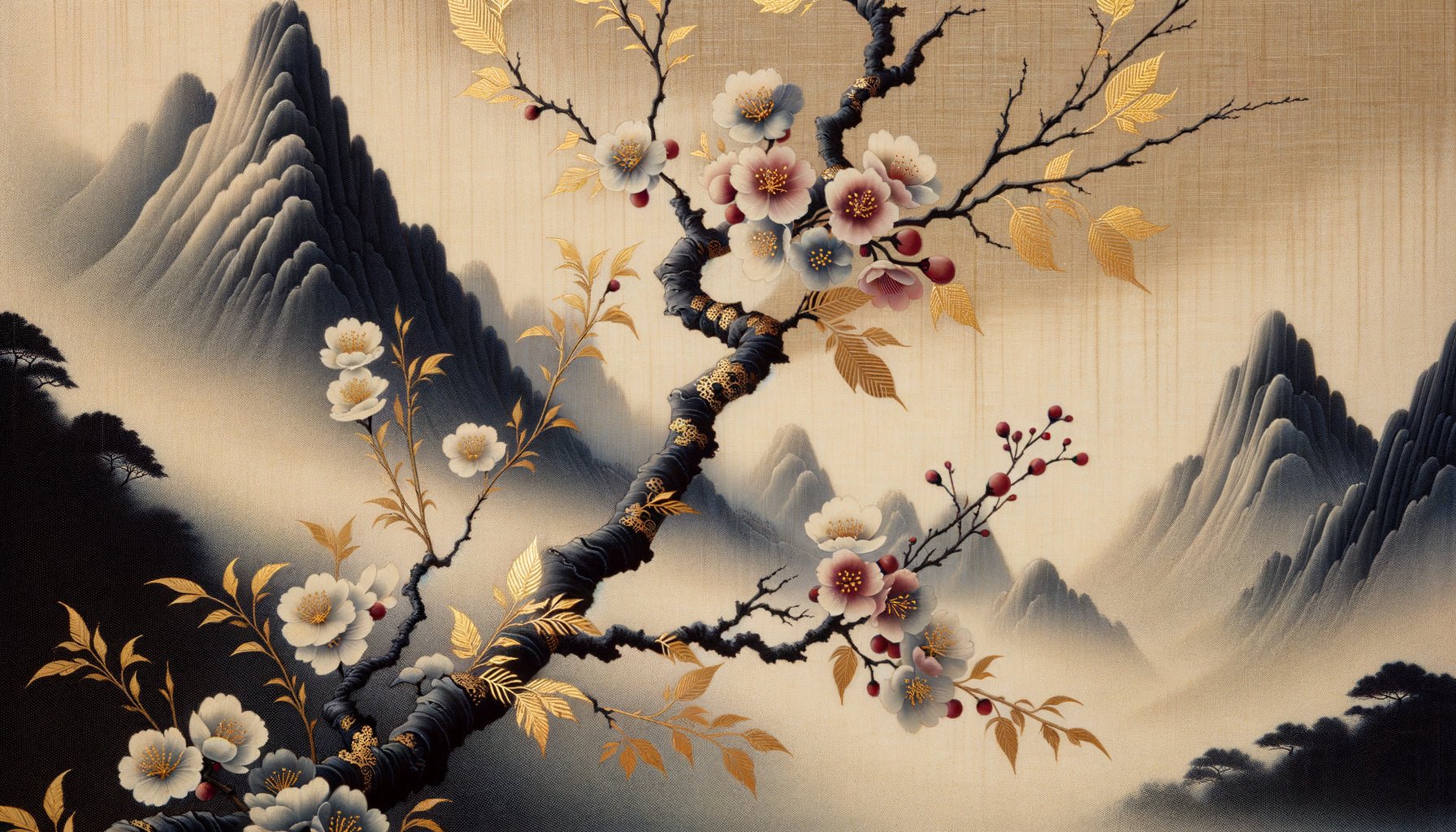
In spring, a kakemono depicting cherry blossoms is accompanied by a plum branch ikebana. In summer, a calligraphy evoking coolness dialogues with purple irises. Autumn sees crimson maples and chrysanthemums appear. Winter welcomes snow-covered pines and camellias.
This seasonal rotation is not just aesthetic: it is deeply philosophical. It reminds inhabitants that everything is impermanence (mujō), that beauty lies in change, and that our domestic environment should reflect the natural cycle rather than freeze it.
I have experimented with this approach in my own interior, with a dedicated wall that I recompose each new moon. The effect is surprising: I rediscover my space instead of crossing it on autopilot. My Asian paintings regain their emotional power because they are no longer condemned to the invisibility of permanence.
The Emotional Calendar of the Tokonoma
Japanese tea masters have developed a precise seasonal vocabulary to guide the composition of the tokonoma. In January, symbols of renewal and luck (pines, bamboos, orchids) are favored. In May, themes of vital growth dominate with wisteria and peonies. August calls for evocations of freshness – streams, dragonflies, light foliage. November celebrates the melancholy beauty with falling leaves and crows.
This discipline transforms decoration into a contemplative practice. Choosing the work of the month becomes an act of mindfulness that reconnects you to the passage of time.

Discover this inspiring work
Adapting the Spirit of the Tokonoma in Your Western Interior
You obviously don't need to own traditional Japanese architecture to adopt the philosophy of the tokonoma. What matters is creating a space dedicated to seasonal contemplation – a wall, a shelf, a console where you will orchestrate your artistic rotations.
Start by identifying the focal point of your main room: that wall you see when entering, that angle your gaze naturally seeks. Reserve it exclusively for your changing composition, free it from permanent clutter. Simplicity is essential: an overloaded tokonoma loses its meditative power.
Next, create a rotating collection of works corresponding to the four seasons. You don't need twelve different paintings – four compositions are enough to start. The important thing is that they clearly evoke a seasonal emotion: springtime awakening, summer vitality, autumnal melancholy, winter introspection.
The Rule of Three Elements
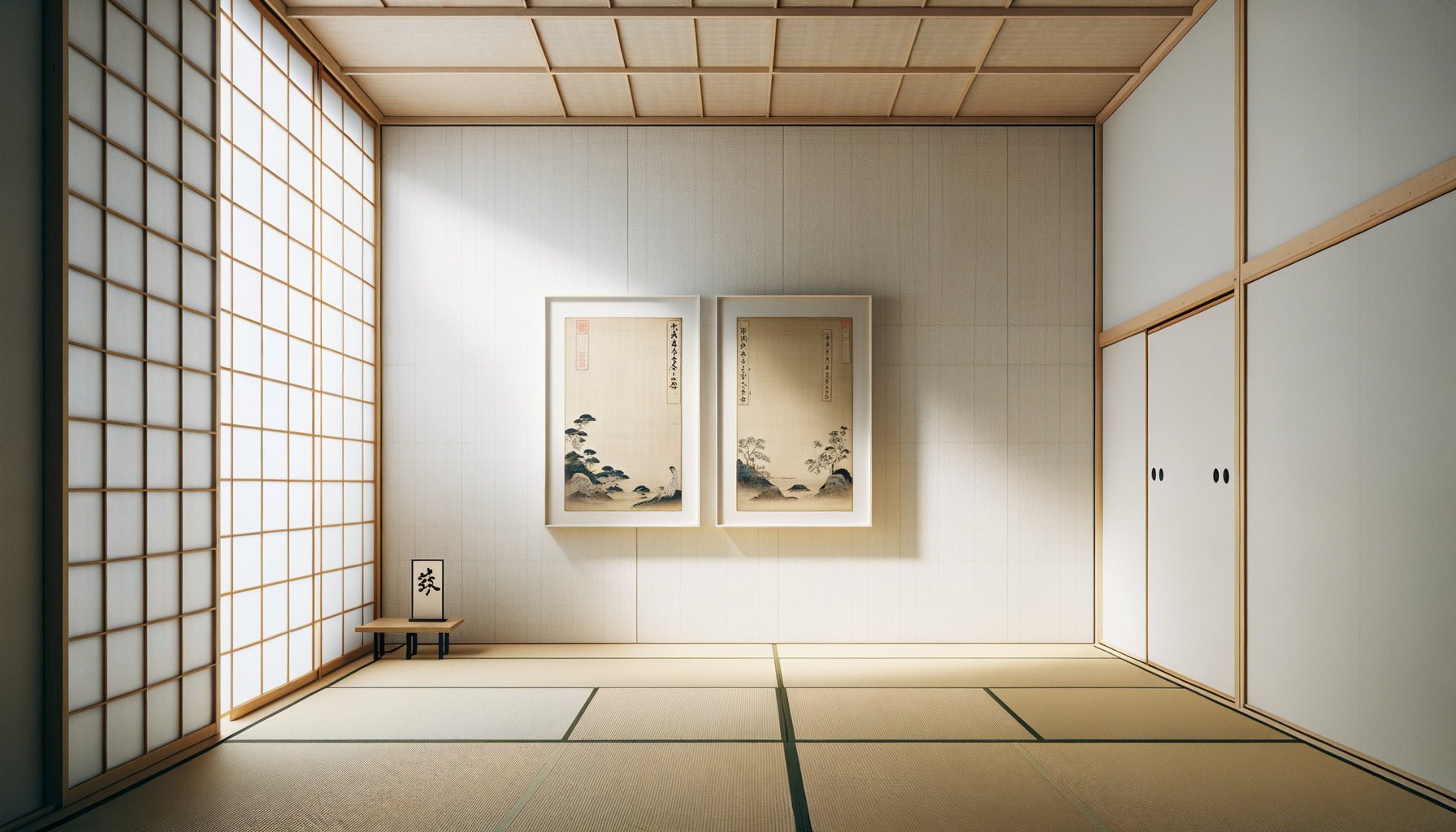
Respect the compositional trinity of the tokonoma even in your Western version. A painting as a dominant vertical element, a decorative object (vase, sculpture, art book) that dialogues with it, and possibly a natural element (branch, stone, plant) that anchors the whole. This triangulation creates a visual dynamic much richer than an isolated work.
Change your composition at each equinox or solstice – four annual moments are enough to maintain the freshness of the gaze. Some of my clients adopt a monthly rotation timed to the full moon, transforming change into a personal ritual.
Western Mistakes That Betray the Spirit of the Tokonoma
The most frequent temptation? Wanting to show everything at once. The tokonoma teaches restraint: what you don't exhibit today is not lost, it awaits its seasonal moment. This rotation creates a living collection rather than a frozen museum exhibition.
Second pitfall: neglecting seasonal coherence. A painting depicting cherry blossoms loses its emotional relevance if it remains hanging in November. The power of the tokonoma lies in this correspondence between your interior and the natural world outside. Your walls become a symbolic window on the cycle of seasons.
Third mistake: clutter. An authentic tokonoma breathes through its empty spaces (ma). The void is not a lack to be filled but an active compositional element. Resist the urge to add « just one more object » – this sobriety is precisely what allows the gaze to rest and meditate.

Discover this inspiring artwork
Why this practice transforms your relationship with decoration
After two years of seasonal rotation inspired by the tokonoma, I noticed a profound change: I no longer consume decoration, I practice it. My Asian paintings are no longer definitive purchases that end up disappearing from my consciousness – they are seasonal companions that return each year with new resonances.
This approach also solves the collector's dilemma: you can own more works without saturating your walls. Your seasonal reserve becomes as valuable as what is on display. You develop a different intimacy with each piece, eagerly awaiting the moment to reinstall it.
Above all, this gentle discipline reconnects you to the cyclic time rather than the linear time of modern productivity. Four times a year, you pause to observe how your sensitivity has evolved, which works resonate differently, what dialogue you want to establish between your interior and the season that begins.
Ready to make your walls breathe in time with the seasons?
Discover our exclusive collection of Asian paintings that dialogue with the Japanese seasons: cherry blossoms in spring, summer waves, autumn maples and snowy landscapes. Create your rotating collection and rediscover the pleasure of contemplating your interior.
Your first tokonoma: where to start
There's no need to wait for perfection to begin. Choose a single wall – ideally the one you see most often – and clear it completely. Remove everything that currently clutters it. This blank page is your future contemplative alcove.
Get two contrasting paintings to start: one evoking warmth (floral motifs, warm colors, scenes of growth) and one evoking coolness (water landscapes, cool tones, minimalist compositions). You now have your summer-winter rotation. Install the one that corresponds to the current season.
Add a simple accent piece : a vase with a branch, a stone collected on a walk, a handcrafted object that resonates with the artwork. No more. Let the rest of the wall breathe.
In six months, during the next solstice, perform your first ritual rotation. Take the time to consciously take down, clean the wall, install the new composition. It's not just rearranging – it's an act that marks your attention to the natural cycle.
You have just created your Western tokonoma. This invisible alcove – because architecturally nonexistent but spiritually very real – will gradually transform your gaze on all of your interior. The tokonoma is not just a physical space: it is a discipline of attention, a gentle resistance to habit that blinds, a permanent invitation to rediscover what we thought we knew.
Your walls will never again be inert surfaces. They will breathe, change, surprise you. Exactly as the Zen masters of the 15th century wanted in their Kyoto homes.