


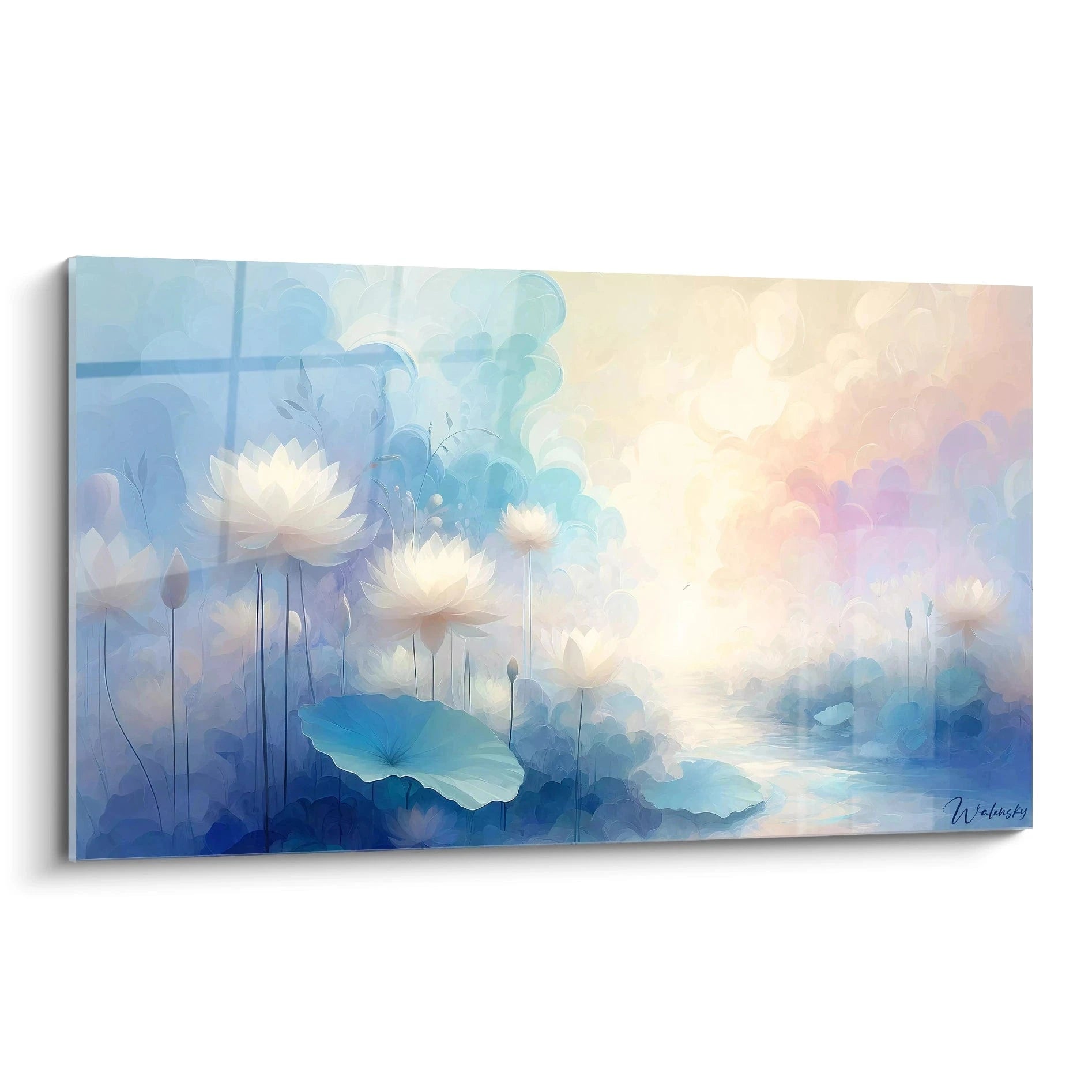

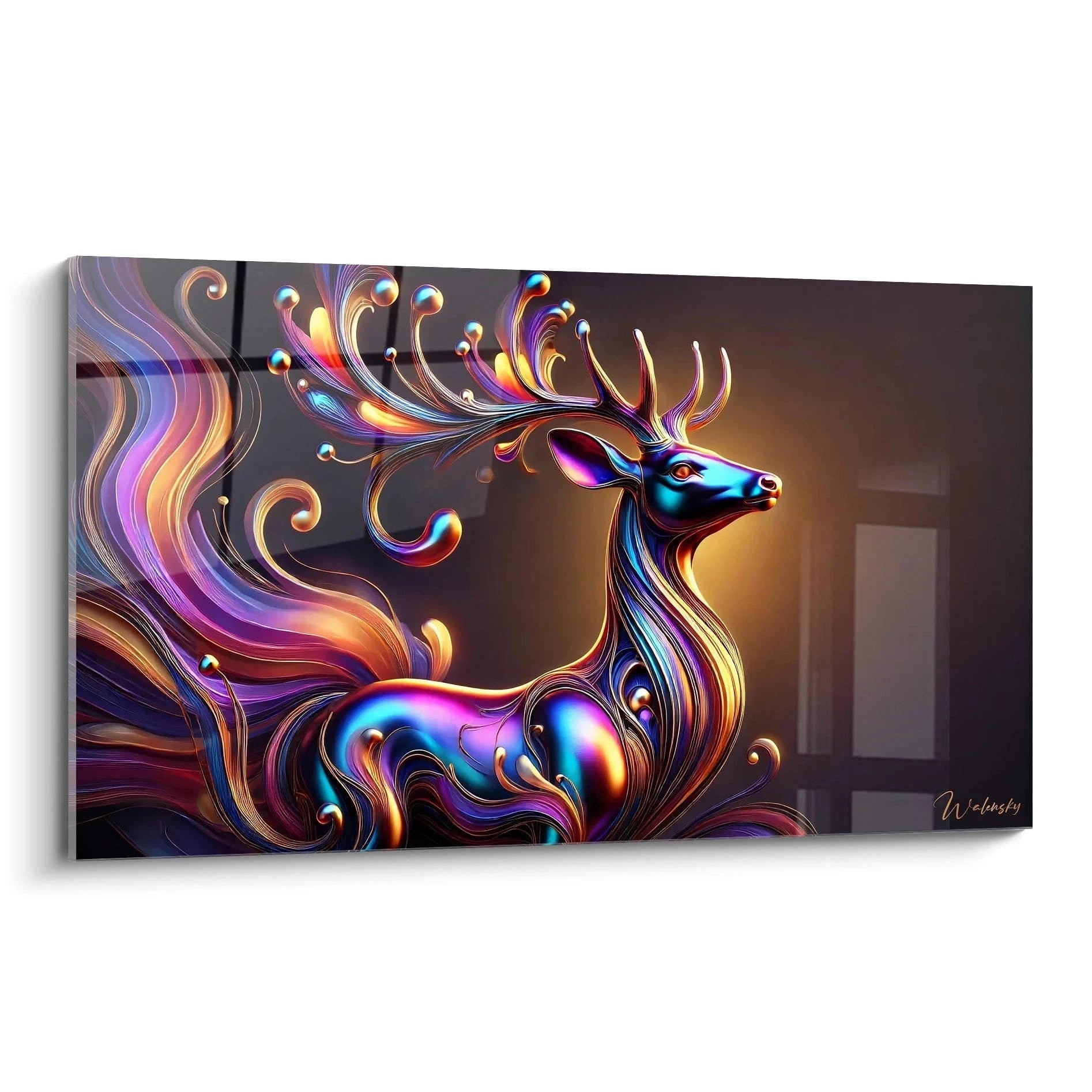
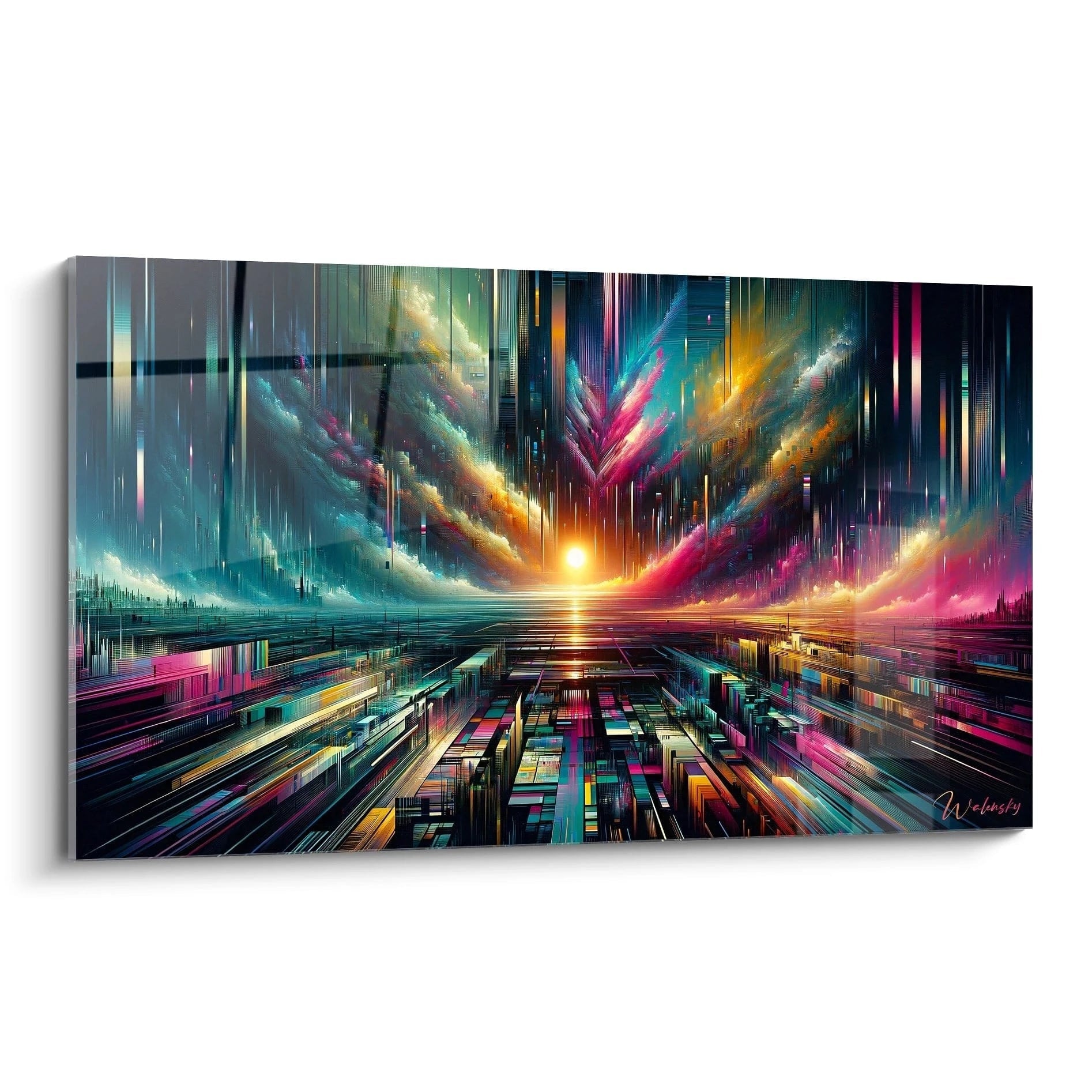
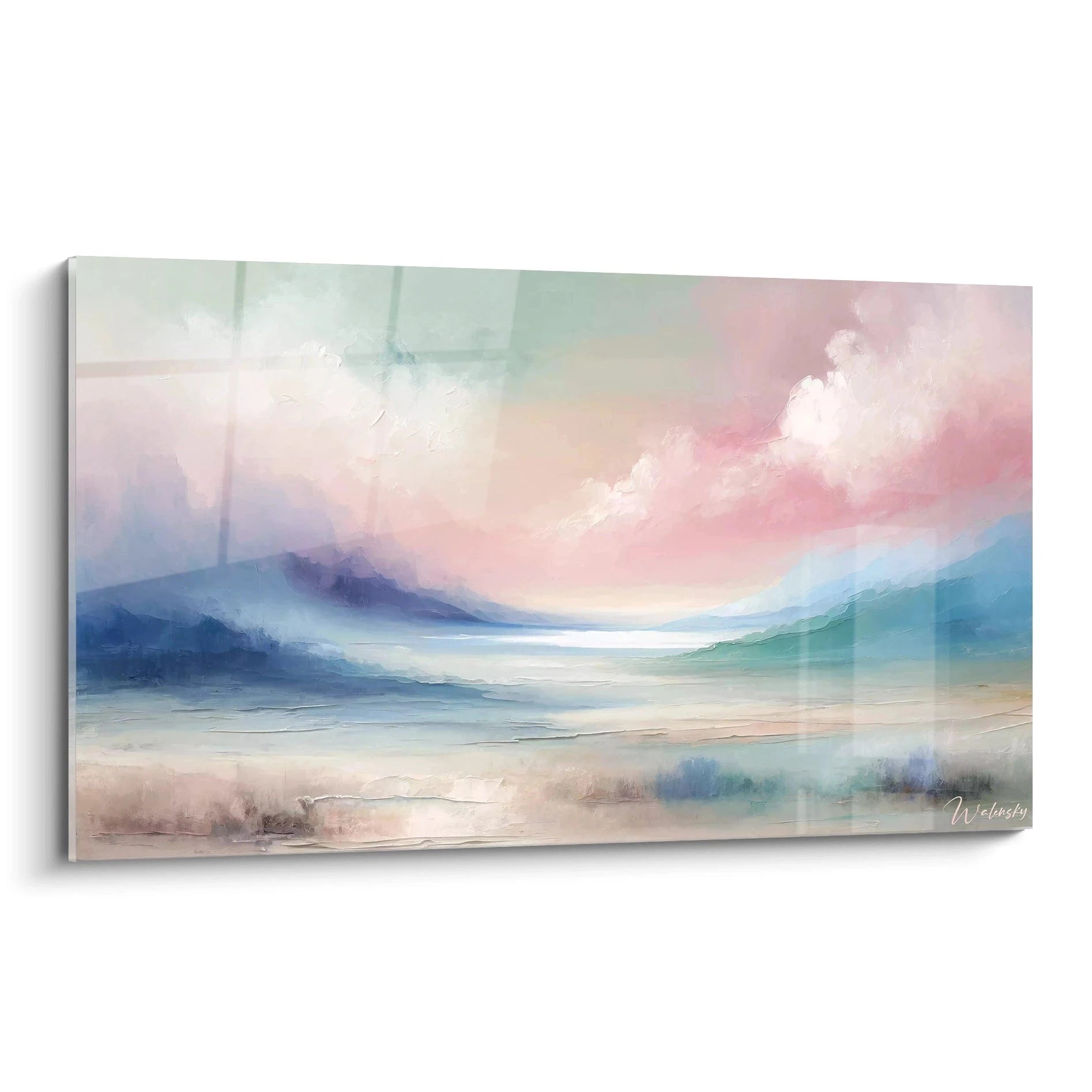

Decorative wall art for open-plan offices or coworking spaces
October 11, 2025 · 17 min read · by Walensky
The golden rule of modern workspaces: Acoustics and aesthetics no longer oppose each other, they complement each other. An acoustic panel acts as a double catalyst: it absorbs noise pollution while creating an inspiring focal point. Visible results from the first week of installation.
Understanding what's really happening in your workspace
Do you ever feel exhausted at the end of the day without having made any particular physical effort? Do you lose track of your ideas as soon as a colleague takes a call? Do you feel a constant tension even on otherwise calm days?
This isn't normal fatigue: it's your brain constantly fighting against noise pollution. In a typical open-space, your nervous system remains constantly alert, processing and filtering dozens of parasitic sounds every minute.
Imagine your brain as an orchestra conductor trying to direct a symphony while a jackhammer is operating nearby. Even when you don't realize it consciously, this cognitive overload exhausts your mental resources.
The first hidden cause: the "resonance box" effect
Contrary to what one might think, the problem isn't solely the sound level, but how sounds bounce and multiply in space. Every hard surface (walls, ceilings, glass partitions) acts as an acoustic mirror.
It's exactly like speaking in a cathedral: even a whisper becomes audible 20 meters away. In your open-space, a phone conversation multiplies and reaches all workstations in the form of a distorted echo.
This permanent reverberation creates an insidious auditory fatigue that impacts your ability to concentrate, your mood, and even your relationship with your colleagues. You begin to perceive every noise as an aggression.
🔍 Quick test: Clap your hands once in your office. If you hear the echo linger for more than a second, your space suffers from reverberation that requires acoustic treatment.
The second little-known cause: visual monotony
The impact of white walls and uniform spaces on our psyche is underestimated. Our brain needs visual landmarks and aesthetic stimulation to maintain an optimal level of alertness.
It's like driving on a straight highway for hours: the lack of visual variety causes a form of negative hypnosis that decreases our cognitive abilities and motivation.
In a visually poor environment, you subconsciously feel a lack of inspiration which translates to a decrease in creativity, difficulty taking initiative, and a general feeling of professional gloominess.
The trigger factor: the accumulation of micro-stresses
The real issue lies in the accumulation of dozens of daily sensory micro-aggressions: the sound of the coffee machine, peripheral conversations, notifications, phones, footsteps in the hallways...
Each disruptive stimulus forces your brain to interrupt its current task to evaluate whether it's important information. These micro-interruptions, even unconscious ones, fragment your attention and deplete your mental energy.
The cumulative effect is similar to that of a dripping faucet at night: each drop is insignificant, but the whole prevents you from achieving deep sleep which your brain needs to be performant.
🎯 3 acoustic warning signs to watch out for:
- You instinctively turn up the volume of your music: Your brain tries to mask background noise by creating a personal sound wall
- You feel tension in your shoulders at the end of the day: This is the physical manifestation of chronic acoustic stress which contracts your muscles
- You avoid certain areas of the open-space: Your instinct guides you towards acoustically more comfortable zones, revealing problem areas
The trigger element: sound absorption quality
The difference between a energizing and exhausting workspace lies in the ability of surfaces to absorb rather than reflect sounds. A well-positioned acoustic artwork acts as a wellbeing catalyst: it breaks up echoes, visually delimits space and creates zones of psychological comfort. You can identify problem areas by observing where conversations naturally concentrate: these are points where acoustics amplify voices.
The 60% absorbent surfaces rule: For optimal acoustic comfort, 60% of visible wall surfaces should absorb sounds rather than reflect them. Check by touching your walls: if they are cold and smooth, they reflect sound.
| ❌ Common misconception | ✅ Reality | 💡 Simple explanation | 🎯 Immediate benefit |
|---|---|---|---|
| Bigger is better | Acoustic intimacy trumps space | Your brain prefers sound cocoons | 3x more efficient concentration |
| It requires complex technical solutions | Decorative art can be functional | Noble materials naturally absorb | Aesthetics + acoustics in a single investment |
| White walls create an impression of space | Colorful focal points structure space better | The eye needs landmarks to assess distances | Feeling of organized and mastered space |
| You need total silence to work | A controlled background sound improves concentration | The brain hates complete silence (primitive stress) | Natural and soothing auditory comfort |

The progressive method for transforming your space in 3 steps
Don't panic! Transforming the acoustics and aesthetics of your workspace doesn't require a large budget or complicated work. Like a gardener who prepares the ground before planting, we will proceed in successive layers to create a harmonious environment. At each step, you will feel a noticeable improvement in comfort, until you obtain a workspace that makes you want to settle in every morning.
📋 Overview of the transformation : Step 1 - Identify critical areas and install the first strategic artwork (immediate impact), Step 2 - Create acoustic balance points (overall harmony), Step 3 - Refine the atmosphere with the details that make the difference (inspiring space). Each phase brings a higher level of comfort.
Step 1: Laying the Acoustic Foundations
Starting by identifying and treating the most problematic point will allow you to immediately see the effectiveness of this approach. It's like removing a pebble from your shoe: a small gesture that radically changes your walking comfort. Once this first artwork is installed, you will feel an immediate acoustic relief which will motivate you for the rest of the project.
Choosing Your First Acoustic Artwork
- Optimal size to start with: Opt for a minimum format of 80x60cm, because sufficient surface area is needed to effectively absorb mid-range frequencies (human voice). Avoid small decorative formats that are beautiful but acoustically ineffective. The impact on reverberation will be visible from installation.
- High-quality absorbent material: Look for canvases mounted on acoustic backing (foam or natural fiber), which combine artistic aesthetics and technical performance. The principle: the thicker and more porous the material, the better it absorbs. You'll recognize the quality by touch (soft texture) and weight (heavier than classic canvases).
- Strategic placement: Position it facing the most frequent area of passage or conversation. It will act as an "acoustic shield" that intercepts sounds before they spread throughout the space. The effect will be immediately perceptible on the overall sound ambiance.
Now, let's move on to the actual installation
Setting up Your First Artwork
Identify the wall with maximum impact: Stand at your workstation and identify where the annoying noises mainly come from. Generally, it's the wall facing the circulation area or the call reception zone. This wall receives and reflects the maximum sound waves towards your personal space.
⏱️ Time: 5 minutes | ✅ Successful when: You can precisely point to the area that most amplifies voices | ⚠️ Attention: Don't choose the most beautiful wall, but the most acoustically strategic
Mount at ear level: Install the center of the artwork between 1m40 and 1m60 from the floor, as this is the height where human conversations primarily propagate. This position optimizes the interception of vocal frequencies before they bounce back to your concentration area.
⏱️ Time: 15 minutes | ✅ Successful when: The artwork is visible and accessible without effort from your seated position | ⚠️ Attention: Too high or too low, it loses 50% of its acoustic efficiency
Test the impact immediately: Ask a colleague to speak at a normal volume from the usual nuisance area, first with the artwork, then temporarily covering it with cardboard. The difference in reverberation should be clearly perceptible from your workstation.
⏱️ Time: 3 minutes | ✅ Successful when: You distinctly hear less echo with the artwork | ⚠️ Attention: If no difference, reposition slightly until you find the optimal angle
✨ Validation of step 1: After 48 hours of use, you should notice a decrease in involuntary interruptions and an ability to stay focused longer on your tasks. If you still feel auditory fatigue, that's normal: a single artwork is not enough, but it initiates the transformation. Congratulations, you have laid the first stone!

Our favourite
Trace Artwork in Gold and Jade - Abstract Painting Edition
233,90€
Discover this artworkOUR RECOMMENDED PRODUCTS
Step 2: Create overall acoustic balance
Now that you have tasted the comfort of the first artwork, it's time to harmonize your entire space. This step is like tuning a piano: we will balance the different zones to create an acoustic coherence throughout the open-space. The synergy effect between multiple absorption points will multiply the benefits of the first artwork.
Plan acoustic distribution
- Mapping sound flows: Observe for a full day the trajectories of disturbing sounds: corridors, printer areas, informal discussion spaces. Each noise source has its area of influence that must be treated specifically. Complementary artworks will intercept these flows before they reach workstations.
- Complementary format and style: Vary dimensions (50x70cm, 60x90cm) to treat different frequencies, while creating a visually harmonious ensemble. Think collection rather than accumulation: colors and styles must dialogue with each other. This controlled diversity enriches the aesthetics while optimizing acoustics.
- Optimal distance between artworks: Maintain a spacing of 2 to 3 meters between each artwork to avoid dead acoustic zones. They should create a network of absorption rather than a punctual concentration. The goal is uniform coverage of the workspace.
Installing the harmonious set
Create acoustic triptychs: Group 2 or 3 artworks on the main walls to create more powerful "absorption islands." This concentration localizes the anti-reverberation effect while visually structuring the space. Alternate heights by 10-15cm to energize the whole.
⏱️ Time: 30 minutes per group | ✅ Successful when: The set seems naturally balanced to the eye | ⚠️ Attention: Avoid the "art gallery" effect by letting compositions breathe
Treat reflection angles: Place artworks in corners or on walls perpendicular to the main sources of noise. These strategic positions break multiple echoes that amplify disturbances. Acoustics work like light: you need to break reflections.
⏱️ Time: 20 minutes per artwork | ✅ Successful when: Distant conversations become a pleasant background murmur | ⚠️ Attention: A poorly oriented artwork can concentrate sounds instead of absorbing them
🎵 Validation of step 2: The general sound ambiance should now resemble that of a modern library: perceptible human presence but not intrusive. You can hold a phone conversation without raising your voice. If areas remain problematic, adjust the position rather than adding artworks.
Step 3: Enhance aesthetics and refine acoustics
You now master the fundamentals of decorative acoustics. This final step will transform your workspace into a true professional cocoon. We will play with the details that make the difference: artwork lighting, strategic color choices, and small acoustic touches to achieve excellence. The final result? A space you'll be proud of and that will positively impress visitors and collaborators.
The finishes that change everything
- Indirect lighting of artworks: Add discreet LED spotlights to enhance your works in the evening and create a warm atmosphere after 5pm. This soft light reduces eye fatigue from screens while maintaining acoustic efficiency. Choose a warm white (3000K) lighting to promote relaxation.
- Strategic color coordination: Harmonize the dominant colors of your artworks with the visual identity of your company or your favorite personal palette. This subconscious coherence reinforces the feeling of belonging and well-being in the space. Earthy tones soothe, blues stimulate concentration.
- Complementary absorbing elements: Subtly integrate other absorbent supports (plants, natural material cushions, textile screen) to perfect the acoustic balance without visually overloading. These details contribute to the desired cocoon atmosphere.
Finalizing your exceptional space
Create visual privacy zones: Use your most imposing artworks to subtly delineate your personal space without partitioning. This psychological appropriation of space improves concentration and well-being. You create your professional "territory" in the open-space.
⏱️ Time: 15 minutes of reflection + adjustments | ✅ Success when: You feel a sense of "home" at your workstation | ⚠️ Attention: Privacy should not create social isolation
Fine-tune acoustics: Make micro-angle and position adjustments based on your actual usage. Some artworks can be slightly tilted forward to better capture rising sounds. These technical details maximize effectiveness without visual impact.
⏱️ Time: 10 minutes per artwork | ✅ Success when: You can whisper on the phone without disturbing anyone | ⚠️ Attention: Modifications must remain imperceptible aesthetically
🌟 Final validation: Your workspace should now inspire a feeling of pride and serenity. Visitors spontaneously notice the soothing atmosphere without being able to pinpoint exactly why. This is a sign of successful integration: discreet effectiveness and natural elegance.
The optimal progression rule: Wait 2-3 weeks between each step so that your brain gets used to the improvements and guides you towards the necessary adjustments. Your feeling after complete adaptation is the best indicator for what comes next. Patience and observation are better than haste.
You now have the keys to create an exceptional work environment. But some expert subtleties can multiply the effectiveness of your installation and avoid costly mistakes that even professionals sometimes make.
🎯 Specialist acoustic tip: Always install your artworks after 4 p.m., when the workspace is in normal activity. The sound nuisances of the morning (relative calm) do not reflect the acoustic reality of the afternoon (peak activity). This timing allows you to adjust directly to the correct sound level and avoid subsequent repositioning.
Frequent question from our clients
"Will my colleagues find it strange that I install artworks in a shared space?"
It’s a very natural concern! In reality, 99% of reactions are positive as everyone benefits from the acoustic improvement. Colleagues first notice that the atmosphere is more pleasant, and only then the artworks. Start with a single quality artwork: the effect will be obvious enough for your colleagues to ask you for advice on how to do the same. You’ll even become the “office well-being” reference person for your team!
💡 Diplomatic tip: Present your approach as a "workplace ambiance improvement test" rather than a personal initiative. Even propose to evaluate the impact as a team after two weeks. This collaborative approach transforms your initiative into a team project.
— Our selection


Costly mistakes to absolutely avoid
After supporting hundreds of professionals in their acoustic improvement projects, we have identified recurring pitfalls that ruin the results. These errors are frustrating because they are easily avoidable with the right information. Here’s how to anticipate them:
- 🚫 Prioritizing aesthetics over acoustic function: It's tempting to choose an artwork solely for its beauty, ignoring its support and thickness. Result: a decorative object with no acoustic impact that leaves you with the initial problem. Always check that the support is specifically designed for sound absorption. This is mistake #1 for beginners, very understandable but easily avoidable. 🚫 Installing too many small scattered artworks: The “sprinkling” effect gives the illusion of acting without creating a sufficiently powerful absorption zone. It’s better to have 2 large well-placed artworks than 6 scattered small ones. Acoustics require critical mass to be effective. If you like small formats, group them in sets of 3 or more. 🚫 Neglecting installation height: Placing artworks too high (above 1m80) or too low (below 1m20) drastically reduces their effectiveness as they no longer intercept human conversations. The optimal zone is between 1m40 and 1m70 from the floor. It’s mathematical: sound waves travel at mouth height. 🚫 Forgetting the angle of incidence of sound: An artwork facing a direct source of noise (printer, passage) will be less effective than slightly offset to capture reflections. Think about the trajectory of sounds rather than face-to-face. This technical subtlety makes the difference between an amateur and a connoisseur. 🚫 Underestimating the importance of fixing quality: Cheap or unsuitable fixings create parasitic vibrations that partially cancel out the acoustic effect. Invest in silent and stable fixing systems. An artwork that moves slightly or vibrates ruins all the absorption work.
🎯 Quick verification checklist: Are your artworks at eye level when seated? Do they cover at least 15% of the visible wall surface? Do you hear a noticeable difference when you temporarily mask them? Have your colleagues spontaneously noticed the improvement? If one answer is no, adjust before continuing.
— You may also like


Your most frequently asked questions about acoustic paintings
The acoustic impact is immediate upon installation, but your brain gradually adapts to the new environment. Allow 48-72h to fully feel the reduction in auditory fatigue. To optimize: install at the end of the week to enjoy the contrast from the following Monday. Estimated budget: €200-€400 to effectively transform an individual workstation.
Choose 2-3 dominant colors in harmony with your graphic chart, then opt for abstract or geometric works that respect these shades. Contemporary styles adapt better to corporate codes than figurative works. Pro tip: blue/green tones soothe and promote concentration, perfect for open spaces.
Allow €800-€1500 for complete treatment depending on the chosen quality. Prioritize 3-4 large paintings rather than 8-10 small formats for a better price/effectiveness ratio. Possibility to spread the investment over 3-6 months by starting with the most critical areas. Measurable ROI: increase in productivity of 15-25% according to studies.
Absolutely! Specialized dry wall fixings perfectly support the weight of acoustic paintings (3-8kg generally). Use Molly anchors or reinforced drywall fixings. Avoid nails or simple screws that crack. Installation remains accessible to any amateur handyman with the right tools.
Very simple maintenance: monthly dusting with a low-power vacuum cleaner or a soft brush. Quality textile supports naturally resist stains. Avoid chemical products that degrade absorbent fibers. Lifespan: 8-12 years in normal office use. Sustainable investment and hassle-free maintenance.
Your transformation towards an inspiring workspace
In a few weeks, when you arrive at the office in the morning, you'll feel that subtle satisfaction of entering a space that reflects you. Your colleagues will notice your newfound serenity, your ability to stay focused for longer, and that aura of relaxed professionalism that people thriving in their work environment exude. This transformation goes far beyond simple decoration: it's an investment in your daily well-being and professional efficiency.
Beyond the immediate acoustic comfort, you will have developed a keen eye for space planning and an intuitive understanding of the impact of the environment on performance. These skills will serve you in all your future projects, personal as well as professional. You will naturally become the person colleagues turn to for improving living spaces.
The first step is often the most difficult because it requires stepping out of your comfort zone. But now that you understand the mechanisms, the first concrete action becomes obvious: identify your wall with maximum impact and visualize your first artwork in that location. This simple mental projection already transforms your relationship with space. Action will follow naturally!
🚀 Your new professional reality awaits you: A work environment that energizes you instead of exhausting you, that inspires your creativity and impresses with its understated elegance. This transformation is within reach today - just take the first step.
Also read: 📖 Read more articles on acoustics and artworks
</div— In the same vein


