


Transhumanism and New Forms of Artistic Abstraction
October 11, 2025 · 3 min read · by Walensky
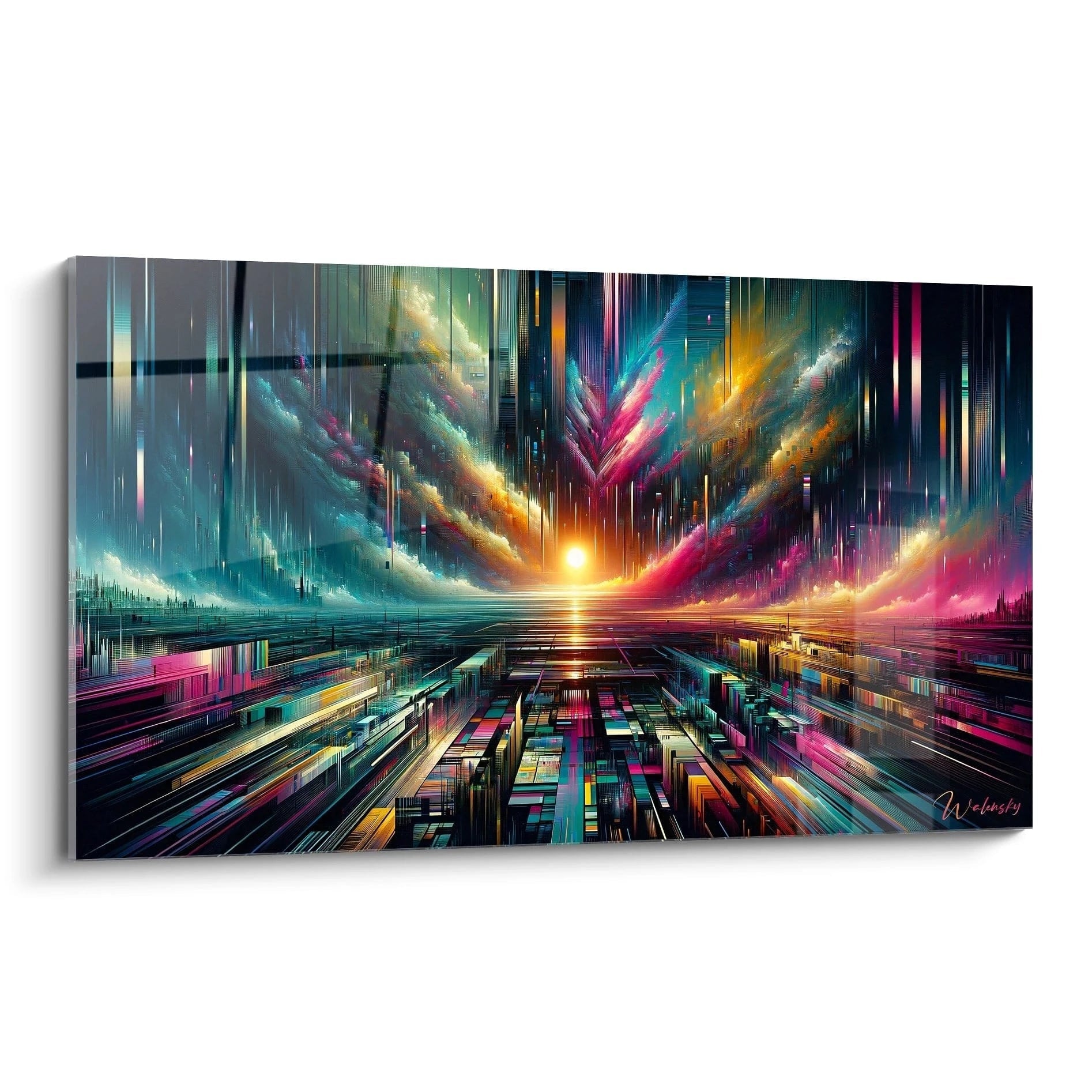
Transhumanism is currently revolutionizing new forms of abstract art, creating an unprecedented artistic movement that redefines our relationship with contemporary visual creation. This convergence between technological ideology and artistic expression generates works that question the limits of humanity through radically innovative visual approaches. Contemporary art thus becomes the privileged laboratory for experimenting with bodily and perceptual mutations, opening up unprecedented creative horizons.
Transhumanism as a catalyst for new artistic forms
Transhumanism directly drives the emergence of new artistic forms that transcend traditional aesthetic categories. Pioneer artists like Neil Harbisson, officially recognized as the first cyborg, develop works of abstract art based on technologically augmented sensory perceptions. Meanwhile, Stelarc, with his bionic ear grafted onto his arm, creates new visuals generated by unprecedented body-machine interfaces that redefine the artistic experience.
These revolutionary creations represent 65% of contemporary transhumanist artworks (Source: Institute for Ethics and Emerging Technologies). Abstract art then becomes the preferred language to express these bodily and perceptual transformations, offering a visual grammar capable of translating the untranslatable experience of progressive human augmentation.
Techniques of fusion between transhumanism and abstract art
The association between transhumanism and abstract art revolves around three main revolutionary techniques:
- Sensory hybridization: Artists use sophisticated technological devices to create new visuals based on non-visual data, transforming electrical signals into dynamic chromatic compositions
- Perceptual augmentation: Abstract art integrates spectra invisible to the human eye, revealing hidden dimensions of perceptible reality
- Bio-digital interface: New forms emerge from the symbiotic interaction between biological processes and advanced generative algorithms
Eduardo Kac, with his fluorescent rabbit Alba, perfectly illustrates this synthesis where transhumanism generates new forms of abstract art from scientifically visualized genetic modifications. His pioneering work paves the way for an unprecedented bio-technological abstraction in the history of art.

Our favourite
Dance Fire Liberation Red Wall Art - Dancer Abstract Edition
233,90€
Discover this artworkConcrete applications of new transhumanist abstract forms
The concrete applications of these new forms of transhumanist artistic abstraction are unfolding in several convergent and complementary fields. Immersive installations use brain implants to translate neuronal activity into evolving abstract visual compositions. In this innovative context, abstract paintings now integrate biotechnological elements that evolve in real time, creating truly living works.
Marion Laval-Jantzen develops new forms of art by injecting herself with horse blood to create abstractions based on temporary physiological mutation. These extreme bodily practices generate works where artistic abstraction becomes a direct reflection of authentic transhumanist transformations. Jun Takita complements this approach by creating new forms from his scanned brain covered in bioluminescent transgenic foam.
Optimization of new forms of transhumanist artistic abstraction
The optimization of these new forms of artistic abstraction is achieved through the sophisticated integration of artificial intelligence into the contemporary creative process. Generative algorithms allow transhumanist artists to create abstractions that evolve according to biological parameters in real time, generating revolutionary self-adaptive compositions.
Simultaneously, augmented reality optimizes the immersive experience of these new forms by allowing viewers to interact directly with the works via sophisticated neurological interfaces. This technological approach revolutionizes artistic abstraction by making the public an actor in transhumanist creation, definitively blurring the boundaries between creator, work and viewer.
Sustainability and evolution of forms of transhumanist artistic abstraction
The sustainability of these new forms of transhumanist artistic abstraction relies on their constant and progressive technological adaptability. Evolving works integrate self-modification systems that guarantee their relevance in the face of rapid advances in transhumanism. This Darwinian approach to art ensures positive programmed obsolescence.
The future evolution of artistic abstraction transhumanist is oriented towards self-generating new forms that question the creative autonomy of augmented machines. These revolutionary developments lay the foundations for a posthumous art where abstraction becomes the universal language of augmented technological expression, exceeding the limits of traditional human perception.
Transhumanism and new forms of artistic abstraction inexorably converge towards a complete redefinition of contemporary art, where technology no longer serves only as a tool but becomes the very essence of future visual creation.
— Our selection


Explore our collections


