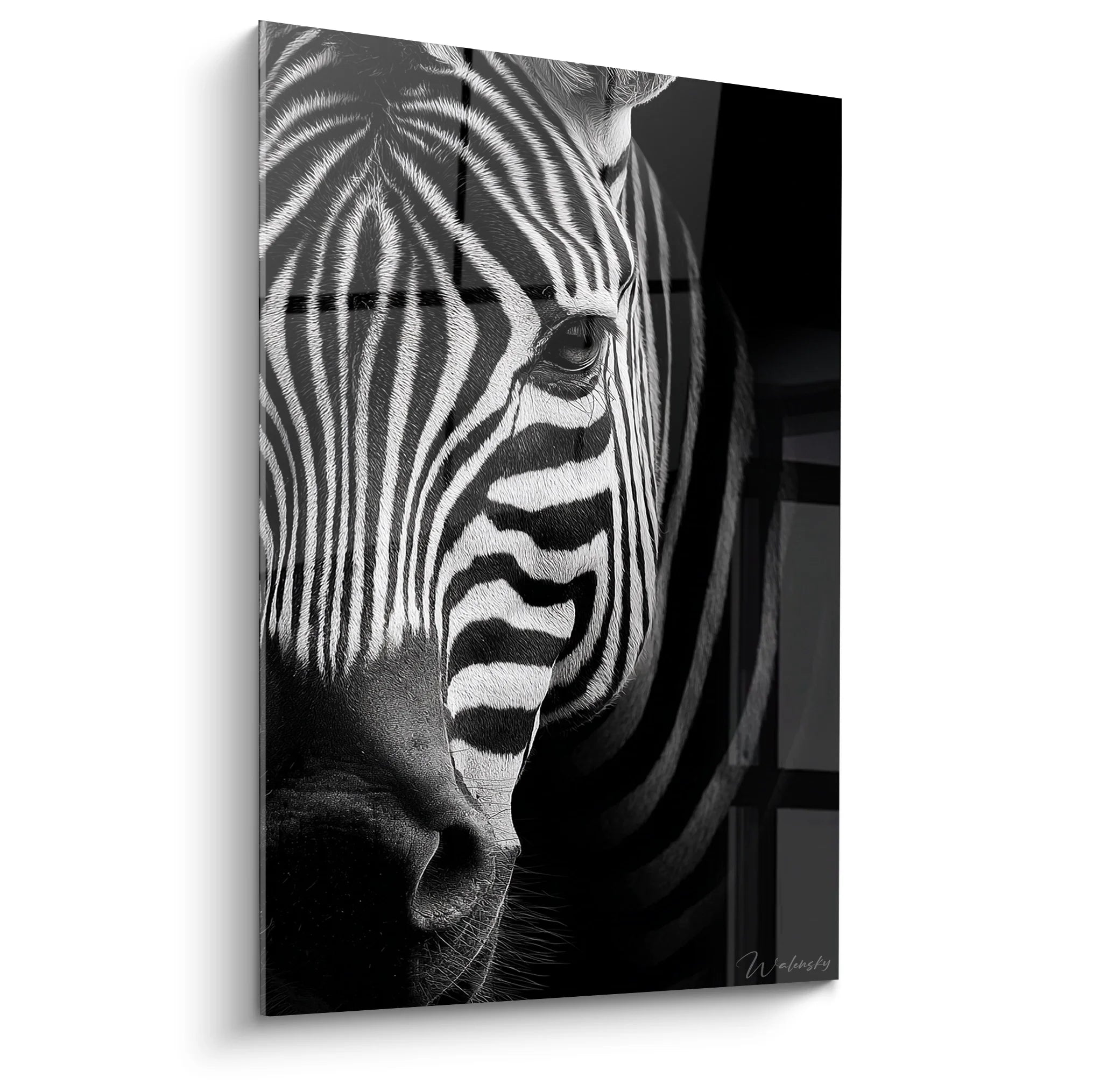
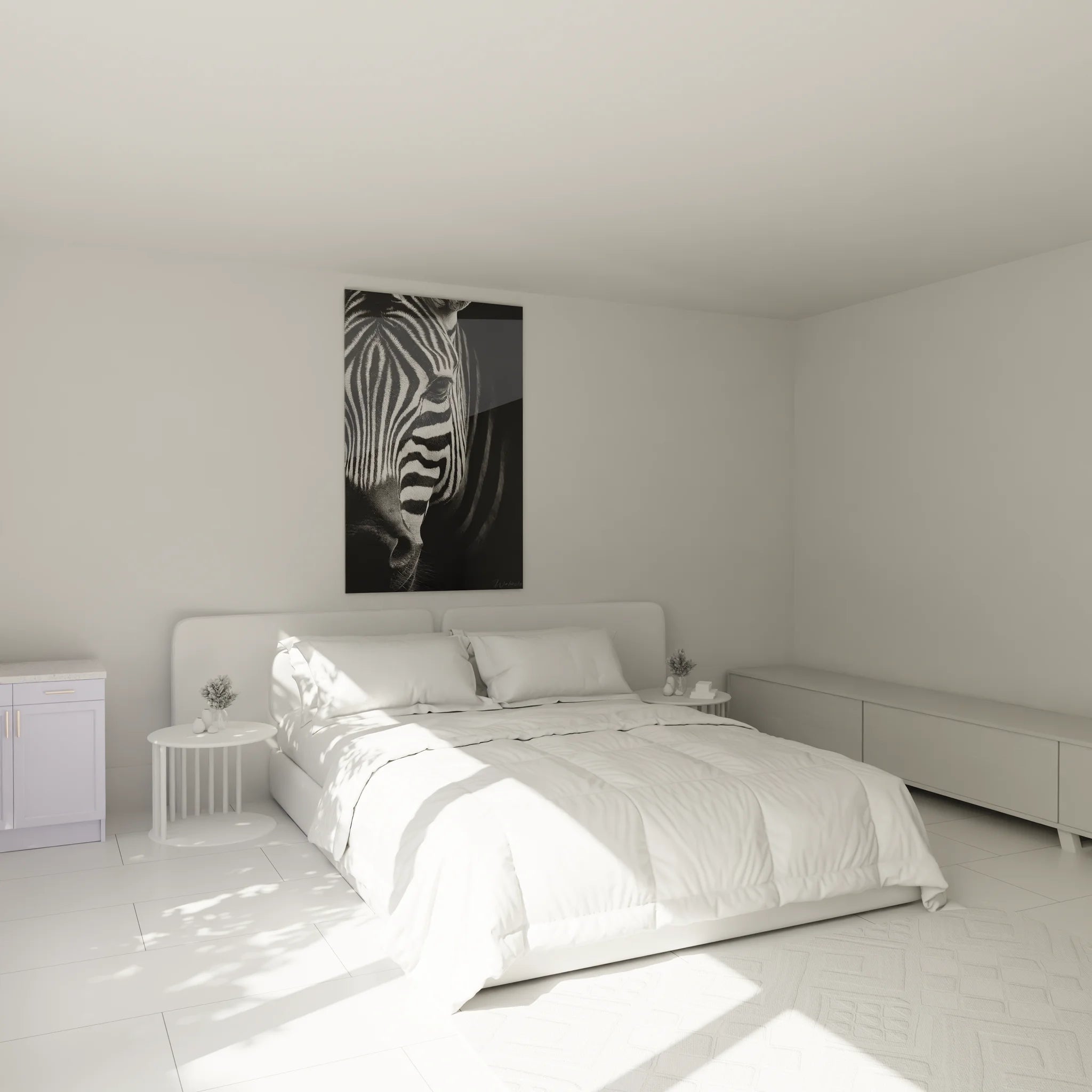
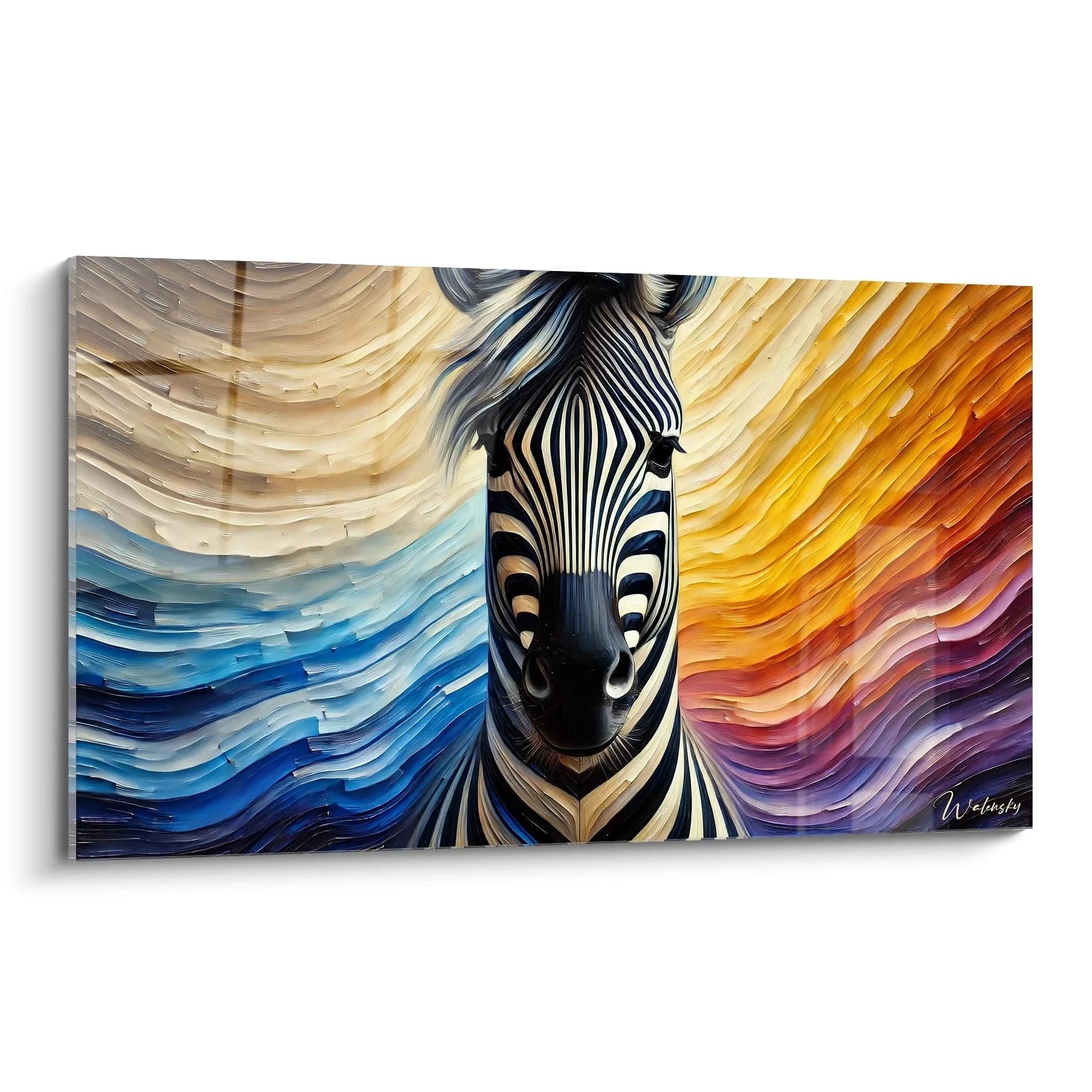
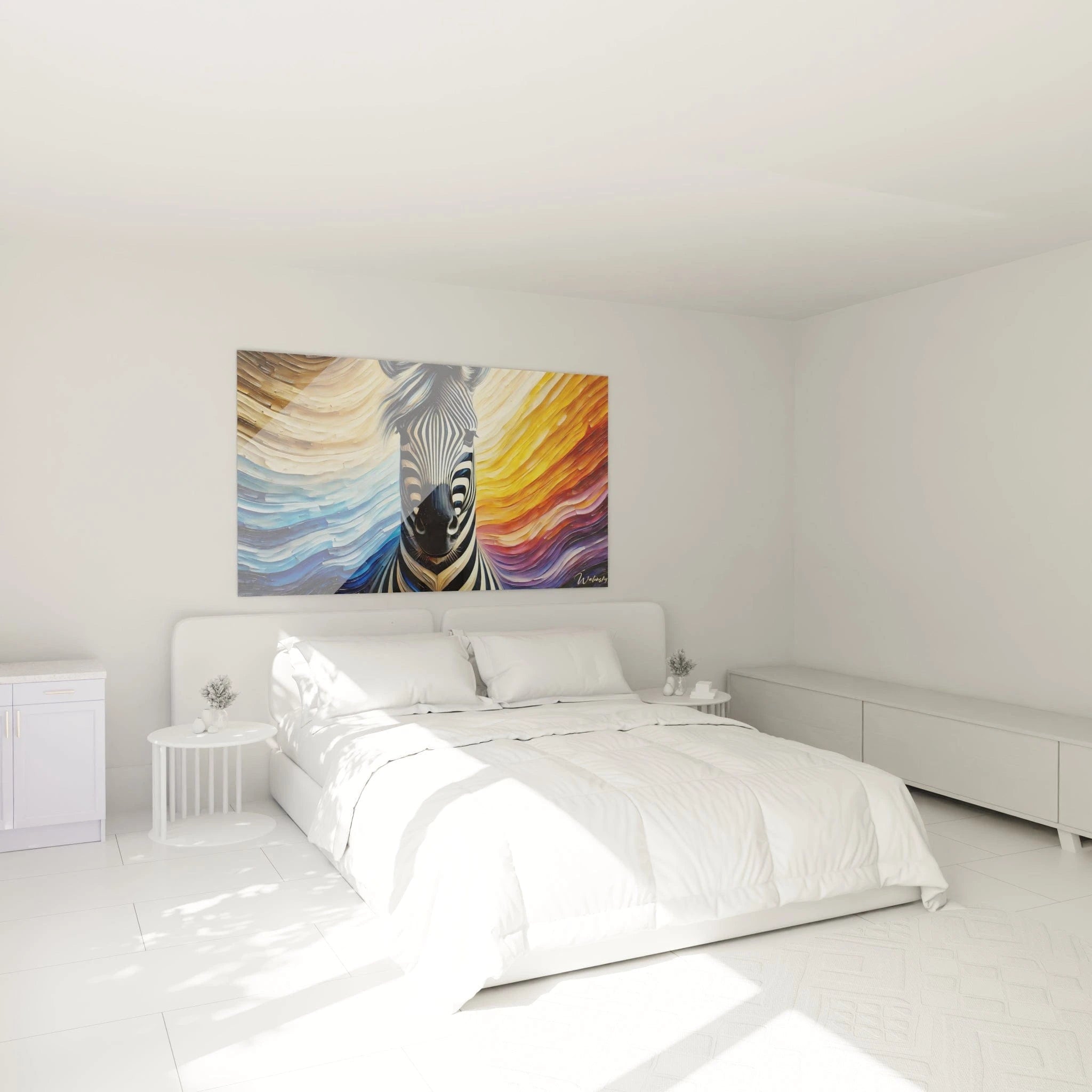
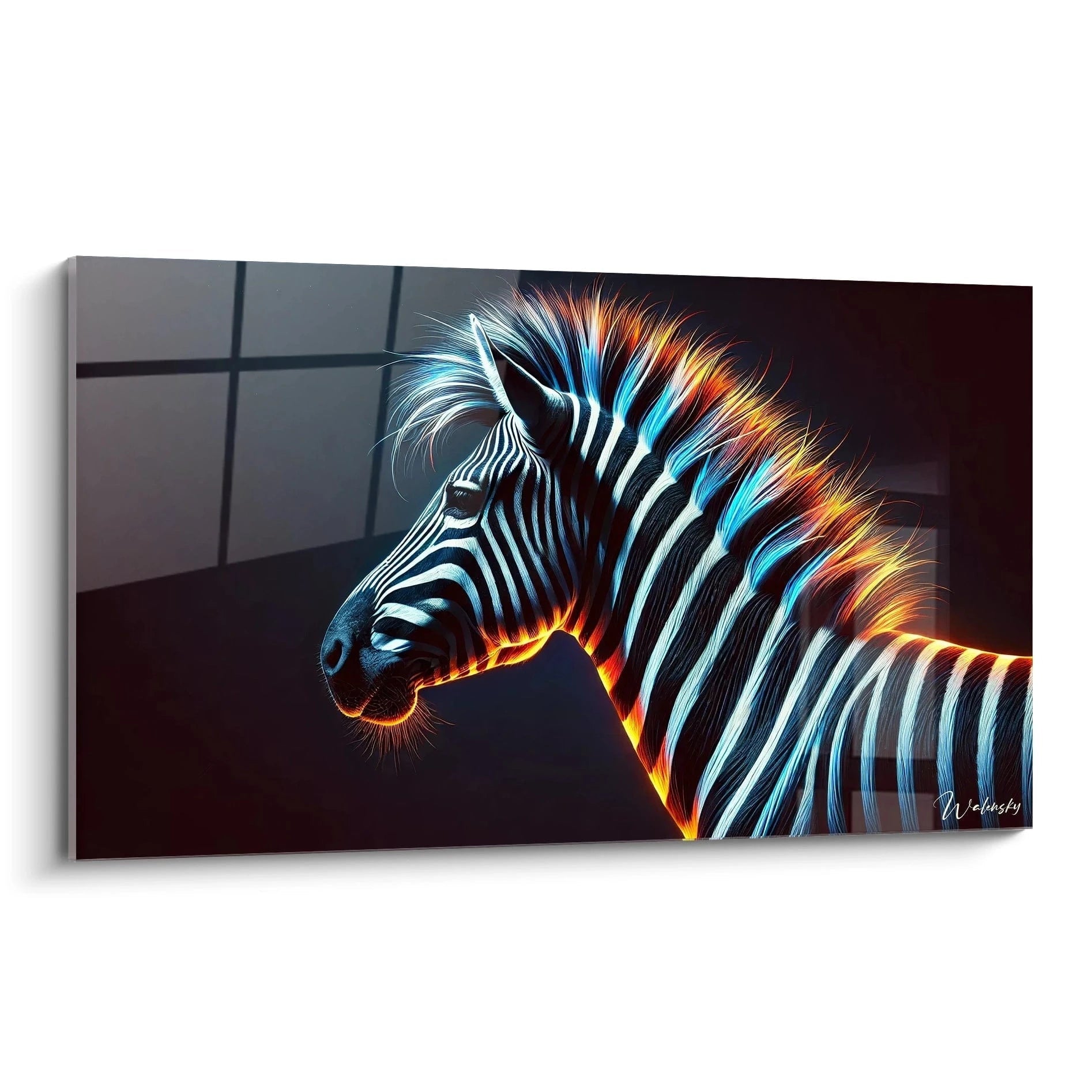
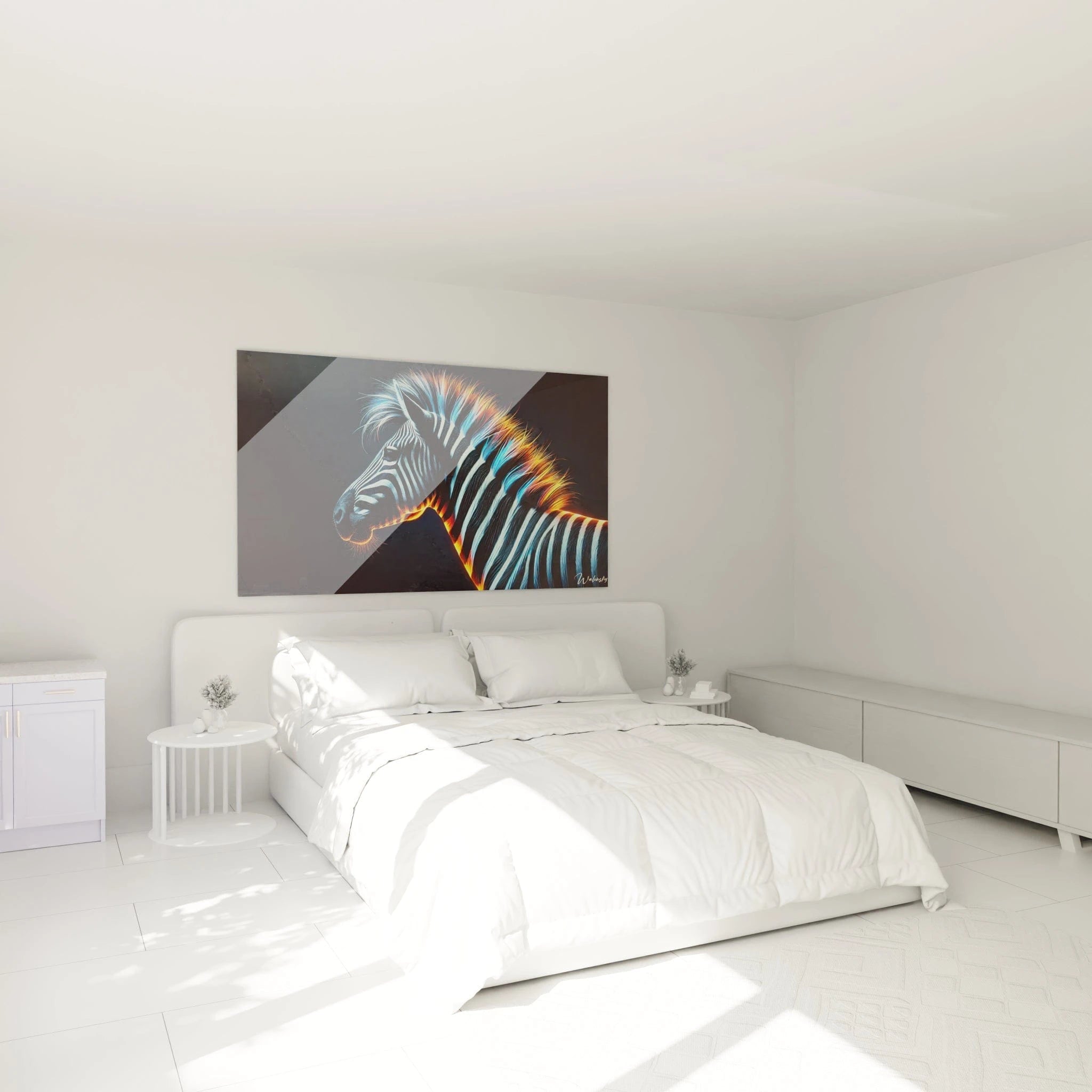
The zebra portrait wall art stands out through its vertical format that magnifies the natural elegance of the wild animal. This orientation captures the intensity of the zebra's gaze and its commanding presence in an upward composition that visually extends the height of your walls. Unlike classic horizontal formats, the vertical portrait concentrates attention on the expressive facial details, coat nuances and depth of the animal's gaze. This arrangement enables optimal integration into hallways, spaces between windows, alcoves and narrow walls where a landscape format would be disproportionate. The portrait orientation transforms the zebra into a truly majestic presence that engages the viewer at eye level, creating an immediate emotional connection in your contemporary interior décor.
The vertical orientation that enhances the zebra's majesty
The portrait format offers a unique upward dynamic that magnifies the zebra's natural stature. This vertical orientation captures the animal in its full height, from hooves to mane top, creating an imposing presence that immediately draws the eye. The vertical dimensions accentuate the elegance of body lines and the fluidity of black and white stripes that seem to defy gravity.
Why choose a vertical format for your animal wall art?
The portrait orientation of the zebra wall art creates a vertical effect that visually elevates your room's ceiling. This perception of enlarged space is particularly suited to modern apartments where every centimeter counts. The eye naturally follows the contrasting stripes from top to bottom, generating a visual movement that energizes static walls. Zebra wall art in portrait orientation integrates remarkably into circulation spaces like entrances and corridors.
The psychological impact of vertical format in décor
Environmental psychology studies demonstrate that vertical compositions generate feelings of ambition, spiritual elevation and dynamism. A zebra portrait wall art positioned in an office stimulates concentration and projects an image of professional determination. In a living room, it brings sophistication and refinement without consuming the precious horizontal space for low furniture and complementary wall compositions.
The enhancement of expressive facial details
The portrait format naturally privileges close framing on the zebra's head and bust, revealing details often overlooked: the unique texture around the nostrils, the intelligence perceptible in the gaze, the subtle variations of facial stripes that function like a fingerprint. This visual proximity creates intense emotional connection between the observer and the represented animal. Collectors particularly seek these intimate representations that transform the wall into an open window onto the African savanna, while maintaining the graphic elegance inherent to contemporary geometric zebra wall art.
The intensity of the gaze captured in portrait orientation
The vertical composition of a zebra portrait wall art allows you to center attention on the animal's facial expression, a determining element for creating a distinctive atmosphere in your interior. The tight framing on the face reveals the emotional depth of the zebra, transforming a simple animal representation into a true psychological portrait that challenges residents and visitors daily.
How does portrait format intensify the visual connection?
The vertical orientation naturally positions the zebra's eyes at human eye level when the wall art is hung according to decorative standards. This frontal arrangement establishes direct visual contact, creating the impression that the animal is actually observing your living space. Neuropsychologists confirm that we instinctively sense a living presence when an animal's gaze meets ours, even in artistic representation. A zebra portrait wall art exploits this phenomenon to animate reception spaces.
Expressive variations in portrait representations
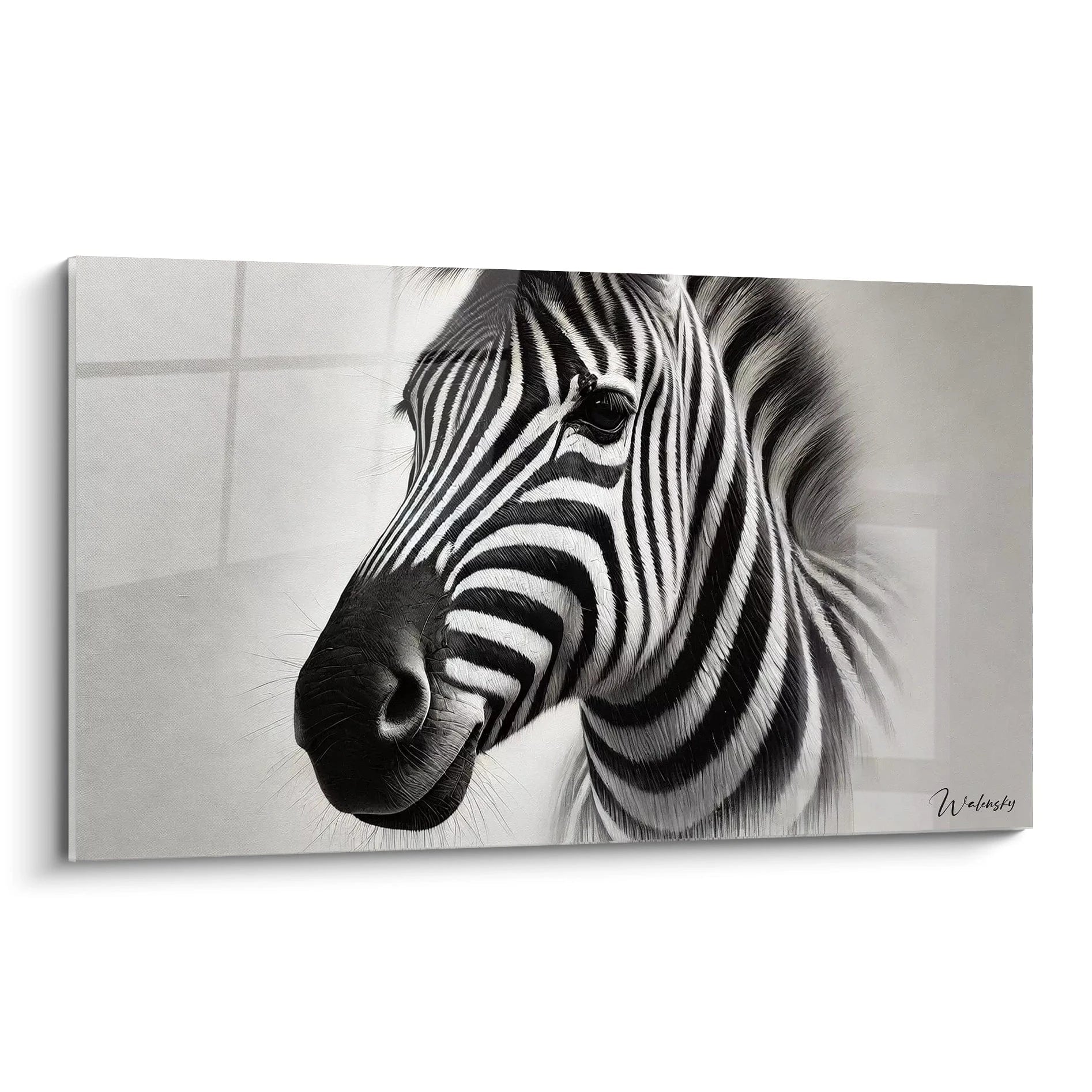
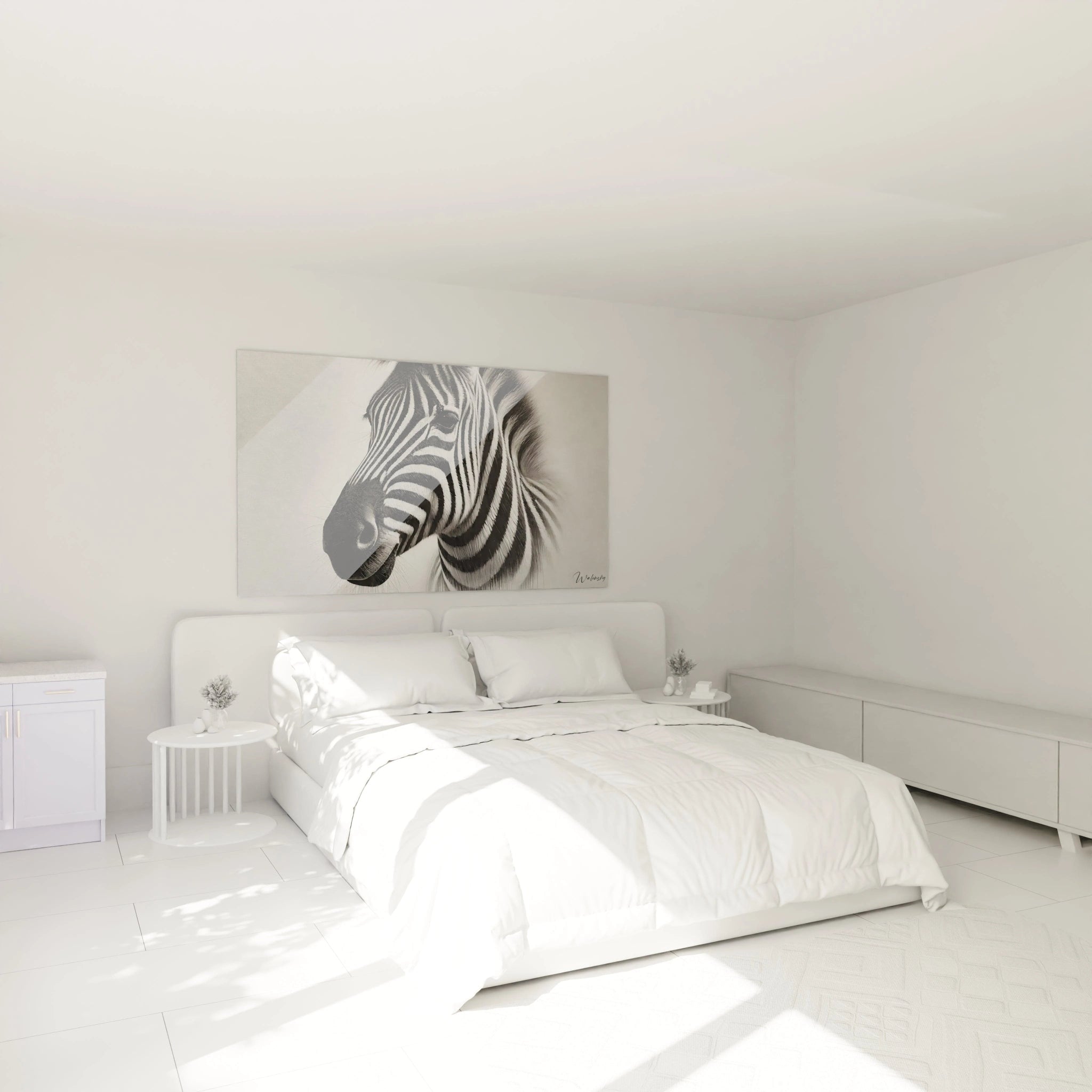
Contemporary artists explore different emotional attitudes in their creations: the zebra on alert with ears raised, the contemplative profile turned slightly to the side, or the imposing frontal gaze that asserts territoriality and presence. Each expression conveys a distinct atmosphere. The side gaze suggests mystery and discrete elegance, ideal for bedrooms and private spaces. Direct face-to-face is suited to offices and reception areas where you wish to project assurance and affirmed character.
Which gaze style to prioritize based on your room?
For a contemporary living room seeking balance, prioritize a zebra portrait wall art with three-quarter gaze that engages without dominating. In a professional space, direct visual contact strengthens your bold brand image. Collectors particularly appreciate series mixing different expressions to create visual dialogue between multiple luxury zebra wall art pieces arranged in vertical triptych.
The narrative power of monumental animal portraiture
Large vertical formats transform the zebra into a true character that inhabits the space. This narrative monumentality changes the room's perception: the wall becomes a portal to a wild universe, the zebra assumes the status of symbolic guardian of the place. Interior architects exploit this dimension to create memorable focal points in high-end residential building lobbies and boutique-hotel entrances seeking distinctive visual identity.
Portrait format to optimize restricted vertical spaces
Contemporary architecture multiplies narrow spatial configurations: wall panels between windows, circulation corridors, spaces adjacent to doors, wall niches. The zebra portrait wall art precisely addresses these dimensional constraints by exploiting verticality rather than horizontal extension. This intelligent adaptation enables introducing impactful animal décor even in the most limited square footage.
Which spaces particularly benefit from vertical format?
Hallways represent the ideal location for a zebra wall art in portrait orientation. The passage length creates natural perspective that values the succession of vertical decorative pieces, while limited width prohibits imposing horizontal formats. Apartment entrances, often neglected decoratively, instantly gain character with large-height animal portraiture that welcomes residents and guests. Spaces between two openings (windows, glass doors) offer narrow wall surfaces perfect for these upward compositions.
The art of exploiting available ceiling height
Modern interiors frequently offer generous heights (2.60 to 3 meters) that horizontal décor doesn't fully exploit. A large-format zebra portrait wall art uses this available verticality, creating harmonious proportional balance. The eye perceives the room as better visually furnished without floor clutter or wall saturation. This decorative strategy is particularly suited to minimalist spaces where each element must justify its presence through maximum impact.
How to correctly size your wall art for a narrow space?
For a standard hallway 1 meter wide, prioritize a zebra portrait wall art whose width doesn't exceed 50-60 centimeters, while exploiting a height of 120-150 centimeters. This 1:2.5 proportion maintains visual balance without crushing effect. In a wall niche, the frame width should leave 10 centimeters margin on each side to avoid confinement impression. Designers recommend measuring precisely before purchase, as monumental vertical formats create different spatial expectations than horizontal compositions.
Complementarity with existing vertical architectures
Vertical architectural elements (tall bookshelves, cabinets, doors) already create upward lines in your space. A zebra portrait wall art aligns in harmony with this vertical rhythm, reinforcing overall aesthetic coherence. This intentional repetition of verticality structurally organizes the room, guiding the eye through a fluid journey. Interior architects frequently associate these animal portraits with directional vertical lighting that further extends the elongation effect. To enrich your collection, also explore zebra stripes wall art that plays on graphic contrasts in different orientations.
FAQ: Frequent questions about zebra portrait wall art
What minimum height for impactful zebra portrait wall art?
To create true visual impact, prioritize a minimum height of 100 centimeters. Monumental formats of 150 to 180 centimeters truly transform a space's atmosphere by creating majestic presence. In hallways and entrances, this vertical dimension fully exploits available ceiling height without cluttering limited width.
Is zebra portrait wall art suitable for low ceilings?
Contrary to common belief, vertical format can optically raise a low ceiling by guiding the eye upward. The essential point is maintaining balanced proportion: for a ceiling height of 2.40 meters, limit the wall art to 120 centimeters maximum. The elongation effect works without creating crushing disproportion if you respect the thirds rule: the wall art occupies approximately one third of total wall height.
How to combine multiple zebra portrait wall artworks on the same wall?
Vertical gallery arrangement works remarkably with multiple zebra portraits presenting different expressions or framings. Space them 15 to 20 centimeters vertically to create visual dialogue while maintaining compositional unity. Alternatively, asymmetrical arrangement with two vertical formats of different heights generates contemporary dynamism appreciated in current design interiors.