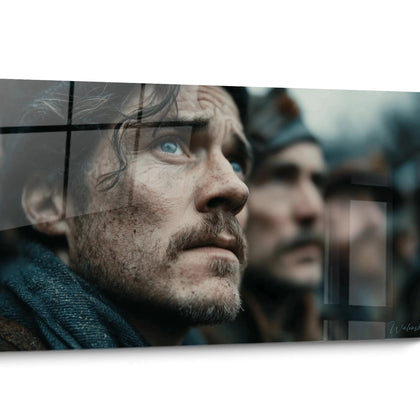
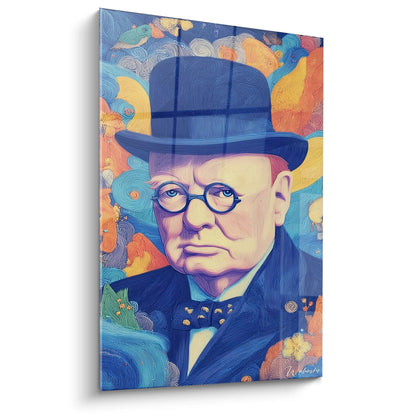
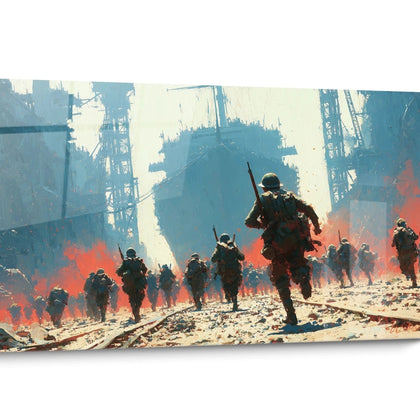
Acquiring a historical Expressionist painting represents far more than a simple decorative investment. These monumental works capture the emotional intensity of a movement that revolutionized European art in the early twentieth century. Each authentic piece conveys the psychological charge and tormented vision of artists who rejected academicism to embrace the raw expression of feeling. The generous formats currently offered allow for total immersion in these audacious chromatic universes, where expressive distortions and violent contrasts create a visual presence impossible to ignore in prestigious contemporary spaces.
The Emotional Impact of Historical Expressionist Paintings in Large Spaces
A historical Expressionist painting radically transforms the atmosphere of a space through its chromatic intensity and expressive violence. Saturated hues, often applied in brutal flat areas or nervous brushstrokes, generate palpable tension that instantly captivates the eye. This characteristic fundamentally distinguishes Expressionism from other artistic movements, notably the historical Cubist painting which privileges geometric deconstruction over emotional exaltation.
How does Expressionism influence the ambiance of a professional space?
Large Expressionist reproductions create environments charged with psychological energy particularly suited to spaces dedicated to creativity or deep professional reflection. The characteristic anatomical distortions, inherited from Kirchner or Nolde, provoke existential questioning in the observer. This introspective dimension suits perfectly architect offices, creative studios or private galleries where visual audacity stimulates innovation.
The Symbolism of Colors in German Expressionism
The Die Brücke movement systematized the use of non-naturalistic palettes to translate complex emotional states. Acidic yellows border venomous greens, while blood reds neighbor glacial blues. This chromatic violence, far from being gratuitous, materializes the anguish of modern human condition. Acquiring a monumental reproduction of German Expressionist works means accepting a visual presence that seeks neither harmony nor rest, but raw authenticity.
Viennese Expressionism and its Decorative Particularities
Egon Schiele and Oskar Kokoschka developed an Austrian variant marked by tortured eroticism and psychological portraiture. These compositions, often centered on contorted human figures, demand strategic positioning in spaces where their emotional charge can be fully appreciated. The imposing formats currently available allow restoration of every detail of the angular anatomies and sickly carnations that characterize this movement.
Major Currents of Expressionism and their Mural Representation
The history of a historical Expressionist painting revolves around several geographic centers with distinct aesthetics. Understanding these differences allows selection of a reproduction suited to the desired visual identity and architectural constraints of the destination space.
The Blue Rider and Spiritual Abstraction
Kandinsky, Marc and Macke developed an Expressionist approach tending toward lyric abstraction. Their compositions privilege organic forms and mystical chromatic harmonies, creating works visually less aggressive than those of Die Brücke. For meditative spaces, high-end waiting areas or executive offices, these reproductions bring contemplative dimension while maintaining the emotional intensity characteristic of the movement. Monumental dimensions reinforce the sensory envelopment effect sought by these artists.
Which Expressionist artists should be prioritized for maximum impact?
Ernst Ludwig Kirchner remains the reference for anguished urban scenes, where elongated silhouettes and vertiginous perspectives translate modern alienation. Emil Nolde excels in tormented landscapes and still lifes with explosive colors. Edvard Munch, Norwegian precursor, offers iconic compositions where psychological dimension reaches its apex. The choice depends on the desired emotional message: urban anxiety, primitive violence or existential anguish.
Flemish Expressionism and its Grotesque Realism
James Ensor developed a Belgian variant blending carnival masks and acerbic social critique. His teeming compositions, populated by grimacing figures, create a fascinating unease particularly suited to collectors seeking originality. Large format reproductions reveal the profusion of unsettling details that saturate these modernized baroque compositions.
Why does Expressionism still resonate today?
The contemporary relevance of the historical Expressionist painting lies in its ability to express anxiety and psychological fragmentation in universal terms. In an era dominated by collective existential crises, these century-old works speak directly to current concerns. Their mural presence constitutes an engaged aesthetic choice, affirming a refusal of sanitized decorative conventions in favor of raw emotional authenticity.
Integration Strategies for Monumental Expressionist Reproductions
Installing a historical Expressionist painting of large dimension requires thorough reflection on surrounding architecture and visual interactions. These works impose their presence and completely redefine spatial perception.
Architectural Dialogues with Expressionism
Brutalist or industrial interiors create remarkable synergy with Expressionist chromatic violence. Raw surfaces in concrete, metal or exposed brick amplify the emotional intensity of these compositions. Conversely, placing an Expressionist reproduction in a minimalist Scandinavian environment generates dramatic contrast that magnifies the formal audacity of the work. Spaces with high ceilings, typical of renovated lofts or studios, ideally accommodate these imposing formats.
How to enhance an Expressionist painting in an executive office?
Acquiring a monumental Expressionist reproduction for a prestigious professional space affirms strong, anticonformist decision-making personality. Positioned behind the main desk or on the focal wall of the meeting room, this decorative choice communicates affirmed artistic culture and preference for authenticity over convention. Visitors immediately perceive this audacity as a marker of intellectual independence.
Decorative Associations with Historical Expressionism
Mid-century furniture with refined lines effectively balances Expressionist visual complexity. Bauhaus-style lighting fixtures with functionalist geometries create relevant historical bridge between rationalism and emotivity. Absolutely avoid decorative accumulations that would dilute the impact of the main work. Expressionism demands stripped environments where its intensity can express itself without visual competition.
Patrimonial Investment and Expressionist Art Market
Professional museum-quality reproductions allow access to Expressionist aesthetics without conservation constraints and prohibitive costs of originals. Authentic works reach peaks at international auction sales, making large format reproductions a strategic alternative for benefiting from this visual power. Universal recognition of Expressionist masters guarantees timeless decorative relevance.
Is a historical Expressionist painting suitable for contemporary residential spaces?
Absolutely, provided you accept a strong visual presence that will define the identity of the space. Large living areas, private libraries or generous entry halls constitute privileged locations where these monumental reproductions can deploy their emotional charge without saturating daily environment.
What conservation should be planned for a large historical Expressionist painting?
Modern professional reproductions use UV-resistant printing processes and dimensionally stable supports. Avoiding direct sun exposure and maintaining stable humidity significantly prolongs their durability. Unlike originals requiring strict museum conditions, these reproductions adapt to standard residential and professional environments.
How to identify an authentic historical Expressionist painting in a reproduction?
Quality reproductions faithfully restore signature characteristics: visible brushstrokes, texture of pictorial material, chromatic saturation and expressive distortions. Details such as black outlines underlining contours in Rouault or unmodulated flat areas in Nolde must be perfectly restored to guarantee the original emotional impact of the Expressionist work.


 Face Painting Emotional Symphony - Christopher Columbus Edition233,90 €
 Christopher Columbus Wall Art Flames of History - Christopher Columbus Edition233,90 €
 Christopher Columbus Painting Conquistador Gaze - Christopher Columbus edition233,90 €
 Portrait Painting Fire Creator - Christopher Columbus Edition233,90 €
 Marianne Republican Spirit Wall Art - French Revolution Edition213,90 €