


Feng Shui Centre Earth Wall Art
The Feng Shui Centre Earth Wall Art embodies balance and stability at the heart of your living space. This artistic collection celebrates the Earth element according to the ancestral principles of Feng Shui, bringing grounding and serenity to your décor. Each Feng Shui Earth element wall art diffuses soothing energies through its ochre, beige and terracotta tones. Perfect for the living room or bedroom, these Centre Earth harmonizing wall art pieces transform your interior into a sanctuary of well-being and energetic harmony.
 Abstract Waves Painting Red Terracotta and Beige - Mineral Fluidity - Feng Shui Earth Center Edition242,90 €
 Abstract Whirlwind Artwork Beige and White with Fluid Movements - Earthly Harmony - Feng shui Earth Center Edition273,90 €
 Golden Ginkgo Leaf on Textured Slate Blue Background - Botanical Harmony - Feng shui Centre Earth Edition273,90 €
 Abstract Golden and Copper Waves Wall Art - Earthly Harmony - Feng shui Earth Center Edition242,90 €
 Abstract canvas with ochre and cream flame gradient and vertical textures - Earthly Harmony - Feng Shui Centre Earth Edition242,90 €
 White and Orange Textured Oceanic Wave Painting - Maritime Energy - Feng shui Centre Terre Edition242,90 €
 White Wave on Copper Orange Background Wall Art - Oceanic Movement - Feng Shui Earth Center Edition242,90 €
 Fluid Forms Abstract Beige and White Wall Art - Mineral Harmony - Feng Shui Earth Center Edition242,90 €
 Fluid organic shapes wall art beige and cream - Sculpted harmony - Feng shui Earth Centre Edition242,90 €
 Wall art geometric orange and brown shapes on cream background - Autumn Harmony - Feng shui Earth Center Edition242,90 €
 Abstract orange and ochre artwork with rocky formations - Land of fire - Feng shui Centre Terre Edition242,90 €
 Abstract landscape artwork with golden and burnt earth tones with mineral flows - Golden Horizon - Feng shui Centre Earth Edition242,90 €
 Golden and white spiral panoramic painting - Harmony of elements - Feng shui Centre Terre Edition242,90 €
 Abstract ochre and brown painting with thick texture - Earthly Harmony - Feng shui Centre Terre Edition242,90 €
 Yellow Orange Floral Explosion Canvas on Neutral Background - Solar Energy - Feng shui Centre Terre Edition242,90 €
 Stylized wave wall art white and sienna red - Telluric Energy - Feng shui Earth Centre Edition242,90 €
 Abstract orange and black wall art with organic forms - Earthly Harmony - Edition Feng shui Centre Terre242,90 €
 Chipped beige ochre rust paint panoramic format wall art - Raw Materials - Feng shui Centre Terre Edition242,90 €
 Abstract Painting Beige and Pink with Golden Touches - Mineral Harmony - Feng Shui Earth Center Edition242,90 €
 Abstract Painting Orange and Black Tones with Golden Textures - Flaming Horizon - Feng Shui Earth Center Edition242,90 €
 Swirling Golden and Red Wall Art - Telluric Energy - Edition Feng shui Earth Center242,90 €
 Abstract painting with golden and pearlescent white textures - Mineral harmony - Feng Shui Centre Earth Edition242,90 €
 Abstract painting orange and burnt earth flows with granulated textures - Terrestrial Magma - Feng shui Centre Terre Edition242,90 €
 Abstract canvas with golden and rose flows on beige background - Mineral harmony - Feng shui Earth Center edition242,90 €
Explore further
In Feng Shui Centre Earth Wall Art
-
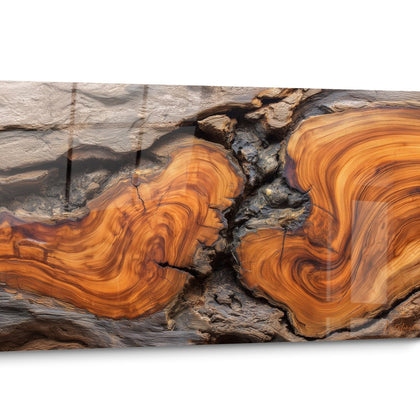 Feng Shui Wood East Wall Art53
artworks
Feng Shui Wood East Wall Art53
artworks
-
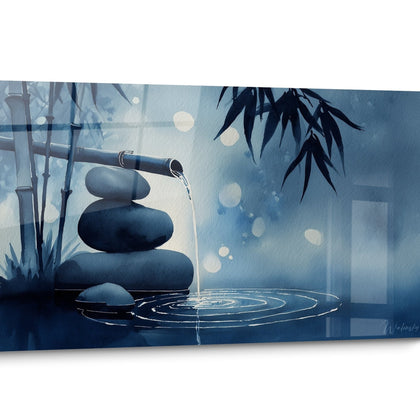 Feng Shui North Water Wall Art86
artworks
Feng Shui North Water Wall Art86
artworks
-
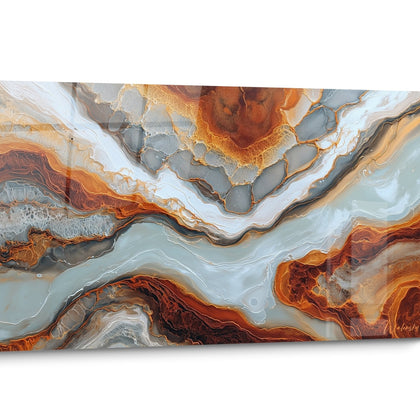 Feng Shui Wall Art Northeast Earth112
artworks
Feng Shui Wall Art Northeast Earth112
artworks
-
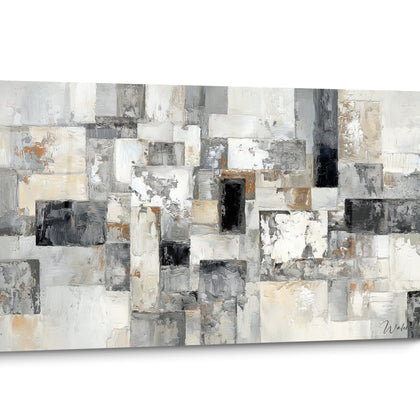 Feng Shui Northwest Metal Wall Art84
artworks
Feng Shui Northwest Metal Wall Art84
artworks
-
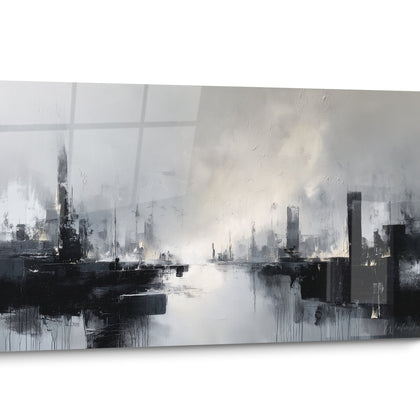 Feng Shui West Metal Wall Art84
artworks
Feng Shui West Metal Wall Art84
artworks
-
 Feng Shui South Fire Wall Art120
artworks
Feng Shui South Fire Wall Art120
artworks
-
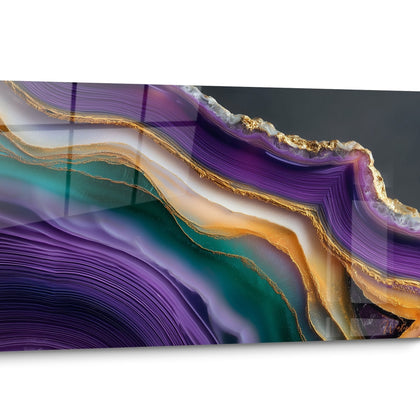 Feng Shui Southeast Wood Wall Art90
artworks
Feng Shui Southeast Wood Wall Art90
artworks
-
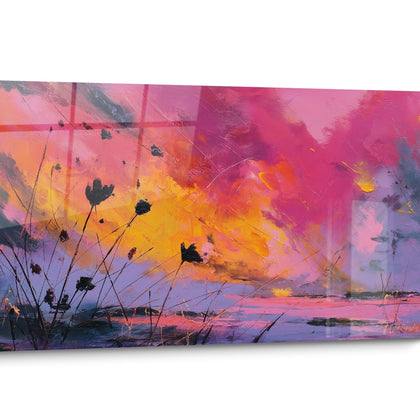 Feng Shui Southwest Earth Wall Art109
artworks
Feng Shui Southwest Earth Wall Art109
artworks
-
 Feng Shui Wall Art904
artworks
Feng Shui Wall Art904
artworks


All about Feng Shui Centre Earth Wall Art
- Overview Feng Shui Earth Center Wall Art
- Telluric Energies and Stabilization
- Five Elements Balance
- Placement and Energetic Activation
The Feng The Feng Shui Earth Center wall art functions as a condenser of telluric energies within the home's energetic architecture. Unlike other Bagua sectors that govern specific aspects of existence, the center acts as a redistributive hub, capturing the Chi rising from terrestrial depths to diffuse it harmoniously throughout all adjacent rooms. A large-scale visual representing geological formations, desert plateaus, or cultivated lands establishes vibratory resonance with gravitational forces, creating a psychological grounding effect particularly sought after in urban apartments disconnected from natural ground. The chromatic nuances of the Earth element—deep beige, caramel brown, mustard yellow, brick red—possess a light frequency that slows Chi circulation, promoting energetic accumulation rather than dispersion. A feng shui earth center artwork adorned with these natural pigments generates a microclimate of emotional stability, effectively counterbalancing mental agitation induced by hectic urban rhythms. This chromatic palette also stimulates serotonin production, the neurotransmitter of calm, transforming the living room or central space into a nerve regeneration zone. According to classical feng shui principles, the central sector corresponds to the spleen-pancreas organ in the energetic body mapping. Installing a Feng Shui Earth Center artwork of imposing dimensions in this zone amounts to practicing spatial acupuncture, stimulating the invisible meridians traversing the home. Representations of stable mountains, crystalline formations, or fertile plains strengthen the energetic digestive function of the space, improving the assimilation of vital nutrients—both dietary and relational—by the occupants. This central activation produces an equilibrating effect on posture, reducing back tension and chronic ailments linked to energetic imbalance. The Earth element of the center maintains specific relationships with the eight other sectors: it is nourished by Fire (South), controls Water (North), and engenders Metal (West/Northwest). A large-scale artwork at the center establishes energetic corridors with the entire feng shui cartography. To amplify this synergy, you can explore visual representations of other elements such as the Feng Shui East Wood wall art that activates growth and vitality in the family sector, creating harmonious circulation between central grounding and vegetative expansion.Energetic Anchoring Through the Earth Element at the Home's Center
Why prioritize ochre and terracotta tones for this sector?
Activation of health meridians through geometric centrality
Complementarity with other Bagua elements
Production Cycle and Neutralization of Conflicting Energies
The Feng Shui Earth Center wall art plays a crucial role in resolving elemental conflicts that can weaken a space's harmony. In the Five Transformations theory, Earth occupies the mediating position: it soothes the antagonism between Water and Fire, tempers Metal's aggressiveness, and channels Wood's sometimes anarchic expansion. A large-scale visual illustrating terrestrial landscapes at the home's heart functions as a thermodynamic regulator, absorbing energetic excesses and filling deficits, particularly in unbalanced architectural configurations featuring too many glass or metal surfaces.
Correction of open-plan homes with central deficit
Contemporary architectures with open, unbounded spaces frequently suffer from a central energetic void, with Chi circulating too rapidly without possibility of accumulation. The strategic installation of a large-format feng shui earth center artwork creates a magnetic focal point that slows energetic flow, allowing occupants to psychologically appropriate the space. This visual intervention compensates for the absence of traditional load-bearing walls that naturally delimited the center in classical architecture, artificially yet effectively reconstructing the missing energetic heart.
How does the Earth element neutralize electromagnetic pollution?
Visual representations of geological elements—shales, granites, clays, sedimentary formations—possess a vibratory signature that enters into resonance with the natural insulating properties of these materials. A Feng Shui Earth Center artwork depicting these mineral structures generates a shielding effect against electromagnetic disturbances emitted by domestic equipment concentrated in open living spaces. This subtle protection obviously does not replace technical mitigation measures, but reinforces the bioenergetic resistance of inhabitants daily exposed to these disruptive fields.
Synergy with construction materials and coverings
A feng shui earth center artwork's efficacy is multiplied when it dialogues with surrounding materials. Terracotta tile floors, natural stone, or polished concrete amplify telluric resonance, while wood parquet creates productive interaction (Earth nourishes Wood in the creative cycle). Conversely, excessively metal surfaces or dominants of blue-black can weaken grounding, necessitating then a visual of superior dimensions to compensate for this energetic loss and restore the elemental balance indispensable to collective well-being.
Strategic Positioning and Ritualization of Central Space
Precise identification of the central sector within a home constitutes the essential prerequisite before installing a Feng Shui Earth Center artwork. Contrary to popular beliefs, the energetic center does not always correspond to the geometric center, particularly in L-shaped configurations or duplexes. The traditional method consists of superimposing the Lo Shu square on the floor plan, accounting for architectural extensions and lacks. A large-scale artwork requires a wall surface visible from multiple angles, transforming each passage through this space into a micro-ritual of reconnection to terrestrial stability.
What mounting height optimizes central energetic anchoring?
For a large-format feng shui earth center artwork, positioning height differs from standard museographic recommendations. The objective is not aesthetic appreciation at eye level, but activation of the lower Dan Tian, the energetic center located approximately three finger-widths below the navel. The visual's lower edge should ideally be positioned between 80 and 100 centimeters from the ground, creating a gravitational force line that naturally attracts descending energy and reinforces the grounding sensation of occupants regularly traversing this strategic space.
Association with decorative elements reinforcing Earth
A Feng Shui Earth Center artwork's power is amplified through orchestrating a coherent environment: artisanal ceramics, stone sculptures, stoneware containers placed nearby create an elemental resonance field. Adding low plants with rounded foliage (Crassula, Peperomia) introduces a touch of Wood nourished by Earth without competing with the telluric dominance. However, avoid excessive object accumulation that would generate energetic stagnation contrary to feng shui principles: three to five complementary elements suffice to establish the desired vibratory signature.
Activation rituals upon installation
Hanging a large-format feng shui earth center artwork deserves particular intentionality to imbue the work with its energetic function. Choose a waxing Moon period, ideally under an Earth sign (Taurus, Virgo, Capricorn) to maximize telluric receptivity. Before final mounting, purify the location with sandalwood or benzoin incense, then mentally formulate the intention of grounding and family protection. This consecration transforms the decorative object into a true spatial talisman, a conscious bearer of the stabilizing mission entrusted to the central sector.
Feng Shui Earth Center wall art: what influence on family cohesion?
The central sector specifically governs family clan unity in traditional feng shui symbolism. A large-scale visual representing terrestrial solidity reinforces intergenerational bonds, facilitates communication among members, and attenuates recurring conflicts. This influence is explained by Earth's ability to absorb dispersed energies and create a sense of collective belonging, particularly valuable in recombined or multigenerational family configurations sharing the same home.
How to adapt visual choice according to center configuration?
A traversing center (hallway, passage) requires dynamic yet stable representations—mountain rivers, paths in rock—that accompany movement without accelerating it. A center occupied by a living space (living room, dining room) welcomes contemplative landscapes—desert plateaus, rolling meadows—that invite gathering. If the geometric center falls in a technical zone (bathroom, kitchen), slightly relocate the artwork placement toward the nearest habitable zone while maintaining visibility from the calculated central point.
Can multiple elements be combined in a feng shui earth center artwork?
While the chromatic and thematic dominance must respect the Earth element, subtle introduction of other elements enriches the composition without diluting the main intention. A terrestrial landscape with golden sky (Metal engendered by Earth) or low vegetation (Wood nourished by Earth) respects the production cycle. However, avoid significant water masses or pronounced flames that would create elemental tensions counterproductive in this sector requiring above all stability, coherence, and quiet strength to accomplish its unifying mission at the heart of the domestic ecosystem.
Further reading
Our articles on this topic
- Where to hang a feng shui earth-center painting according to your home's bagua
- Earth feng shui painting in the master bedroom: where to position it for couple harmony
- Earth feng shui painting: the perfect housewarming gift
- Which feng shui painting size to choose for the southwest wall of an apartment
- Feng Shui Living Room Colors: The Complete Guide to Harmonizing Your Living Space
- Earth Element Feng Shui Painting: Which Room to Choose to Maximize Its Energy?
L'art qui suscite l'envie
Maison belge d'art mural grand format
14 jourspour changer d'avis*
Protection Walenskyincluse
Fabriquéen Italie
FormatXXL
Kit de fixationtoujours fourni
* Hors tableaux personnalisés et tailles personnalisées


