


African Dance Yellow Wall Art
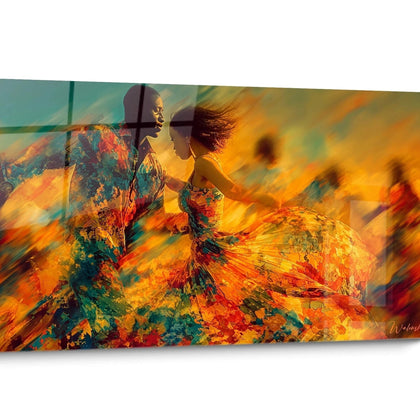
The African Dance Yellow painting captures the vibrant essence of African culture through exceptional contemporary artworks. This collection celebrates the expressive gestures and energy of traditional African dances in luminous compositions dominated by vibrant yellow tones. Each creation evokes joy, movement, and the cultural richness of the African continent. Perfect for bringing warmth and character to your interior, these modern African artworks transform your spaces into vibrant galleries of authenticity.
 Tribal Dancer Painting - Ancestral Movement - African Dance Edition273,90 €
 African Dancers Painting - Celebration in Motion - African Dance Edition273,90 €
 African Dancer Painting - Expressive Movement - African Dance Edition228,90 €
 African Dancer Ethnic Adornments Painting - African Dance Edition273,90 €
 African Dancers Wolof Tradition Painting - African Dance Edition273,90 €
 Senegalese Sabar Dancers Painting - African Dance Edition273,90 €
 Dancers Liberating Movement Wall Art - African Dance Edition273,90 €
 Dancers Painting Original Cadence - African Dance Edition228,90 €
 Dancer Painting Ancestral Passage - African Dance Edition228,90 €
 Woman Beating the Sacred Djembe Artwork - African Dance Edition228,90 €
Explore further
In African Dance Yellow Wall Art



All about African Dance Yellow Wall Art
- African Dance Yellow Wall Art Presentation
- Symbolism and Chromatic Energy
- Interior Scenography
- Acquisition Criteria
The yellow African dance wall art embodies an exceptional encounter between the ancestral choreographic expression of the African continent and the luminous power of a solar hue. This fusion creates a monumental mural artwork that instantly transforms the atmosphere of your reception spaces. Representations of dancing women captured in their ritual or festive poses dialogue with golden, ochre and saffron nuances to generate a visually striking composition. Intended for lovers of contemporary ethnic art, this type of large-format mural creation naturally asserts itself in interiors seeking an affirmed and warm visual identity. The alliance of frozen body movement and yellow tonality produces an energizing effect that stimulates social interactions while celebrating a millennia-old cultural heritage.
The Communicative Power of Yellow in African Iconography
The yellow African dance wall art mobilizes a symbolism deeply rooted in the traditions of the continent. Yellow simultaneously evokes the ochre earth of savannas, the gold of royal ornaments and the equatorial light that rhythms collective ceremonies. This tonality transmits vital energy that amplifies the gestural dynamism of the dancers depicted, creating a visual synergy between color and movement.
How does yellow intensify the perception of danced movement?
In these large-scale mural compositions, variations of yellow – from luminous lemon to deep honey – structure the visual choreography. Lightened zones suggest the culminating points of gesture, while amber tones mark bodily transitions. This chromatic orchestration naturally guides the viewer's gaze according to a dynamic path that reproduces the very rhythm of African dance, where each movement carries narrative intention.
The association of yellow with African festive rituals
West African cultures traditionally associate yellow with harvest ceremonies, initiations and community celebrations. A monumental yellow African dance wall art transposes this festive dimension into contemporary domestic space. Dancers adorned in saffron fabrics or evolving against gilded backgrounds embody this collective memory, transforming your living room or professional space into a place of permanent celebration of cultural vitality.
For a more conceptual approach to this theme, the creations of abstract African dance wall art propose a refined interpretation where gestural forms dissolve into audacious chromatic harmonies. This alternative explores the boundaries between figuration and suggestion, offering a contemporary reading of African choreographic heritage.
Color theory applied to ethnic scenes
The dominant use of yellow in these large-format mural representations creates striking contrast with the skin tones of the dancers, accentuating the three-dimensionality of silhouettes. Contemporary artists exploit this opposition to produce a depth effect without resorting to complex perspectives, allowing figures to literally burst from the mural surface toward the observer.
Orchestrate Your Space Around a Monumental Solar Artwork
The integration of a large yellow African dance wall art requires specific spatial reflection. This artwork acts as a visual magnetic pole that instinctively reorganizes the circulation of gazes and the disposition of other decorative elements. In a spacious living room, it naturally imposes itself above a deep sofa in neutral tones – cream linen, anthracite gray or chocolate brown – that bring out the yellow luminosity without competing with it.
Which arrangements maximize the impact of a monumental yellow composition?
For professional spaces such as cultural company reception halls or architects' offices, this type of large-format mural creation immediately establishes a welcoming and dynamic atmosphere. Positioned facing the main entrance, it captures visitors' attention upon crossing the threshold. The association with contemporary furniture – camel leather seating, exotic wood coffee tables – creates a dialogue between modernity and heritage references.
Chromatic dialogues with your existing palette
A yellow African dance wall art harmonizes particularly well with interiors adopting a neutral base enhanced with botanical touches. Tropical plants with large leaves – monstera, bird of paradise, fiddle leaf fig – reinforce the connection with the African universe while bringing green nuances that value yellows through chromatic complementarity. Ethnic textiles with geometric patterns – bogolan cushions, kente blankets – establish visual echoes without duplicating the figurative representation.
In a dining room opening onto the living space, this mural artwork becomes the focal point that visually unifies distinct functional zones. Its monumentality creates visual continuity that structures the space without requiring physical partitions, particularly effective in open-plan configurations.
Adapt light intensity to yellow tonality
Unlike dark compositions that absorb light, a yellow African dance wall art reflects and amplifies light sources. This property requires particular attention to the orientation of your lighting fixtures. Favor indirect lighting with dimmable floor lamps or adjustable spotlights that avoid direct reflections while revealing the richness of golden, ochre and lemon nuances. As natural light declines during evening hours, this artwork maintains a luminous presence that visually extends the day.
Select Your Yellow African Dance Wall Art With Discernment
The acquisition of a monumental yellow African dance wall art represents a significant decorative investment that requires evaluating specific criteria. The first consideration concerns the narrative density of the composition: some artworks privilege a single dancer in XXL format with detailed treatment of bodily and vestimentary attributes, while others multiply silhouettes to create a collective choreographic scene evoking ritual ceremonies.
What technical details distinguish an exceptional creation?
For monumental formats intended for large walls (beyond 120 cm), verify the stratification of yellow hues. Sophisticated creations superimpose multiple chromatic layers – ochre base, golden glaze, lemon highlights – that generate visual depth impossible to obtain with monochromatic application. This technical complexity ensures that the artwork reveals different nuances depending on the hour and light intensity, avoiding the effect of uniform saturation.
Stylistic authenticity in contemporary representations
An excellent yellow African dance wall art faithfully transposes the gestural characteristics specific to different choreographic traditions across the continent: the accentuated dorsal arch of West African dances, ground movements of Central African traditions, or the jerky shoulder movements typical of Sahelian celebrations. This ethnographic precision, even when stylized, confers cultural legitimacy to the artwork that transcends simple exotic decoration to celebrate a living intangible heritage.
The imposing dimensions of these mural creations also require reflection on the configuration of your reception space. Precisely measure the available height and width while accounting for visual margins – minimum 20 cm on the sides, 30 cm above low furniture – so the artwork breathes without appearing compressed. A format too modest on a vast wall dilutes visual impact, while an oversized composition for the space creates a sensation of oppression.
Why prioritize large dimensions for this specific theme?
The theme of African dance expresses itself fully in monumental formats that allow capturing the amplitude of gesture characteristic of these corporeal traditions. Ample movements, circular trajectories and expressive postures require generous representation space to avoid visual compression. A small-format artwork constrains this natural dynamism, while an XXL format liberates all the choreographic power and allows appreciating anatomical subtleties – muscular tension, vertebral curve, gaze orientation – that carry visual narration.
Does a yellow African dance wall art suit all interior styles?
This artwork integrates particularly well in contemporary, ethnic-chic, or eclectic interiors that embrace cultural juxtapositions. It brings instant warmth to minimalist Scandinavian or industrial spaces that risk coldness. However, it can create visual overload in interiors already saturated with patterns or bright colors.
How to maintain the luminosity of yellow long-term?
Protect your yellow African dance wall art from direct sun exposure which progressively degrades yellow pigments, particularly sensitive to UV rays. Use protective films for windows or filtering sheers in highly exposed rooms. A monthly dusting with a dry microfiber cloth suffices to maintain the surface's brilliance.
Can multiple yellow-dominant artworks be associated in the same space?
The multiplication of yellow artworks risks chromatic saturation. If you wish to create a mural gallery, alternate your yellow African dance wall art with compositions in contrasting tonalities – indigo blue, Sienna earth, off-white – that mutually value their chromatic particularities while preserving thematic African coherence.
Further reading
Our articles on this topic
L'art qui suscite l'envie
Maison belge d'art mural grand format
14 jourspour changer d'avis*
Protection Walenskyincluse
Fabriquéen Italie
FormatXXL
Kit de fixationtoujours fourni
* Hors tableaux personnalisés et tailles personnalisées


