


Minimalist Zen Pebbles Wall Art
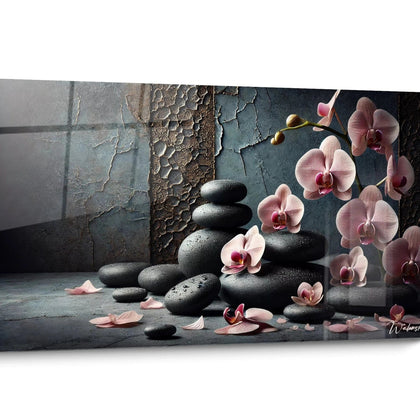
The Zen Pebbles Minimalist Painting brings serenity and harmony to your living space. This collection celebrates the perfect balance between simplicity and elegance, inspired by Eastern philosophy. Our zen tables pebbles stacked evoke meditation and inner peace, perfect for creating a soothing atmosphere in your living room, bedroom or office. Each artwork captures the essence of minimalist zen decoration with clean compositions that invite contemplation and relaxation.
 Ephemeral Stability Wall Art - Zen Feng Shui Edition233,90 €
 Balance Pastel Wall Art - Zen Edition233,90 €
 Forest Balance Canvas - Zen Edition233,90 €
 Calm Abstract Painting - Zen Edition233,90 €
All about Minimalist Zen Pebbles Wall Art
- Minimalist Zen Pebbles Wall Art Presentation
- Visual Balance and Decorative Simplicity
- Sensory Calm and Spatial Design
- Contemplative Meditation and Psychology
The minimalist zen pebbles wall art embodies a refined decorative philosophy that transforms living spaces into sanctuaries of serenity. This mural representation combines Japanese minimalist aesthetics with the ancestral symbolism of pebbles rounded by water, creating a large-format wall art piece that dialogues with silence and the essential. Unlike cluttered décor, this creation values emptiness, purification, and visual breathing, offering a meditative focal point in contemporary interiors. The generous dimensions allow a marked architectural presence while preserving contemplative discretion, ideal for spaces dedicated to personal renewal, holistic therapy offices, or professional decompression zones.
Visual Balance and Decorative Simplicity of Zen Pebbles
The minimalist zen pebbles wall art responds to the spatial requirements of refined environments where each element must justify its presence. Its composition reduced to the essential eliminates all visual distraction, allowing the eye to rest without excessive solicitation. The rounded forms of pebbles create an organic balance that subtly contrasts with the strict geometry of modern architecture, introducing natural softness without compromising minimalist rigor.
Why choose a minimalist pebble representation in a contemporary interior?
The characteristic chromatic reduction of zen pebbles wall art promotes decorative neutrality that harmonizes with monochrome palettes. Shades of gray, beige, and off-white avoid excessive color stimulation, preserving the calming atmosphere sought in spaces of mental rest. This chromatic approach facilitates integration into Scandinavian, wabi-sabi, or softened industrial aesthetics.
Depth effect through refined layering
Minimalist pebble compositions exploit subtle superposition to create visual depth without graphic complexity. This measured stratification generates a contemplative movement of the gaze, inviting prolonged observation that slows down perceptual rhythm. The large-format scale amplifies this spatial effect, transforming the wall into a window to an inner meditative space.
How does this type of wall art influence spatial perception?
In minimalist open spaces, the minimalist zen pebbles wall art acts as a visual anchor point that structures the zone without compartmentalizing it. Its presence calms surrounding agitation and defines a zone of psychological quietude. Therapeutic decoration professionals favor these representations in medical waiting rooms, yoga studios, or coworking spaces requiring mental disconnection zones.
Sensory Calm and Minimalist Spatial Architecture
The minimalist zen pebbles wall art responds to a search for sensory calm in oversaturated urban environments. Its stripped-down aesthetic activates neuronal mechanisms of visual relaxation, reducing the cognitive load imposed by complex decorative stimuli. Neuroscience confirms that simplified organic forms decrease cortisol levels, the stress hormone, fostering a physiological state conducive to concentration or mental rest.
The importance of emptiness and visual silence
The minimalist composition prioritizes negative spaces that frame the pebbles, creating essential visual breathing in dense interiors. This deliberate emptiness is not absence but active presence, inviting contemplation of nothingness, a central practice in zen philosophy. The monumental format amplifies this sense of space, contrasting with the material density of contemporary urban environments.
Which spaces particularly benefit from this refined aesthetic?
Bedrooms oriented toward restorative sleep, offices requiring sustained concentration without distraction, and transition spaces like hallways or entrances gain coherence with a minimalist zen pebbles wall art. Its emotional neutrality prevents parasitic associations, allowing each observer to project their own inner state without imposed suggestion. Interior architects integrate it into visual detoxification projects post-lockdown.
Resonance between perceived materiality and symbolism
Though a visual reproduction, the wall art evokes the tactile materiality of water-polished pebbles, triggering an appeasing sensory memory. This symbolic association with natural elements – water, time, patience – psychologically anchors the space in a slowed temporality. Owners of urban spaces without access to nature use these representations as contemplative substitutes, creating islands of symbolic naturalness in artificial environments.
The extended format allows sufficient visual immersion to trigger these psychological mechanisms, unlike small reproductions that remain purely decorative. The monumental scale transforms passive observation into contemplative experience, bringing the spectator closer to informal meditative practice integrated into daily life.
Contemplative Meditation and Environmental Psychology
The minimalist zen pebbles wall art functions as a support for visual meditation, an ancestral technique adapted to contemporary constraints. Therapists specialized in mindfulness recommend these representations as focal points for mental recentering exercises, an accessible alternative to formal meditative practices. Compositional simplicity facilitates entry into attentive presence without prior learning.
How to use this wall art as an anchor for daily presence?
A three-minute morning observation before the minimalist zen pebbles wall art establishes a ritual of conscious transition between sleep and activity. Stacked pebbles symbolize the precarious balance to maintain, reminding of the need for constant adjustments in daily stress management. This informal practice integrates naturally into routines without requiring complex time arrangement, unlike structured meditation sessions.
The psychological impact of rounded forms in the immediate environment
Environmental psychology research demonstrates that curved forms reduce amygdala activation, the brain area associated with anxious vigilance. The wall art regularly exposes the nervous system to these appeasing stimuli, contributing to underlying emotional regulation. People exposed to angular environments (industrial architecture, strict design furniture) particularly benefit from this gentle sensory compensation.
Integration into heart rate coherence practices
Heart rate coherence practitioners use the wall art as visual support during breathing exercises. The gaze mentally follows the pebble contours at the rhythm of inhalation and exhalation, synchronizing visual perception with physiological regulation. This technique reinforces the effectiveness of stress management protocols by adding a contemplative dimension to purely respiratory practice.
FAQ - Frequently asked questions about minimalist zen pebbles wall art
Is minimalist zen pebbles wall art suitable for demanding professional spaces?
Absolutely, medical offices, psychological consultation spaces, and strategic meeting rooms integrate these representations to reduce ambient tension. Their neutrality avoids any inappropriate subjective connotation in a professional context while humanizing the environment.
How to position a minimalist zen pebbles wall art to maximize its calming effect?
Prioritize a clear wall visible from rest zones (bed, reading chair) or facing the work station. Eye-level height when seated allows natural consultation during visual micro-breaks. Avoid cluttered walls or fast-passage zones that prevent contemplative observation.
Is the monumental format of minimalist zen pebbles wall art necessary to achieve the desired effect?
Generous dimensions create an immersive presence essential to trigger mental disconnection mechanisms. A reduced format remains decorative but loses the desired psychological impact. Monumental scale transforms the decorative object into spatial experience, a necessary condition for environmental therapeutic effectiveness.


