


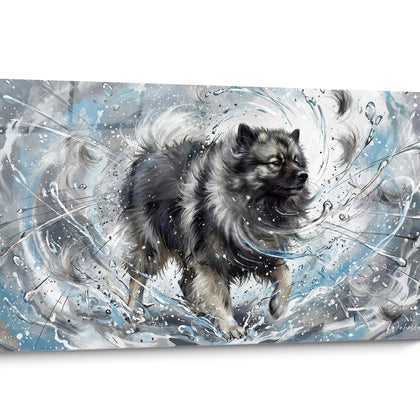
Keeshond Dog Pop Art Canvas
The Painting Dog Keeshond Pop Art celebrates this endearing Dutch breed through an explosion of bold colors and striking contrasts. This collection transforms the Keeshond, with its characteristic silver-gray fur and joyful expression, into true contemporary artworks. Each pop art Keeshond painting captures the lively and affectionate personality of this dog with vibrant hues and modern graphic compositions. Perfect for enthusiasts of this Dutch breed, our artistic Keeshond collection brings energy and originality.
 Multicolor Keeshond Painting with Orange Bowl - Artistic Feast - Keeshond Edition273,90 €
 Dog Portrait Painting with Vibrant Turquoise Orange and Purple Colors - Radiant Smile - Keeshond Edition273,90 €
 Spirited Keeshond on Vibrant Blue and Orange Background Contemporary Style - Dynamic Canine Art - Keeshond Edition273,90 €
 Grey Keeshond Pink Tongue on Vibrant Orange Background with Blue Bicycle - Urban Escape - Keeshond Edition273,90 €
Explore further
In Keeshond Dog Pop Art Canvas


All about Keeshond Dog Pop Art Canvas
- Painting Presentation Keeshond Dog Pop Art
- Keeshond Pop Art Decoration
- Graphic Dog Art
- Keeshond Mural Collection
The painting Keeshond dog Pop Art transforms the Dutch wolfhound into a contemporary artistic icon. This breed with its spectacular silver-gray coat and characteristic glasses finds a new expression through monumental pop art aesthetics. XXL formats magnify the Keeshond's playful personality while creating powerful chromatic focal points for demanding modern spaces.
The Chromatic Explosion of the Keeshond in Contemporary Wall Art
The Keeshond Pop Art painting exploits the natural visual contrasts of this Dutch spitz breed to generate striking graphic compositions. The distinctive facial mask of the Keeshond, with dark sunglasses framing expressive eyes, becomes a central motif in the neon palettes typical of the pop art movement. Vibrant color blocks - electric fuchsia, luminous cyan, intense lemon yellow - replace traditional gray nuances to create an instant visual impact in large architectural volumes.
How do the patterns of the Keeshond's coat influence the pop art composition?
The Keeshond’s abundant mane offers exceptional graphic texture when stylized according to pop art codes. Artists exploit natural contrast zones - the marked creamy collar, the pronounced eyebrows, the plume-like tail - to structure saturated color compositions. This graphic transformation particularly enhances three-quarter profiles of the Keeshond where the distinctive facial architecture creates natural chromatic divisions. Large-format editions amplify these stylized texture games to generate a monumental presence.
What cultural symbolism does the Keeshond carry in pop art imagery?
An emblem of the Dutch Patriots in the 18th century, the Keeshond retains a political and identity dimension that the pop art aesthetic reactivates. This breed becomes a symbol of joyful resistance and national pride when treated according to Warholian codes. Dutch collectors in particular seek out these representations that blend cultural heritage and artistic modernity. The Keeshond Pop Art painting thus functions as a sophisticated identity marker in contemporary interiors, celebrating a breed less universal than the Bulldog but rich in meanings.
Adaptation to Scandinavian and Nordic Spaces
Minimalist Nordic interiors find in these pop art representations of the Keeshond a perfect balance between structural sobriety and controlled chromatic exuberance. The white walls typical of Scandinavian architecture serve as a neutral setting for the colorful explosions of these XXL mural compositions. Cultural familiarity with the breed in the Benelux and Scandinavian countries reinforces emotional attachment while introducing a touch of visual boldness. For those who also appreciate metallic interpretations, the Golden Keeshond painting offers a luxurious alternative to pop art codes.
Visual Psychology and Emotional Impact of Graphic Dog Representations
The Keeshond’s characteristic smile - this unique facial expression created by the configuration of its mouth and eyes - becomes a powerful emotional vector when amplified by pop art techniques. Imposing wall formats transform this natural joviality into a permanent comforting presence. Studies on the psychological impact of animal representations demonstrate that positive canine expressions reduce visual stress in domestic environments, an effect amplified by the energetic palettes of the pop art movement.
Why does the Keeshond stand out as a preferred pop art subject?
Unlike breeds with solid coats, the Keeshond presents a complexity of markings - contrasted light and dark areas, graduation of gray tones - which offer pop art artists a pre-existing structure for their color divisions. This characteristic reduces the artifice of graphic transformation: saturated color blocks naturally replace the tonal areas of the real coat. The painting dog Keeshond Pop Art thus retains anatomical readability even in the most abstract interpretations, a quality essential to maintain the emotional connection with the spectator who is a fan of this specific breed.
Integration into high-end canine merchandising strategies
Professional Keeshond breeders and breed clubs use these monumental pop art representations as visual communication elements in their reception areas. These large-format artistic installations enhance brand image by associating the breed with contemporary culture rather than exclusive historical tradition. Dog show venues are gradually integrating these wall formats to modernize their visual identity. This trend creates a specialized market where racial authenticity meets aesthetic boldness, positioning the Keeshond as a breed that is both heritage and resolutely modern.
Stylistic variations within the canine pop art movement
From Lichtenstein-inspired treatments with oversized Ben-Day dots to Warhol-style flat prints in digital screen printing, the Keeshond lends itself to the entire pop art spectrum. Versions inspired by Hockney favor colorful geometric backgrounds that dialogue with the dog's silhouette, while neo-pop approaches integrate typographic elements celebrating the Dutch origins. Panoramic horizontal formats particularly exploit the characteristic plume tail as a dynamic compositional element. This stylistic diversity allows buyers to select interpretations aligned with their personal aesthetic sensibility while celebrating the same iconic breed.
Strategies for Acquisition and Valuation of Keeshond Wall Editions
Investing in a painting dog Keeshond Pop Art of large dimensions is a targeted collecting approach rather than simple generic decoration. The relative rarity of this breed compared to mainstream Bulldogs or Poodles confers exclusivity sought after by connoisseurs. Limited edition numbered prints gain value particularly among Spitz enthusiast communities, creating an active secondary market. Formats exceeding 150 centimeters become architectural masterpieces justifying privileged locations in reception areas.
Which commercial spaces value these specific wall compositions?
High-end pet boutiques specializing in Nordic breeds use these artistic installations to create immersive themed environments. Veterinary clinics focused on canine behavior integrate these joyful representations to soothe visitor anxiety. Pet-friendly coworking spaces deploy these XXL formats to signal their welcoming positioning towards dog owners. This professional commercial adoption validates the relevance of these works beyond the domestic setting, expanding exhibition contexts and reinforcing their artistic legitimacy within the contemporary canine art ecosystem.
How to assess the authenticity of racial representations in pop art?
Purists of the Keeshond breed scrutinize anatomical fidelity even in stylized interpretations: correct skull proportion, precise placement of facial markings, appropriate angle of triangular erect ears. A painting Keeshond Pop Art of museum quality respects these racial markers despite chromatic freedom. Discerning collectors seek artists collaborating with confirmed judges or photographers specializing in canine morphology to guarantee this accuracy. This requirement differentiates serious artistic productions from generic interpretations where any spitz could be substituted without significant visual impact.
Maintenance and conservation of large-format editions
Monumental dimensions impose specific preservation considerations: protection against UV discoloration particularly critical for neon pigments, humidity control in exposed rooms, non-abrasive cleaning of printed surfaces. Formats exceeding two meters require reinforced hanging systems calculated according to total weight and stress distribution. Home insurance covers these acquisitions as contemporary artworks rather than simple decoration, requiring photographic documentation and certificates of authenticity. This professionalization of heritage management reflects the growing maturity of the contemporary pop canine art market.
Is a Keeshond Pop Art painting suitable for formal professional spaces?
Law and finance firms are gradually adopting these representations to humanize their environments while maintaining visual sophistication. The Keeshond, less common than ultra-popular breeds, avoids cliché while remaining immediately identifiable as a symbol of loyalty and vigilance - qualities valued in these sectors. Pop art palettes bring the necessary energy without falling into frivolity thanks to the imposing format and museum-quality execution.
What is the difference between a Keeshond Pop Art painting and photographic portraits of the breed?
Photography captures the specific individual while the pop art interpretation celebrates the racial archetype. This abstraction allows a universal emotional connection with all Keeshonds rather than attachment to a particular animal. Saturated colors and graphic compositions generate a decorative impact impossible with naturalist photography, justifying monumental wall formats in spaces requiring strong visual presence.
How does a Keeshond Pop Art painting integrate into a diversified canine art collection?
Thematic collectors often organize their acquisitions according to coherent series: spitz breeds in pop art, European national dogs, or monochromatic versus polychrome representations. The Keeshond ideally complements Nordic ensembles including Samoyed, Husky and Malamute, while offering a less physically imposing but equally visually striking counterpoint thanks to the graphic treatment. Mural series create sophisticated visual narratives traversing residential or commercial spaces.
L'art qui suscite l'envie
Maison belge d'art mural grand format
14 jourspour changer d'avis*
Protection Walenskyincluse
Fabriquéen Italie
FormatXXL
Kit de fixationtoujours fourni
* Hors tableaux personnalisés et tailles personnalisées


