


Close-Up Peony Wall Art
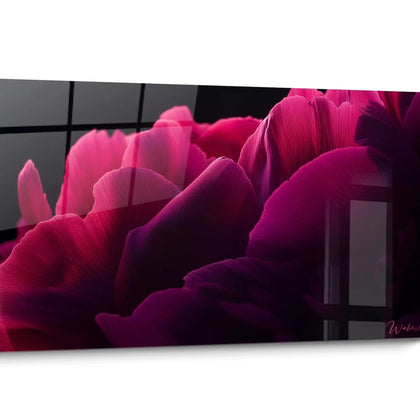
Our Peony Painting Close-up captures the delicate beauty of this iconic flower in its smallest details. This collection celebrates the natural elegance of peonies in macro photography, revealing the velvety texture of the petals and the richness of the pink and white hues. Perfect for creating a romantic and refined atmosphere, each large-format peony floral painting brings a touch of sophisticated softness to your interior decoration. Ideal for lovers of botanical art and majestic floral compositions.
 Peony Wall Art No.3 - Nature Edition273,90 €
 Peony Painting No.2 - Nature Edition273,90 €
 Peony Painting No.1 - Nature Edition273,90 €
Explore further
In Close-Up Peony Wall Art

All about Close-Up Peony Wall Art
- Close-Up Peony Wall Art Presentation
- Botanical Details and Visual Depth
- Floral Symbolism and Interior Atmospheres
- Decorative Impact and Close-Up Composition
A close-up peony wall art captures the majestic intimacy of this emblematic flower by revealing every detail of its layered petals. This macro photographic approach transforms your space into a botanical sanctuary where silky texture, subtle color variations, and complex organic structure become powerful decorative elements. Unlike classic floral compositions, close-up peony art creates a sensory immersion that captivates the eye and invites daily contemplation.
Revealing Botanical Details Through Close-Up Framing
The close-up peony wall art unveils floral architecture invisible at normal distance: the delicate veins running through each petal, imperceptible color transitions from center to edges, and the almost fleshy texture that characterizes the peony. This level of detail transforms a simple floral representation into a visual exploration where each glance discovers new elements.
How does close-up magnify the structural complexity of the peony?
The macroscopic approach reveals the fascinating organic geometry of this flower: petals organize in nested spirals, creating a three-dimensional depth rarely perceptible. Golden stamens contrast with powder pink or creamy white tones, generating natural focal points that capture attention. This natural composition offers perfect visual balance for demanding contemporary spaces.
Close-up photographic capture and its sensory effects
A large format amplifies the immersive effect of the close-up: installed in a spacious living room or master bedroom, the wall art creates a monumental botanical window. Visitors instinctively feel the urge to touch the surface, as if to verify the apparent texture of the petals. This emotional interaction fundamentally distinguishes floral close-ups from conventional representations.
Collections of modern peony wall art exploit precisely this close-up approach to transform residential space. Tight framing eliminates contextual distractions, concentrating all attention on the flower's intrinsic beauty and infinite nuances.
Amplified Floral Symbolism and Emotional Atmosphere Creation
The close-up peony wall art intensifies the traditional symbolism of this flower associated with prosperity, honor, and feminine beauty. By massively occupying the visual field, the image acquires an almost meditative presence that subtly influences the room's atmosphere. This decorative approach is particularly suited to interiors seeking to convey refinement and aesthetic sensitivity.
Which spaces benefit most from close-up peony framing?
Master bedrooms find in this visual an invitation to calm: soft curves and soothing tones promote mental relaxation. Home offices transform this decorative choice into a visual pause point, offering contemplative breathing during intense days. Reception spaces like living rooms or entry halls use floral close-ups as an immediately recognizable aesthetic signature.
The chromatic influence of floral close-ups on spatial perception
Color variations of pink, white, or coral dominant in peonies create reference palettes for the entire interior design. The close-up allows precise identification of undertones: slightly salmon pink will orient toward warm complements, while greenish white will harmonize with cooler elements. This function goes far beyond simple decorative role.
Monumental formats accentuate this influence: a reproduction of 120x80 cm or larger genuinely imposes its palette on the entire room. Textiles, accessories, and even furniture gain from subtly echoing the nuances revealed by the close-up framing, creating sophisticated decorative coherence.
Maximum Decorative Impact Through Close-Up Composition
The decorative power of close-up peony wall art rests on eliminating the superfluous: no stems, no foliage, no distracting background. This radical simplification concentrates all visual energy on the flower itself, transforming a natural element into quasi-organic abstraction. Large formats particularly exploit this dynamic, creating focal points impossible to ignore.
How to strategically position large-scale floral close-up art?
Optimal placement depends on the desired effect: facing a room's main entrance, the wall art becomes an immediate style declaration. Above a console or buffet, it anchors the space vertically while dialoguing with objects arranged below. In a bedroom, positioning facing the bed transforms morning awakening into a gentle and inspiring visual experience.
Minimalist spaces benefit maximally from this approach: floral close-up introduces organic complexity and emotional warmth without compromising overall simplification. More decorated interiors conversely use close-up framing as a visual breathing zone, an island of contemplative simplicity in a stimulating environment.
The complementarity between close-up and monumental scale
Generous dimensions paradoxically amplify the subject's intimacy: seeing petals depicted at human size or larger creates a fascinating scale inversion. This deliberate distortion generates a subtle surreal effect that captivates without disturbing. Visitors experience the peony as never before, discovering newfound familiarity with this otherwise well-known flower.
Does close-up peony wall art suit classic decorative styles?
Absolutely, high-definition photographic rendering integrates harmoniously into traditional interiors when tones are carefully selected. A close-up with powder pink tones dialogues elegantly with light woodwork and refined fabrics, while creamy white versions complement refined Haussmann-style atmospheres.
What is the optimal viewing distance for appreciating large-scale close-up peony wall art?
Monumental formats ideally require 2.5 to 3.5 meters of distance to embrace the overall composition while perceiving details. This distance allows the eye to navigate between overall vision and texture exploration, maximizing the contemplative experience that close-up framing provides.
Does floral close-up work in spaces with low ceilings?
Perfectly, horizontal framing of a close-up peony visually widens the space without emphasizing limited height. Centered compositions create illusory depth that advantageously compensates for architectural constraints, transforming a limitation into distinctive decorative opportunity.


