


Bullmastiff Dog Mosaic Wall Art
The Painting dog Bullmastiff Mosaic celebrates the power and nobility of this iconic breed through a fragmented and colorful artistic style. This contemporary Bullmastiff wall decoration transforms the canine portrait into a vibrant visual composition, where each tessera reveals the protective and majestic character of the molossus. Perfect for dog lovers and geometric dog wall art, this painting brings a modern and sophisticated touch to your living room, office or animal-dedicated space.
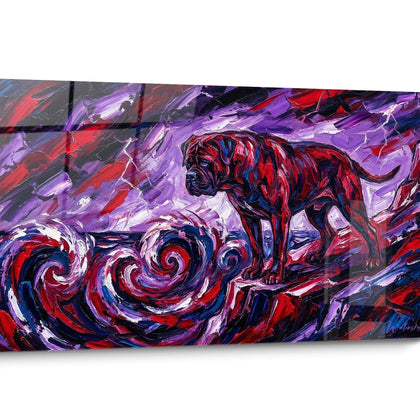
 Bullmastiff Lying on Oriental Blue Mosaic Wall Art - Canine Serenity - Bullmastiff Edition233,90 €
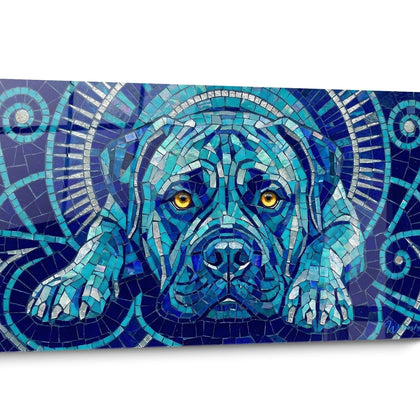
 Blue Mosaic Dog Painting with Golden Eyes - Artistic Portrait - Bullmastiff Edition233,90 €
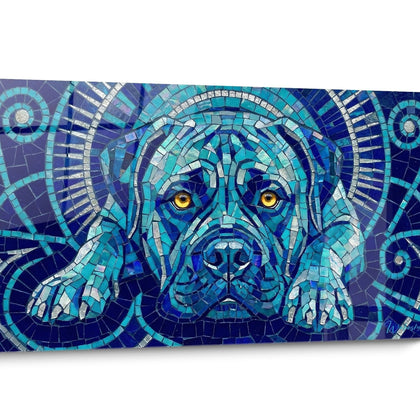
 Blue Mosaic Dog Stars Geometric Patterns Wall Art - Celestial Vision - Bullmastiff Edition213,90 €
Explore further
In Bullmastiff Dog Mosaic Wall Art
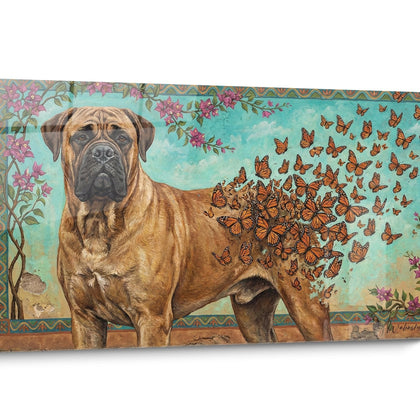
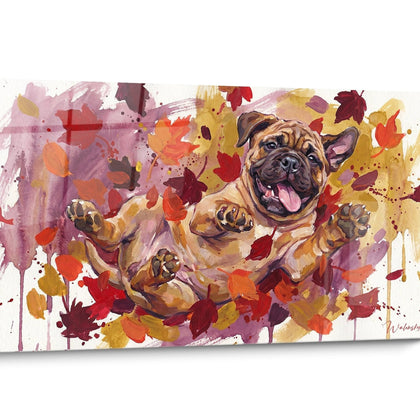
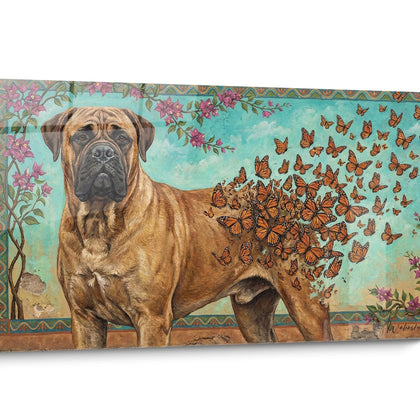
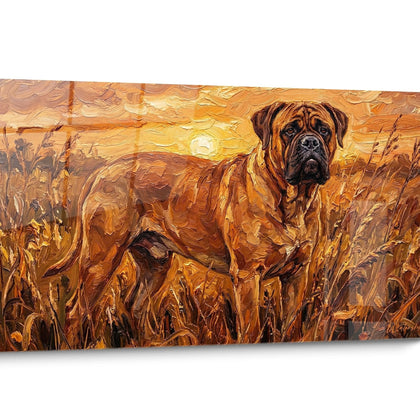
All about Bullmastiff Dog Mosaic Wall Art
- Bullmastiff Mosaic Canvas Presentation
- Canine Mosaic Art
- Monumental Decoration
- Acquisition Guide
The Bullmastiff Mosaic dog canvas embodies a masterful fusion between ancestral mosaic art and the commanding presence of the British mastiff. This fragmented representation transforms the intimidating power of the Bullmastiff into a shattered visual composition, where each chromatic tessella contributes to revealing the imposing musculature and penetrating gaze characteristic of the breed. The mosaic approach confers a unique visual texture that captures light in a singular manner, creating plays of shadows and brilliance that evolve according to the viewing angle. These large-format works transform any wall surface into a contemporary gallery, particularly suited to spaces requiring an affirmed decorative presence without visual heaviness. The fragmented technique paradoxically softens the intensity of the Bullmastiff while preserving its protective aura, creating a sophisticated decorative balance for demanding modern interiors.
The Tessellated Aesthetic of the British Guardian
Chromatic fragmentation and molossian anatomy
The Bullmastiff Mosaic dog canvas exploits pixelated decomposition to restore the characteristic volumes of this exceptionally sized breed. Fragmentation into geometric tessellae reveals the massive bone structure of the skull, the expressive folds of the facial mask and the powerful neck that morphologically define this lineage created for guarding English estates in the 19th century. Each chromatic square becomes a constitutive element of overall reading, where fawn, brindle or mahogany nuances juxtapose creating gradual transitions absent in conventional representations.
This geometric approach confers an architectural dimension to the work, transforming the animal into an almost monumental structure. The shadowed zones beneath drooping jowls, the depth of frontal wrinkles and the vigilant expression of the gaze build through accumulation of contrasted colored fragments. The visual effect obtained evokes Byzantine techniques while inscribing itself in a resolutely contemporary aesthetic, particularly sought after for residential spaces with streamlined or industrial design.
Visual dynamism and fractional perception
Reading a Bullmastiff Mosaic dog canvas occurs at two distinct perceptual levels. At close range, the observer distinguishes the tessellate complexity, subtle chromatic variations between each fragment, creating a visually tactile texture. When progressively stepping back, these disparate elements merge to reveal the complete physiognomy of the mastiff with striking clarity, an optical effect characteristic of modernized pointillist works.
This perceptual duality considerably enriches the decorative experience, inviting repeated observations that constantly unveil new details. For collectors of unconventional animal artworks, this approach offers a refined alternative to Bullmastiff Watercolor dog canvases and their traditional fluid rendering. Digital mosaic also transforms the perception of the Bullmastiff's imposing size, visually decomposing its mass while preserving its monumental decorative impact.
Why does fragmentation enhance the Bullmastiff's prestige?
The mosaic technique paradoxically softens the intimidating intensity of the gaze without diminishing the sculptural presence of the breed. The tessellae create micro-visual interruptions that render the ensemble less frontal than a classical photographic Bullmastiff Portrait dog canvas. This fragmentation allows harmonious integration of a massive subject into contemporary environments where decorative subtlety takes precedence over direct demonstration.
Spatial Integration of Monumental Formats
Architectural proportions and calculated visual impact
The generous dimensions of Bullmastiff Mosaic dog canvases respond to a specific decorative logic: occupying wall space significantly without creating visual saturation. The fragmented nature of the composition allows aerated reading even across surfaces exceeding two meters in width, where continuous representation might seem oppressive. This particularity makes these works ideal for professional reception spaces, residential entry halls or partition walls requiring a striking focal element without visual aggression.
The tessellated effect functions as an optical filter that decomposes subject intensity. A full-face Bullmastiff, with its prominent jaw and direct gaze, can appear intimidating in monumental realistic format. Mosaic transforms this visual confrontation into geometric exploration, inviting detailed observation rather than instinctive reaction. For decorative alternative enthusiasts, Bullmastiff Pop Art dog canvases offer another large-format stylization approach, privileging chromatic saturation where mosaic favors structural fragmentation.
Compatibility with contemporary architectures
The streamlined lines of modern architecture find natural echo in the regular grid of a mosaic canvas. Spaces with mineral dominance — exposed concrete, large-format tiling, glass surfaces — particularly benefit from this decorative approach that introduces complexity and warmth without breaking overall stylistic coherence. The geometric regularity of mosaic treatment dialogues with contemporary orthogonal structures while bringing the organicity of the animal subject.
In refurbished industrial lofts or streamlined design residences, an oversized Bullmastiff Mosaic dog canvas creates a sophisticated visual counterpoint. The artwork attracts attention without requiring peripheral stylistic rearrangement, unlike traditional figurative representations that often necessitate a specific decorative setting. The complete collection of Bullmastiff dog canvases proposes various aesthetic interpretations suited to varied decorative preferences.
How to optimize the tessellated effect according to observation distance?
To maximize the impact of a monumental mosaic canvas, privilege positioning allowing observation distance of at least three to four meters. This visual range permits optical fusion of fragments while preserving perception of the tessellate texture. In constrained spaces, height positioning partially compensates reduced distance, creating a favorable observation angle for overall composition reading.
Selection and Acquisition of Canine Mosaic Artworks
Distinctive tessellate quality criteria
Evaluation of a Bullmastiff Mosaic dog canvas rests on several specific technical parameters. Tessellate density determines rendering fineness: excessive fragmentation creates visual confusion, while insufficient fragmentation produces a coarse effect little flattering. Optimal quality works present between 1500 and 3000 tessellae for a 120x80 cm format, balance allowing immediate recognition and richness of close observation.
Chromatic coherence constitutes the second determining criterion. The palette must respect natural Bullmastiff tonalities — sustained fawn, deep mahogany, nuanced brindle — while exploiting the expressive possibilities of fragmentation. Transitions between light and dark zones reveal technical mastery: progressive gradations testify to thoughtful composition, where brutal ruptures betray basic algorithmic treatment. Collectors appreciating stylistic variations will appreciate comparison with Bullmastiff Expressionist dog canvases that privilege gestuality over geometry.
Positioning within a diversified animal collection
A mosaic canvas naturally integrates into a wall gallery associating different stylistic interpretations of the same subject. Juxtaposition of a Bullmastiff Mosaic dog canvas with floral or golden representations creates enriching visual dialogue, each treatment revealing a different facet of the breed. This multi-stylistic approach avoids monotony while maintaining strong thematic coherence, particularly appreciated by cynophile enthusiasts wishing to celebrate their favorite breed without decorative repetition.
For balanced wall composition, alternate geometric treatments with more organic approaches such as Bullmastiff Floral dog canvases that introduce vegetable curves and chromatic softness. This decorative strategy also allows visual adaptation of different rooms in the same residence while preserving recognizable stylistic signature. Monumental formats find their place in principal spaces while more intimate compositions occupy secondary areas.
Heritage valorization and decorative singularity
Investment in a large-format mosaic artwork transcends simple decorative acquisition to constitute a distinctive heritage element. The relative rarity of this stylistic approach applied to British mastiffs confers appreciable exclusivity, particularly for collectors seeking non-standardized pieces. A Bullmastiff Golden dog canvas will offer a luxurious alternative focused on material preciousness, while mosaic privileges structural complexity and visual innovation.
What size should be prioritized for optimal Bullmastiff Mosaic dog canvas impact?
For standard residential spaces, a 120x80 cm format offers excellent compromise between decorative presence and harmonious integration. Commercial surfaces or generous architectural volumes justify dimensions of 150x100 cm or larger, fully exploiting the monumental effect of tessellate composition.
Does mosaic technique suit humid environments?
Contemporary mosaic prints on treated supports resist perfectly moderate hygrometric variations of standard living spaces. For specific zones such as bathrooms, privilege finishes with reinforced protection guaranteeing durability and chromatic stability facing ambient humidity.
How to associate a Bullmastiff Mosaic dog canvas with other decorative elements?
The geometric nature of mosaic treatment harmonizes naturally with furniture with streamlined lines, textiles with minimalist graphic patterns and metal accessories with contemporary finishes. Avoid peripheral decorative overload: let the artwork breathe by preserving neutral adjacent zones that enhance its intrinsic visual complexity.


