I still remember that room in a château in the Périgord region, where a Tuscan landscape reigned supreme, with reliefs so pronounced that you would have sworn to see the cypresses tremble under the mistral. As I approached, I understood: each knife stroke had sculpted the very fabric of the canvas, creating a topography where light danced according to the time of day. This technique, which marked vintage wall art from the 1950s to 1970s, transformed painting into luminous architecture.
Here's what knife paintings brought to vintage artworks: a textured relief that naturally captures light, an immediately recognizable visual signature, and an emotional depth impossible to achieve with a brush.
You may have fallen under the spell of these antique canvases in an antique shop or flea market, fascinated by these generous impasto that give the impression of being able to touch clouds or feel the bark of trees. But you wonder what makes these works so special, why they seem to vibrate with a life that modern reproductions never manage to equal.
The answer lies in a gesture now rare: that of the artist who abandons the brush for the spatula, who sculpts rather than paints, who builds light layer by layer. This approach, popularized in mid-20th century vintage artworks, has created a unique visual language.
I invite you to discover the secrets of this fascinating technique, why it marked an entire generation of wall art, and how to recognize today these pieces that still transform our interiors.
The revolution of matter: when painting becomes sculpture
In the 1950s, a silent revolution took place in workshops. Artists gradually abandoned subtle glazes and smooth gradations in favor of a radically different approach: knife painting. This technique, inherited from the Impressionists but magnified by new thicker oil paints, allows color to be deposited in generous layers.
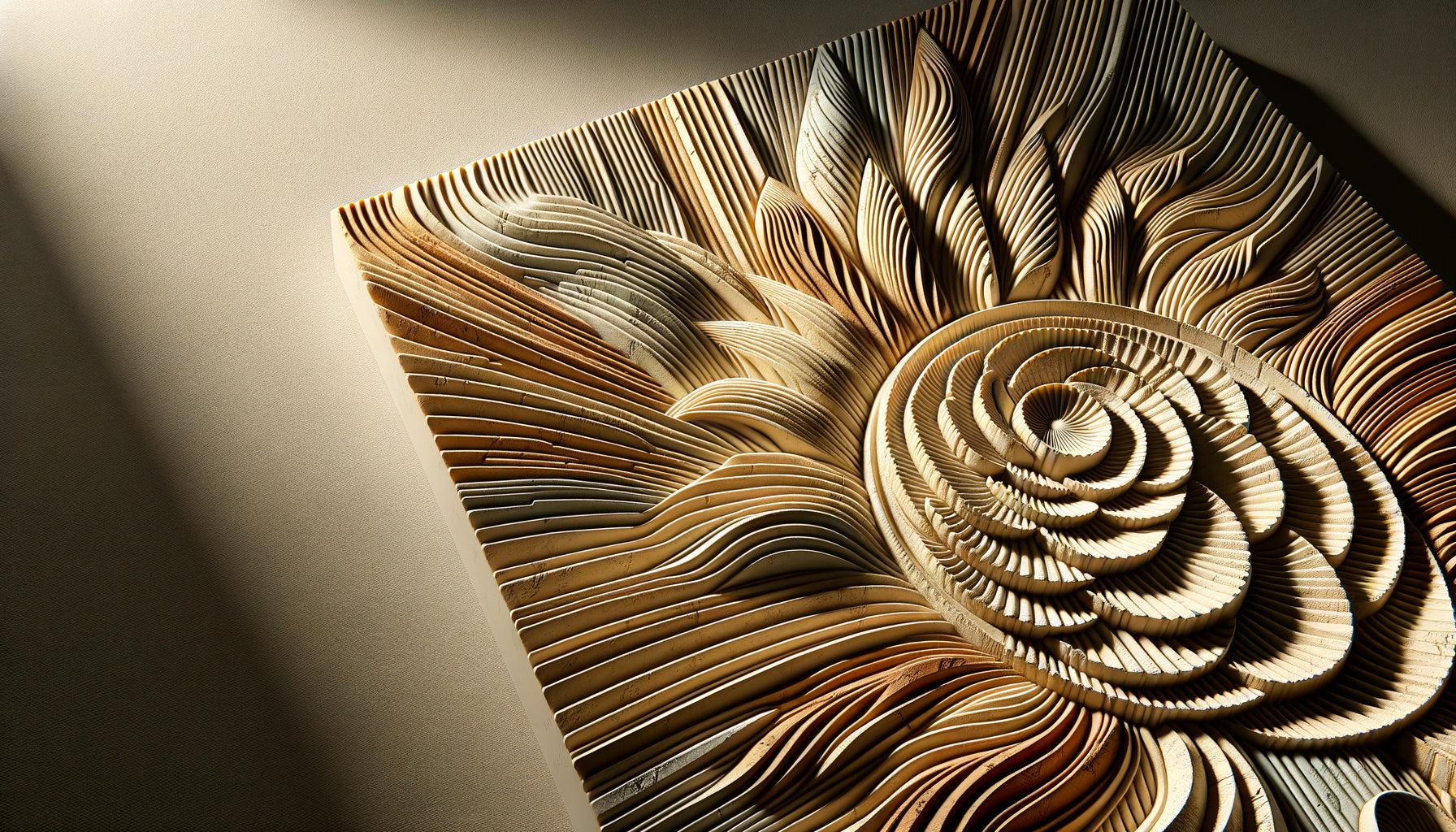
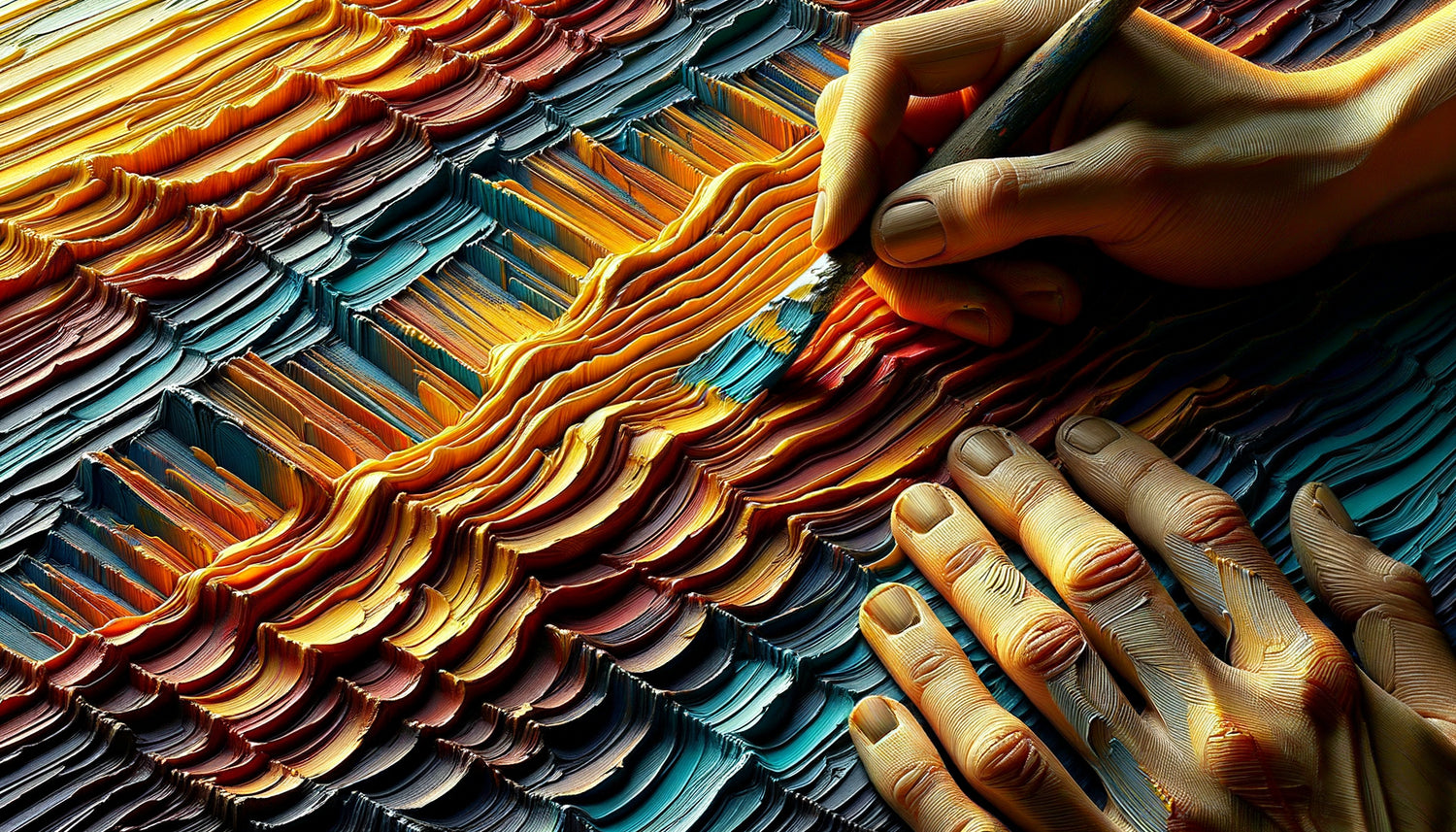
The palette knife, with its flexible steel blade, becomes an extension of the hand that not only applies color: it sculpts it directly onto the canvas. Unlike a brush which deposits a thin film, the knife piles up the material, creating reliefs sometimes several millimeters thick. On vintage wall art, these impasto dramatically capture light.
I have restored dozens of these pieces, and each time, the same wonder: under raking light, these canvases reveal an unsuspected topography. Clouds are no longer represented, they are built in successive volumes. Countryside paths no longer suggest the texture of gravel, they physically possess it.
The art of building light in three dimensions
What fundamentally distinguishes vintage knife paintings from brush artworks is their relationship to light. A traditional canvas reflects light relatively uniformly. But a knife painting fragments it, multiplies it, sculpts it.
Observe a vintage knife painting at different times of the day: it literally changes appearance. In the morning, when the light is lateral, the reliefs project micro-shadows that accentuate the depth. At noon, under zenithal lighting, it's the summits of material that shine like miniature glaciers. In the evening, warm light brings out the warm tones trapped in the impasto.
The technique of successive layers
Vintage artists mastered a secret: they worked in superimposed strata. First a background layer, often dark, then progressive accumulations of lighter colors. This relief construction created a fascinating optical depth. On wall paintings of landscapes, particularly popular in the 1960s, this method gave the impression of being able to dive into the scene.
The knife also made effects impossible with a brush: these streaks of pure color that stripe some vintage skies, these vibrant touches that suggest foliage without describing it, these white impasto that transform snow into luminous almost phosphorescent material.

Why this visual signature dominated vintage wall paintings
Between 1950 and 1975, knife painting became the preferred technique for wall paintings. This popularity is explained by several converging factors. First, the post-war period brings a desire for modernity and a break with academic styles. The knife texture embodies this freshness.
Secondly, interior architecture evolves: spaces expand, bare walls call for generous format works. However, paintings with a knife have a physical presence that allows them to be visually prominent even in large rooms. Their relief makes them visible and attractive from afar, unlike more subtle techniques that require close observation.
I have been able to note, when assessing private collections, that vintage knife paintings were systematically chosen for the main rooms: living rooms, entrance halls, dining rooms. Their ability to dialogue with natural light made them living elements of decoration, which changed atmosphere according to the hours.
Favorite subjects
Certain themes lent themselves particularly well to the palette knife technique. Marine landscapes, with their waves built up in successive layers of whites and blues, created an almost kinetic movement. Mountain scenes, where snowy peaks captured the light like real Alpine reliefs. Provençal seascapes, with their sailboats with white hulls sculpted with a precise gesture.
Still lifes also benefited from this approach: fruits took on a fleshy volume, flowers unfolded in tactile corollas. On vintage wall art, these classic subjects gained modernity through the very treatment of the material.
Recognizing the authenticity of a vintage palette knife painting
Faced with a vintage painting, how to distinguish a genuine antique palette knife painting from a reproduction or a recent work? Several clues are not misleading. First, examine the reliefs under raking light: an authentic palette knife painting has a complex geology, with streaks, edges, and sometimes even tiny cracks in the thickest impasto.
The thickness of the material is a crucial clue. Vintage paintings often used professional-grade oil paint, very rich in pigments. The reliefs can reach 3 to 5 millimeters in some areas. Modern reproductions or recent decorative paintings rarely have this generosity of material.
Also observe the edges of the painting: on authentic palette knife works, the paint often spills onto the edges of the frame, testifying to a free and spontaneous gesture. Signatures, frequently also made with a palette knife, are integrated into the overall texture rather than simply being placed on the surface.
The patina of time
Vintage wall art palette knife paintings develop a characteristic patina over time. The oil slowly migrates to the surface, creating a slight luster on the peaks of material. Colors stabilize, acquiring that warm depth found only in works that have aged naturally. This maturation, impossible to artificially reproduce convincingly, authenticates the age.
I also learned to recognize the feel: by gently touching the surface (with clean hands, of course), a vintage palette knife painting has a firm but slightly elastic texture, the result of complete oil polymerization over several decades.

Integrating a vintage palette knife painting into a contemporary interior
The beauty of vintage palette knife paintings lies in their ability to converse with all decorating styles. In a minimalist contemporary interior, they bring the warmth and texture that smooth modern surfaces cannot offer. Their relief creates a fascinating contrast with clean white walls.
To highlight them, lighting is crucial. Avoid direct spotlights that flatten reliefs. Opt for lateral or slightly oblique lighting, with wall sconces or floor lamps. Natural light remains ideal: place your vintage painting perpendicular to a window so it captures the changing light of the day.
Large-format palette knife wall paintings work beautifully as masterpieces. Above a velvet sofa, a raw wood console, or even in an entrance hall to welcome with character. Their texture particularly dialogues well with natural materials: linen, wool, untreated wood, stone.
Preserving and maintaining these textured treasures
Vintage palette knife paintings require special attention. Their relief accumulates more dust than a smooth surface. Use a soft brush with natural bristles to gently dust, following the direction of the reliefs. Never use a cloth that could snag the impasto.
Humidity is the main enemy. In a bathroom or kitchen, humidity can gradually soften the layers of paint. Maintain your vintage paintings in rooms with stable humidity, ideally between 45 and 55%. Sudden temperature changes are also to be avoided.
If you notice significant cracks or areas where the paint is peeling off, consult a specialist restorer. Palette knife artworks can be consolidated, but this delicate operation requires technical expertise. Never attempt to retouch a damaged area yourself: you would irrevocably destroy the original texture.
Let the light sculpt your decor
Discover our exclusive collection of Vintage paintings that transform your walls into galleries of living texture and light.
The renaissance of a tactile art
Today, as the digital world dominates our visual environment, vintage palette knife wall paintings are experiencing a fascinating resurgence. Their affirmed materiality, their undeniable physical presence respond to a deep need for real textures, authentic materials.
These artworks remind us that an image is not only what it represents, but also how it is constructed. The artist's gesture remains visible, readable in every edge of color, every generous impasto. This human trace, this presence of making, gives vintage palette knife paintings an irreplaceable warmth.
By integrating one of these vintage paintings into your interior, you are not simply hanging a decoration: you are installing a sculpture of light that will evolve with the rhythm of the day, which dialogues with the seasons, which carries within it the history of a unique artistic gesture. The palette knife technique has given these works a tactile soul that time magnifies rather than alters.
Start by observing the light in your space. Identify the wall that receives it best, the one where shadows move throughout the day. It is there that your vintage palette knife painting will reveal all its magic, transforming your room into a sculpted theater of light.