Designers' Secrets for Harmonizing Art and Space
11 October 2025 · 4 min read · by Walensky
Art is more than just decoration; it shapes the atmosphere and transforms an interior into a place imbued with harmony and serenity. Integrating a Zen Decor Artwork into a space requires careful consideration of color balance, proportions, and lighting to create a soothing ambiance. Inspired by the principles of feng shui and positive energy, designers explore various techniques to ensure that each work, whether it's a Zen Wall Artwork, a Zen Painting or an Zen Illustration, naturally finds its place. Here are their secrets to enhancing art within an interior and establishing a true inner harmony.
1. Color Harmony: When a Zen Decor Artwork Blends into the Space
One of the first principles for integrating a Zen Artwork is to respect color consistency with the surrounding space. Designers prefer soft, natural tones that promote relaxation and invite meditation.
-
Color and Emotion Balance: A Nature Zen Artwork, representing a Japanese landscape, bamboo and lotus or even a soothing waterfall, blends perfectly with a palette of neutral and earthy tones. These nuances reinforce the feeling of visual tranquility and sensory escape.
-
Subtle Contrast Play: To give character to a minimalist space, a Feng Shui Artwork with golden or deep blue accents can structure the atmosphere while maintaining a pure and refined spirit.
-
Echo of Natural Elements: Associating a Buddha Artwork with light wood furniture and indoor plants amplifies the connection with nature and a feeling of well-being.
2. Proportions and Arrangement: Structuring Space with Art
The size and placement of a Zen Wall Artwork directly influence the harmony of an interior.
-
The Central Artwork: A large-format Relaxation Artwork placed above a sofa or bed becomes a true focal point, inviting serenity and sensory escape.
-
The Gallery Wall: In a living room or meditation space, several Zen Illustrations of varying sizes, framed homogeneously, create a visual dynamic while maintaining a pure and orderly atmosphere.
-
Well-Dosed Minimalism: Too many works can disrupt the balance of a space. Opting for a single, well-chosen Zen Canvas guarantees a soothing effect without visual clutter.

Editor's Pick
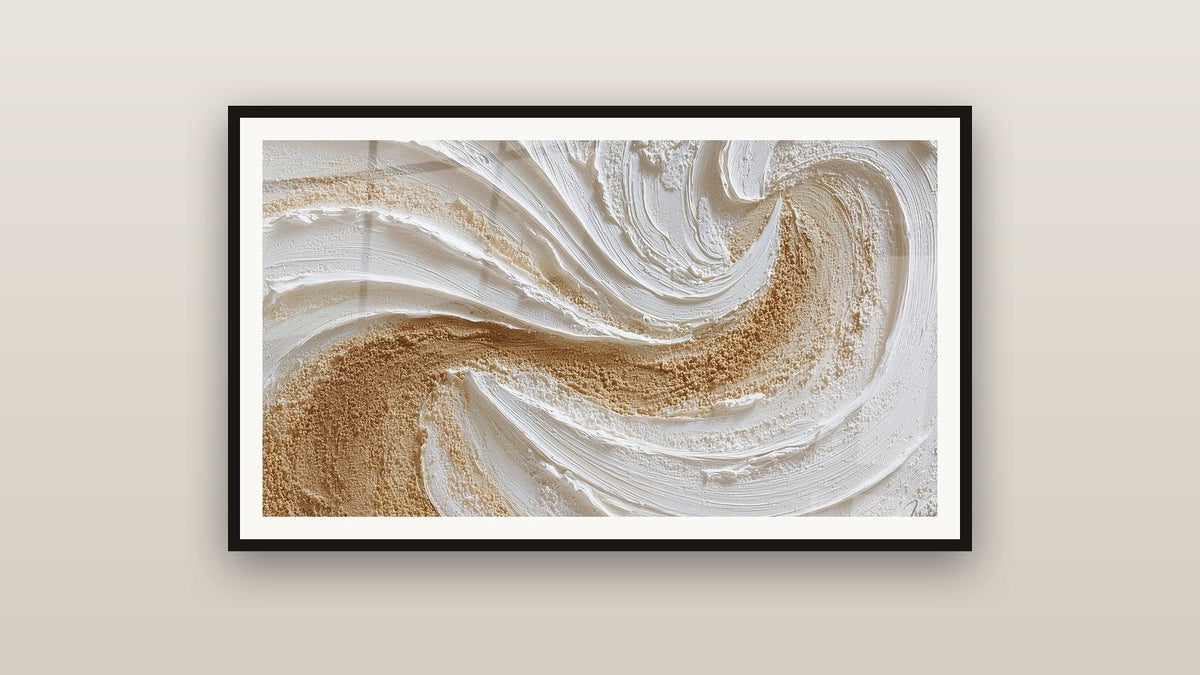
Abstract Whirlwind Painting Beige and White with Fluid Movements - Earthly Harmony - Feng Shui Centre Terre Edition
233,90€
Discover this painting3. Lighting: Revealing the Beauty of the Zen Decor Painting
Lighting plays a crucial role in highlighting a feng shui painting or a zen painting.
-
Soft and subdued lighting: Wall sconces or LED strips with adjustable intensity allow you to soften the contours of the painting and create a soothing atmosphere conducive to meditation.
-
Use of natural light: Placing a Buddha painting facing a window captures daylight and accentuates the depth of the colors, reinforcing its relaxation effect.
-
Light contrasts: A spot directed at a zen frame in relief highlights the textures and intensifies the perception of the natural elements it represents.
4. Materials and Textures: Fusion Between Art and Environment
The interaction between the materials of the furniture and those of a zen nature painting reinforces the cohesion of a space.
-
Dialogue between materials: A zen canvas with slightly raised reliefs blends in with furniture made of rattan, linen or raw wood, creating a sensory continuity.
-
Integration into the decor: A zen decor painting printed on a textured canvas blends ideally with walls made of natural stone or polished concrete, bringing a touch of modernity to the minimalist spirit.
-
Evocation of Asian symbols: A Buddha painting or an illustration of landscapes inspired by Asia promote an atmosphere inspired by feng shui, where each element seems to naturally find its place.
5. Art as a Vector of Inner Harmony
Far from being a simple decorative element, a zen wall painting tells a story and conveys a soothing energy.
-
Create a refuge of serenity: A bedroom adorned with a relaxation painting inspired by nature invites sensory escape and well-being.
-
Awaken the senses: A feng shui painting with delicate motifs of bamboos and lotuses instantly transports you to a universe of meditation and relaxation.
-
Personalize your interior with a spiritual message: Opting for a Buddha painting brings a symbolic dimension and recalls the importance of the quest for inner balance.
The integration of a zen decor painting into an interior is not only based on aesthetics, but also on a true quest for visual tranquility and inner harmony. Thanks to a thoughtful choice of colors, proportions, textures and lighting, designers transform each space into a sanctuary dedicated to serenity and positive energy.
— Our selection


Explore our collections