

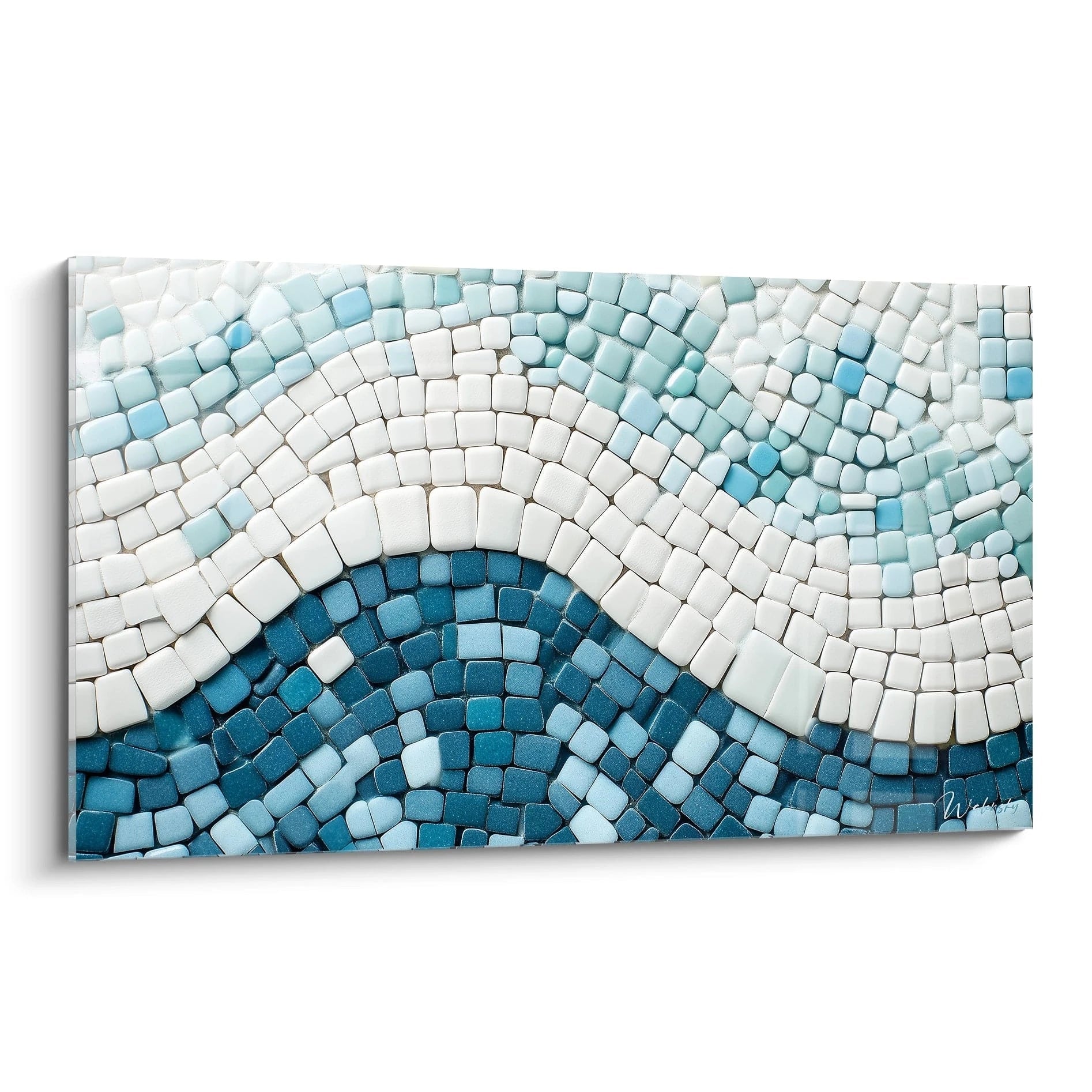






Do Water-Themed Artworks Enhance a Spa Atmosphere?
November 10, 2025 · 12 min read · by Walensky
This morning, upon entering a five-star spa nestled in the Swiss Alps, I was struck by an obvious realization: it wasn't just the scent of eucalyptus or the steam that created this atmosphere of absolute serenity. A monumental photograph of a crystalline waterfall on the wall seemed to literally refresh the surrounding air. The moving water, frozen in time, transformed the space into a sanctuary of well-being.
Here’s what artworks with aquatic elements bring to your spa ambiance: an immediate amplification of the feeling of relaxation through the sensory evocation of water, a visual consistency that reinforces your space's spa identity, and a psychological anchor promoting deep relaxation. After designing more than forty wellness spaces within hotels and thalassotherapy centers, I can affirm that the choice of wall visuals directly influences the quality of the experience lived.
How many times have you decorated your bathroom or relaxation corner with care, without managing to recreate the soothing atmosphere of real spas? You may have invested in essential oils, scented candles, even a hydrotherapy tub, but something is missing. That enveloping dimension, that immediate invitation to let go.
Rest assured: it's not about redoing your entire decor. The strategic addition of artworks evoking water can radically transform the perception of your space. I will show you how to choose and integrate these visual elements to create a true spa atmosphere in your home, drawing on principles that I apply daily in my professional projects.
Water as a universal language of relaxation
When I accompany my clients in the creation of wellness spaces, I always start with this question: what type of relaxation are they seeking? The answer directly influences the choice of aquatic representations. Because water has only one face: it possesses a thousand expressions, each resonating differently with our deep emotions.
Cascades and waterfalls evoke purification, renewal. Their descending movement creates a visual dynamic that soothes the mind while maintaining a form of vital energy. In a recent project for a physiotherapy center, I installed a series of three paintings representing an Icelandic waterfall: patients spontaneously reported a sensation of freshness and increased mental clarity.
Oceans and marine horizons offer a completely different dimension: immensity, infinite perspective, invitation to inner travel. A large format depicting an oil sea at dusk instantly transforms a room into a meditative space. I observed in a thermal spa that customers naturally spent more time in the area equipped with such a work, unconsciously prolonging their moment of relaxation.
Calm bodies of water – mountain lakes, Zen Japanese ponds, reflections in the water – embody absolute serenity. Their smooth surface acts as a soothing mirror for the mind. These visuals work particularly well in meditation spaces or reading corners adjacent to your bathroom.
The science behind the soothing effect of aquatic visuals
Why does a simple painting depicting water possess this remarkable power? During an environmental psychology training course I took in Stockholm, I discovered fascinating research on our neurological reaction to natural elements.
Our brains instinctively associate water with survival and well-being. This primal connection triggers a measurable reduction in cortisol, the stress hormone, when we observe aquatic scenes. A study conducted by the University of Exeter even demonstrated that a simple image of an aquatic environment could decrease heart rate and blood pressure in just minutes.
The phenomenon of effortless attention also explains this effectiveness. Unlike urban stimuli which require active and tiring concentration, natural elements like water capture our attention gently and restoratively. This is exactly what a spa space seeks: to allow the nervous system to switch to parasympathetic mode, that of recovery and regeneration.
In my creations, I systematically integrate this scientific dimension. For a yoga center in Brussels, I selected macro photographs of water droplets on lotus leaves. The feedback from practitioners was unanimous: the transition to a meditative state happened more naturally, as if the space itself were guiding them towards introspection.
The perceived temperature of your space
Here's an aspect that few people consider: paintings with aquatic elements literally change the perceived temperature of a room. During a project for a hammam in Lyon, I noticed that adding visuals of glaciers and turquoise waters brought a welcome psychological contrast to the intense heat. Customers reported a refreshing feeling of coolness, without any actual temperature modification.
This thermal perception directly influences comfort and the length of stay in a wellness space. A painting depicting tropical crystalline waters can make a white-tiled bathroom less visually cold, while a mountain waterfall will temper the atmosphere of a south-facing room.

What types of aquatic paintings to choose for your home spa?
After dozens of projects, I have identified five categories of aquatic visuals particularly effective in strengthening a spa atmosphere. Each has its specific advantages depending on your configuration and sensory goals.
Large-format immersive photographs are my first choice for generous spaces. An image of Icelandic waterfalls measuring 120x80 cm creates a visual window that perceptually expands the room. In an 8m² bathroom, this approach completely transforms the experience: you no longer feel in a simple functional room, but transported to a natural and restorative environment.
Triptychs and multiple compositions offer narrative dynamics. I recently installed a series of three paintings showing the evolution of a wave, from the open sea to the shore. This progression creates a visual movement that naturally accompanies the spa journey: preparation, immersion, return to calm. The effect is remarkably harmonious in transitional spaces, such as a hallway leading to your bathroom.
Abstract aquatic representations seduce contemporary interiors. Whirlpools of blues and greens evoking water without literally representing it bring sophistication and tranquility. For a converted industrial loft where I created a spa corner, this approach made it possible to maintain stylistic consistency while introducing the desired sensory dimension.
Macro-photographs of aquatic details – bubbles, reflections, ripples – create a meditative intimacy. Their close scale invites slow contemplation, attentive observation. I particularly recommend them for small spaces where a large landscape might seem overwhelming. Above a bathtub, an image of crystalline droplets on a calm water surface becomes a natural meditation support.
Underwater scenes offer a unique immersive experience. Corals, tropical fish evolving in turquoise waters, games of light crossing the surface: these visuals create total escapism. However, pay attention to balance: too much movement or detail can become stimulating rather than soothing. I prefer clean compositions, with areas of visual emptiness allowing the eye to rest.
— Our selection


The art of positioning your aquatic paintings
The best painting in the world will lose its impact if it is poorly positioned. The location determines the effectiveness of your spa atmosphere as much as the visual itself. Here are the rules I consistently apply in my professional arrangements.
Face-to-face contemplation remains the most powerful configuration. Place your main painting directly opposite your bathtub, at eye level when immersed. This position transforms bathing into an immersive experience: your gaze naturally rests on the aquatic visual, creating a sensory continuity between the water surrounding you and its visual representation. In a hotel spa in Brittany, this simple arrangement increased the average bath duration by nearly fifteen minutes.
Transition zones deserve special attention. The entrance to your wellness space, the hallway leading to it, are psychological thresholds. A painting with aquatic elements placed strategically signals: “you are leaving the ordinary world to enter your sanctuary.” I often use vertical formats in these passages, creating an elegance that naturally guides towards the relaxation area.
Natural light should be your ally, never your enemy. Absolutely avoid direct reflections that would turn your painting into a disturbing mirror. Position it perpendicularly to windows rather than facing them. If your bathroom lacks natural light, plan for indirect lighting – spotlights directed at the wall rather than directly on the painting – which will highlight the nuances of blues and greens without creating glare.
The rule of thirds adapted to the spa
In a wellness space, I apply a modified version of the photographic rule of thirds. The aquatic painting should occupy about one third of your main field of vision when you are in a relaxed position. Too small, it loses its immersive power. Too large in a small space, it can create a feeling of oppression contrary to the desired effect.
For a standard bathtub, this generally corresponds to a minimum format of 80x60 cm. In an Italian shower where you stand, prioritize a vertical format of 60x90 cm that naturally accompanies your posture. The goal is for the painting to become a soothing presence without visually monopolizing the space.

— You may also like


Harmonize colors and materials for total spa coherence
An aquatic painting never exists in isolation. Its effectiveness depends on its dialogue with the environment. During my consultations, I spend as much time analyzing what already exists as choosing the visual itself, because it is the overall harmony that creates a true spa atmosphere.
The tones of blues and greens in your aquatic paintings should resonate with the materials present. If your bathroom features light wood and white, prioritize visuals with luminous turquoise waters that extend this clarity. For a space with stone-like tones – gray, beige, taupe – representations of deeper waters, with ultramarine blues and emerald greens, will create a rich contrast without stylistic disruption.
I completed a fascinating project for a Mediterranean villa: the client wanted to recreate the atmosphere of Roman baths. We selected paintings depicting milky thermal springs, with white-blue tones that beautifully complemented the travertine marble walls. The effect was striking in its coherence, as if the entire space breathed in unison.
Frames deserve specific consideration. In a humid spa environment, I systematically avoid untreated natural wood frames that would quickly warp. Brushed aluminum finishes, moisture-resistant composite frames, or even better, canvas paintings with thick frames that are self-sufficient, constitute durable choices. For a spa zen, I often prefer the absence of a frame: the image seems to float on the wall, reinforcing the impression of openness to a soothing elsewhere.
Don't forget the textiles and accessories that complete the ensemble. Towels in tones echoed by your aquatic painting, a bath mat whose texture evokes sand or pebbles, containers of essential oils in frosted glass reminiscent of water: these subtle echoes weave a sensory coherence that multiplies the spa effect. It is the sum of these harmonious details that transforms a functional space into a personal sanctuary.
Ready to transform your space into a true aquatic haven of peace?
Discover our exclusive collection of wall art for spa that captures the soothing essence of water in all its expressions. Each piece is selected for its ability to create this deep relaxation atmosphere you are looking for.

Create your visual wellness ritual
Beyond aesthetics, a painting with aquatic elements quickly becomes an integral part of your relaxation ritual. I always recommend to my clients to establish a conscious connection with their visuals: before entering the bath, take thirty seconds to really observe your painting. Let your gaze follow the movement of the waterfall, the horizon line on the ocean, the reflections in calm water.
This visual micro-meditation prepares your nervous system for relaxation. Your brain gradually learns to associate this image with a state of deep well-being. After a few weeks, simply seeing your aquatic painting will automatically trigger a relaxation response. It's exactly the principle we apply in professional spas, where every visual element participates in psychological preparation for relaxation.
One of my clients, a senior executive constantly under pressure, confided in me six months after installing a large cascade painting in his bathroom: "Now, when I come home stressed from work, I go straight to the bathroom, look at the cascade for a minute, and literally feel my breathing slow down before even touching the water." This emotional anchoring power of aquatic visuals far exceeds their decorative function.
Imagine yourself six months from now: you push open the door to your wellness space, your gaze falls on this crystalline cascade that seems to whisper its freshness, or an endless ocean inviting you on an inner journey. The warm water welcomes you while the water depicted on the wall amplifies every sensation. You are no longer simply in your bathroom: you are in your personal spa, a sanctuary where every visual element conspires for deep relaxation. This transformation begins with a choice: that of a painting that resonates with your quest for serenity. And this choice, you can make it today.

More selected pieces
Extraterrestrial Planet Painting - Cosmic Horizon - Diverse Space Edition
233,90€
Discover this artwork →Frequently Asked Questions about Aquatic Paintings in a Spa Setting
Does a painting depicting water really resist the humidity of a bathroom?
Absolutely, provided you choose the right support and treatment. I systematically recommend paintings on aluminum dibond, plexiglass, or canvas prints with specific protective varnish. These supports are designed to withstand constant humidity. Avoid simple glass paper prints, especially in a small, poorly ventilated bathroom. In my projects, I regularly install aquatic paintings in hammams and saunas where the humidity reaches 100%: with the right materials, they retain their luster for years. Also ensure proper ventilation of your bathroom – an efficient VMC protects both your paintings and your walls. If your room is particularly humid, position the painting at a reasonable distance from direct water source: two meters from the shower rather than immediately adjacent, for example.
What size of aquatic painting should I choose for a small bathroom?
The ideal size depends less on the total area than on your field of vision from your relaxation position. In a bathroom of only 4m², a format of 60x40 cm can work perfectly if it is placed facing the bathtub, at eye level. The common mistake is to choose too small for fear of visually cluttering the space: a tiny picture will have no immersive impact. My advice: hold an open magazine at arm's length from your bathtub or usual position. The size that seems comfortable to observe without turning your head corresponds to your optimal format. In small spaces, I often prefer a vertical format rather than a horizontal one: for example, 50x70 cm, which visually elongates the room while offering sufficient presence. One well-sized picture creates more of a spa atmosphere than three small scattered images. Focus your visual impact rather than diluting it.
Do aquatic paintings work as well as a real decorative fountain?
They play complementary rather than competing roles, with distinct advantages. A fountain brings the sound dimension – the rustling of real water – which indeed has a remarkable soothing power. But it requires regular maintenance, consumes electricity, can create additional humidity problematic in a small bathroom, and constant noise does not suit everyone. Some people find the permanent splashing disturbing rather than relaxing, especially for falling asleep if the bathroom adjoins the bedroom. Paintings with aquatic elements offer the soothing visual dimension without these constraints: no maintenance, no noise (freedom to choose silence or your own music), no energy consumption. In my projects, I often combine the two: a small ambient fountain in the relaxation corner, and a large aquatic painting facing the bathtub. But if I had to choose one element to create a spa atmosphere, I would prefer the painting for its versatility and constant visual impact without constraint.


