


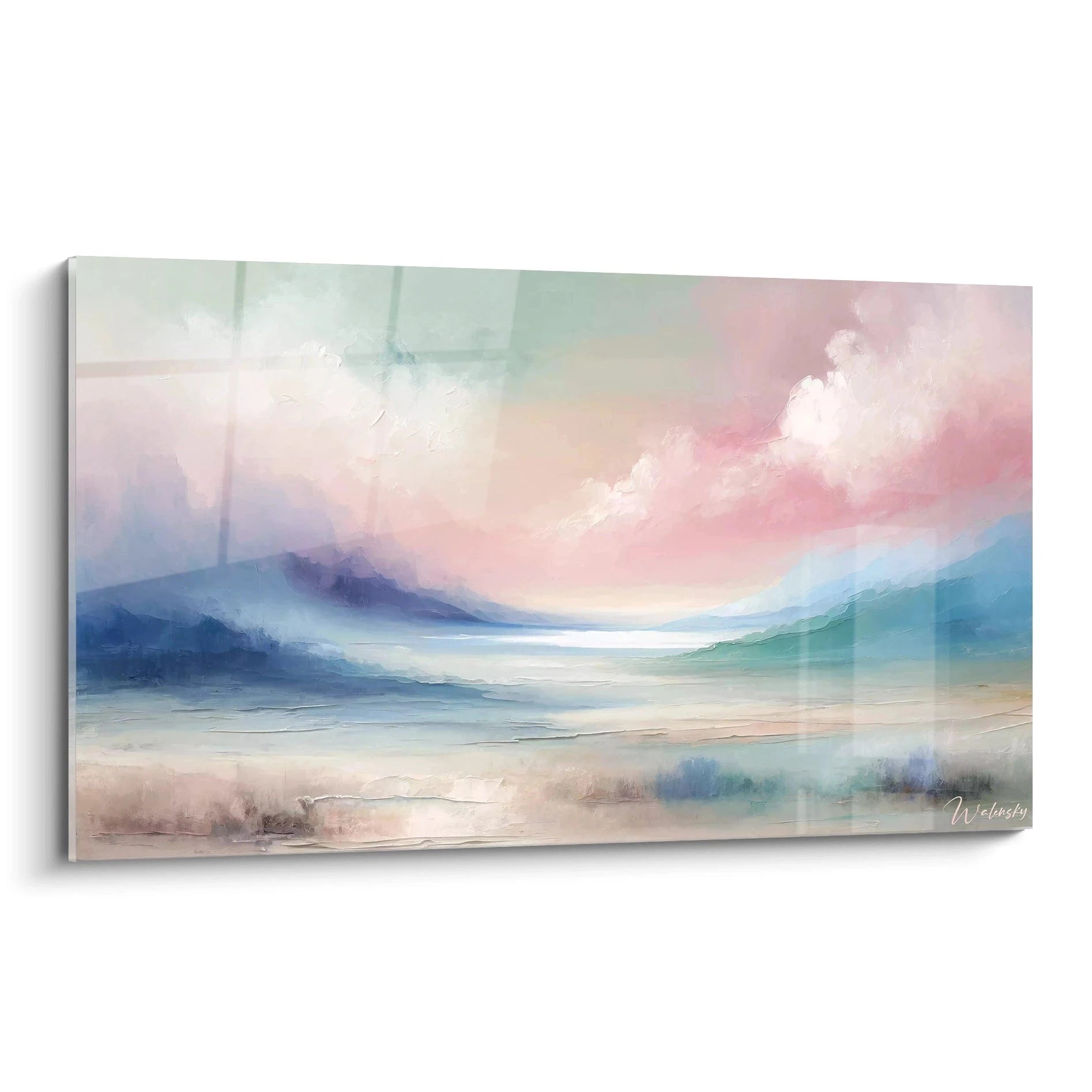

What type of varnish eliminates annoying reflections under restaurant lighting?
December 1, 2025 · 9 min read · by Walensky
That evening, in that Michelin-starred Milanese restaurant, I realized how easily a simple reflection could ruin everything. A magnificent artwork hanging on the back wall disappeared under the halos of LED suspensions. The artistic director confided his frustration to me: "These paintings cost a fortune, but no one can really see them." The solution? It lay in a technical gesture that I have been perfecting for fifteen years in my conservation workshops: choosing a matte varnish.
Here's what an anti-glare varnish brings to your restaurant spaces: perfect visibility of artworks from all viewing angles, a sophisticated atmosphere without visual disturbances, and authentic enhancement of each artistic investment. In environments where light constantly dances between chandeliers, spotlights, and natural light, the varnish becomes your best ally.
You have invested in paintings that tell your identity. You have taken care of every detail of your decoration. Yet, as soon as night falls, your artworks transform into dazzling mirrors. Customers avert their gaze, photographers change angle, and this refined atmosphere you were looking for evaporates under aggressive reflections.
I reassure you immediately: this problem is not a fatality. After working on more than eighty scenography projects for high-end establishments, I have developed a precise understanding of what really works.
I will reveal to you exactly what type of varnish transforms a shiny painting into a centerpiece visible under any lighting, why all matte varnishes are not equal, and how to choose the finish that enhances rather than tarnishes your artistic investments.
The discreet science of non-reflective finishes
In my restoration laboratory in Florence, I spent hundreds of hours testing the reactions of different varnishes under various lighting conditions. The conclusion is unequivocal: modern acrylic resin based matte varnish constitutes the absolute reference for restaurant environments.
Unlike glossy varnish which creates a smooth and reflective surface, matte varnish incorporates microparticles that diffuse light. Imagine a surface composed of thousands of tiny facets oriented randomly. When a ray of light strikes this surface, it disperses in all directions rather than bouncing directly into your eyes.
This diffusion does not mean a loss of visual quality. On the contrary, it reveals the true colors of the artwork. The pigments appear in their authentic intensity, without that white veil characteristic of reflections which masks subtle nuances.
The three families of anti-glare varnishes
Traditional matte varnish uses wax or natural resins mixed with matting agents. Effective, but it yellows over time and requires regular maintenance in the atmospheres loaded with kitchens.
The modern satin varnish offers an elegant compromise. It eliminates 70% of reflections while retaining a slight depth. I recommend it for spaces with mixed lighting, where you want to keep a minimum of shine while controlling glare.
The professional acrylic matte varnish represents the ultimate for restaurants. Its advanced formulation incorporates ultra-fine silicas that create a perfectly matte surface, resistant to UV rays and temperature variations. It's the one I consistently use for my fine dining clients.
Why restaurants require specific protection
The constraints of a restaurant are nothing like those of a gallery or private living room. I noticed this difference during an intervention in a contemporary Parisian bistro: in three months, glossy varnishes had developed a greasy patina invisible to the naked eye but which amplified reflections.
The atmosphere of dining spaces combines humidity, temperature variations, subtle fumes and multi-directional lighting. A suitable varnish must not only eliminate reflections, but also resist these silent aggressions.
Professional matte varnishes form a microporous protective barrier. They allow the canvas to breathe while repelling greasy particles. Under the warm white LED lighting typical of modern restaurants, this finish reveals an amazing depth.
The critical angle test
Here's how I validate the effectiveness of an anti-reflective varnish: I place the artwork two meters from an intense light source, then observe it from different angles. With a glossy varnish, there is always a glare zone between 30 and 45 degrees. With a quality matte varnish, this zone disappears completely.
In a restaurant, your customers view paintings from various positions: seated, standing at the bar, walking through the room. A uniform matte varnish ensures that everyone perceives the artwork in its true colors, regardless of their location.

The costly mistakes to absolutely avoid
Last summer, a restaurateur contacted me urgently. He had had his new acquisitions varnished with a low-end matte product. Result: the paintings looked covered with a grayish veil that stifled all chromatic vibrancy. Classic but devastating mistake.
Low-cost matte varnishes contain crude matting agents that create a chalky texture. Under raking light, this texture becomes visible and gives the impression of a faded artwork. Professional varnishes, on the other hand, use nanoparticles that mattify without altering color perception.
Another frequent pitfall: applying matte varnish to a glossy surface without prior preparation. The two layers do not fuse correctly, creating areas of irregular opacity. In my workshop, we systematically strip old finishes before applying a new finish.
The importance of the initial support
A detail often overlooked: the type of canvas radically influences the appearance of the varnish. On a fine-grained canvas, matte varnish creates a sublime velvety surface. On a coarse-grained canvas, the same varnish can accentuate the texture excessively.
For restaurants, I prefer medium-grain supports that offer the best compromise. Matte varnish settles into the interstices without creating visible relief, while maintaining this essential anti-glare capability under directional spotlights.
— Our selection


The little-known alternatives that change everything
During a project for a fusion restaurant in Barcelona, the chef wanted to retain a slight sheen for certain intensely colored abstract works. The solution? A semi-matte varnish applied in two ultra-thin layers.
This technique, which I have perfected over the years, allows precise modulation of the level of light reflection. The first layer, very diluted, penetrates the canvas fibers. The second, slightly more concentrated, creates a homogeneous finish that eliminates 85% of reflections while preserving the depth of blacks and the brilliance of bright colors.
For contemporary works on non-traditional supports – metal, plexiglass, lacquered wood –, I use specialized matte varnishes that adhere without prior priming. These modern formulations have revolutionized artistic staging in commercial spaces.
Controlled spray varnishing
The application method radically transforms the final result. With a brush, even with an excellent matte varnish, you risk streaks and uneven thickness. Professional spraying, carried out in a ventilated booth, deposits a microscopic mist that dries instantly into a perfectly uniform film.
This technique requires specific equipment, but the investment is worth every dollar for a restaurant that focuses on visual excellence. The result is incomparable: no brush marks, no variation in gloss, just an impeccable matte surface that enhances the artwork.

How to choose according to your specific lighting
Each type of lighting interacts differently with finishes. In my consultations, I always analyze the light plan before recommending a varnish.
White LED suspensions, popular in contemporary restaurants, create intense bright spots. A matte varnish with a high diffusion index (IDL greater than 90) neutralizes these aggressive point sources.
Indirect lighting from cornices or ceiling-oriented spotlights generates less direct reflections, but can create problematic shadow areas. A satin varnish is better suited in this case, as it captures diffused light and maintains some brightness of the artwork.
For large bay windows, a real challenge in restaurants with views, only a full matte varnish works. Natural light, changing and multidirectional, would turn a shiny painting into an unusable mirror at certain times.
— You may also like


Maintenance that preserves the anti-reflective effect
A well-maintained matte varnish retains its anti-reflective properties for years. In a restaurant I have been advising in Lyon for eight years, the varnished paintings have never needed revarnishing.
The secret? A gentle weekly dusting with an antistatic microfiber cloth. No classic cleaning products that leave a greasy film paradoxically amplifying reflections.
Every six months, professional cleaning with specific solutions for matte varnish restores light diffusion capacity. These products contain agents that « reorganize » the microporous surface structure without abrading it.
Transform your walls into a gallery without visual compromise
Discover our exclusive collection of paintings for Restaurant that already integrate professional anti-reflective finishes for perfect visibility under all lighting conditions.

In the same vein
Japanese Artwork No. 3 - Japan Around the World Edition
233,90€
Discover this artwork →Visualize your transformed space
Imagine your customers entering your restaurant tonight. Their eyes are immediately captured by this masterful work on the back wall. No blinding reflection, no unsightly halo. Just the pure intensity of colors, the depth of textures, the emotion that the artist wanted to convey.
The gallery director no longer has to apologize for « the unfortunate reflection depending on the time ». Photographers capture perfect images for your social networks. Your artistic investment finally fully plays its role in the experience you offer.
This transformation begins with a simple technical decision: choosing the professional matte varnish adapted to your specific lighting conditions. For existing works, competent revarnishing is sufficient. For your future acquisitions, specify this requirement from the start.
Art in your restaurant should never be a compromise. With the appropriate finish, each painting becomes what it should be: a magnetic presence that enriches the atmosphere without ever assaulting it.
Frequently asked questions about anti-glare varnishes
Does a matte varnish make colors less vibrant?
This is the most persistent misconception, and it is totally false with modern professional varnishes. On the contrary, a quality matte varnish reveals colors in their absolute truth. Why? Because it eliminates the white veil of reflections that masks subtle nuances. In my workshop, I systematically carry out comparative tests: customers are amazed to see that the colors seem more intense after applying a matte varnish. The fundamental difference lies in the formulation: professional matte varnishes use transparent resins with optimized refractive index, while low-end varnishes contain whitening agents that actually create a faded effect. For a restaurant, this preserved vibrancy makes all the difference between decoration that goes unnoticed and works that mark people's minds.
Can a matte varnish be applied to any painting?
The technical answer is yes, but with essential precautions. Antique paintings require prior de varnishing by a qualified restorer, as layering creates chemical incompatibilities. For contemporary acrylic works, application is direct after a simple dusting. Recent oil paintings (less than six months) must absolutely be completely dry before varnishing, otherwise the varnish traps residual solvents and causes cracking in the long run. In a restaurant context, I always recommend entrusting this operation to a professional for valuable pieces. For reproductions or decorative works, a quality professional spray matte varnish can be applied by your teams, provided that the conditions are scrupulously respected: temperature between 18 and 22°C, humidity below 65%, and three thin coats rather than one thick coat which would create runs.
How long does the anti-glare protection of a matte varnish last?
Under normal display conditions for a restaurant – without prolonged direct sunlight, with stable temperature and regular cleaning –, a professional matte varnish maintains its anti-reflective properties for a minimum of ten to fifteen years. I have artworks in my own favorite restaurant in Florence that haven't moved in twelve years and remain perfectly matte. The main degradation factors are exposure to UV rays (hence the importance of varnishes with integrated filters), sudden temperature variations (be careful with paintings near kitchens or doors), and the accumulation of greasy dust which gradually creates a reflective film. Annual professional cleaning is generally sufficient to maintain the anti-reflective effect at 95% of its initial effectiveness. If you notice a progressive reappearance of reflections after a few years, it's probably that the initial varnish was of insufficient quality or that the exposure conditions are particularly aggressive. In this case, a simple re-varnishing immediately restores the impeccable matte finish.


