I still remember renovating a Mediterranean restaurant in Marseille. The owner called me urgently: "My dining room is huge, the white walls swallow all the energy, my customers feel lost in a hangar." Upon entering, I immediately understood. The volumes were there, but the soul was missing. It's precisely in these generous spaces that wall texture becomes your best ally. Not just any texture: one that reveals itself from the back table, dialogues with the light, and transforms a cold room into a warm showcase.
Here's what textured paint techniques bring to your large restaurant dining room: an instantly recognizable visual identity, architectural depth that structures the space, and an aesthetic signature that justifies your premium prices.
You’ve probably already felt this frustration: painting walls in a large dining room is like pouring water into the ocean. The result is flat, impersonal, invisible. Customers walk through the space without really seeing it. You invest in decoration, but nothing catches the eye. Instagram photos of your establishment lack character.
Rest assured: you don't need to redo all your architecture. The textured paint techniques that I’m going to reveal radically transform the perception of a volume, even from 15 meters away. In three weeks, this Marseille restaurant became one of the most photographed in the Vieux-Port.
I will show you exactly which techniques create these spectacular textures, how to choose them according to your universe, and how to implement them so that your room finally tells the story you want to convey.
Venetian stucco: when Italian tradition sculpts light
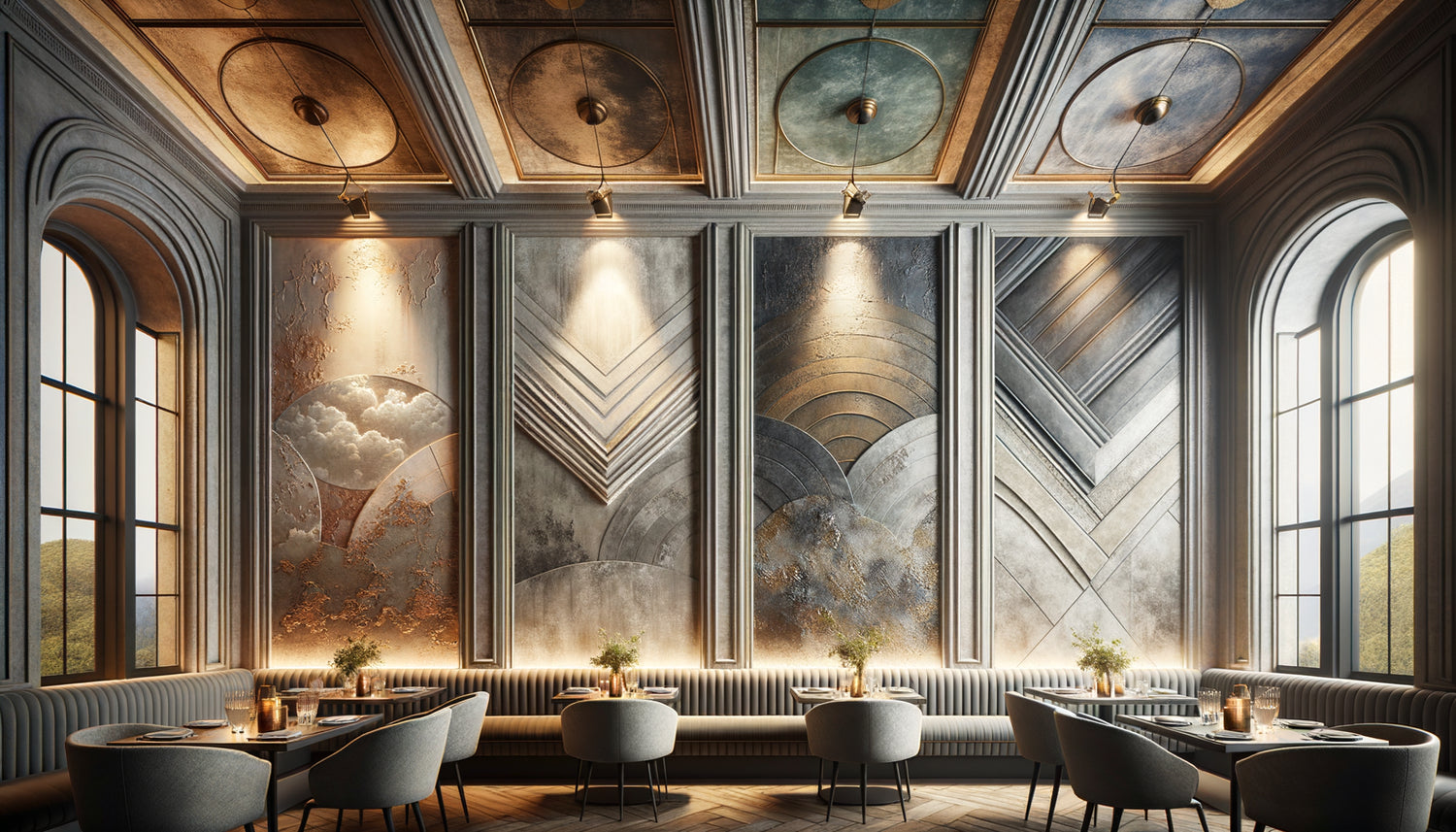
In the world of textured wall finishes, Venetian stucco has reigned supreme for centuries. This ancestral technique, which I learned from artisans in Venice, consists of applying several layers of tinted lime with precise, almost choreographed gestures. Each pass of the trowel creates micro-reliefs that capture the light differently.
What fascinates about Venetian stucco is its ability to create depth without aggression. From afar, your customers perceive a living wall, almost organic, which changes according to the time and lighting. Up close, they discover a subtle color palette, delicate plays of shadows. This is exactly what a large room needs: a texture visible from a distance that doesn't tire the eye.
Application requires patience and skill. Three to five successive layers are necessary, each polished with a stainless steel trowel. The result? A satin finish, almost marbled, of timeless elegance. I particularly recommend this technique for gastronomic restaurants, Mediterranean establishments, or any space seeking discreet sophistication.
The tones that enhance stucco in large volumes
Warm beiges, taupe grays, sienna earths: these colors reveal the richness of stucco. On an 8-meter high wall, I saw a pearlescent gray nuance completely transform the perceived acoustics of a room. Guests spontaneously spoke more softly, as if enveloped by the mineral softness of the walls.
Structured lime plaster: the relief that dialogues with architecture
When I want to create a texture really visible from afar, I turn to structured lime plaster. Unlike smoothed stucco, this technique frankly assumes its relief. We work with trowels, sponges, wire brushes to create patterns: waves, vertical streaks, natural stone effects.
I used this approach for an industrial restaurant in Lyon. The owner wanted to preserve the loft spirit while softening the coldness of the volumes. We applied a lime plaster in irregular horizontal stripes, like gusts of wind frozen in the material. From the entrance, 20 meters away, the wall literally vibrates. The texture captures the LED spotlights and creates shadows that animate the space.
The major advantage? This technique breathes. Lime is a living material that naturally regulates humidity. In a restaurant kitchen where temperature differences are important, this is a considerable asset. Your textured walls remain beautiful without heavy maintenance, unlike some acrylic paints that move over time.

How wall textures visually restructure your large room
Let's talk spatial strategy. A frequent mistake I notice: applying the same paint texture everywhere. In a large restaurant room, not all walls play the same role. The back wall, the one your customers see when they enter, deserves the most spectacular texture. It is your visual signature.
Side walls can receive a more subdued texture that accompanies without competing. I often use a mixed technique: an accent wall in deeply textured Venetian stucco, and other surfaces in lightly structured lime wash. This hierarchy creates a clear reading of the space, even in 200 m² of room.
The texture visible from a distance also acts as an architectural corrector. A ceiling that is too high? A horizontal texture on the walls visually lowers volumes. A room that is too narrow? Vertical streaks miraculously elongate the perspective. I transformed an old industrial hall into an intimate restaurant simply by playing with the orientation of the wall textures.
Lighting: The Secret Revealer of Your Textures
A paint texture without appropriate lighting is like a gourmet dish in the dark. I systematically install low-profile lights that make the reliefs sing. LED spotlights placed 30 cm from the wall, directed parallel to the surface, create spectacular shadows that reveal every nuance of your textured plaster.
Polished Concrete: The Raw Modernity That Structures Space
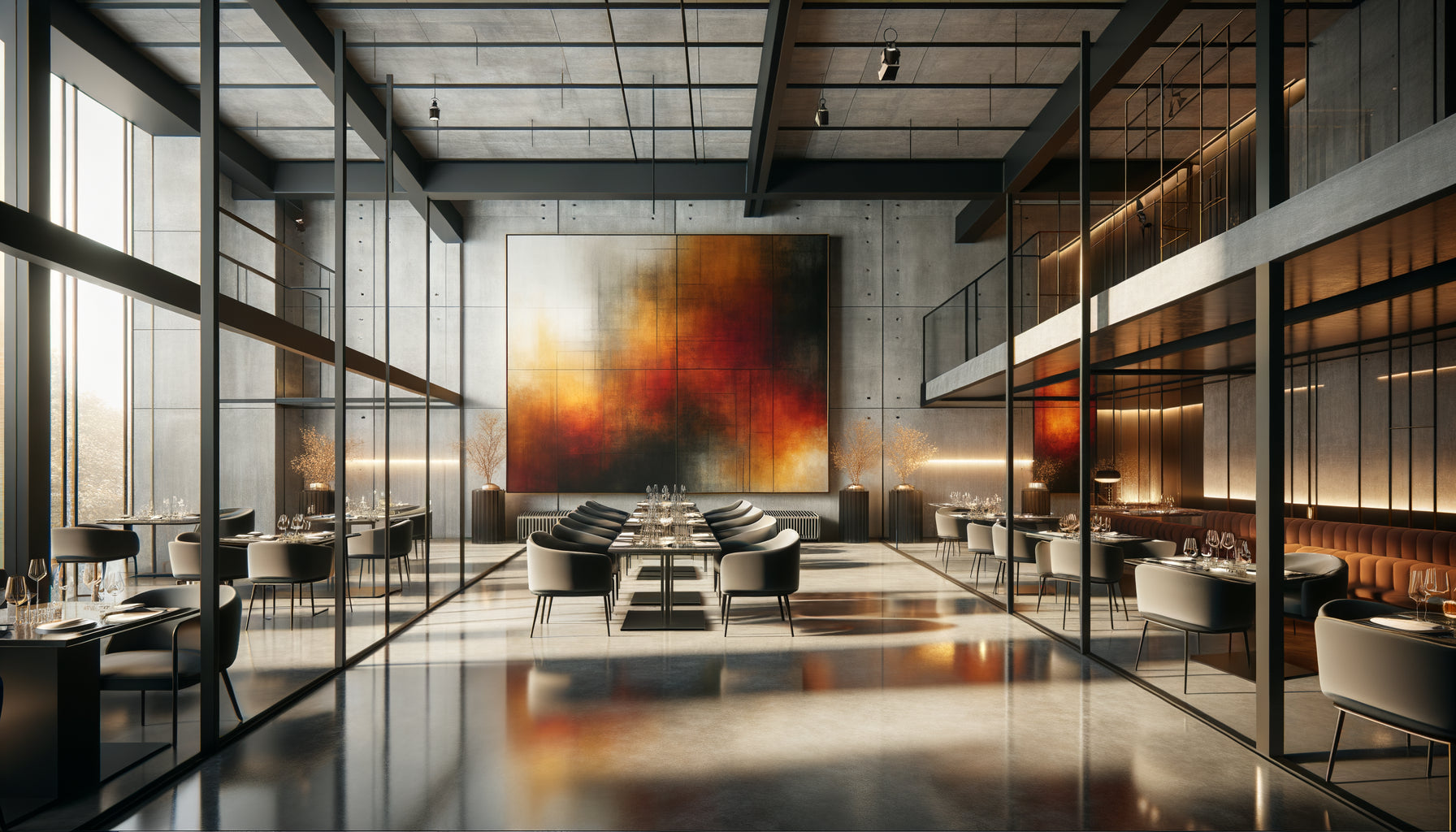
For restaurants with an industrial, contemporary or fusion style, polished concrete on the walls offers a fascinating alternative. This technique creates a subtle, almost tactile texture that evokes raw material while remaining sophisticated. It is applied in several passes with stainless steel trowels, creating random nuances impossible to reproduce.
What makes polished concrete visible from a distance is its play of matte and shine. Depending on the viewing angle, the surface reveals darker areas, tool marks, density variations. In a large restaurant hall, this chameleon effect maintains visual attention without fatigue.
I coated the walls of a contemporary Japanese restaurant in Paris with anthracite grey polished concrete. The contrast with the light wood furniture created a perfect visual tension. Customers systematically photographed the walls: the texture was present enough to structure Instagram images, without stealing the show from the dishes.
However, be careful: polished concrete requires impeccable preparation of the substrate and final protection (wax or varnish). But once properly applied, it lasts for decades.

Lime Wash Technique: The Poetry of Imperfections
If you are looking for an authentic wall texture, almost artisanal, lime wash is your ally. This technique consists of applying a very diluted lime paint in several crossed layers with a wide brush. The result? A slightly irregular appearance, as if the walls have always been there.
The spattering creates a soft texture, never aggressive, which works beautifully in Mediterranean restaurants, chic bistros, or establishments seeking a warm atmosphere. From afar, your customers perceive a chromatic richness, luminous variations that give character without excessive sophistication.
I used this approach for a Provençal restaurant on the outskirts of Toulouse. The ochre yellow spattered walls captured natural light and created the illusion of a mask in the countryside. Guests told me they instantly felt like they were on vacation. That's exactly the magic that a good paint texture can work.
Why lime is superior to textured acrylic paints
Acrylic effect paints can mimic textures, but they lack depth. Lime, an age-old material, brings an extra dimension: it ages well, breathes, and has an internal luminosity that industrial products never reproduce. In a large room where every detail counts, this difference is perceptible.
Your textured walls deserve a decoration to match
Discover our exclusive collection of wall art for Restaurant that perfectly dialogues with your textured wall finishes and amplifies the visual identity of your establishment.
Transforming your dining room: the complete project in 5 steps
Now that you know the major techniques, here's how to orchestrate your textured paint project in your large restaurant dining room. First step: define your impact zones. Identify the walls that will be most seen, those that frame the customer experience. These are the ones that will receive the most spectacular texture.
Second step: choose your technique according to your identity. A traditional gourmet restaurant will naturally gravitate towards Venetian stucco. A modern establishment will prefer concrete screed. A Mediterranean bistro will love the spattering. Consistency between texture and concept is fundamental.
Third step: test on samples. I always have 1m² test panels made in different lighting conditions. A beautiful texture in full daylight can become dull under your evening spotlights. Observe your samples at different times, from different distances.
Fourth step: plan the execution. Textured painting techniques require drying time. Allow 3 to 4 weeks for a complete project including preparation, application and finishing touches. Anticipate this period in your calendar.
Fifth step: smart maintenance. Contrary to popular belief, lime or stucco wall textures are easy to maintain. Regular dusting and annual touch-ups on high-traffic areas are sufficient. Your textured walls will last for years while retaining their character.
Visualize your transformed room
Imagine: your customers step through the threshold. Their eyes are immediately drawn to that back wall, vibrant with texture, which structures the entire space. They move forward, discover the nuances, the depth, the sophistication. Before even looking at the menu, they know they are in an exceptional place.
Visible texture from a distance is not just a decorative detail. It's the foundation of your visual identity, the first message you send, the signature that justifies your positioning. Restaurateurs I work with all notice the same thing: after installing quality wall textures, customers spend more time in their establishment, take more photos, and spontaneously recommend it.
Your large room has an architectural potential that the right painting technique will reveal. Venetian stucco, lime plaster, concrete screed or spatter: choose the one that resonates with your vision. And start with a wall. A single textured wall will already radically transform the perception of your space. Then, you won't be able to imagine your restaurant any other way.
The material on your walls tells your story. Make it unforgettable.