


Tableaux for cognitive stimulation: develop your mind through art
11 October 2025 · 14 min read · by Walensky
Do you sometimes stop in front of your bare wall, feeling that intellectual void sensation that frustrates you? That impression that your mind is mired in routine, that your thinking abilities are becoming dull day after day, while you aspire to stimulate your creativity and critical thinking?
Every morning, while having your coffee, your eyes scan these white and cold walls. You feel that intellectual hunger that torments you, that desire to nourish your mind other than through the omnipresent screens.
You may have tried crosswords, sudokus, brain training apps... But after a few weeks, boredom sets in and your cognitive motivation falls like a soufflé.
That's perfectly normal! These occasional exercises do not create the permanent stimulation environment that your brain needs. They remain artificial, disconnected from your emotional daily life.
At the end of this article, you will know how to transform your interior into a true cognitive stimulation laboratory thanks to wall art, and discover the 3 types of paintings that specifically develop your mental agility on a daily basis.
Why does your brain now crave complex art?
Your brain works like a muscle: without daily visual challenges, it loses its plasticity. Imagine a pianist who only plays basic scales – their fingers would eventually forget the virtuoso pieces. If you wait any longer, you are missing this precious neuroplastic window where your mind can still flourish.
🎨 Revealing testimony: Sarah, a 42-year-old architect, recently explained to me: "Since I hung this complex geometric artwork in my office, my colleagues notice that I find creative solutions more quickly. I spend a few seconds observing its patterns between files, and my brain seems to reorganize differently."
Conversation with a decor expert
The golden rule of cognitive stimulation: A painting that engages your reflection for 30 seconds a day develops your mental flexibility like a daily stretch loosens your muscles. Visible results in 3 weeks of regular contemplation.

Our eye-catcher
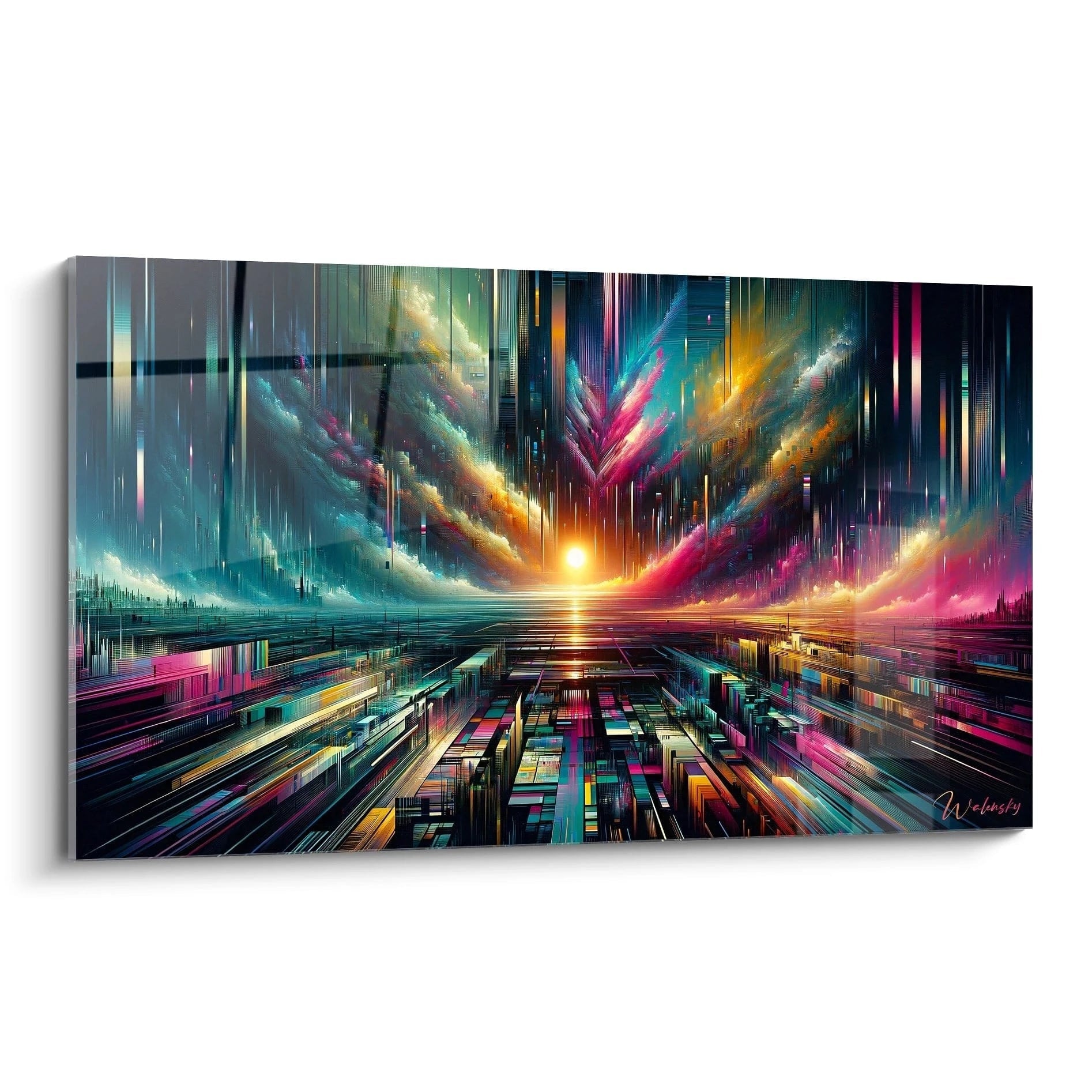
Digital Female Profile Painting - Neural Connections - neuronal edition
233.90€
Discover this painting →Understand what truly limits your cognitive potential
You are probably experiencing these 3 situations: you struggle to break out of established patterns in your projects, you ruminate on the same thoughts in a loop, or you feel less creative than before.
What’s really happening? Your brain lacks complex visual stimuli that force your neurons to create new connections. The problem isn't your intelligence, but the depleted cognitive environment surrounding you.
Imagine your brain as a garden: without new visual seeds to explore, it can only regrow the same thought patterns you're used to.
First hidden cause: daily visual monotony
Contrary to popular belief, it's not the screens that tire your brain, but their predictability. Your brain anticipates every scroll, every click. It slows down.
It’s like driving on the same highway all the time: your reflexes dull while a winding mountain road keeps you alert and focused.
This visual monotony creates neural laziness that affects your ability to innovate. When you change your visual environment, you will regain that intellectual curiosity you thought was lost.
🔍 Quick test: Look around you for 30 seconds. If nothing makes you question visually or intrigues you, your environment is limiting your creative potential. Check now!
Second hidden cause: the illusion of mental rest
Many believe that decoration should "rest" the brain. In reality, a resting brain is a brain that regresses. It needs aesthetic challenges to maintain its cognitive vitality.
It’s like believing a sportsman progresses by lying still. Your brain thrives in controlled stimulation, not boredom.
This belief deprives you of daily mental micro-exercises that maintain your intellectual agility. Complex art becomes your personal cognitive coach.
Third hidden cause: underestimating the impact of visuals
You probably underestimate the influence of your visual environment on your intellectual performance. Martin, an engineer, discovered that he solved his technical problems faster since contemplating a complex abstract work.
Observe your moments of inspiration: they rarely happen in front of a blank wall. Your brain needs visual richness to make unexpected connections.
This underestimation prevents you from accessing a powerful and natural cognitive lever , accessible 24/7 in your own living space.
3 signs that your environment is limiting your intellect:
- You seek inspiration elsewhere: You leave your home to be creative, because your interior doesn't nourish your reflection
- Your ideas go in circles: You feel this recurrent mental block , as if your brain were in energy-saving mode
- You avoid certain spaces: Unconsciously, you flee neutral rooms that give you this impression of intellectual emptiness
The trigger: active contemplation
What really makes the difference is active contemplation – looking at a work by seeking to understand its mechanisms. It’s like a domino effect: one minute of visual reflection triggers hours of creative thinking enriched. You will recognize this state by that feeling of awakened curiosity that inhabits you after carefully observing a stimulating work.
Rule of progressive stimulation: The more you nourish your gaze with complex works, the more your brain develops its analytical capacity in all areas. Check this by observing your decision-making after a week of artistic exposure.
| ❌ Limiting belief | ✅ Stimulating reality | 💡 Mechanism | 🎯 Cognitive benefit |
|---|---|---|---|
| Art should be restful for the eyes | Art should gently challenge the mind | The brain grows through controlled stimulation | Increased mental flexibility in everyday life |
| Neutral colors promote concentration | Complex compositions boost creativity | Visual richness nourishes the imagination | More frequent innovative solutions |
| A simple decor avoids distractions | A rich decor inspires connections of ideas | Visual details stimulate the association of ideas | Developed systemic thinking |
| Abstract art is too intellectual | Abstract art leads to interpretation | Visual ambiguity solicits analysis | Enhanced cognitive adaptability |

Our selection
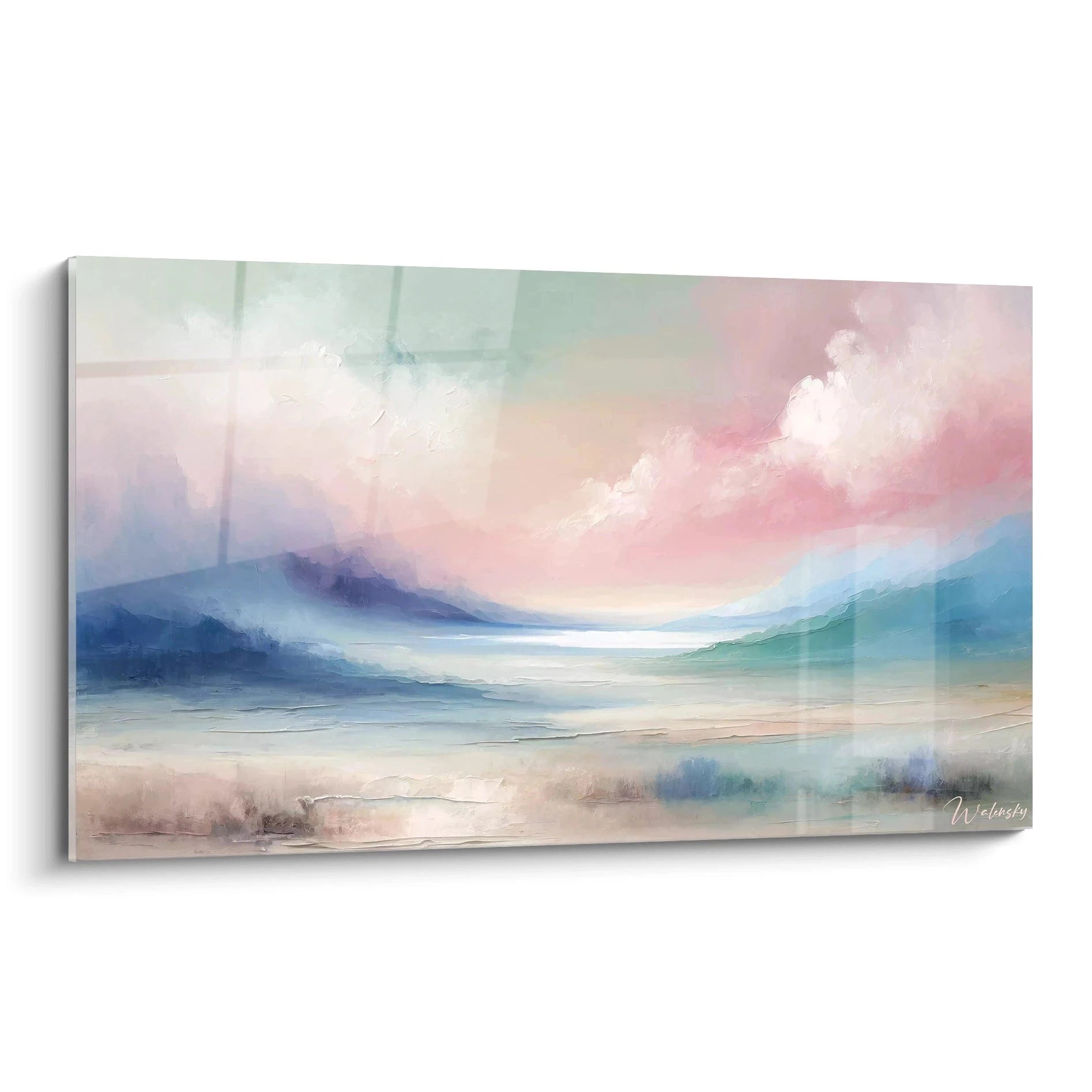
Tableau Connexions Synaptiques - Fusion Neuronale - neuronal edition
233,90€
Discover this paintingThe 3-level method to develop your mental agility
Rest assured, you don't need to revolutionize your entire interior at once. This progression is built like a cognitive training in stages. Imagine yourself in 3 months: your mind sharper, your ideas more fluid, your creativity multiplied by a simple daily look at your walls.
🏗️ Architecture of stimulation: Level 1 (awakening the gaze), Level 2 (progressive complexity), Level 3 (cognitive mastery). Each step develops a specific mental skill and naturally prepares the next. Result: a more agile brain and a restored intellectual confidence .
Level 1: Awaken Your Analytical Eye
This first step lays the foundations for your cognitive development. Like a gardener prepares their soil before sowing, you will prepare your brain to receive enriching visual stimuli. The satisfaction will be immediate: from the first day, you will feel this intellectual curiosity awakening.
Your Ideal First Cognitive Artwork
- Simple geometric work: Clear shapes with 3-4 contrasting colors, visible in local contemporary galleries. Check that lines naturally attract your eye without tiring you. Avoid blurry reproductions that do not produce visual acuity
- Museum-quality support: Stretched canvas or fine art print that reveals every detail. The principle: the clearer the image, the more precisely your brain works with precision. Recognize the quality by that feeling of "visual depth" that invites you to look longer
- Dedicated lighting: Adjustable spotlight or wall lamp that eliminates reflections. It's like having adapted glasses: lighting reveals the subtle nuances that nourish your reflection
Now, let's move on to strategic installation
Positioning for Maximum Cognitive Impact
Place at natural eye level: The artwork should be visible without effort when you are in your reflective position usual. This creates passive stimulation that enriches your mental break moments. The center of the artwork at 1m60 from the floor optimizes this natural contemplation.
⏱️ Time: 15 minutes | ✅ Successful when: You naturally see the artwork without turning your head | ⚠️ Attention: Avoid facing a window as reflections disperse attention
Create a contemplation angle: Install your desk chair to have an oblique view of the artwork. This position allows for natural glances that stimulate peripheral thinking without interrupting your main activities.
⏱️ Time: 10 minutes | ✅ Successful when: The artwork enters your field of vision with a slight head movement | ⚠️ Attention: Not too close (eye strain) nor too far (details invisible)
Eliminate visual distractions: Clear a clean visual space around the artwork, without objects that compete with it. Your brain can then focus fully on aesthetic analysis rather than dispersing its attention.
⏱️ Time: 20 minutes | ✅ Successful when: Your eye naturally goes to the artwork first | ⚠️ Attention: Plants or decorative objects too close create visual competition
✨ Validation of level 1: After 3 days, you should notice that your gaze spontaneously rests on the artwork several times a day. You begin to distinguish details that you had not initially seen. If this is difficult, simply adjust the lighting – it is often the key. You are ready for complexity !
Level 2: Complexify Your Mental Training
Your brain now has a habit of active observation. It is time to move to the next level with artworks that challenge your interpretation and analysis. The snowball effect begins: each new visual complexity develops your cognitive agility in all areas of your life.
Selection of Multi-Level Artwork
Choose a narrative abstract artwork: A work that tells a story without being literal, with elements to discover progressively. This search for meaning stimulates your ability to synthesize and develops your narrative intelligence applied to everyday life.
⏱️ Time: 2-3 hours of searching | ✅ Successful when: The artwork intrigues you without discouraging you | ⚠️ Warning: Avoid the overly complex which discourages – keep the pleasure of looking
Level 3: Master the art of systemic thinking
You are now reaching the level of cognitive connoisseurs. Your brain naturally processes complex information and establishes creative connections that you did not suspect. Your surroundings notice this new depth of reflection and your ability to see issues from original angles.
Installing a cognitive ecosystem
Create a dialogue between 2-3 artworks: Arrange complementary artworks that create a visual conversation. Your brain develops its ability to systemic thinking by establishing links between the different elements. This mental gymnastics naturally translates into your analysis of complex situations.
⏱️ Time: 1 full day | ✅ Successful when: You perceive echoes and contrasts between the artworks | ⚠️ Warning: Respect the overall harmony – too much contrast creates confusion
Cognitive progression rule: Move to the next level when you naturally anticipate certain elements of the work and feel the need for new visual challenges. Balance ambition and pleasure – frustration blocks learning.
You now master the fundamentals of cognitive stimulation through art. Here are the subtleties of an expert that transform an informed amateur into a true architect of their visual intelligence. This mastery gives you a decisive advantage over those who passively endure their mental environment.
🎖️ Cognitive expert technique: Practice "spiral reading" – start with the peripheral details then converge towards the center of the work. This method optimizes your analytical abilities by mimicking the natural process of solving complex problems. Example: Sophie uses it to analyze her legal files and finds 30% more flaws in opposing arguments.
Frequent question from a motivated reader
"I'm afraid of quickly getting bored with a complex work and ending up not looking at it anymore..."
I perfectly understand this concern! It's even intelligent to ask yourself this question before investing. In reality, a truly stimulating work evolves with your gaze – you discover new details in it for months. It's like a good book that is reread: each reading reveals nuances. Start by observing the work for 2 minutes a day for a week to test this progressive richness.
💡 Longevity tip: Change the lighting according to your moods (warm spot in the evening, cool light in the morning). The work reveals different facets and maintains your active cognitive curiosity.
— Also to discover


Avoid these traps that sabotage your cognitive development
Beware, these common mistakes can undo all your efforts to stimulate intellectual activity. I am pointing them out to protect you because they are tempting but counterproductive.
- 🚫 The mistake of an impulsive "love at first sight": Choosing a work based on emotion without checking its cognitive richness. Result: boredom in 2 weeks and a feeling of failure. Always take 24 hours to reflect and visualize the work in your daily life. It's a natural cognitive protection reflex.
- 🚫 Beginner visual overload: Wanting to install 5-6 complex works at once out of enthusiasm. Your brain saturates and you lose the contemplation benefit of each. Start with ONE work, master its discovery, then add more. Calm progression guarantees lasting anchoring.
- 🚫 The "decorative" location trap: Placing the work to look nice rather than to stimulate your cognitive routine. The work becomes invisible in 1 month. Always prioritize your usual line of sight – aesthetics adapts afterwards.
- 🚫 The illusion of artificial complexity: Confusing "complicated" and "stimulating". A work that is too complex is tiring without developing. Seek elegant complexity – that which intrigues without discouraging. Simple test: you should want to return to it the next day.
- 🚫 Premature abandonment: Changing a work after 3 weeks because "you know it by heart". In reality, true discovery begins after this period! Persevere for a minimum of 2 months to reap the profound cognitive benefits.
🛡️ Cognitive verification system: Each week, ask yourself these questions: "Am I still noticing new details?", "Does this work nourish my reflections?", "Am I experiencing intellectual stimulation when I look at it?" Warning signs: boredom, avoidance of the gaze, impression of mental emptiness.
— In the same spirit


Your questions about cognitive stimulation through art
Allow 150-300€ for a quality work that will accompany you for several years. Optimize by choosing a medium format (50x70cm) which offers enough details without dominating the space. Concrete example: Julien invested 220€ in an abstract geometric work and has noticed a notable improvement in his professional creativity for 6 months.
The first benefits appear after 7-10 days : you notice that you are looking at your environment differently. The profound cognitive impact stabilizes after 6-8 weeks of daily exposure. Marie, a consultant, testifies: "After 1 month, my colleagues noticed that I was approaching projects with more systemic creativity."
Simple test: after 2 minutes of observation, you should have at least 2-3 questions about the work (technique, meaning, composition). If it doesn't generate any questions, it is purely decorative. A cognitive work maintains your active curiosity and evolves with your expert gaze.
Great news: cognitive efficiency doesn't depend on surface area! A 25m² studio with a well-placed artwork outperforms a 50m² living room with poorly placed art. What matters is the visual quality of the exposure within your usual field of vision, not the size of the space.
For cognitive stimulation, a high-quality reproduction on premium support provides 85% of the benefits of an original. What counts: the fineness of detail, the richness of color, and the resolution. Avoid discount prints that impoverish the visual experience and reduce the neurological impact.
Your new cognitive reality in 3 months
Imagine yourself in your transformed living room: your gaze naturally rests on this artwork that nourishes you intellectually every day. Your loved ones notice this new mental acuity, this original way of approaching problems. You feel that secret pride of the person who has managed to create an environment that naturally develops their cognitive potential.
This transformation goes far beyond decoration: you develop visual intelligence that applies to all your projects, a fine analytical ability that sets you apart, a creativity nurtured by your daily environment.
Now that you understand the mechanism, the first step is simple: choose your first artwork this week. Your brain is waiting, ready to flourish in this new cognitive richness. Start today!
✨ Your moment has arrived: Every day spent in a cognitively poor environment is one day less to develop your natural creative genius. You have all the keys in hand – it remains only to open the door to your intellectual renaissance !
Also read: 🧠 Discover more psychology decor articles
— Other selected pieces


Explore our collections


