





What technique allows you to visually differentiate soil types in an agricultural landscape?
December 22, 2025 · 9 min read · by Walensky
The first time I flew over Burgundy in a hot air balloon at dawn, I was overwhelmed by the mosaic of colors drawn by the agricultural plots. Deep ochres followed chocolate browns, while other lands displayed almost reddish tones. This natural spectacle, which I have now observed for fifteen years during my aerial photo shoots, tells an invisible but fascinating story: that of the diversity of soils that make up our rural landscapes.
Here's what reading agricultural soils photographically brings: an immediate understanding of the geological composition of a territory, the ability to anticipate the agricultural potential of a plot, and above all, wonder at the chromatic richness of our countryside. This technique of observation transforms a simple country walk into a captivating sensory exploration.
You have probably noticed these color variations when crossing the countryside, without being able to explain why some lands seem almost black while others tend towards brick red. This inability to decode the landscape can be frustrating, especially when you want to understand the environment around you or simply appreciate all the subtlety of these natural paintings.
Rest assured, identifying soil types visually does not require advanced scientific training. With a few observation keys and an attentive eye to chromatic nuances, you will quickly develop this sensitivity that will transform your walks into true contemplative experiences. I promise you that after reading this article, you will never look at a field the same way again.
The color palette of soils: an ancestral visual language
Each soil color tells a millennial geological story. Black or dark brown soils reveal a high concentration of organic matter: these are the richest soils, those that farmers cherish and which are mainly found in major cereal plains. During my photographic missions in Beauce, these plots appear as dark, almost velvety rectangles, contrasting beautifully with the bright sky.
At the opposite end of the spectrum, light, beige or grayish soils generally indicate a limestone or sandy dominance. These less fertile lands require more amendments but offer a particular luminosity to the landscape. In Champagne, this mineral clarity creates almost lunar visual compositions when the plots are freshly plowed.
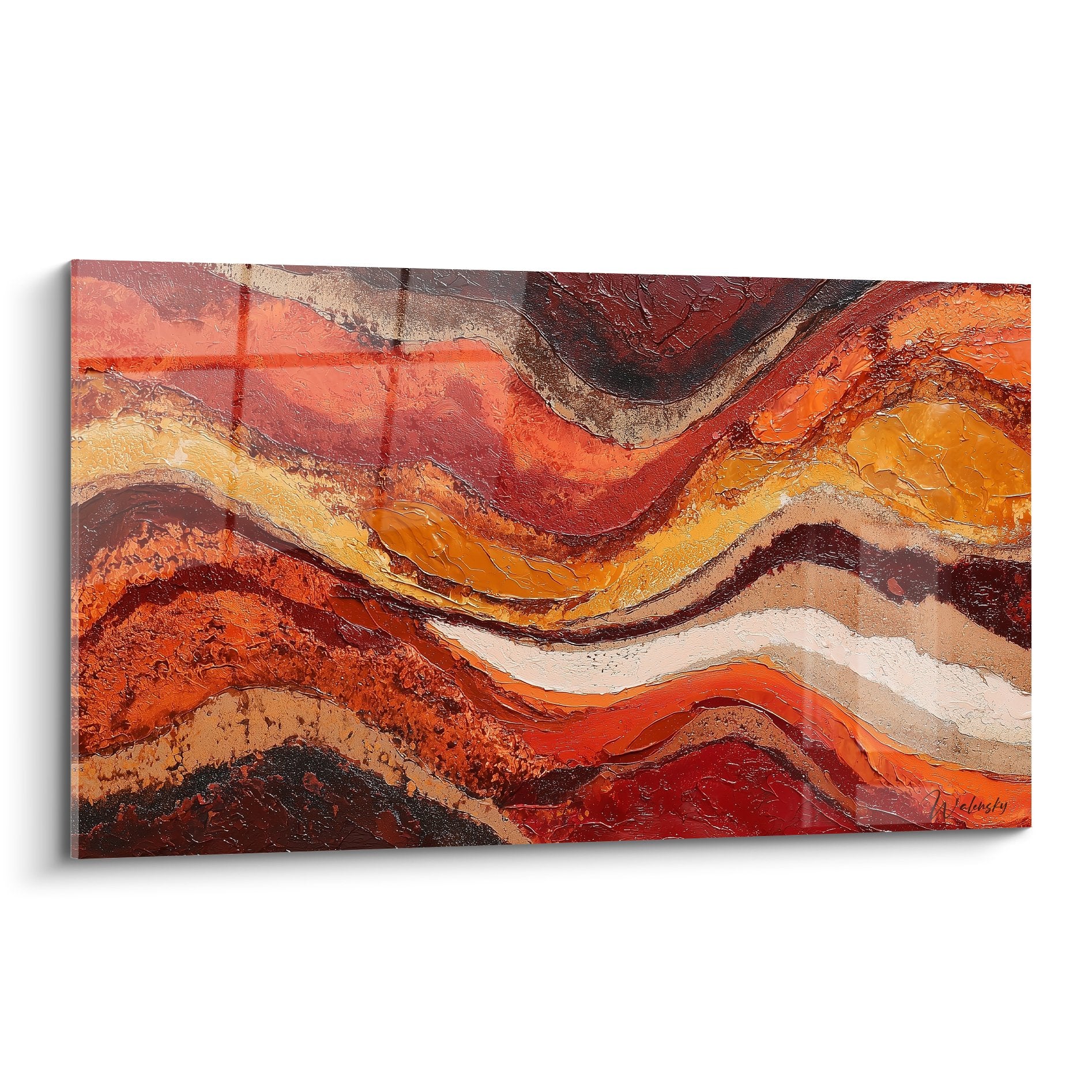
Between these two extremes, a whole range of ochre, red and orange tones testifies to the presence of iron oxide in the soil. These warm hues, particularly photogenic at golden hours, characterize clayey and ferruginous terroirs frequently found on the borders of ancient massifs.
Decoding humidity through nuances
Soil moisture adds an extra dimension to this chromatic reading. The same type of soil can display variations in several tones depending on its degree of hydration. The darkest areas of a parcel often indicate superior water retention, revealing the microtopographies of the terrain and the preferred flow paths.
Texture Revealed by Light
Beyond color, surface texture is a major visual cue for differentiating soil types in an agricultural landscape. Clay soils, heavy and compact, form large, shiny clods after plowing, creating accentuated relief that captures light in a characteristic way. These irregular surfaces produce fascinating shadow plays at the end of the day.
Sandy soils, on the other hand, have a fine and homogeneous grain size. Freshly worked, they resemble velvet, with a smooth surface that absorbs light uniformly. This difference in texture is particularly visible in aerial photography, where reflectivity contrasts become evident.
Loamy soils, intermediate, offer a distinctive satin-like appearance. Their fine but cohesive structure creates a surface that, at certain angles of light, seems almost waxed. It was this particular visual quality that allowed me, during an overflight of Brie, to immediately identify the parcels with the most balanced soils.

Soil Behavior in the Face of Weather
Observing an agricultural landscape after rain offers a particularly revealing reading of different soil types. Clay parcels retain water on the surface, creating bright, almost mirrored areas that persist for several days. This retention capacity is visually translated by persistent puddles and a uniformly darkened coloration.
Conversely, sandy soils drain rainwater quickly and regain their light color in just a few hours. This rapid drying creates striking contrasts in mixed landscapes where sand and clay coexist: some parcels seem already dry while their neighbors remain soaked with water.
Limestone soils exhibit a fascinating intermediate behavior: the water infiltrates rapidly, but leaves on the surface a characteristic whitish veil once evaporated. This phenomenon, particularly visible in wine-growing regions such as Chablis, allows to identify from a distance the limestone terroirs that are the reputation of certain vintages.
Retreat cracks: clay signatures
During periods of drought, clay soils develop characteristic fissures visible even at altitudes of several hundred meters. This network of cracks, which can reach widths of several centimeters, creates a unique geometric pattern, a true fingerprint of heavy lands. These retreat cracks constitute an infallible visual indicator for identifying clayey areas of a landscape.
Spontaneous vegetation as a visual bio-indicator
The weeds that spontaneously colonize the edges of fields and uncultivated areas are valuable visual markers for identifying soil types. During my photographic explorations, I learned to recognize limestone areas by the presence of bright poppies and wild mustard, whose vivid yellow contrasts beautifully with the light tones of the substrate.
Acid soils, on the other hand, host specific species such as heather or eagle fern, whose deep green hues immediately signal a low pH. This characteristic vegetation creates clear visual transitions in the landscape, naturally delineating the different pedological units.
In wetlands where hydromorphic soils predominate, reeds and cattails draw sinuous lines that reveal the paths of water and zones of temporary saturation. These vegetal corridors, with a particularly bright green color, contrast with the surrounding crops and make it possible to mentally map the diversity of soils from a simple panoramic view.
— Our selection


Agricultural practices as a revealer
The crop choices of farmers constitute an indirect but very reliable indicator of soil nature. A landscape dominated by vineyards often indicates well-drained, stony or calcareous soils. Conversely, vast expanses of corn generally signal deep and fertile lands capable of retaining the water necessary for this demanding crop.
The presence of permanent grasslands in a context of large crops frequently reveals soils that are too wet, too shallow or too steep to be plowed. These herbaceous areas create verdant visual breaths in the agricultural patchwork, functioning as markers of pedological constraints.
The work periods of the soil also vary depending on the type of soil. Clay soils, which are difficult to work with, are plowed in the fall and spend the winter as large clods that will break down with freezing. Sandy soils, which are easier, can be prepared in the spring. Observing a landscape in winter therefore makes it possible to quickly identify clay plots by their uneven relief.
Transform your interior by celebrating the beauty of rural landscapes
Discover our exclusive collection of nature paintings that capture the chromatic essence of our countryside and its authentic mosaic of colors.
— You may also like


Develop your gaze: a contemplative practice
Learning to visually differentiate soil types profoundly transforms our relationship with the landscape. What seemed uniform suddenly reveals an infinite complexity, each plot telling its geological and agronomic story. This sensitive reading of the territory considerably enriches our walks and travels.
I recommend starting this learning by 'observing at optimal times: early morning or late afternoon, when grazing light accentuates reliefs and textures. These privileged moments reveal details invisible in full daylight, transforming a simple plowed field into a monumental sculpture with a thousand nuances.
Photographing agricultural landscapes, even with a smartphone, is an excellent exercise to refine your chromatic perception. The lens forces us to isolate details, compare tones, understand how light interacts with matter. Over time, this sensitivity becomes instinctive, and the reading of soils occurs naturally, enriching each contemplation of the rural world.
The seasonal dimension adds an additional layer of fascinating complexity. The same landscape offers totally different readings depending on whether it is observed in February after plowing, in June under green crops, or in September after harvest. This temporal variability invites us to regularly revisit the same places, discovering new subtleties each time.
Create your own sensory map
Keeping a visual observation notebook allows us to systematize this learning. Note the dominant colors, sketch the texture patterns, annotate the plant associations. This practice, which I have maintained since my beginnings, gradually creates a mental library of references that facilitates the rapid identification of soil types during new explorations.
Imagine yourself on your next countryside escape, able to read the landscape like an open book. You instantly identify the rich and deep soils, anticipate wet areas, understand why one crop thrives here and not elsewhere. This skill transforms every outing into an intellectual and sensory adventure, revealing the hidden face of familiar landscapes.
Start today: on your next trip, carefully observe agricultural plots. Note the color variations, imagine their texture, question yourself about cultural choices. This attention consciente au territoire will immediately enrich your experience of the rural world and open up unsuspected perspectives on the invisible diversity that makes up our countryside. The landscape will never again be just a backdrop, but a complex text whose keys to reading you now hold.
Frequently Asked Questions
Can you really identify a soil type just by its color?
Absolutely, and it's even the most accessible method for beginners. Color is the first visual indicator of a soil's composition. Dark shades reveal a high content of organic matter, a sign of natural fertility. Light tones generally signal a mineral, limestone or sandy dominance. Reddish or orange hues indicate the presence of iron oxide, characteristic of clay soils. With a little practice, you will quickly identify the main families of soils solely by their color palette. Of course, this visual reading becomes more accurate when combined with observation of texture, spontaneous vegetation and agricultural practices, but color remains your best ally for a first quick analysis of the landscape.
What is the best time of year to observe soil differences?
The ideal period is between November and March, when plots are freshly plowed and devoid of vegetation. At this time, soils reveal their true nature without the green filter of crops. Color and texture contrasts reach their maximum, creating landscapes with striking graphic compositions. Prefer days following rain: drainage and water retention differences become spectacularly visible, some plots drying in a few hours while others remain soaked for several days. Winter mornings also offer exceptional grazing lights that accentuate reliefs and textures. That said, each season brings its share of revelations: summer reveals the shrinkage cracks of clays, spring shows differential warming rates, and autumn after harvest exposes color differences in straw.
Do you need special equipment to learn how to read agricultural landscapes?
Not at all, and that's the beauty of this contemplative practice. Your eyes are your only essential tool. A simple walk or car ride is enough to begin observing variations in color and texture of the parcels. If you want to deepen your practice, a smartphone for photographing interesting details proves useful to build your personal library of references. Binoculars can enrich distant textures observation, especially if you explore from an elevated viewpoint. A notebook to note down your observations helps structure learning, but remains optional. The essential thing is the regularity of the practice and the conscious attention paid to the landscape's details. Over time, your eye naturally forms, and this reading of soils becomes intuitive, transforming each outing into a moment of wonder in front of the invisible diversity of our countryside.
Explore our collections


