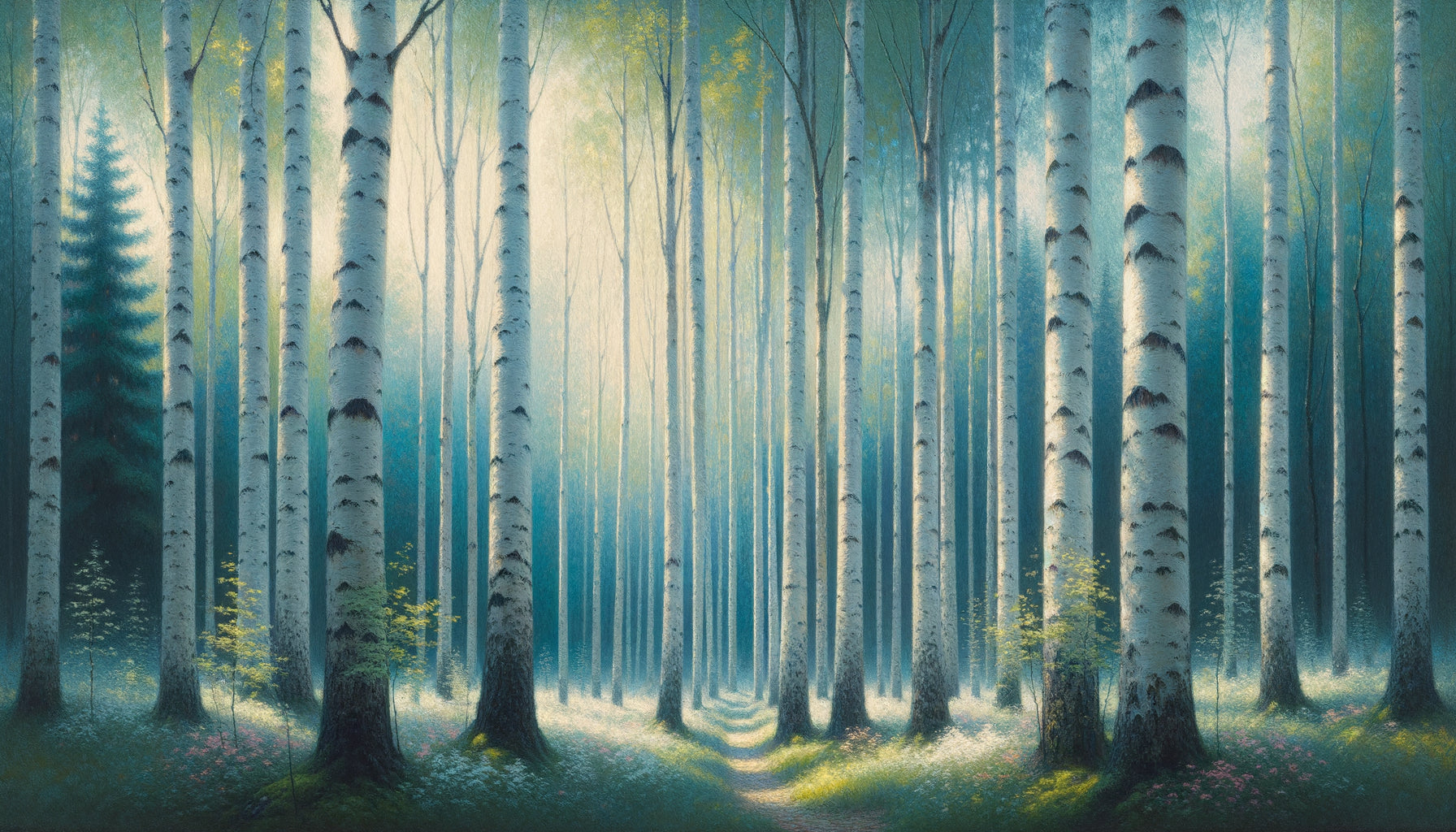
I will never forget that misty autumn day when, browsing the reserves of the art romantic museum in Copenhagen, I came across a canvas by Caspar David Friedrich depicting an ancient oak tree. Its gnarled branches stretched like the veins of a sleeping giant, telling centuries of silent history. That day, I understood that the millennial oak was not just a decorative motif: it embodied the very soul of European romanticism.
Here's what the symbolism of the millennial oak in Romantic art brings to your interior: an unparalleled emotional depth that transforms your spaces into contemplative refuges, a visceral connection with nature and time that transcends ephemeral trends, and a rich visual conversation that nourishes the imagination of all who cross your threshold.
Perhaps you feel this frustration with contemporary works that seem to lack substance, this impression that your decor remains superficial despite your efforts. You are looking for that touch that transforms a room into a personal sanctuary, but the codes of Romantic art seem opaque, reserved for initiates.
Rest assured: understanding the symbolism of the millennial oak in Romantic art requires no academic training. Just listen to what these 19th-century artists still whisper to us today through their majestic canvases. I invite you on a journey into the heart of this fascinating iconography, so that you too can bring this timeless power into your daily life.
The witness tree: when the oak becomes a living memory
In the Parisian workshops of the 1820s, the millennial oak emerges as the silent guardian of European history. Théodore Rousseau, leader of the Barbizon school, spent weeks studying the oaks of the Fontainebleau forest, noting in his notebooks how their scarred trunks bore the marks of wars, famines, and revolutions.
The millennial oak first symbolizes permanence in the face of chaos. As Romantic Europe experiences political upheavals and industrial revolutions, these centuries-old trees recall that there are forces that transcend human agitation. Their roots plunge into an immemorial past, their branches draw the future in the sky.
This symbolism of the oak as impassive witness runs through all of European Romantic painting. In the German painters of the Düsseldorf school, the millennial oak often frames medieval ruins, creating a poignant dialogue between two forms of memory: human architecture that crumbles, and nature that persists.
The visual codes of the memory oak
Romantic artists develop a precise visual language around the millennial oak. Dead branches symbolize lost civilizations, while young shoots evoke rebirth. The rough bark, painted with almost tactile attention, becomes a metaphor for trials overcome. This symbolic richness explains why reproductions of romantic works featuring millennial oaks instantly bring narrative depth to a contemporary space.
The vegetal sanctuary: spirituality and transcendence
When I guide collectors in their quest for romantic works, I always invite them to observe how artists transform the millennial oak into a natural cathedral. Carl Gustav Carus, physician and painter, theorized this vision in his writings: the millennial oak offers access to the divine more authentically than any religious building.
In the symbolism of the millennial oak among the romantics, the tree becomes an axis mundi, a world axis connecting the earthly to the celestial. Its roots plunge into the chthonic depths, its trunk anchors the visible world, its branches rise towards cosmic mysteries. This sacred verticality particularly fascinates Scandinavian artists such as Johan Christian Dahl, whose Norwegian oaks seem to converse directly with the aurora borealis.
Light plays an essential role in this spiritualization of the millennial oak. Romantics excel at capturing those moments when rays pierce the dense foliage, creating cathedral light effects that transform the forest into a Gothic nave. Friedrich in particular masters these compositions where the millennial oak becomes a portal to infinity.

When your walls tell the infinite story of time
One of the reasons why the symbolism of the millennial oak resonates so deeply in our contemporary interiors is due to our anxiety-inducing relationship with time. We live in permanent acceleration, overwhelmed by the ephemerality of digital flows. Introducing a work representing a millennial oak is installing at home a meditative counterpoint.
I have observed this phenomenon in many clients: the presence of a romantic oak in a living room transforms the quality of silence. Conversations become deeper, moments of contemplation more frequent. The millennial oak in romantic art acts as a temporal slowdown, inviting longevity in a world obsessed with the instant.
The scale and human perspective
Romantics masterfully play with scale. They often paint tiny human figures at the foot of monumental oaks, creating what is called the romantic sublime: this mixture of admiration and reverential awe for the power of nature. This disproportion recalls our modest place in the grand narrative of life, a lesson in humility particularly welcome in our ego-laden living spaces.
The seasons of the oak: eternal cycle and melancholy
The symbolism of the millennial oak unfolds differently according to the seasons, an obsessive theme for romantics. The springtime oak, with its young tender green leaves, symbolizes hope and renewal. George Sand, in her descriptions of the Berry countryside, evokes these centuries-old oaks that « dress themselves in youthful fragility like grandparents endearing their grandchildren ».
Summer magnifies the vital fullness of the millennial oak. English painters such as John Constable capture these midday moments when dense foliage offers a hospitable shade, transforming the tree into a refuge from the heat of the world. This protective function of the oak runs through all romantic iconography.
But it is autumn that reveals the most melancholic dimension of the symbolism of the millennial oak. The russet leaves, which the oak often retains until the following spring, become a metaphor for persistence in decline. This particular resilience of the oak, which refuses to shed completely, fascinated German romantics who saw in it a lesson in dignity in the face of adversity.
Winter and the stripped oak
The millennial oak in winter reveals its secret architecture. Stripped of its foliage, it exposes the extraordinary complexity of its branches, this fractal geometry that romantics associated with the mathematical mysteries of creation. These winter compositions, particularly popular with Nordic artists, bring remarkable graphic elegance to contemporary minimalist interiors.

The oak-refuge: intimacy and protection
In my research through European collections, I have identified a recurring motif: the millennial oak as space of intimacy. The Romantics regularly paint scenes of confidential exchanges, solitary readings, amorous reveries sheltered by ancient branches. The oak then becomes a natural alcove, a vegetal confidant of human emotions.
This protective function of the millennial oak resonates with our contemporary needs for cocooning and sanctifying private space. Installing a romantic work representing an oak-refuge is to symbolically invite this containing energy into one's interior. Customers often tell me that their reading corner takes on a whole new dimension when it visually dialogues with a romantic millennial oak.
British artists are particularly skilled in this representation of the oak as social shelter. We think of David Cox’s paintings showing rural families gathering under old oaks for harvests or village festivals. The millennial oak then becomes community cement, a rallying point that transcends generations.
Integrating the power of the millennial oak into your home
Specifically, how can you bring the symbolism of the millennial oak into your decor without turning your interior into a dusty museum? I always recommend starting by identifying your personal resonance with this archetype. Are you looking for spiritual dimension? Connection to long time? Autumn melancholy? Protective intimacy?
Works representing millennial oaks in Romantic art lend themselves remarkably well to transition spaces: hallways, landings, entrances. Their natural verticality embraces these volumes that are often difficult to dress. They also create an atmosphere conducive to contemplation in libraries, offices or meditation corners.
However, pay attention to the scale and lighting. A large reproduction of Friedrich’s monumental oak requires distance and sufficient natural light. For more intimate spaces, prioritize tighter studies, close-ups of bark or branches that Romantics created as arboreal portraits.
Create a dialogue with your furniture
The symbolism of the millennial oak dialogues beautifully with solid wood furniture, creating a material conversation between the tree represented and the tree transformed. I have created particularly successful scenes by combining canvases of romantic oaks with Scandinavian furniture in raw oak, amplifying the tactile and sensory dimension of the whole.
Let the timeless majesty of the millennial oak enter your daily life
Discover our exclusive collection of nature paintings that captures the symbolic depth of European romantic art and transforms your spaces into contemplative refuges.
The living heritage: when the romantic oak inspires today
The symbolism of the millennial oak in romantic art is not just a thing of the past. It still nourishes many contemporary artists who revisit these archetypes with modern techniques. I recently discovered photographers capturing centuries-old oaks with exposure times of several hours, creating ghostly images that directly dialogue with the works of Friedrich or Turner.
This persistence testifies to its timeless power. The millennial oak continues to speak to us because it embodies eternally human questions: our relationship to the passage of time, our place in the natural order, our quest for permanence in a changing world, our need for roots and elevation at the same time.
By integrating this symbolism into your home, you are not just acquiring a decorative work: you are installing a philosophical companion, a silent interlocutor who will enrich your relationship with space and time. The romantic millennial oak offers what few decorative objects can claim to give: a depth that is revealed gradually, enriching itself with your own inner seasons.
Imagine the moment, in a few weeks, when you settle down facing your millennial oak with a steaming cup of tea. Its centuries-old branches will remind you that the essential is built slowly, that authentic beauty resists trends, that your interior can become that timeless refuge you secretly dream of. Start with a single painting, a single work that resonates with your deep sensitivity. Let it dialogue with your spaces, observe how it transforms the quality of your presence at home. The millennial oak has waited centuries: it will know how to wait until you are ready to welcome its silent wisdom.
Frequently Asked Questions
Why the oak rather than another tree in romantic art?
The millennial oak asserts itself in European romantic art for both symbolic and practical reasons. Unlike conifers or fast-growing trees, the oak can live for several centuries, with some specimens reaching over a thousand years old. This exceptional longevity makes it the ideal witness to historical cycles, a perfect embodiment of the permanence that romantics sought in the face of the upheavals of their time. Culturally, the oak also occupies a central place in European mythologies: sacred tree of the Celtic druids, associated with Zeus in Greek mythology, symbol of strength and wisdom in Germanic traditions. Romantic artists, fascinated by these deep cultural roots, found in the millennial oak a condensed expression of European identity. Finally, from an aesthetic point of view, the tortuous architecture of the millennial oak, its gnarled shapes and deeply furrowed bark offer an incomparable visual richness, perfect for expressing the sublime and the picturesque, two fundamental aesthetic categories of romanticism.
How to recognize a millennial oak in a romantic painting?
Several visual clues can identify the representation of a millennial oak in romantic art, even without being an expert. First, observe the trunk: millennial oaks always have an imposing circumference, often represented with deeply fissured bark, almost sculpted. Romantics emphasize these textures with an almost tactile precision. Then, look at the architecture of the branches: unlike young trees that grow relatively orderly, millennial oaks develop tortuous ramifications, sometimes impressive horizontal branches. Romantic artists often accentuate this structural complexity. Also look for signs of age: dead wood on some branches, cavities in the trunk, sometimes ivy or mushrooms. Finally, note the presence of human figures nearby: romantics systematically paint tiny characters at the foot of these giants to emphasize their monumentality. The disproportion between humans and trees is a reliable indicator that it is a centuries-old specimen charged with symbolism.
In which room to place a work representing a romantic millennial oak?
The choice of location depends on the energy you want to cultivate in each space. For a living room or lounge, a large ancient oak canvas creates a contemplative focal point that naturally slows down the pace, perfect if you want to encourage deep conversations rather than constant stimulation. In a study or workspace, the symbolism of the ancient oak recalls patience and building over time, a welcome counterpoint to the pressure of immediate productivity. Many of my clients install romantic oaks in their library, creating a magnificent dialogue between the wisdom of books and that of the centuries-old tree. For a bedroom, prioritize more intimate compositions, these views into the undergrowth where the oak offers protection and refuge, promoting deep and restorative sleep. Avoid kitchens or bathrooms where humidity could damage the artwork, and where the functional energy conflicts with the meditative dimension of the ancient oak. The entrance is also an excellent choice: there, the oak acts as a symbolic guardian of the threshold, immediately establishing the contemplative character of your interior.