I experienced that precise moment when everything shifts. A novice collector stood before two Campbell's Soup cans that appeared identical. One at €15,000, the other at €150. He chose the first. Three years later, it was worth €28,000. The other still decorated his wall but held no value in his estate.
Here's what an original Andy Warhol screen print brings: an authentic artwork that gains value, a certified tangible investment, and access to a major artistic heritage of the 20th century. Not just decoration, but a cultural and financial asset.
You are looking at these iconic Marilyn Monroe prints online. Digital reproductions seem perfect. The price reassures you. But one question lingers: what really justifies such a difference in price? You're neither an expert nor a millionaire. You simply want to understand if investing in a Warhol screen print makes sense for your interior and your portfolio.
Rest assured: distinguishing an authentic screen print from a digital reproduction doesn't require a degree in art history or a family fortune. Just a clear understanding of what constitutes the value of an original work. And I will show you exactly why this difference changes everything.
The aura of the original: what technology cannot reproduce
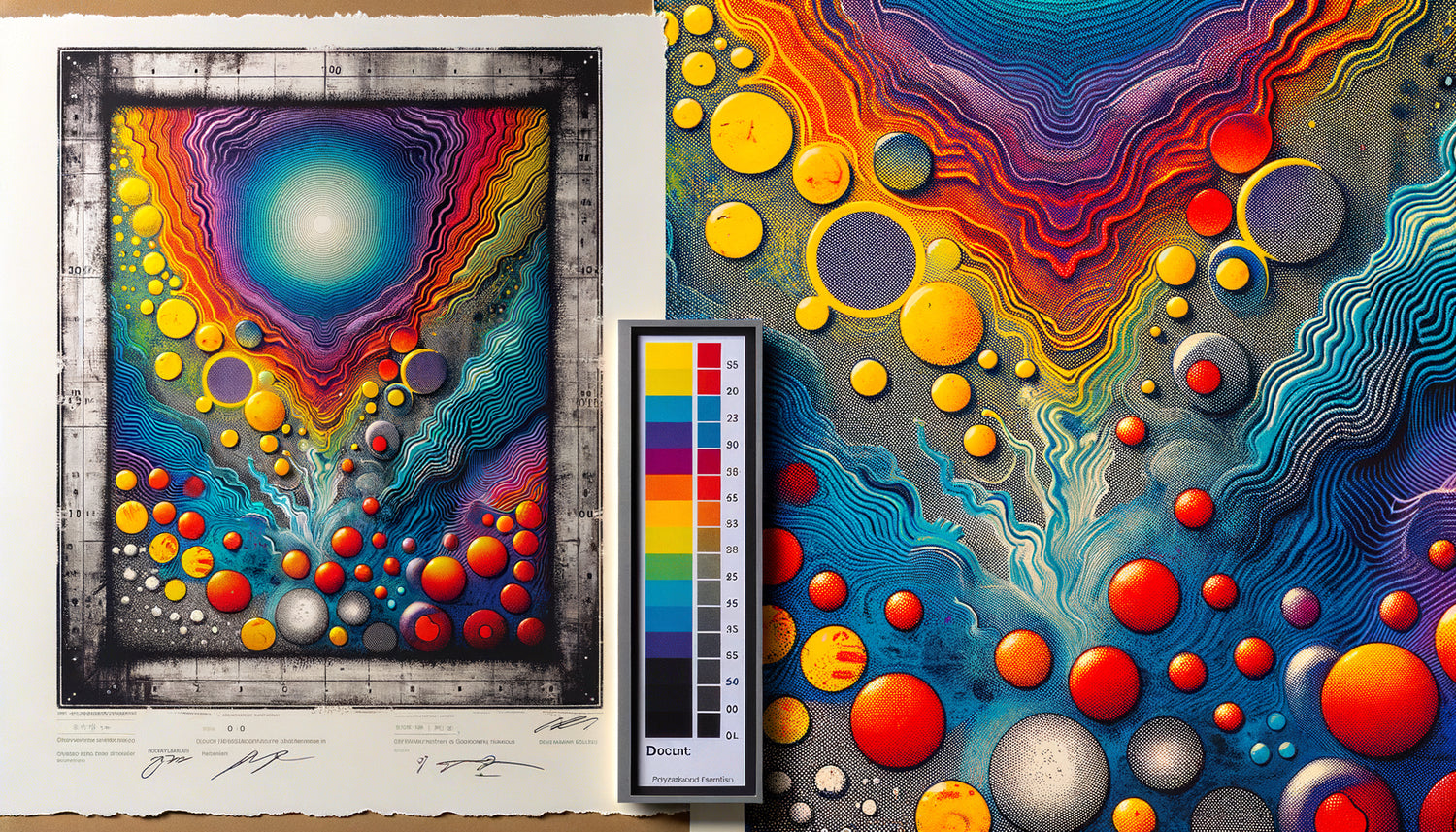
Andy Warhol worked with his hands. Each screen print went through a physical process where ink passed through the silk screen, creating infinitesimal variations that mark authenticity. These micro-imperfections - a slight ink overflow here, a slightly different color density there - constitute the unique DNA of each print.
A digital reproduction, however sophisticated, freezes an image. It photographs a moment but doesn't capture the physical creative process. It’s the difference between watching a photo of a sunset and experiencing it. The original possesses a presence, a materiality that Walter Benjamin called the aura of the artwork.
In front of an authentic Warhol screen print, you observe the texture of the ink, its subtle reliefs. You perceive the successive layers applied by the artist and his studio. Under certain lights, these variations create effects that no digital impression can simulate. It is this tactile and luminous dimension that transforms a wall into a private gallery.
The screen print as a heritage investment
The numbers speak for themselves. Between 2010 and 2023, Warhol screen prints experienced an average appreciation of 120 to 180% depending on the series. The Flowers from the 70s, accessible around €8,000 fifteen years ago, now reach €20,000 to €35,000 for prints in good condition.
This appreciation is explained by several converging factors. First, Warhol remains one of the most sought-after artists worldwide. Second, the number of authentic screen prints is strictly limited - generally between 100 and 250 numbered copies per series. Finally, time works in your favor: each year, some pieces disappear from the market, acquired by institutions or long-term collectors.
Conversely, a digital reproduction has no historical value. Being infinitely reproducible, it is not an asset. In ten years, it will have lost its visual freshness without gaining the noble patina of the original. You will have decorated your wall, but not enriched your heritage.
The certificate of authenticity: your key
Each authentic Warhol screen print comes with precise documentation. The certificate of authenticity issued by recognized organizations such as the Andy Warhol Foundation guarantees the provenance and legitimacy of the work. This document transforms your purchase into a traceable, insurable, transferable investment.
Digital reproductions obviously offer no certification. They are everyday consumer products, not collectibles. This legal and patrimonial distinction makes all the difference when reselling, inheriting or even taking out premium home insurance.

Why Warhol resists time and trends
Fifty years after its creation, Warhol's work has lost none of its relevance. On the contrary. Our hyperconnected era, obsessed with images and celebrity, validates his prophetic intuitions every day. Warhol didn't just create pop icons - he anticipated our relationship to consumption, repetition, and stardom.
This constant topicality maintains demand at exceptional levels. New collectors, particularly Generations Y and Z who are now solvent, actively seek out his works. Screen prints represent the accessible entry point into the Warhol universe, much more affordable than original paintings which reach tens of millions.
The Warhol market also benefits from remarkable liquidity. Unlike more confidential artists, an authentic screen print can be easily resold through international auction houses, specialized galleries or certified platforms. You are not investing in a uncertain niche, but in a safe haven for the contemporary art market.
The daily experience with the artwork
Living with an authentic Warhol screen print transforms your relationship to space. It is not simply a decorative element, but an artistic presence that dialogues with you. Every morning, this Mao or Marilyn reminds you that you own a fragment of art history, a piece that has crossed decades.
Guests react differently. In front of a reproduction, one appreciates the taste. In front of the original, one stops. One approaches. One asks. This work naturally becomes a conversation focal point, a cultural marker that reveals your sensitivity and enlightened investor approach.
The original also fits into a different time dimension. You are not decorating for a season. You integrate a work that will age with you, which will enrich your family heritage. Collectors regularly tell me that their children, initially indifferent, develop a deep attachment to these pieces passed down, aware of their emotional and patrimonial value.
Preservation: a long-term commitment
Acquiring a Warhol screen print involves a responsibility for preservation. Professional framing with UV protective glass, humidity control, positioning away from direct light: these precautions preserve the work and its value. It is an active commitment to artistic heritage, far removed from the replaceable consumable.
This patrimonial dimension changes your relationship to ownership. You do not simply possess: you temporarily conserve for the next generation. This awareness gives a profound existential depth to your approach, well beyond simple interior decoration.

How to intelligently start collecting Warhol screen prints
Starting a collection of Warhol screen prints does not require an unlimited budget. Series such as Flowers, Endangered Species or some portraits can be acquired between 8,000 and 25,000 euros depending on the condition and rarity. This is a significant investment, certainly, but accessible compared to the vertiginous peaks of the art market.
Favor established galleries and recognized auction houses. Always check for the existence of the raisonné catalogue, this exhaustive inventory that validates the authenticity of each work. Be wary of offers that are too tempting: the Warhol market is structured, prices are consistent. An exceptional opportunity often hides a problem with authenticity or condition.
Also consider the tax and inheritance aspects. Works of art benefit from a favorable system in France: exemption from ISF (now IFI), substantial reduction in case of transmission. Your Warhol screen print thus becomes an intelligent patrimonial optimization tool, advised by many wealth managers to diversify assets.
Your interior deserves more than fleeting decor
Discover our exclusive collection of fashion wall art that transforms your walls into a personal and timeless art gallery.
Investing in Art or Consuming Decor?
The question is ultimately not technical, but philosophical. Do you want to consume an image or invest in a work of art? Do you desire temporary decoration or build a cultural heritage? Are you seeking the immediate satisfaction of low cost or the progressive appreciation of a tangible asset?
A digital reproduction satisfies an immediate decorative need. It dresses an empty wall at little expense. But it tells no story, carries no memory, transmits no value. In ten years, it will simply have aged.
An authentic Warhol screen print represents a sophisticated investor's choice. It forms a bridge between daily aesthetic pleasure and thoughtful patrimonial strategy. It affirms that your interior deserves more than temporary solutions. It places your approach within a history of art that continues to be written.
Faced with this Campbell's Soup, this iridescent Marilyn, you are not simply choosing between two prices. You are choosing between two relationships to art, two visions of value, two ways of inhabiting your space. And this difference, believe me, is felt every day on your walls.
Visualize Your Transformed Interior
Imagine your living room in five years. This Warhol screen print hanging opposite your sofa has lost none of its luster. It has aged nobly, gaining the particular presence of objects that cross time. Its value has increased. Your gaze too. You no longer simply see a pop work: you perceive layers of meaning, Warhol's prophecy on our society of spectacle, the technical prowess of screen printing.
You entertain guests. They compliment you. But above all, they ask about the story behind this acquisition. And you tell it. This screen print becomes narration, fragment of your journey, testimony to your informed choices. It anchors your identity in your living space.
Start modestly if necessary. An accessible limited edition screen print. Then let time and your expertise progress together. You build, piece by piece, a personal collection that reflects your sensitivity while constituting a tangible patrimonial asset. This is the double dimension - emotional and financial - that makes all the richness of investing in authentic art.
Frequently Asked Questions About Warhol Screen Prints
How to know if a Warhol screen print is authentic?
An authentic Warhol screen print features several verifiable markers of authenticity. First, it must be numbered and signed (although some posthumous series are stamped with the estate's signature). Next, it is obligatorily included in the raisonné catalogue, this exhaustive bible listing each authenticated work. The certificate of authenticity issued by the Andy Warhol Foundation or recognized experts such as the Andy Warhol Art Authentication Board (before its closure in 2012) constitutes your main guarantee. Physically, observe the texture: a real screen print has a slight relief from the ink, subtle variations between prints, and uses specific identifiable papers. If in doubt, always consult an independent expert before purchasing. Serious galleries systematically offer this complete documentation and accept external verifications. Never buy a Warhol screen print without certification - it is the absolute rule of the market.
What budget should you expect for your first Warhol screen print?
The market for Warhol screen prints is segmented according to series and rarity. For a reasonable initial investment, count between 8,000 and 15,000 euros for accessible series such as some Flowers, a few portraits from the Endangered Species series, or less iconic but authentic compositions. Ultra-famous series like Marilyn Monroe, Campbell's Soup, or Mao start around 20,000 to 40,000 euros depending on condition and print number. Editions in excellent condition with documented provenance easily reach 50,000 to 100,000 euros. To get started intelligently, prioritize an authenticated work from a less publicized series rather than a reproduction of the absolute icon. You are thus entering the market with a real asset that will benefit from the overall appreciation of the Warhol rate. Some collectors also start with works by artists of the same Pop Art movement (Lichtenstein, Rosenquist) whose screen prints are sometimes more accessible, before progressing to Warhol.
Is a Warhol screen print really a good long-term investment?
Historical data clearly supports Warhol screenprints as a solid heritage investment. Over the past twenty years, the Warhol index (calculated by Artprice) has outperformed many traditional financial indices, with an average annual appreciation of 8 to 12% depending on the series. Several structural factors support this dynamic: universal recognition of Warhol as a major figure in 20th-century art, exceptional market liquidity (ease of resale), strictly limited supply facing growing global demand, and the emergence of new wealthy collectors in Asia and the Middle East. However, as with any investment, certain precautions are necessary: prioritize works in excellent condition, systematically verify authenticity, diversify between several series if possible, and adopt a long-term perspective (minimum 5 to 10 years). A Warhol screenprint is not a short-term speculative asset, but a heritage component that combines daily aesthetic pleasure and progressive appreciation. Investment advisors frequently recommend it to diversify portfolios beyond traditional financial assets.