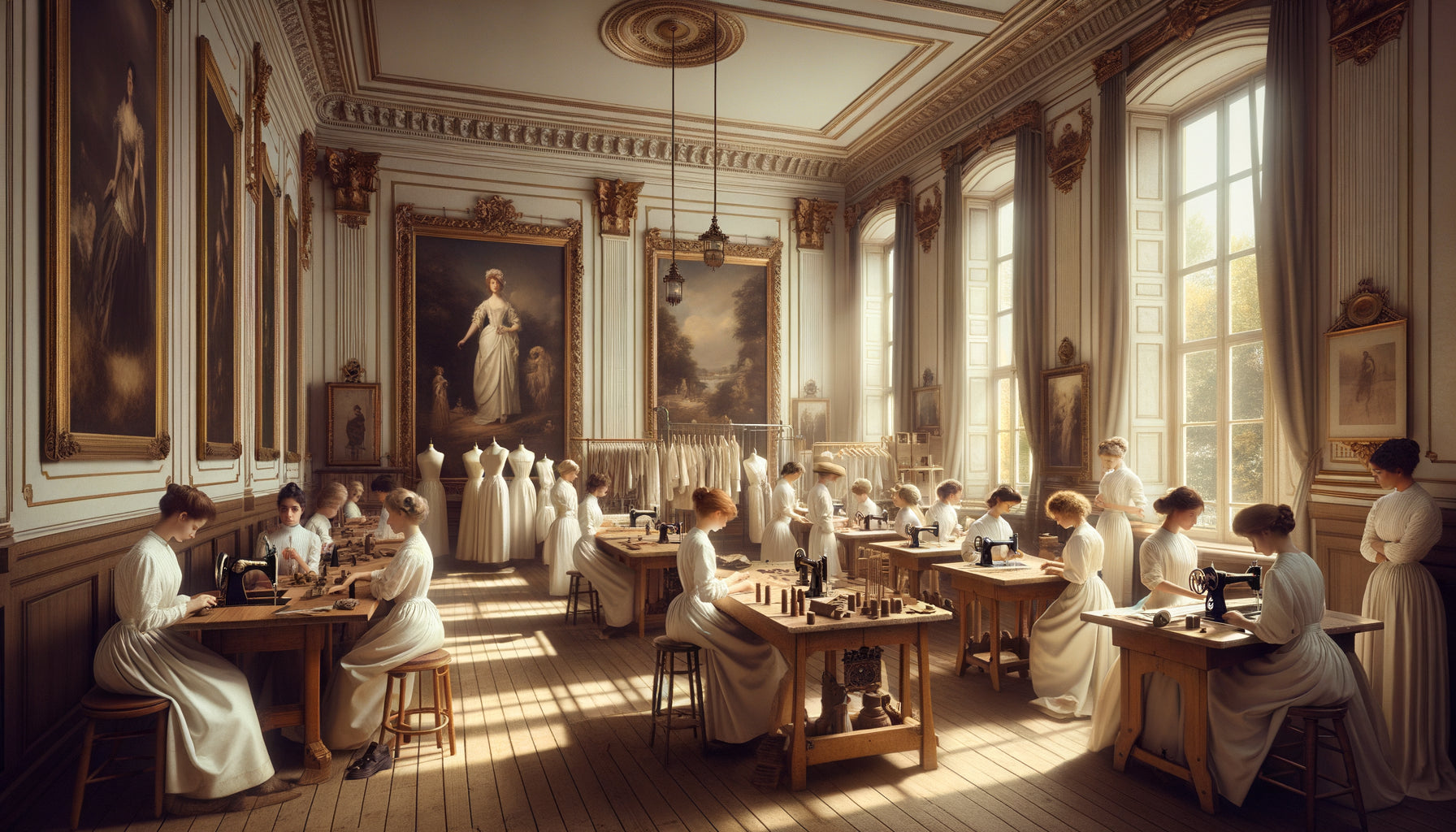
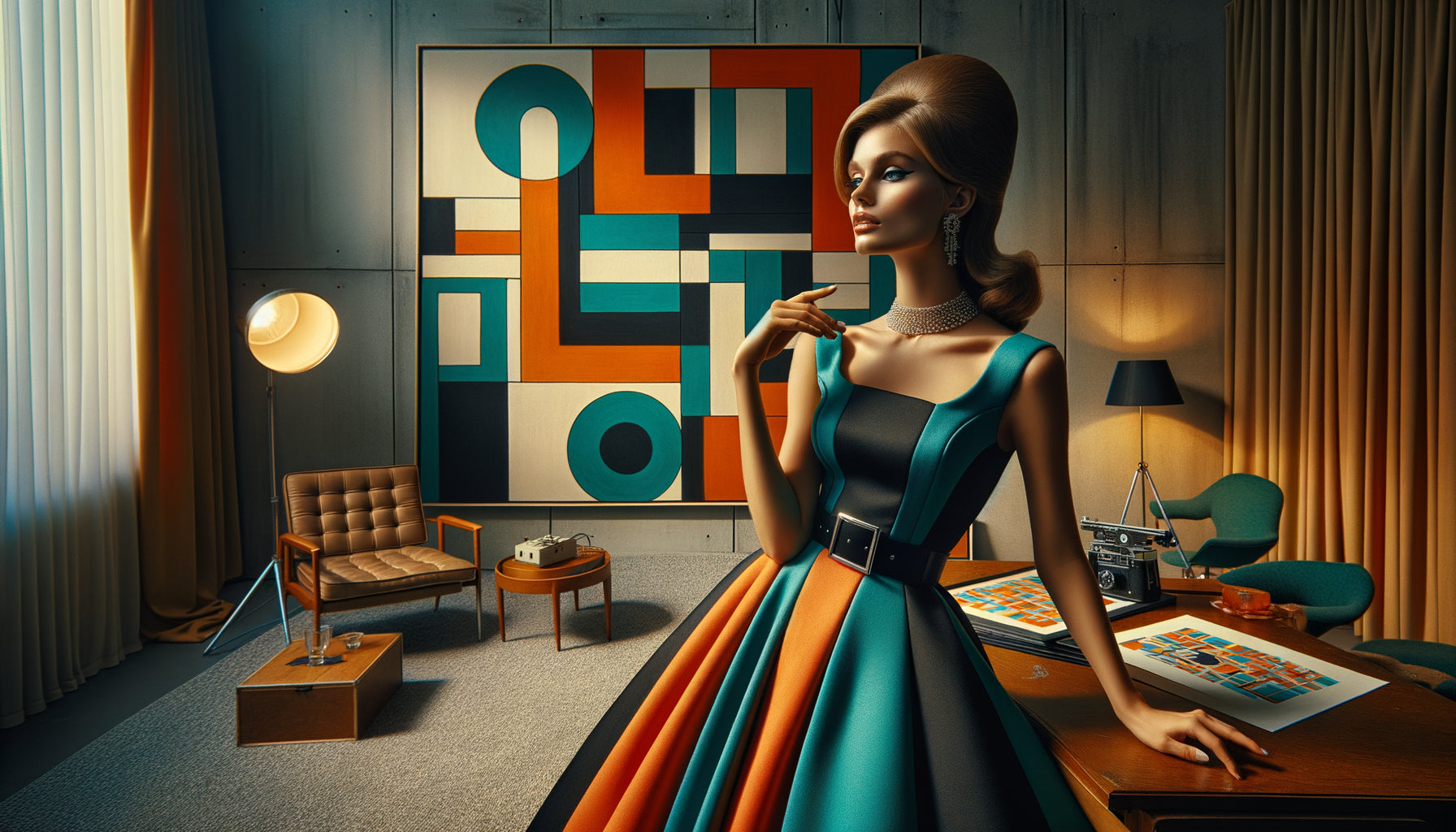
Imagine stepping through the door of a Parisian boutique in 1928. The crystalline chime of a bell resonates under a ceiling adorned with golden geometric patterns. Your footsteps sink into a carpet with stylized arabesques as your gaze gets lost in the reflections of immense beveled mirrors. Palissandre and chrome display cases showcase creations like jewels in a treasure box. You are not simply entering a shop: you are penetrating a temple of modernity where every architectural detail tells the story of an era undergoing profound change.
This is what Art Deco brought to fashion boutiques in the interwar period: a radically modern visual identity that transformed the act of buying into a sensory experience, a theatrical staging of products that amplified their desirability, and a promise of accessible luxury that democratized elegance.
For too long, shops resembled dark backrooms where goods piled up without soul. Customers had to rummage, negotiate, almost apologize for being there. The post-war era calls for a revolution: the modern woman wants to be celebrated, inspired, transported. But how to create this magic? How to transform a simple commercial space into a dream destination?
The answer emerges from the workshops of the great creators of the time. Art Deco does not simply decorate shops: it completely reinvents the shopping experience. In this article, I invite you to discover how this artistic movement shaped the most iconic fashion boutiques of the 1920s-1930s, and why its principles continue to inspire today's creators.
When architecture becomes a manifesto: the storefront as a total work of art
Art Deco first revolutionizes the facade. Gone are the timid and overloaded frontages of the Victorian era. Architects now design monumental windows that stretch across the entire width of the shop, sometimes over two floors. At Jean Patou on rue Saint-Florentin, the blonde limestone facade incorporates stylized bas-reliefs depicting elongated female silhouettes, like frozen flappers in stone.
These storefronts become veritable theater scenes. Indirect lighting, a major technical innovation of the time, replaces dusty suspensions. Concealed spotlights in chrome brass cornices project a soft and flattering light that makes fabrics sparkle. The Chanel boutique at 31 rue Cambon goes to the height of refinement by installing mirrors opposite which multiply the space and create an infinite depth.
The geometric vocabulary of Art Deco is expressed everywhere: zigzags, chevrons, fan motifs, aerodynamic curves. On wrought iron signs, on bronze door handles, on ventilation grilles. Every element participates in a harmonious composition that proclaims: you are entering the age of modernity.
The interior as a setting: the luxurious staging of collections
Stepping through the threshold is entering a universe orchestrated with surgical precision. The interior design of Art Deco boutiques adheres to a golden rule: fewer products on display, but each one enhanced. Forget cluttered displays. Make way for sculpted showcases where each dress, each hat becomes a work of art.
The materials themselves tell the story of understated luxury from the era: precious woods like mahogany or rosewood, Belgian black marble veined with gold, sparkling chrome, smoked glass. In Madeleine Vionnet’s boutique, walls are draped in raw silk in cream and taupe tones, punctuated by lacquered black panels featuring Japanese-inspired mother-of-pearl motifs. A large horseshoe staircase made of wrought iron, with its chrome metal railing, guides towards the fitting room floor like an invitation to social ascension.
Fitting rooms deserve special attention. They are no longer simple functional spaces but private boudoirs. Velvet drapes, triptych mirrors allowing you to see yourself from all angles, leather-upholstered armchairs, wall sconces diffusing amber light. At Jeanne Lanvin’s, the fitting rooms are adorned with frescoes depicting imaginary gardens in the style of Raoul Dufy, transforming the fitting into a moment of poetic escape.

Furniture as functional sculpture
Art Deco tolerates no compromises: even utilitarian furniture becomes a work of art. Cash desks, traditionally relegated to the back of boutiques, transform into master pieces. Jacques-Émile Ruhlmann, a genius cabinetmaker, creates for several fashion houses desks in ivory and rosewood marquetry, with clean lines and perfect proportions. These furnishings affirm that commerce can be noble, that financial transactions participate in overall elegance.
The seats intended for customers waiting or consulting reflect the same requirement. Armchairs with fan-shaped backs, a chaise longue with zigzag chrome feet, poufs covered in patinated leather. Each seat invites you to take your time, to savor the experience. Discomfort has no place: we want the customer to settle in, dream, desire.
The displays themselves become sculptures. Asymmetrical shelves made of sandblasted glass and chrome, mannequins with geometric shapes, truncated columns serving as bases. In some avant-garde boutiques like that of Paul Poiret, library-style display windows exhibit the creations like precious books, reinforcing the idea that fashion is an intellectual art as much as it is aesthetic.
Color and light: orchestrating emotion
Art Deco masters the art of color palettes with unprecedented sophistication. Boutiques abandon dark and oppressive tones to adopt bold harmonies: beige, black, and gold for classic Parisian elegance; Klein blue, silver, and white for a more radical modernity; dusty rose, pearl gray, and bronze for an affirmed femininity.
But the real revolution lies in indirect lighting. Designers of the interwar period understand that light sculpts space as much as walls. Opal glass bowls diffuse a uniform and flattering clarity. Neons, a recent technology, highlight architectural lines by creating luminous traces. At Elsa Schiaparelli’s, Place Vendôme, backlit translucent panels create an almost surreal atmosphere, in line with the designer's avant-garde creations.
This lighting orchestration serves a specific purpose: to make fabrics and details shine. Satin must shimmer, sequins sparkle, and embroidery reveal its complexity. Art Deco lighting transforms each dress into a magical apparition, justifying its price through its sumptuous presentation.

The democratization of luxury: creating accessible illusion
Paradoxically, Art Deco in fashion boutiques democratizes the luxury experience. Before the war, major houses received customers exclusively by appointment, in private lounges. The interwar period sees the emergence of a new model: an open but theatrical boutique where any woman can enter and dream, even if she doesn't buy.
This commercial strategy relies on a calculated layout. The ground floor, visible from the street, displays accessories and perfumes at relatively affordable prices. The upper floors, accessible by these spectacular staircases, reserve haute couture for wealthy clients. But Art Deco architecture unites these spaces in an aesthetic continuity that suggests: you already belong to this world.
Department stores such as the Galeries Lafayette or the Printemps widely adopt Art Deco for their fashion departments. Their domes, wrought ironwork, and geometric stained glass create commercial cathedrals where the middle class accesses a form of modern elegance. The style becomes a vector of dreamed social ascension.
The forgotten legacy that still inspires today
Take a close look at contemporary luxury boutiques: Art Deco codes are everywhere. Clean lines, contrasting noble materials, indirect lighting, the theatricality of space... Apple Store didn't invent anything: it reinterprets principles established by Parisian shops in the 1920s.
Some heritage brands have preserved their original decor. At Guerlain on the Champs-Élysées, the Art Deco sales salon designed in 1936 is a testament to an era when commercial architecture met art. Mirrors, gilding, marble: everything exudes the confidence in modernity that characterized the interwar period.
For contemporary creators, revisiting Art Deco means finding a certain idea of optimism. After World War I, this style affirmed that beauty could be reborn, that technical progress served elegance. Our era, seeking meaning and sustainability, can draw inspiration from its ability to transform commercial space into a memorable experience without falling into frenzied overconsumption.
Extend the timeless elegance of Art Deco into your interior
Discover our exclusive collection of fashion paintings that capture the sophisticated spirit of the roaring twenties and sublimate your decor with the same theatricality as the mythical shops of the interwar period.
Bringing the Art Deco boutique spirit into your home
The main lesson from the layout of Art Deco fashion boutiques? Every space can become a showcase. You don't need black marble and chrome to apply these principles. The essential thing is the intention: to create an experience, tell a story, celebrate everyday beauty.
Start by observing the proportions and light of your own interior. Where could you install indirect lighting that transforms the atmosphere at the end of the day? Which piece of furniture could become your centerpiece, displayed like a sculpture rather than simple storage? How to create contrasts in materials – wood and metal, textile and glass – that enrich the sensory experience?
Art Deco reminds us that elegance is never accidental. It results from a thoughtful composition where each element dialogues with the others. In your entrance hall, in your dressing room, in your living room, you can reproduce this attention to detail that transformed interwar boutiques into dream destinations. Simply consider your space not as a simple container, but as a showcase that reveals and magnifies what it contains.
Frequently Asked Questions
What were the most famous art deco fashion boutiques in Paris?
The most emblematic Parisian boutiques of the Art Deco aesthetic included Chanel on rue Cambon with its endless mirrors and iconic staircase, Jean Patou on rue Saint-Florentin recognizable by its sculpted facade, and Jeanne Lanvin's salon on rue du Faubourg Saint-Honoré decorated by Armand-Albert Rateau with its patinated bronze furniture. Madeleine Vionnet on avenue Montaigne offered a revolutionary space designed like a modernized Greek temple. These places were not just shops but true architectural manifestos that affirmed the legitimacy of fashion as a major art form. Many have unfortunately disappeared or been transformed, but some elements are preserved in museums such as the Musée des Arts Décoratifs which exhibits fragments of these mythical arrangements.
Why was Art Deco particularly suitable for luxury fashion boutiques?
Art Deco perfectly embodied the aspirations of interwar fashion: modernity, accessible luxury and celebration of emancipated femininity. Its geometric and streamlined lines contrasted with Victorian clutter, creating spaces where creations could breathe and be admired. Precious materials (chrome, marble, exotic woods) visually justified high prices while remaining sufficiently understated not to eclipse the clothing. Art Deco also offered an international aesthetic, recognizable from Paris to New York, which suited fashion houses in expansion. Finally, its technological optimism resonated with textile innovation and new silhouettes: both movements shared a vision of progress as a source of beauty, not just efficiency.
How to recognize Art Deco influence in a contemporary boutique?
Several elements betray the Art Deco heritage in current commercial layout. Look for repetitive geometric motifs (zigzags, chevrons, fan shapes) on floors, ceilings or decorative grids. The contrasting use of luxurious materials – black marble with golden veins, dark wood with shiny metal inserts – directly recalls this era. Indirect lighting, especially cornice lights and backlit panels, is a direct legacy of Art Deco. The theatrical arrangement with sculpture-like displays rather than functional shelves, the large mirrors creating infinite depth, and above all that impression that the space itself is a work of art as much as the products exhibited: all these elements testify to the lasting influence of 1920s-1930s fashion boutique layout on our contemporary conception of luxury retail.