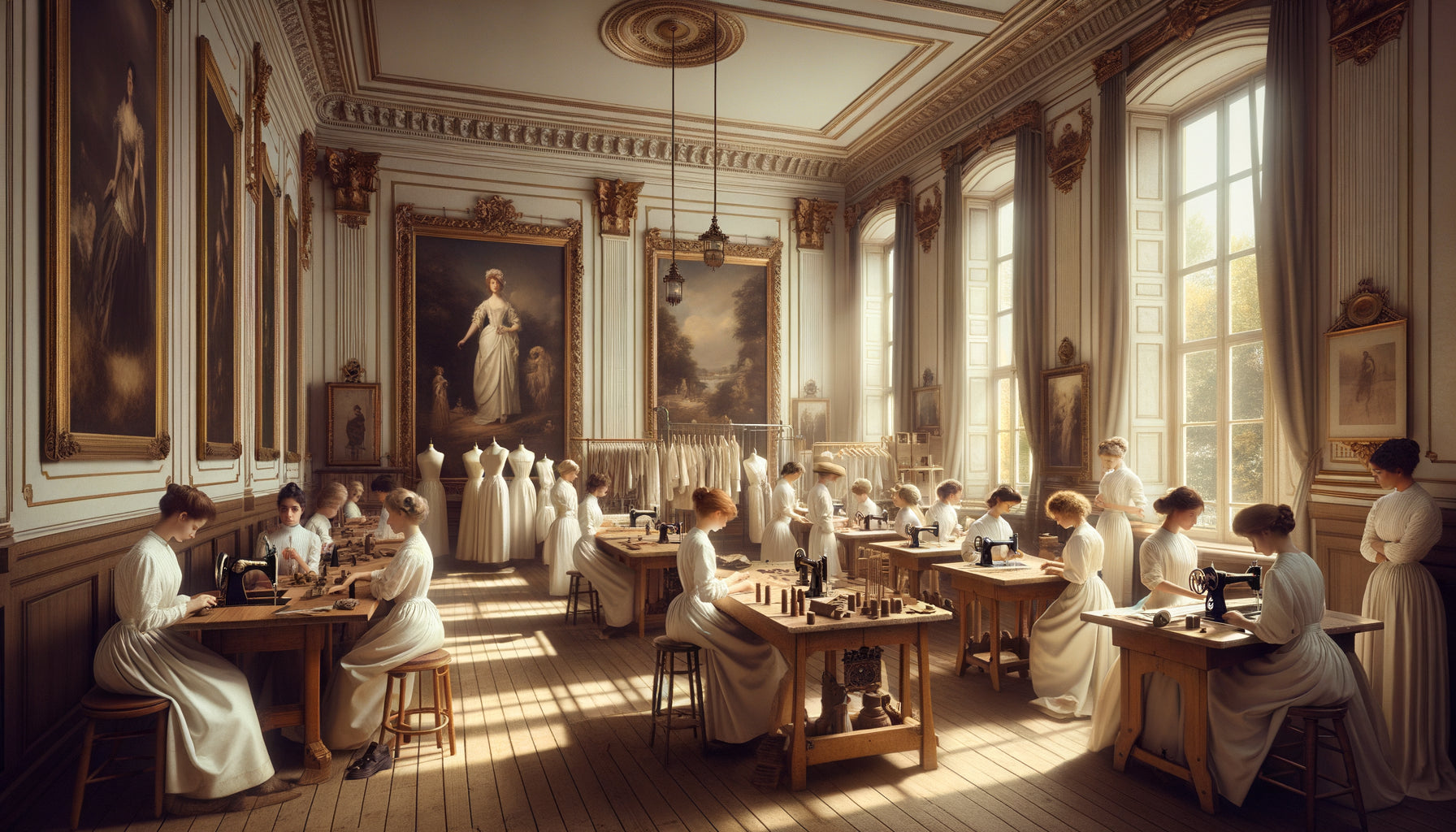
Paris, 1923. In Sonia Delaunay's workshop, a dress takes shape. No romantic curves, no delicate lace. Only bold triangles, overlapping diamonds, fragmented circles that seem to vibrate on the fabric. On the nearby easel, a reproduction of a Picasso from 1912: « Les Demoiselles d'Avignon ». Two universes seemingly distinct, yet intimately linked by a revolution that would redefine our relationship with beauty.
Here is what Cubist influence brought to 1920s fashion: a total liberation from traditional decorative constraints, a celebration of geometry as a modern aesthetic language, and the transformation of clothing into portable artwork. This encounter between avant-garde painting and haute couture was not merely a stylistic borrowing, but a true philosophical fusion.
For decades, women's fashion had imprisoned the body in organic silhouettes, floral volutes, naturalistic ornaments. How to break these chains? How to translate onto fabric the revolution that Braque and Picasso were leading on their canvases? This question tormented visionary creators of the time, caught between tradition and modernity.
Fortunately, Cubism offered more than just an aesthetic: it proposed a new way of looking at the world. Deconstruction, multiplication of perspectives, geometrization of forms... all principles that would naturally migrate to Parisian sewing workshops.
I promise to reveal to you how this unlikely encounter between controversial canvases and iconic dresses shaped the visual DNA of modernity, and why these geometric patterns continue to fascinate our interiors and wardrobes today.
When Picasso meets Poiret: anatomy of a visual revolution
The story truly begins in 1907, when Pablo Picasso unveils his « Les Demoiselles d'Avignon ». The scandal is immediate: fragmented faces, bodies reduced to geometric planes, perspective shattered into a thousand facets. What the public does not yet understand is that Picasso has just fractured the mirror of classical representation.
The most daring couturiers frequent the same Parisian salons as Cubist painters. Paul Poiret, the first to liberate women from the corset, observes with fascination these canvases where reality bends to the laws of geometry. He intuitively understands that fashion must follow this movement: abandon the imitation of nature to celebrate abstraction.
As early as 1911, Poiret collaborated with Raoul Dufy to create printed fabrics that directly borrow from the Cubist vocabulary: angular shapes, superimposed planes, colors juxtaposed without a soft transition. Clothing ceases to be a second skin to become a carried architecture.
Geometry as a manifesto: decoding the language of forms
The geometric motifs that invade 1920s fashion are not mere decorations. They embody a radical philosophy: the rejection of sentimental ornamentation in favor of structural clarity. Each triangle, each diamond carries a message of modernity.
Cubism had introduced the idea that beauty could arise from fragmentation and recomposition. On Art Deco fabrics, this lesson translates into prints where shapes break apart, overlap, create visual tensions. A zigzag pattern is no longer a simple ornament: it's a line of force, an energy captured.
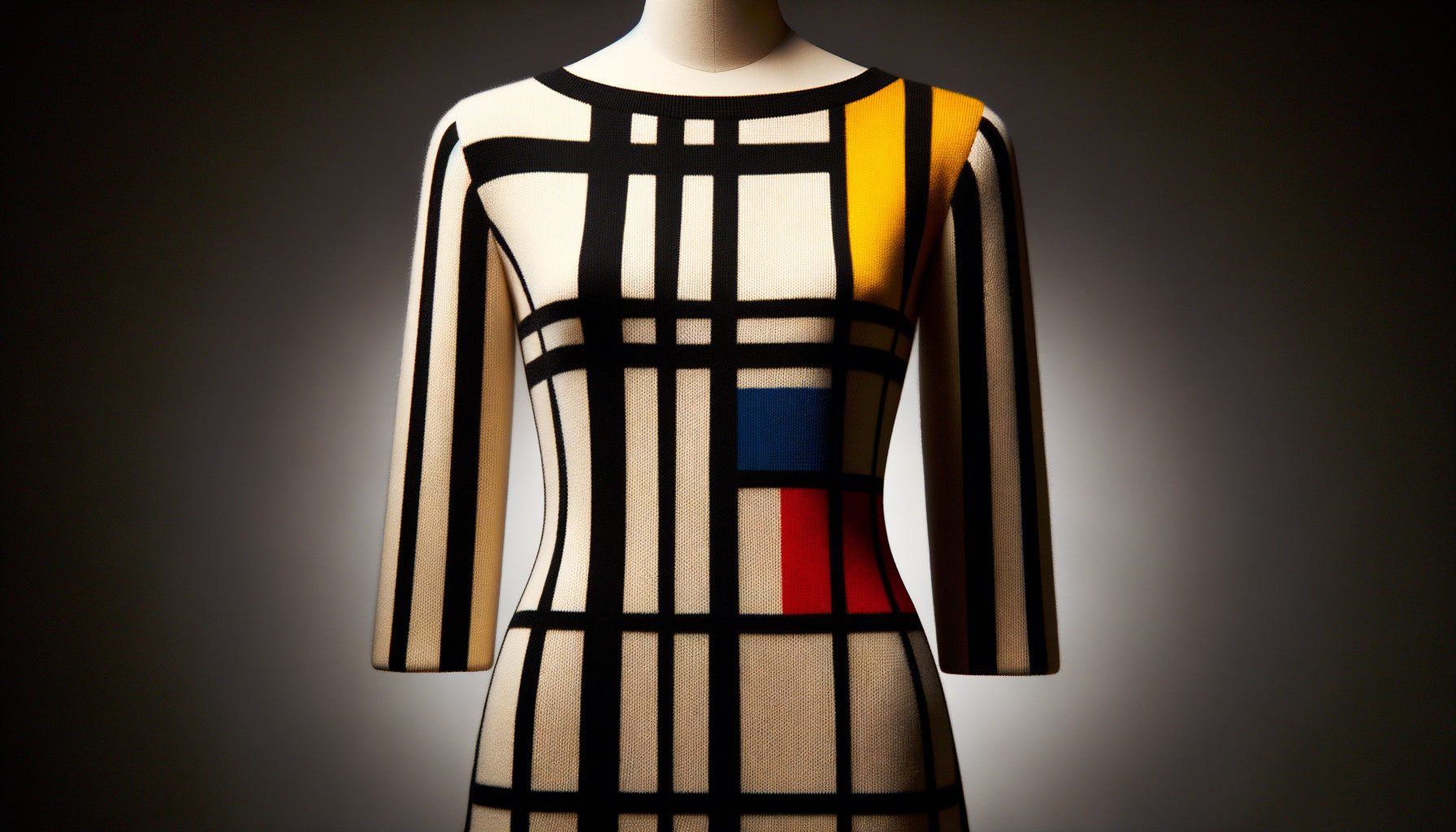
Sonia Delaunay pushes this logic to its paroxysm. Trained in the principles of Orphism (a branch of Cubism centered on color), she creates "simultaneous" dresses where rectangles of bright colors assemble like the facets of a Braque painting. Wearing these clothes is literally donning a living cubist artwork.
Visual codes transposed
Several cubist elements migrate directly to fashion: superimposed planes become asymmetrical cutouts, the monochrome palette (browns, grays, ochres of the early Cubist paintings) influences sophisticated neutral tones, and above all, the multiplication of perspectives inspires these dresses that radically change appearance depending on the viewing angle.

The textile icons of the geometric era
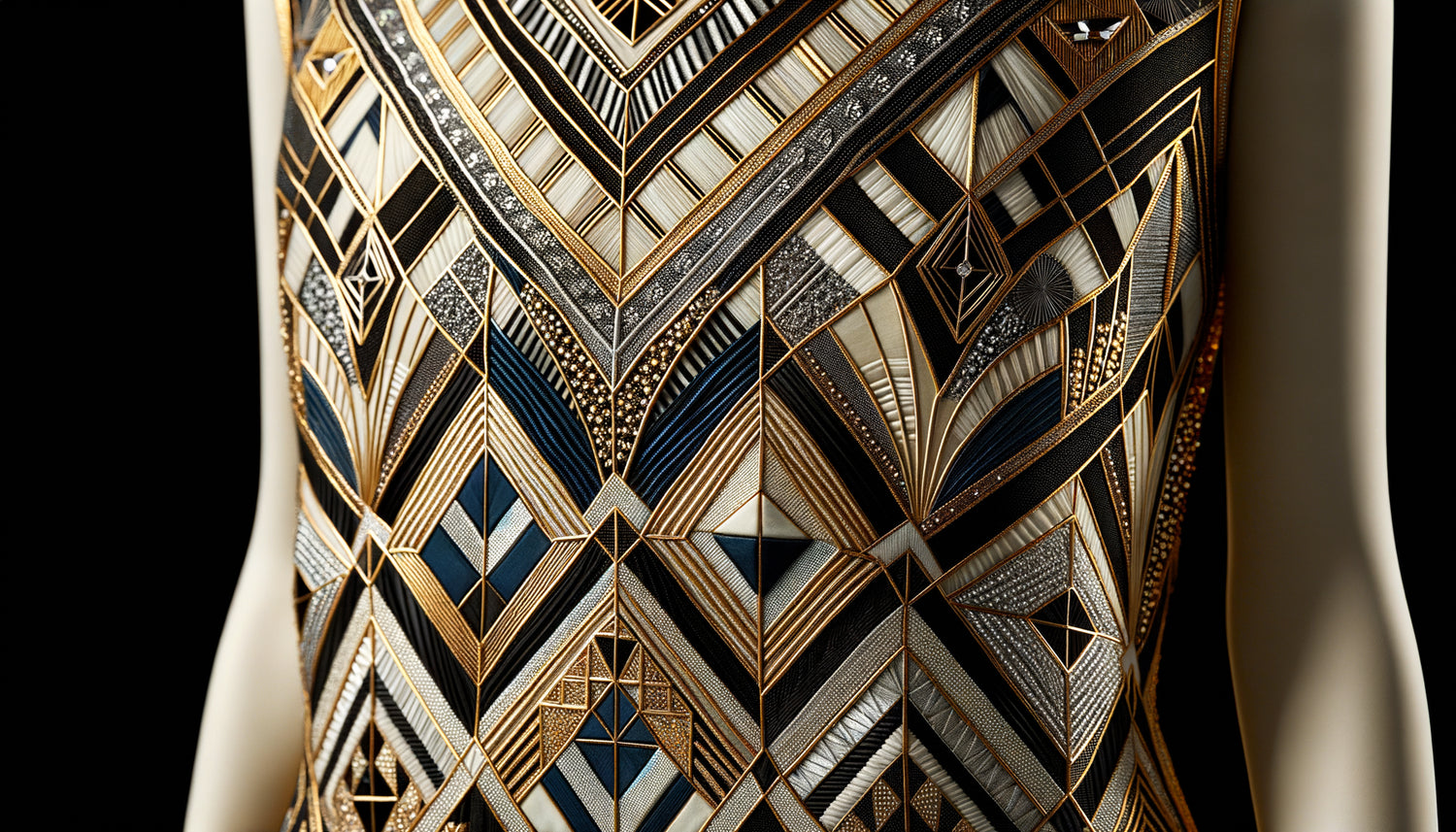
Some creations perfectly embody this fusion. The Charleston dress, with its fringes that create moving vertical lines, translates the cubist deconstruction into movement. Chevron patterns, omnipresent in the 1920s, directly take up the broken angles of Picasso's guitars.
Accessories follow suit. Evening clutches are adorned with geometric pearl motifs: concentric circles, interlocking triangles, perspective squares. Each handbag becomes a miniature Cubist painting, a Gris portable.
Even hairstyles adopt this aesthetic: the geometric bob, that perfectly square cut, radically breaks with romantic waves. Art Deco jewelry, with its clean lines and angular shapes, completes this total transformation of the female body into a modernist manifesto.
From painting to interior: when decoration embraces Cubism
This revolution obviously doesn't stop at clothing. Geometric motifs inspired by Cubism simultaneously invade interiors. Wallpapers, rugs, upholstery fabrics adopt these angular shapes that dialogue with the dresses worn in those spaces.
A typical Parisian apartment from 1925 presents a total aesthetic consistency: a rug with black and white diamond patterns, cushions adorned with Delaunay-esque colored triangles, curtains printed with abstract geometric shapes. The inhabitant who walks through this decor in her cubist patterned dress does not create a dissonance: she completes a living painting.
This unity between fashion and decoration reflects a broader ambition: to make everyday life a total work of art. Cubism offered the formal vocabulary for this fusion, the 1920s provided the necessary boldness to accomplish it.
The legacy in our contemporary interiors
Even today, when we choose a cushion with geometric patterns or an abstract painting for our living room, we unconsciously extend this revolution. Geometric shapes remain synonymous with modernity, timeless elegance. They create that dynamic visual tension that the Cubists sought: an unstable balance that keeps the eye awake.

Beyond aesthetics: a philosophy of freedom
But why has this Cubist influence so deeply marked the 1920s? Because it coincided with an unprecedented social liberation. Women had just obtained new rights, they were cutting their hair short, smoking in public, dancing until dawn. Geometric patterns were not simply a decorative choice: they symbolized a break with the old world.
Wearing a cubist-line dress meant asserting one's belonging to modernity. It meant rejecting the «naturally feminine» curves imposed by the corset, embracing an androgynous, rectilinear silhouette, constructed rather than passively endured. Geometry became political.
Cubist painters had deconstructed reality in order to better understand it. Fashion creators of the 1920s deconstructed clothing to liberate the body. This parallel was not accidental: it revealed an era that was simultaneously reinventing art, fashion, architecture, and society.
How to integrate this legacy into your daily life
This fascinating story does not belong only to the past. Geometric patterns inspired by Cubism cross the decades with intact elegance. In your interior, they bring that sophisticated visual tension, that dialogue between order and dynamism.
An abstract geometric artwork immediately creates a modern focal point. Paired with minimalist furniture, it evokes this Art Deco philosophy where each element dialogues with the others. Contrasting colors – black and gold, navy blue and off-white – echo the chromatic harmonies of the 1920s.
The trick is not to overload: a few strong pieces are enough. A large geometric artwork above a neutral sofa, cushions with angular patterns, perhaps a rug with broken lines. Each element breathes, creates its own space, while contributing to an overall harmony.
Transform your space into a tribute to this aesthetic revolution
Discover our exclusive collection of fashion artworks that capture the geometric elegance of the 1920s and dialogue with your contemporary decor.
The timeless elegance of shapes that liberate
Closing this chapter in history, we understand that the cubist influence on 1920s fashion goes far beyond a simple stylistic question. It was a cultural revolution that used geometry as the language of modernity. The triangles, circles and diamonds that adorned dresses and interiors were not mere motifs: they proclaimed a new aesthetic order.
This fusion between avant-garde painting and textile creation has permanently shaped our conception of beauty. Today, when we seek to create a modern and sophisticated interior, we intuitively rediscover these lessons: the expressive power of geometric shapes, the elegance of structured simplicity, the beauty that arises from the tension between order and dynamism.
Your next decorative gesture could prolong this century-old conversation between cubism and design. A single well-chosen artwork is sometimes enough to transform an ordinary space into a visual manifesto. It's up to you to compose your own dialogue between past and present, between art and everyday life.
FAQ : Your questions about the cubist influence in 1920s fashion
How to recognize a motif inspired by cubism in decoration?
Cubist-inspired motifs are characterized by several distinctive elements: pure geometric shapes (triangles, squares, circles) that overlap or interlock, creating a sense of fragmented depth. Unlike floral or organic patterns, they favor sharp angles and straight lines. The color palette tends towards marked contrasts rather than soft gradients. Also observe the composition: a true cubist motif creates visual tension, as if different perspectives coexisted simultaneously. In your interior, these motifs instantly bring a modern and sophisticated touch, particularly effective in a focal point on a neutral wall.
Why do 1920s geometric motifs remain contemporary?
The lasting appeal of these geometric patterns is explained by their fundamental nature: they are based on archetypal shapes that transcend ephemeral trends. Unlike dated decorative trends, pure geometry possesses a timeless quality. The 1920s crystallized a visual language based on the balance between simplicity and dynamism, clarity and complexity. This aesthetic resonates particularly with our contemporary era which values sophisticated minimalism. Moreover, these motifs adapt remarkably to different styles: they complement both a clean Scandinavian interior and an industrial loft or an authentic Art Deco apartment. Their versatility explains their constant presence in design for a century.
How to integrate cubist elements without overwhelming my interior?
The key lies in strategic selection rather than accumulation. Start with a single focal point: a large painting with geometric motifs becomes the focus of a room. Surround it with neutral and clean surfaces to allow it to breathe. If you add textiles (cushions, rugs), limit yourself to a maximum of two or three items, ensuring color consistency. The cubist spirit favors structural clarity: each element should have its own space. Also consider balance: if your painting is very colorful and dynamic, opt for accessories with more discreet black and white geometric patterns. This measured approach captures the sophisticated elegance of the 1920s without falling into decorative overload.