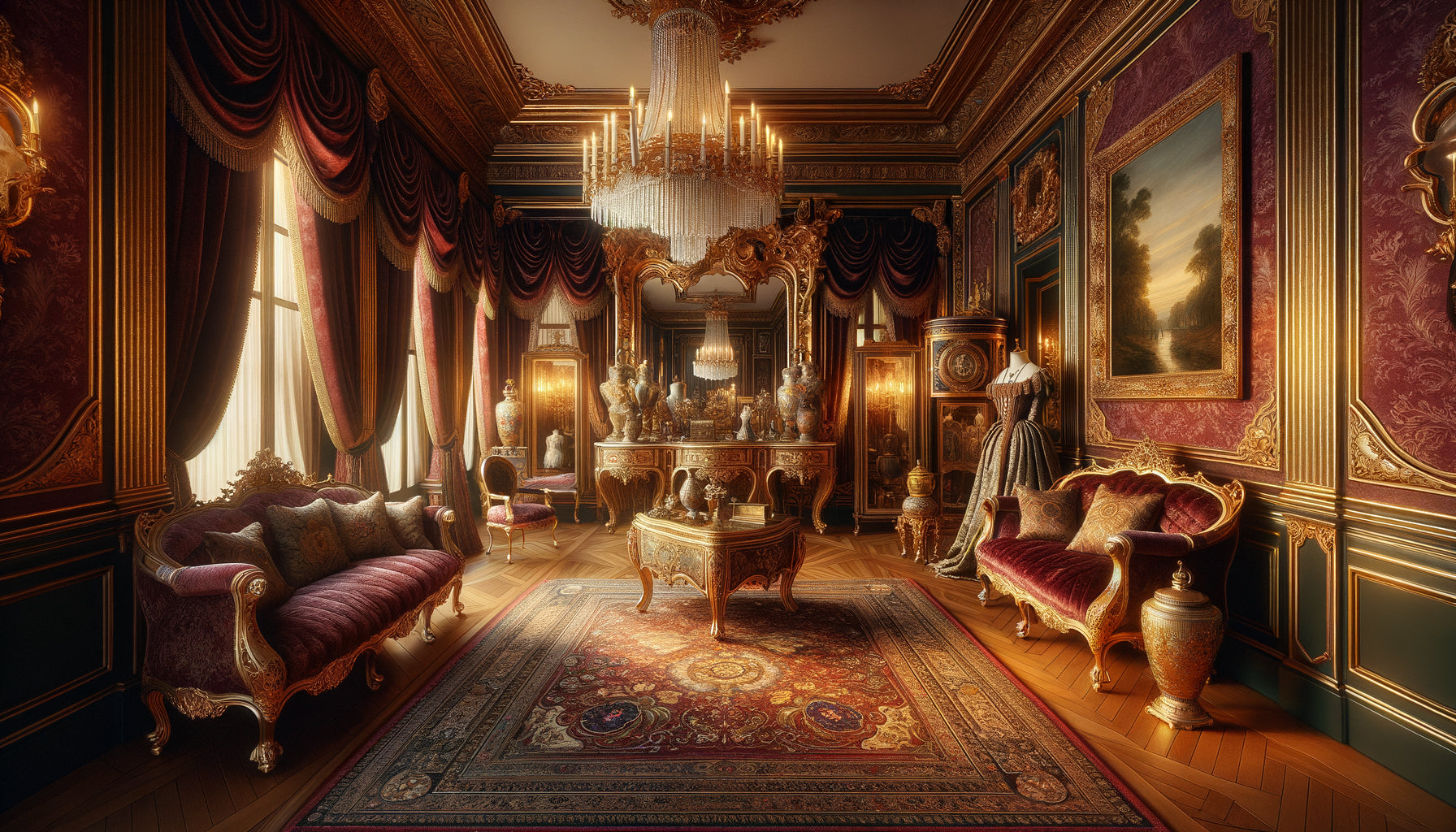
In the living room of Yves Saint Laurent's Parisian apartment, on rue de Babylone, hung a geometric canvas with black lines and blocks of primary colors. Not just any canvas: an authentic Mondrian. The couturier owned several, hanging between his Picassos and his Matisses. Why would a fashion creator at the peak of his art devote such passion to these abstract compositions seemingly so far removed from the universe of textiles and haute couture?
Here's what this fascination reveals: a shared vision of radical modernity, an obsession with perfect balance, and the ability to transform pure geometry into aesthetic emotion. Many think that abstract art and fashion evolve in distinct spheres, that collecting paintings is a matter of chance or simple investment. But at Saint Laurent, each artistic acquisition was a statement of intent, a silent manifesto that illuminates his entire work. This article plunges you into this story of elective affinities where the straight line becomes revolutionary, where pure color transcends clothing, and where two geniuses separated by half a century dialogue through the absolute balance of forms.
The obsession with the pure line: when geometry becomes language
Yves Saint Laurent did not collect Mondrian paintings out of snobbery or to adorn his walls with valuable pieces. He contemplated them daily, studied them like treatises on composition. Piet Mondrian, Dutch painter who became the apostle of neoplasticism, had devoted his life to purifying painting down to its essence: perpendicular black lines, rectangles of red, blue and yellow, white. Nothing superfluous, no concessions to decoration. This radicality fascinated Saint Laurent who, in his workshops, applied the same principle of purification to dresses and suits.
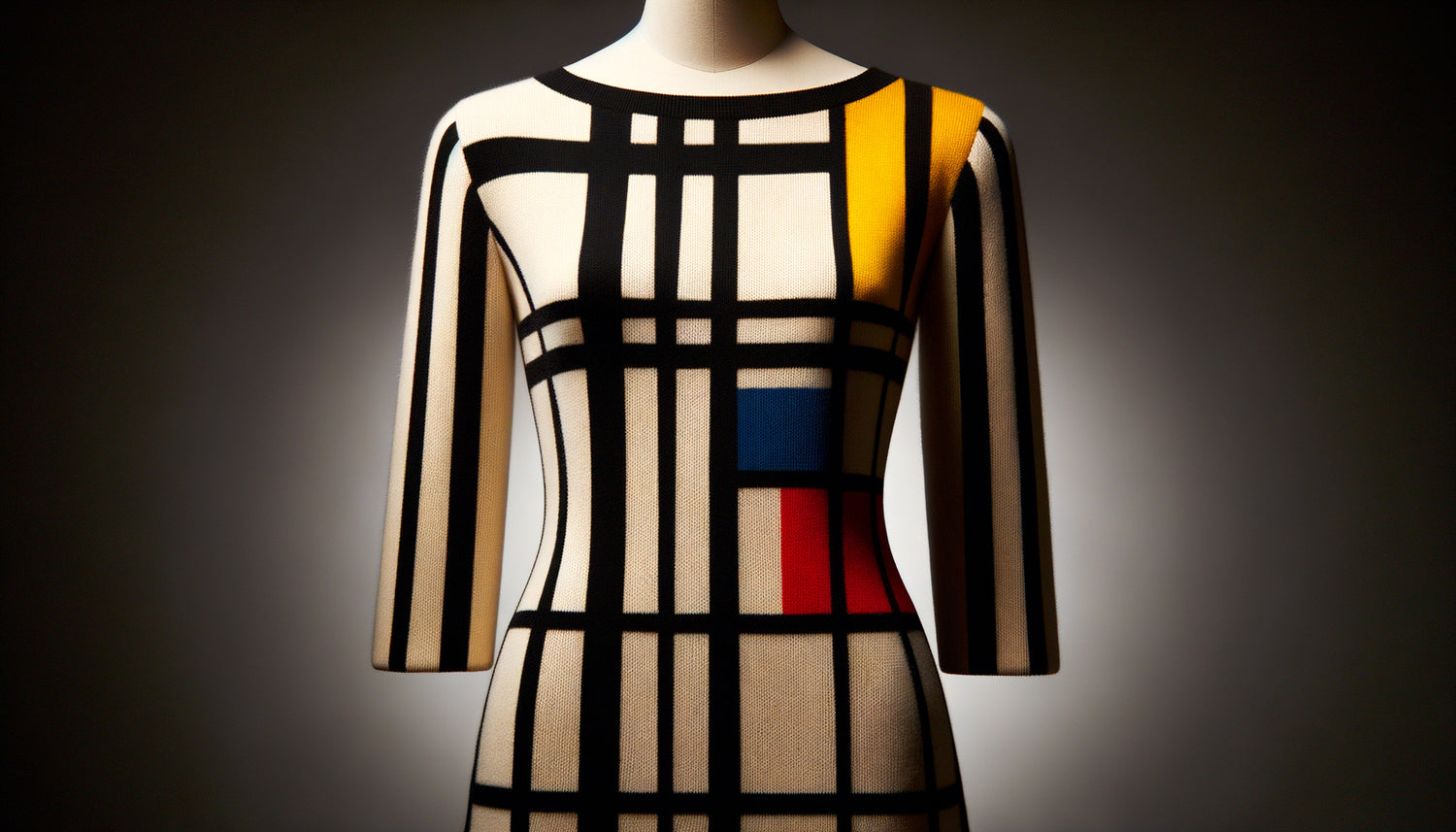
Mondrian's paintings embody a search for universal harmony through structure. Each line is weighed, each color calibrated to create a dynamic balance. Saint Laurent found in these geometric compositions the very architecture of a garment cut: how a vertical seam sculpts a silhouette, how a horizontal panel widens or slims, how black structures while color reveals. In 1965, when he created his famous Mondrian collection, he did more than just pay homage to the artist: he literally transposed the pictorial universe onto the female body, transforming each dress into a walking painting.
The Mondrian dress: a textile manifesto
These iconic robe-paintings use wool jersey to faithfully reproduce the painter's abstract compositions. No embroidery, no volume: just blocks of color separated by black bands. The apparent simplicity masks a monumental technical feat. Perfectly aligning these color blocks, maintaining the flatness of the fabric, creating a wearable garment from a two-dimensional work required absolute mastery. Saint Laurent proved that he had grasped the essence of Mondrian's paintings: economy of means in service of maximum impact.
Color as an Absolute: Chromatic Purification
Mondrian only worked with three primary colors: red, blue, yellow. Add black, white and gray. Nothing else. This palette reduced to the extreme allowed him, according to him, to reach the universal, to transcend trends and eras. Saint Laurent, a passionate collector of these works, applied the same chromatic philosophy in his moments of radical creativity. His most revolutionary collections reject half-tones and nuances to assert frank colors, clear contrasts.
Contemplating his Mondrians hanging in his apartment, the couturier meditated on the power of pure color. A cardinal red that pops, a Klein blue that vibrates, a solar yellow that radiates: these uncompromising tones became statements in his fashion shows. The paintings of Mondrian functioned as visual mantras, constantly reminding us that in fashion as in painting, daring radical simplicity requires more courage than piling up embellishments. This collection of abstract paintings guided his most audacious choices, those that tipped the balance of fashion towards modernity.

Asymmetrical Balance: The Creative Tension
What makes Mondrian's compositions so fascinating is their paradoxical balance. Nothing is symmetrical, yet everything is harmonious. A large blue rectangle on the left balances several small red squares on the right. A slightly offset horizontal line creates a dynamic that prevents the eye from resting. Mondrian mastered the art of constructive tension, this feeling that everything could collapse but miraculously holds.
Saint Laurent, by acquiring several Mondrian paintings, absorbed this science of asymmetrical balance. His most famous suits play on these mastered imbalances: a pocket placed slightly higher, a lapel that breaks symmetry, an off-center button that creates an unexpected focal point. He understood that Mondrian had not simplified painting out of intellectual laziness, but to access a superior complexity where each element counts infinitely. A millimeter's difference in the placement of a black line changed everything. A centimeter variation in a seam completely modified the perception of a dress.
The collection as a global composition
Yves Saint Laurent did not collect Mondrian paintings in isolation. He integrated them into a larger ensemble where Braque, Léger, Brancusi also dialogued. Each work became an element of a wall composition, creating harmonies and contrasts. The strict geometries of Mondrian vibrated alongside the curved forms of Matisse, creating that dynamic tension he also sought in his fashion collections: alternating straight lines and fluid ones, the structured and the draped, rigor and sensuality.
The rejection of anecdote: towards timelessness
Mondrian progressively eliminated all reference to the visible world in his painting. He moved from stylized trees to abstract grids, from landscapes to pure relationships of lines and colors. This quest for the timeless by suppressing narrative echoed Saint Laurent's ultimate ambition: to create clothes that transcend eras, pieces stripped of fashion anecdotes to reach the status of archetypes. The women's suit, the trench coat, the revisited cabin : essential forms, recognizable among all.
The Mondrian paintings that Saint Laurent contemplated daily reminded him of this requirement. An abstract composition from 1930 remains as modern in 2024 because it depends on no ephemeral cultural context. It exists within its own system of internal references. The couturier wanted his creations to reach this status: pieces that would not age because they had captured something universal in the way of dressing a body, expressing elegance. Collecting Mondrian was surrounding oneself with this demand for absoluteness that refuses compromise with the spirit of the times.

Modernity as an assumed break
When Mondrian painted his first neoplastic grids in the 1920s, he shocked the art world. He was accused of dryness, coldness, and renouncing what is essential to painting: representation, visible emotion, the virtuosity of gesture. He embraced this radical break, convinced that he was opening a path towards a new beauty, both rational and spiritual. Saint Laurent had a similar experience when he presented his Mondrian collection in 1965. Some critics screamed scandal: these were no longer dresses, just colored panels! Others hailed a genius who brought modern art into the wardrobe.
By collecting Mondrian paintings, Saint Laurent was following this line of revolutionaries who accept initial incomprehension to impose their vision. The works by Mondrian hanging in his private spaces functioned as talismans, constant reminders that true modernity always implies a form of radicality that disturbs before becoming an obvious fact. Today, a geometric dress with blocks of primary color seems natural, almost classic. In 1965, it was a provocation. Mondrian had lived the same journey fifty years earlier.
Transform your interior into a tribute to timeless elegance
Discover our exclusive collection of fashion paintings that capture the visionary spirit of the greatest creators and bring this refined sophistication that Saint Laurent sought in each composition.
A dialogue between two architects of beauty
Beyond stylistic affinities, Saint Laurent collected Mondrian paintings because he recognized in him a spiritual brother. Two men obsessed with order, structure, and the elimination of superfluity. Two creators who understood that simplicity is never simple, that it results from arduous work of distillation where each retained element must justify its presence. Mondrian could spend weeks moving a line by a few millimeters. Saint Laurent redid a sleeve ten times to obtain the exact curve.
This collection of abstract paintings was also a refuge. In an agitated world of fashion, subject to trends and commercial pressures, these rectangles of pure color offered stability, an immutable truth. The Mondrian paintings did not change, do not go out of style, do not betray. They embodied eternal principles of composition that Saint Laurent could consult as an architect consults his fundamental treatises. Each canvas was a lesson in rigor, a reminder that excellence requires never compromising on the essential.
This passion for Mondrian illuminates the entire creative approach of the couturier. It explains why, among all his contemporaries, Saint Laurent remains the one whose creations have aged best. Like Mondrian's compositions, his most iconic pieces exist outside of time because they captured something universal in the balance of forms, the accuracy of proportions, and the truth of colors. Collecting these paintings was not a hobby of a dilettante billionaire: it was an act of absolute coherence, an expression of a worldview where art and fashion share the same fundamentals.
Conclusion: The legacy of a shared vision
When contemplating the paintings by Mondrian that Yves Saint Laurent had gathered, one understands that this collection told much more than a taste for abstract art. It revealed a creative philosophy where modernity is achieved through subtraction, where emotion arises from order rather than chaos, where a few well-placed lines and colors are worth all the ornaments in the world. Mondrian and Saint Laurent shared this rare conviction that ultimate beauty lies in perfect balance, that moment of grace where nothing more can be added or removed without destroying harmony. Hang a geometric image with primary colors in your living space, observe it regularly. You may discover what Saint Laurent found there: a daily lesson in creative rigor, a silent reminder that the essential is often hidden in apparent simplicity.
FAQ: Understanding Saint Laurent's passion for Mondrian
What is the most famous piece inspired by Mondrian by Saint Laurent?
The Mondrian dress of 1965 remains the absolute icon of this inspiration. Made from wool jersey, it faithfully reproduces the painter's aesthetic with blocks of primary colors separated by black lines. Saint Laurent created several versions of it, all characterized by their straight trapezoid cut that hugs the body without restricting it. These dresses revolutionized fashion by proving that a garment could be both a portable work of art and a radical statement of modernity. They perfectly embody the couturier's philosophy: elegance through purification, impact through simplicity. Today preserved in the most important museums, these pieces have become treasures of fashion history, tangible testimonies to the dialogue between abstract painting and textile creation.
How many paintings by Mondrian did Saint Laurent own?
Yves Saint Laurent and his companion Pierre Bergé amassed one of the world's most important private collections of modern art. It included several major Mondrian paintings, including neo-plastic compositions emblematic of the 1920s and 1930s. During the historic 2009 auction, following the designer’s death, three Mondrians were dispersed for record amounts, testifying to their exceptional quality. These works were not simply investments: they occupied prime locations in the couple's Parisian apartment and Moroccan villa, constantly visible and a source of daily inspiration. Saint Laurent considered them creative companions, essential presences to his artistic balance. Each painting had been chosen for its formal perfection and its ability to dialogue with the other pieces in the collection.
Can we still see Yves Saint Laurent's Mondrian dresses today?
Absolutely, several prestigious institutions preserve and regularly exhibit these historical pieces. The Musée Yves Saint Laurent in Paris holds examples from the 1965 collection, presented in permanent and temporary exhibitions. The Metropolitan Museum of Art in New York, the Victoria and Albert Museum in London, and other major fashion museums around the world also feature Mondrian dresses in their collections. These institutions periodically organize thematic exhibitions where these iconic creations are highlighted, allowing the public to discover their technical construction and visual impact. For enthusiasts, visiting these museums offers a unique experience: contemplating these dress-paintings reveals the technical virtuosity behind the apparent simplicity and understanding how Saint Laurent materialized the Dutch painter's geometric vision in textiles.