







Mistakes to Avoid When Choosing a High-End Artwork
11 October 2025 · 18 min read · by Walensky
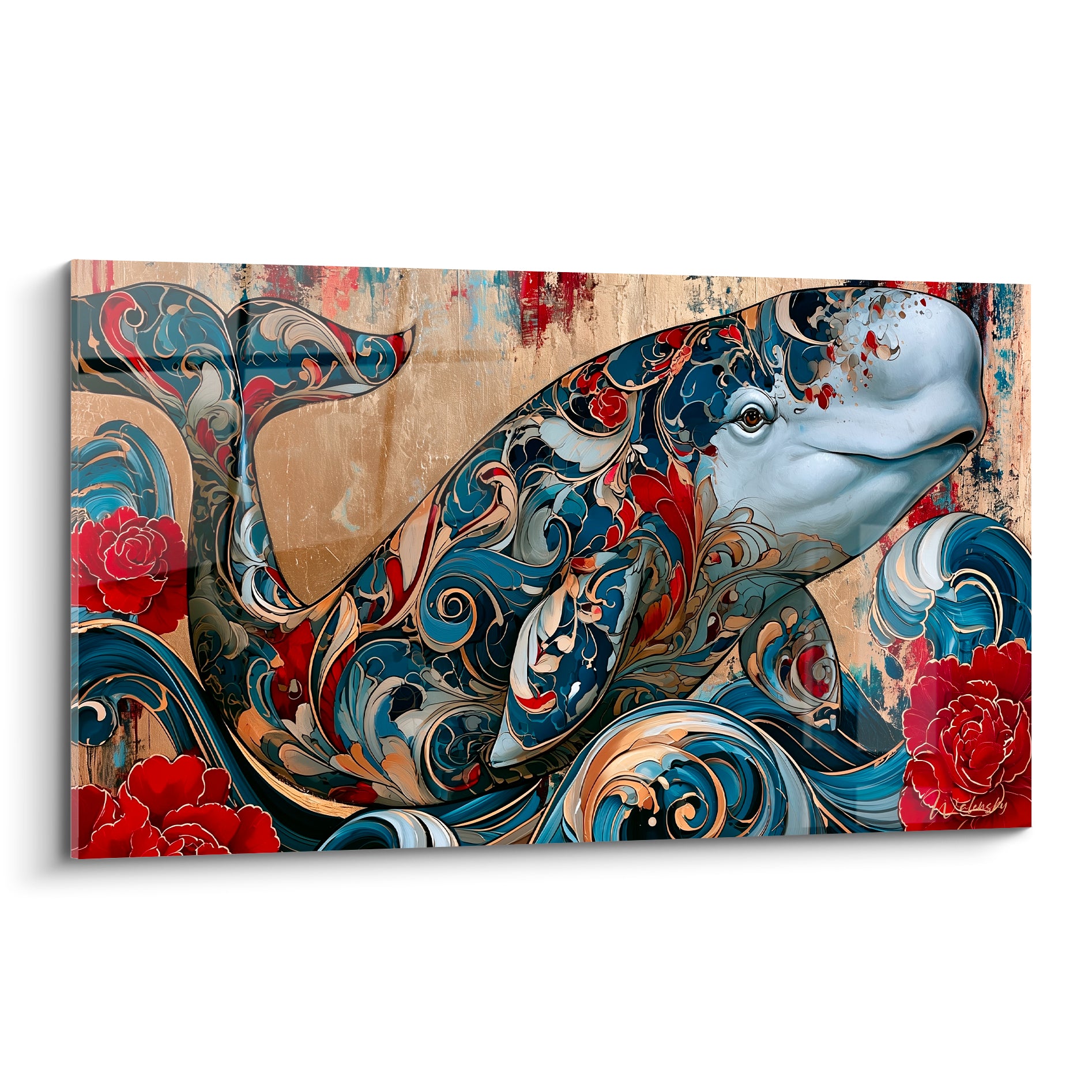
You just splurged on this stunning painting seen in this Parisian gallery. The price made you swallow hard, but after all, it's an investment for your living room, isn't it?
Three weeks later, the disillusionment is total: the colors have already lost their vibrancy, the hanging creaks with every draft, and even worse, you discover a micro-crack in the support that is inexorably spreading.
You had followed the salesperson's advice, chosen a frame that matched your decor, checked that the dimensions harmonized perfectly with your wall. So why this artistic fiasco that's costing you a fortune?
Rassurez-vous : you are not responsible for this failure. The real reason? No one explained to you the invisible technical aspects that make the difference between a temporary decorative artwork and a durable piece.
By the end of this article, you will master the 6 essential technical criteria to choose a high-end artwork that will last for years without losing its beauty, while avoiding the costly traps that ruin 80% of impulsive purchases.
Why do experienced buyers always examine the back of the artwork first?
The decorative artwork industry is experiencing a silent technical revolution. While most buyers admire the visuals, connoisseurs methodically inspect what you never see: the hidden side of the artwork. It's like choosing a car by only looking at the bodywork without ever lifting the hood to check the engine.
📖 Revealing testimony: Sarah, an interior designer, says: "My client had invested €2,500 in a triptych for his office. Six months later, the panels were warping and the colors were turning yellow. When I examined the back, I discovered a low-quality plywood support and a standard inkjet print. The salesperson had talked about a 'revolutionary modern technique' without mentioning these crucial details."
Conversation with a decor expert
Rule of thumb for experienced collectors: A quality artwork first reveals its value through its invisible finishes, like an iceberg whose beauty lies in its submerged part. Observable result: no deformation, colors stable for a minimum of 15-20 years.

What Your Seller Never Tells You About Durability
Do you feel that muted frustration when your artwork loses its luster after just a few months? When the colors fade despite the lack of direct sunlight? When you discover defects that weren't visible in the store?
This isn't bad luck, but the result of technical choices that no one explains to you. The industry relies on your lack of knowledge of these technical aspects to sell products with high margins and minimal production costs.
It's like buying a car based solely on the color of the body, without ever checking the quality of the engine that will take you around the world.
Mistake #1: Confusing Support and Print Quality
Most buyers think that a beautiful visual guarantees a beautiful print. It's like judging a book by its cover without looking at the quality of the paper and ink used.
Imagine a precious family photo printed on newsprint: even with the most beautiful memories, the result will be disappointing and ephemeral.
This confusion costs you money because it makes you miss the real criteria for longevity, leaving you with a work that ages poorly and quickly loses its aesthetic value.
🔍 Quick test: Ask the seller to show you a sample of the support used AND explain the type of ink. If they evade or remain vague, run! A serious professional masters these technical details.
Mistake #2: Neglecting Mounting Systems
Many believe that "what matters is what you see" and completely neglect the mounting. The actual mechanism: an unsuitable mounting system constantly stresses the artwork, creating invisible tensions that gradually deform the support.
It's like carrying a heavy bag with a faulty strap : at first everything seems normal, then the damage accumulates insidiously.
Result: you live in constant anxiety that your investment will fall, and discover irreversible deformations that spoil the overall aesthetics.
Mistake #3: Ignoring Environmental Compatibility
No one ever talks about adapting the artwork to your specific environment. Kitchen, bathroom, south-facing living room: each room imposes different constraints that most sellers completely ignore.
It's like planting a cactus in a tropical greenhouse : even the most beautiful plant will quickly wither in an unsuitable environment.
You can spot this by observing whether the seller asks you questions about the exact location, exposure, humidity of the room in question before advising you.
🚨 The 3 alarm signals that never lie:
- The seller avoids technical talk: They only tout the visual beauty without explaining the materials. It's like a mechanic who would only look at the paint on your car.
- No questions about your environment: A serious professional always worries about the final location. Otherwise, they are selling standard products without adaptation.
- Vague or nonexistent warranty: If they don't guarantee long-term durability, it's because they know the product won't last. End of story.
The Trigger: Overall Technical Coherence
What really makes the difference is the harmony between all the technical components : support, print, finish, mounting. It's a reverse domino effect: when everything is consistent, each element strengthens the durability of the others. You can identify it by verifying that each technical aspect is explicitly detailed and guaranteed for the same duration.
Universal law of durable artwork: A weak link compromises the entire chain. Ensure that support, print AND mounting are all of equivalent level. Immediate test: request the specific warranty of each component.
| ❌ Widespread belief | ✅ Technical reality | 💡 Why this difference | 🎯 Concrete benefit |
|---|---|---|---|
| "A beautiful visual is enough" | The support determines longevity | The print adapts to the support, not the other way around | Stability 15-20 years minimum |
| "Mounting is a detail" | It conditions deformation | Permanent tensions deteriorate the artwork | Perfect shape over time |
| "All inks are the same" | Pigments vs dyes = durability | UV rays and humidity degrade differently | Colors remain stable year after year |
| "It's fine everywhere" | Each environment has its constraints | Humidity, heat and light interact | Perfect adaptation to your interior |
— Also to discover


The expert's method for choosing without ever making a mistake
Now that you understand the real causes of failures, Here's how to select a painting that will last for decades. This approach follows the logic of professional collectors: First, you build a solid technical foundation, Then you refine the aesthetics. At the end, you will have the satisfaction of owning a work that enhances with time instead of degrading.
🏗️ Overview of the method: We proceed like an architect: first the foundations (support and printing), then the structure (hanging and finishes), finally the finishes (environmental adaptation). Each step validates the previous one and prepares the next, guaranteeing a durable and harmonious final result.
Step 1: Deciphering the technical specifications (the invisible foundations)
Starting with the technical aspects rather than the aesthetics avoids you expensive crushes. It's like choosing a house: you first check the foundations and electricity before falling in love with the decor. This step will give you absolute confidence in the durability of your future purchase.
The 3 technical elements to examine in priority
- The support (substrate): Look for "Dibond", "acrylic Plexiglas" or "380g/m² canvas". These materials look like shiny metal plates, thick transparent panels, or very dense canvases to the touch. Avoid "cardboard supports" or "standard PVC" sold cheaper: they warp quickly and yellow. Direct impact: a good support guarantees perfect flatness for 20 years.
- The type of printing: Require "high-definition UV printing" or "screen printing with pigment inks". The principle: UV instantly freezes the ink, creating an ultra-resistant layer. Recognize the quality by touch: UV printing is slightly raised and perfectly matte. Standard printing remains shiny and smooth. Visible result: colors remain unchanged even 15 years later.
- The surface finish: Prefer "UV protective varnish" or "protective lamination". These finishes create an invisible barrier that filters harmful rays. Visually, the surface appears slightly satin rather than shiny. This protection makes the difference between a painting that keeps its shine and another that gradually tarnishes.
Now, let's move on to the practical inspection of these elements
How to practically inspect these criteria
Ask for the complete technical specifications: Any serious seller has a document detailing support, inks, and finishes. If they don't, they don't master their product. Insist politely but firmly: "Could you show me the precise technical characteristics?" A professional will be happy to share their expertise.
⏱️ Time: 2 minutes | ✅ Successful when : You have a sheet with precise brands, thicknesses, ink types | ⚠️ Warning: Be wary of vague terms like "high-quality print" without technical details
Examine a physical sample: Ask to touch and closely observe a piece of the support used. A quality support has a perfectly smooth and rigid surface, without excessive flexibility. Check the thickness: minimum 3mm for Dibond, 5mm for acrylic. A support that is too thin will inevitably flex.
⏱️ Time: 1 minute | ✅ Success when: The material is rigid, dense, with a beautiful finish | ⚠️ Attention: If it bends easily or sounds hollow, it's disguised low-end
Test the print's resistance: Gently run your fingernail over a test area (ask for permission). A UV print resists perfectly, a standard inkjet print flakes slightly. This simple check immediately reveals the actual quality of the process used.
⏱️ Time: 30 seconds | ✅ Successful when: No trace, no flaking | ⚠️ Attention: Some sellers refuse this test because they know their product won't withstand it
✅ Validation of step 1: You must have a precise technical specification sheet, have touched a quality sample, and verified the print's resistance. If an element is missing, do not proceed to the next step! If in doubt, request a period of reflection rather than giving in to sales pressure.
Step 2: Validate the hanging system (invisible security)
With a solid technical foundation, you can now focus on long-term security. This step is more rewarding because you can see how your investment will be protected. The momentum kicks in: a good hanging system reveals and preserves the quality of the support you have just validated.
The components of a professional hanging system
- Rear fixing system: Look for "distributed load bars" or "suspension rails". These systems resemble horizontal metal bars attached to the back of the painting. Avoid simple "eyelets" or "point fixings": they concentrate all the weight on tiny points. Impact: perfect distribution of stress, no deformation.
- Wall spacing: A quality system automatically maintains 8-10mm of space between the wall and the artwork. This spacing allows for air circulation and prevents moisture from contact. Ensure this distance is integrated into the system, not cobbled together with makeshift shims.
- Appropriate screws and wall plugs: For a 60x80cm painting, require expanding metal wall plugs and screws of at least 60mm. The seller must provide the specific screws or advise you precisely what to buy according to your wall type (plasterboard, concrete, brick).
Verification of the hanging system
Inspect the back of the painting: Ask to see the back of the artwork (or an identical model). A professional system features robust metal fixings, perfectly aligned and screwed with long screws passing through the entire support. Bricolage fixings are easily recognizable: they hang loose, move, or seem to have been added later.
⏱️ Time: 1 minute | ✅ Successful when: Solid, aligned, integrated fixings | ⚠️ Attention: If the seller refuses to show the back, it's because they are hiding something unsightly or fragile
Verify the supply of screws: A professional always provides the appropriate screws or provides a precise sheet with exact references. Beware of "you'll find that in any hardware store": it's a sign of a lack of seriousness in customer follow-up.
⏱️ Time: 30 seconds | ✅ Successful when: Screws provided or precise screw technical sheet | ⚠️ Attention: A failed hanging system can irreversibly damage a quality painting
🔐 Validation of step 2: The back of the painting reveals a professional hanging system, you have the screws or their precise references. This step gives you absolute peace of mind : your artwork will be perfectly secured and protected from deformation.
Step 3: Personalize according to your environment (custom adaptation)
You have now reached the level of expertise that differentiates the amateur from the connoisseur. This final step optimizes durability according to your specific context: light exposure, humidity levels, temperature variations. The final result: a perfectly adapted artwork that will reveal all its beauty in YOUR unique environment, which you will be proud of for decades.
Professional Environmental Adaptation
- Reinforced UV Protection: For sunny locations (less than 3m from a window), require "99% UV filter" to be integrated into the finish. This invisible protection is recognizable by a slight bluish reflection at certain angles. Without this protection, even the best inks will lose 30% of their intensity in 5 years.
- Anti-Humidity Treatment: For kitchens and bathrooms, the support must receive a "hydrophobic treatment" that repels moisture. Visually, water droplets will bead up instead of spreading. This protection prevents deformations and mold that ruin so many artworks in these rooms.
- Thermal Stability: For rooms with significant temperature variations (near a radiator, veranda), prioritize supports with "controlled dilatation" such as composite aluminum. These materials move uniformly, avoiding the internal stresses that crack rigid supports.
Final Optimization According to Your Context
Evaluate the light exposure of the location: Observe your wall at different times of the day. If it receives more than 3 hours of direct sunlight, be sure to mention this to the seller. A professional will automatically adapt the finishes, an amateur will ignore this crucial information and sell you unsuitable standard products.
⏱️ Time: 5 minutes of observation | ✅ Successful when: You know precisely the exposure of your wall | ⚠️ Attention: Even indirect but prolonged exposure requires UV protection
Measure the ambient humidity level: Use your smartphone (many free apps measure humidity). Above 60% humidity, report it: this completely changes the support and finish recommendations. This is the difference between a piece of art that lasts and one that molds in a few months.
⏱️ Time: 2 minutes | ✅ Successful when: You know the average humidity level of the room | ⚠️ Attention: Humidity varies by season, take several measurements
🏆 Validation of Step 3: Your seller adapts his recommendations to your specific environment and explains why these adaptations are necessary. You now have absolute certainty that your artwork will be perfectly adapted to its future location.
Rule of Expert Progression: Never move on to the next step until the previous one is perfectly validated. Objective criteria: complete technical sheet + successful physical inspection + explained environmental adaptation. Balance: it is better to take your time to choose perfectly than to rush and regret it.
You now master the fundamental technical basics. Here are the expert subtleties that will give you a decisive advantage over other buyers and avoid the most costly pitfalls.
💎 Collector's Tip: Always ask to see the "technical authenticity certificate" or the "traceability sheet". True professionals document every stage of production: origin of materials, treatment dates, storage conditions. This traceability protects you and guarantees resale value. Concrete example: at the best manufacturers, each artwork has a serial number linked to its complete technical sheet.
"But how do I know if I'm being ripped off on the price?"
"I'm afraid of paying too much for quality I won't be able to recognize..."
I perfectly understand this concern! It's normal to feel vulnerable facing sellers who master technical jargon. Good news: quality can be objectively verified with the criteria you have just learned. A genuine high-end artwork costs between €40 and €80 per m² depending on the finishes, but you now have the tools to ensure you're getting your money's worth. The important thing: a high price without detailed technical justification is suspicious, a low price with all quality criteria is an excellent deal!
🎯 Immediate verification technique: Ask to compare two different price models by explaining precisely the technical differences justifying the difference. An honest seller will detail support, printing, finishes. A dishonest seller will remain vague or only talk about aesthetics.
— In the same spirit


The 5 most expensive technical pitfalls
Now that you know what to look for, I want to protect you from the most costly mistakes that even experienced buyers make. These pitfalls are insidious because they seem perfectly logical at first glance.
- 🎭 Pitfall of "Made in France" without substance: Many sellers highlight the French origin to justify a high price, but import their supports from Asia and only do the final assembly in France. Ask to know the origin of each component: support, inks, finishes. A real French manufacturer masters its entire chain and is not afraid to detail its supplies. Common but understandable mistake: you trust the label without checking the reality behind it.
- 🖼️ Pitfall of the "revolutionary technique": Beware of sellers who invent fanciful technical names: "UltraHD Premium", "TechnoArt Advanced", etc. Real techniques have standard names: UV printing, Dibond, acrylic, screen printing. If you can't find the term on Google or Wikipedia, it's probably disguised marketing. Safe alternative: ask for the equivalents in terms of standard technical terms.
- 💡 Pitfall of in-store lighting: Showrooms use special lighting that enhances colors and hides defects. Always ask to see the artwork under natural lighting or go outside with the salesperson near a window. The true colors and any defects only appear in natural light. Normal precaution: a confident salesperson will accept this verification without problem.
- ⏰ Pitfall of commercial urgency: "It's the last piece", "the offer ends tomorrow", "I can't hold this price for long"... These pressure techniques prevent you from calmly checking all the technical criteria. A quality product doesn't need these artifices to sell. Protection strategy: always impose a minimum reflection period of 24 hours, even if it makes you "miss" the offer.
- 📏 Pitfall of "custom" dimensions: Be careful of salespeople who automatically push for custom sizes under the pretext that "it's better adapted". They often charge 40-60% more for slightly different dimensions without any real technical added value. First check if a standard size is suitable: you will save money without losing quality. Custom sizes are only justified for real architectural constraints.
🛡️ Anti-scam verification system: (1) Detailed technical sheet obtained and verifiable online, (2) Successful physical material inspection, (3) Price comparison with 2 other suppliers, (4) Reflection time respected. Immediate warning signs: refusal to show the back of the painting, excessive time pressure, invented technical terms, "exceptional" price without clear justification.
— Other selected pieces


Questions you still have
Allow 2h to 3h spread over several days for a perfectly considered choice: 1h for the first technical inspection visit, a minimum of 24 hours of reflection, then 1h to finalize with the right questions. To optimize: prepare your list of criteria to check before the visit, take photos of the samples to compare calmly at home. Concrete example: Marie took her time, compared 3 suppliers, and saved €800 while obtaining a superior quality.
For a 60x80cm painting of professional quality, allow between €200 and €500 depending on the finishes chosen. This range includes Dibond or acrylic support, high-definition UV printing, and professional hanging system. Below €150, technical quality becomes random. Above €600, check that the additional cost is justified by exceptional finishes (integrated frame, LED lighting, etc.), not just by the seller's margin.
With a professional hanging system and the right screws, installation takes 15-20 minutes and only requires a drill and a level. Serious manufacturers provide a detailed notice with diagrams. Only difficulty: accurately identify your wall type (drywall, concrete, brick) to choose the right anchors. If in doubt, a craftsman charges €40-60 for a perfect installation, which remains marginal on an investment of several hundred euros.
A technical quality painting retains its aesthetic value and therefore its market value, unlike low-end prints that degrade quickly. To increase real value, prioritize: (1) emerging artists with already some recognition, (2) limited and numbered editions, (3) traceable provenance with certificate. Realism: the main goal remains lasting aesthetic pleasure, financial value being an eventual bonus.
Serious online galleries often offer a better price-quality ratio than physical stores (less overhead, more transparency on techniques). Criteria of trust: detailed technical sheets, photos of the back of the works, customer service reachable by phone, clear return policy (minimum 14 days), verified customer reviews. Be wary of: only aesthetic photos, vague descriptions, inability to speak to an expert, abnormally low prices without technical justification.
Your transformation into an enlightened expert
In a few weeks, when your guests admire your tableau with vibrant colors perfectly integrated into your decor, you will savor the satisfaction of having made the perfect technical choice. Never again that nagging anxiety of a poorly controlled impulse purchase, but the serene pride of a connoisseur who knows how to recognize and choose true quality.
This technical expertise will be valuable to you far beyond this first purchase: you have developed a critical and methodical eye that will apply to all your future decor investments. Your entourage will naturally come to you for advice, recognizing your new status as an art mural expert.
The hardest part is behind you: you now know what to look for and how to verify. Your next move? Apply this reading grid to your next visit. You will be surprised to see how much sellers will respect you differently when they realize you master the technical aspects!
🎯 Your newly acquired power: You now have the keys to transform any space into a durable and refined personal gallery. This expertise is yours for life and will save you thousands of euros by avoiding costly mistakes!
Explore our collections


