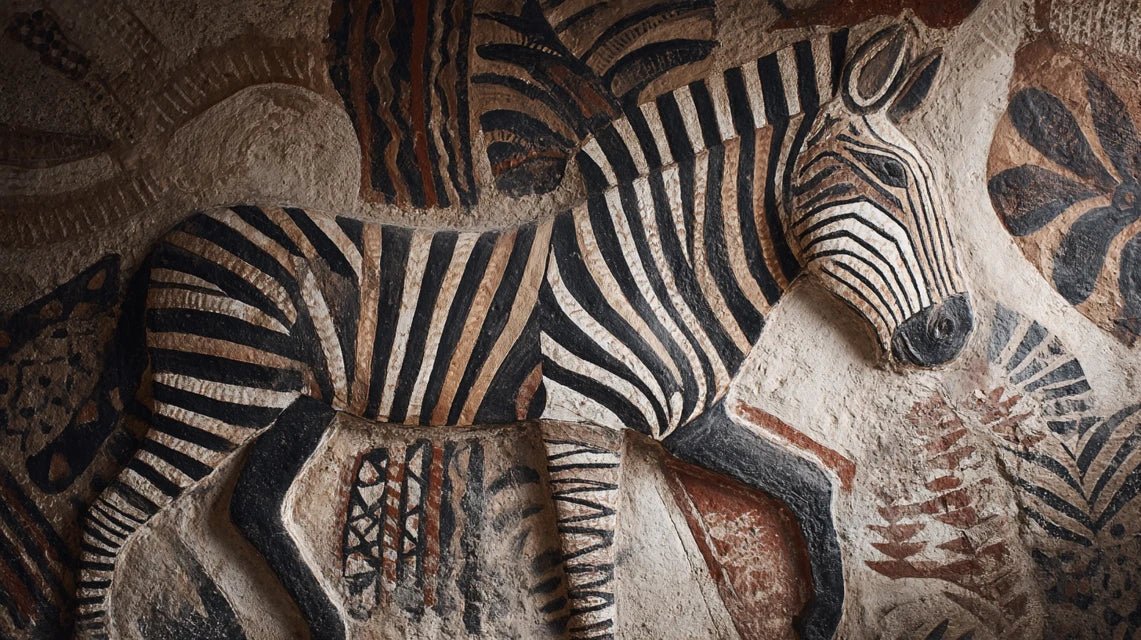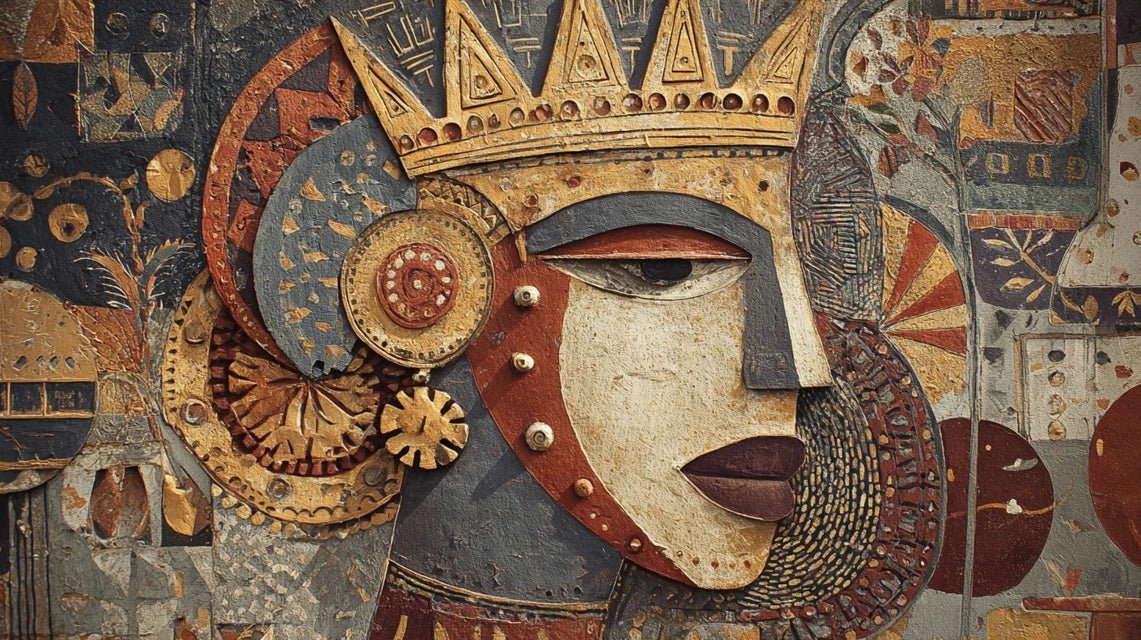
In a Parisian loft I visited last year, a scene deeply marked me: above a minimalist white sofa stood a monumental work representing an Ashanti royal throne, its geometric patterns exploding in gold and deep black. The owner, a discreet collector, confided to me that this piece transformed every conversation. Guests stopped abruptly, fascinated by this presence that commanded respect without saying a word. African royal thrones possess this magnetic force that transcends centuries.
Here's what the inspiration of African royal thrones brings to your interior: a architectural presence that structures space, a symbolic depth that nourishes conversations, and a cultural sophistication that instantly elevates any room to the rank of precious setting.
The problem with contemporary wall art? Too often, it decorates without telling a story. It fills a void without creating dialogue. We accumulate neutral impressions, soulless abstractions, desperately seeking that je ne sais quoi that makes a space memorable. We want personality, but we fear kitsch. We desire depth, but we resort to ease.
Yet, the solution has existed for centuries in African royal courts. The thrones of the Kingdom of Dahomey, the Bamiléké ceremonial seats, the Baoulé sculpted thrones – these objects of power are never just seats. They embody a visual philosophy that translates authority, dynastic continuity and cosmic connection into pure forms. And this same philosophy can transform your walls into visual manifestos.
I will show you how this millennial tradition reinvents contemporary wall art, giving you the keys to create at home this sovereign presence that changes everything.
The geometry of power: when royal patterns structure space
African royal thrones never let the eye rest. Each surface tells a story: the lozenge patterns of the Kuba evoke the scales of the royal python, the Akan spirals draw the paths of ancestral wisdom, the Bamiléké chevrons symbolize the sacred protective mountains.
This sacred geometry possesses an architectural power that savvy interior designers masterfully exploit. In a space with a low ceiling, a wall artwork inspired by the vertical patterns of Fon thrones creates an illusion of elevation. The ascending lines guide the eye upwards, just as the monumental backrest of a royal seat proclaims the stature of the sovereign.
I recently advised a London client to install a triptych composition featuring the geometric patterns of Dogon thrones in his narrow hallway. Result? The confined space was transformed into a procession gallery, each panel creating a visual rhythm that naturally led to the living room. The patterns of African thrones do not decorate: they orchestrate space.
How to integrate this geometry into your home
Start by identifying the energy function of your room. An office requires concentration: prioritize regular and symmetrical patterns inspired by Ashanti thrones, these hypnotic repetitions that soothe while stimulating. A living room intended for exchanges? Opt for more dynamic compositions where motifs intertwine as on Bamoun royal seats, inviting dialogue and progressive discovery.
The color palette plays a crucial role. African royal thrones traditionally use strong contrasts: deep black against gold, sienna earth against limestone white, indigo against ochre. These oppositions create an immediate visual readability while maintaining timeless sophistication.
The sculptural symbolism that transforms a wall into a narrative
On a Baoulé royal throne, you will never find a gratuitous ornament. Each sculpted figure – the spider weaver of destinies, the chameleon messenger between worlds, the bird bearer of prophecies – fulfills a precise narrative function. It is this symbolic density that contemporary wall art can reinvest.
A Brussels artist I particularly admire creates mural bas-reliefs inspired by thrones of the Kingdom of Benin. She transposes protective figures – leopard guardians, serpent wisdom, ancestral characters – into modular compositions. Her clients can compose their own visual narrative, just as a king had his personal history sculpted on his seat.
This narrative approach radically transforms the perception of an interior. Instead of an anonymous space, you create a biographical environment where each wall element tells a chapter of your sensitivity. A Zurich collector thus had a monumental mural fresco made that reproduces the structure of a Bamiléké throne, where each symbolic level represented a stage in his entrepreneurial journey.
Build your personal symbolic vocabulary
The mistake would be to literally copy the symbols of African thrones without understanding their logic. The strength of this tradition lies in its method: associating form and meaning inextricably. You can adopt this approach with your own references.
Identify three to five elements that structure your vision of the world – these can be abstract concepts (balance, transmission, transformation) or concrete references (mountain, ocean, architecture). Then look for how the traditions of African royal thrones visually encode similar ideas. Spirals for cycles, stacks for continuity, symmetries for cosmic harmony.

Discover this inspiring artwork
The precious materiality: texture and physical presence
When you observe closely an authentic African royal throne, you discover a staggering material richness. The Ashanti inlaid their seats with gold powder mixed with resin. Kuba artisans covered some thrones with microscopic pearls, creating surfaces that captured light like living skin. Bamiléké thrones alternated carved wood, repoussé copper and natural fiber weaves.
This textural opulence may be the most valuable lesson for contemporary wall art. In a world saturated with flat digital prints, materiality becomes a rare luxury. Avant-garde creators understood this: they are reinventing the artisanal techniques of African thrones to create tactile wall artworks.
I recently discovered the work of a Milanese workshop that produces wall panels inspired by the royal thrones of Cameroon. They use reclaimed wood which they carve in relief, then patinate with natural pigments and copper leaf. The result? Pieces that evolve with daylight, creating an almost animated presence in the space.
The effect of visual hierarchy: composing your mural royal court
In a traditional throne room, nothing is left to chance. The royal seat always occupies a calculated position: often elevated, sometimes framed by columns or hangings, always in relation to openings and circulations. This staging creates what is called in design visual hierarchy.
Your wall can function according to the same logic. Imagine a composition where a monumental central piece – inspired for example by a Yoruba royal throne with its sculpted figures – dominates the space, flanked by smaller satellite pieces that create a rhythm. This organization is not decorative: it literally programs how your guests will perceive and inhabit the space.
A Berlin interior architect I know systematically uses this principle in his high-end projects. For a penthouse overlooking the Spree, he created an accent wall inspired by the layout of a Bamoun royal court: an imposing central work representing a stylized throne, surrounded by four smaller panels depicting emblems of power – spear, shield, mask, drum. The effect? A narrative depth that gives the impression of entering a space steeped in history.
Calibrate proportions for your space
Size matters, but not as we think. An African royal throne is not always physically monumental – some ceremonial seats are barely 50 centimeters high. Their presence comes from their visual density and strategic positioning.
For a wall 3 meters wide, a composition inspired by royal thrones should occupy approximately 60 to 70% of the available surface, leaving the rest of the wall to breathe. This proportion creates a balance between an affirmed presence and restrained elegance. Too small, the artwork will float without anchorage; too large, it will stifle the space.

Discover this inspiring artwork
Royal chromies: when color becomes the language of power
In the traditions of African royal thrones, each color speaks. Ashanti gold proclaims wealth and divine sunlight. The red of the Benin kingdoms evokes both the blood of ancestors and the nourishing earth. The deep black of Dogon thrones symbolizes the primordial night from which all emerges. Kaolin white represents purity and spiritual connection.
These color codes offer a palette that is infinitely richer and more meaningful than fleeting contemporary design trends. Rather than blindly following the Pantone of the year, you can build a chromatic identity rooted in millennial symbolic systems.
A Parisian interior designer specializing in character interiors recently explained her method to me: she always starts by identifying the color palette of a royal throne corresponding to her client's personality. For a business leader seeking to assert their authority, she chose the colors of the Ashanti thrones: black, gold and accents of earth red. For a couple of artists seeking inspiration and serenity, she turned to the softer tones of the Baoulé royal seats: natural wood, off-white and touches of indigo.
From the royal court to your living room: orchestrating the transformation
Specifically, how do you translate all this richness into your project? Start by asking yourself what function you want to give your space. African royal thrones were never just furniture: they transformed an ordinary space into a place of power, justice, celebration or spiritual contemplation.
Your wall can achieve the same metamorphosis. In a dining room, a wall composition inspired by ceremonial thrones transforms a simple meal into a ritual of conviviality. In an office, a work drawing on the symbolism of council seats creates an atmosphere conducive to important decisions. In a bedroom, the soothing motifs of meditation thrones promote rest and introspection.
South African artist William Kentridge masterfully demonstrated this approach in an installation I saw at Tate Modern: he recreated a throne room entirely in animated wall projections, where the patterns of royal thrones unfolded, transformed, told the story of colonial and post-colonial history. The space became simultaneously a memorial, a court, and a celebration hall.
Ready to invite the majesty of African royal courts into your interior?
Discover our exclusive collection of African art that captures the symbolic power and timeless elegance of African royal traditions, to transform your walls into manifestos of cultural sophistication.
Your space deserves its visual throne
African royal thrones teach us a fundamental truth: art is never just decoration. It's an experience programmer, an atmosphere creator, a catalyst for conversations and contemplations. By integrating this philosophy into your approach to wall art, you are not simply covering a blank wall – you are creating a magnetic pole that structures your entire living space.
Imagine coming home tonight and feeling that benevolent presence: a wall that doesn't shout but commands respect, that doesn't distract but inspires, that doesn't age but transcends time. That’s exactly what a royal throne provides in a ceremonial hall – and that’s exactly what wall art inspired by it can achieve.
Start modestly if you wish: a single piece, carefully chosen, positioned with intention. Observe how it transforms your relationship to space. Then, gradually, build your visual vocabulary, your personal royal court, this silent dialogue between the walls that tell who you are and what you celebrate.
The power of African royal thrones does not belong only to museums and palaces. It simply awaits reinterpretation, reinvention, and an invitation into our contemporary spaces. Your wall is a throne awaiting its coronation.
Frequently asked questions about wall art inspired by African royal thrones
How to choose the right African royal throne style for my modern interior?
The beauty of African royal thrones is their incredible stylistic diversity that adapts to practically all contemporary interiors. For a minimalist Scandinavian space, I recommend the sleek elegance of Senufo thrones, with their pure vertical lines and understated geometric patterns. If your interior leans towards industrial with raw materials, Dogon thrones in dark wood with their sculpted figures will bring perfect organic texture. For a bright contemporary loft, the golden motifs of Ashanti thrones will create a sophisticated contrast. The trick? First identify your dominant color palette and desired level of visual complexity, then look for the royal tradition that shares those characteristics. Don't be afraid to mix: a richly decorated Bamiléké throne can beautifully balance an otherwise very understated interior, creating that dramatic focal point sought by all designers.
Is wall art inspired by African thrones likely to look out of place or like cultural appropriation?
This is an essential question and I thank you for asking. The crucial difference lies between appropriation and respectful appreciation. Appropriation consists of extracting visual elements from their context without recognition or understanding. Appreciation involves learning, recognizing the source, and ideally supporting artists and artisans from the cultures concerned. When you choose a wall art inspired by African royal thrones, make sure it comes from contemporary African artists or artists who collaborate directly with African communities and share profits fairly. Find out about the meaning of symbols – some are sacred and should not be reproduced out of context, while others are part of a shareable visual vocabulary. Finally, be prepared to tell the story: when your guests admire your wall, talk about the tradition of Baoulé or Ashanti thrones, mention the artist, pass on the knowledge. It is this conscious approach that transforms a decorative object into an authentic cultural bridge.
What budget should I expect to integrate this African royal aesthetic into my space?
The good news is that the inspiration of African royal thrones is accessible to all budgets, even if the investment varies considerably depending on the approach. To start with a modest budget (100-300 euros), you will find excellent reproductions of high-quality digital art depicting historical thrones or contemporary compositions inspired by their motifs - choose a large canvas or dibond print that will immediately have presence. In the mid-range (500-1500 euros), you gain access to original works by emerging artists, often mixed media pieces combining painting and textural elements that evoke the material richness of authentic African thrones. For a significant investment (2000 euros or more), you can order custom pieces from established artists, or even sculpted bas-reliefs or modular wooden compositions that truly reproduce the artisanal techniques of royal throne creators. My advice? Start with a mid-range piece that really speaks to you, live with it for a few months, then invest gradually. A single well-chosen and well-positioned African artwork will have infinitely more impact than three mediocre works accumulated out of budgetary caution.