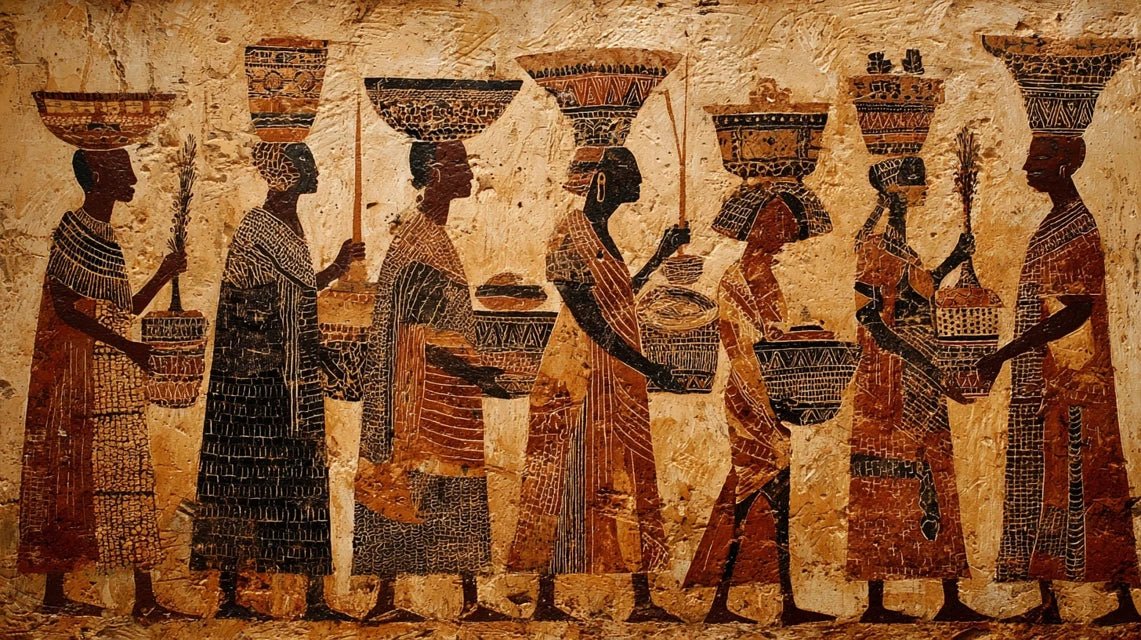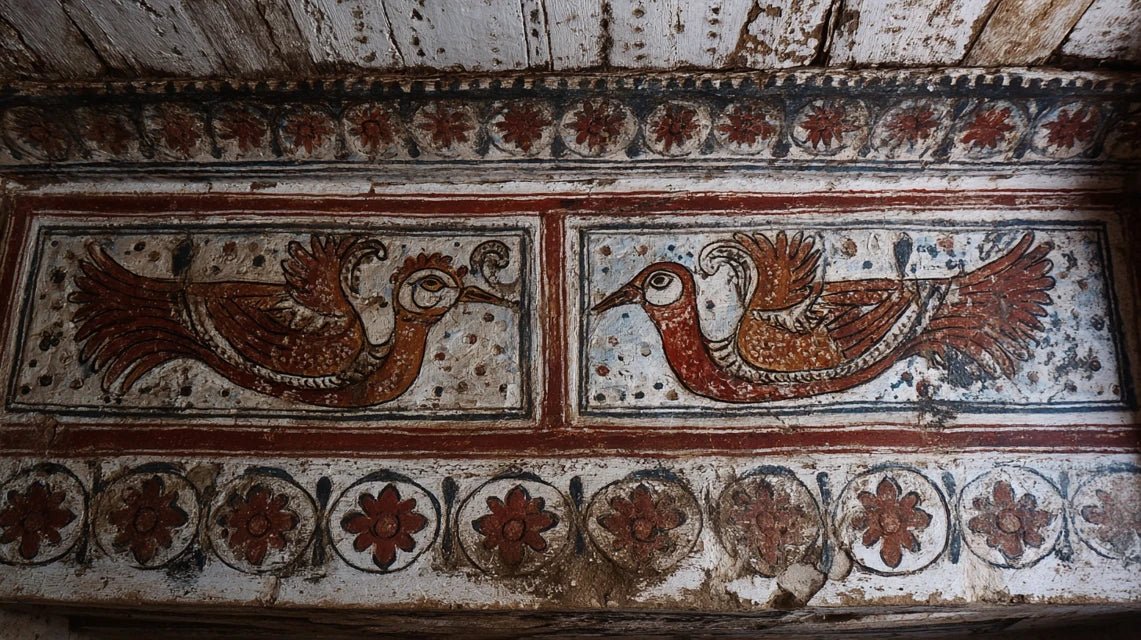
Imagine a morning in Lamu, on the Kenyan coast. The first rays of sunlight brush against the walls of an ancient palace, revealing floral motifs of unparalleled finesse, carved into coral and plaster. These Swahili frescoes tell a thousand years of history, a fascinating blend of Africa, the Arab world, and the Indian Ocean. Today, this East African coastal art inspires the most refined interiors, far beyond the shores of Zanzibar.
Here's what Swahili palace frescoes bring to your decor: an authentic cultural depth that transcends fleeting trends, a sophisticated geometric aesthetic that enhances space without weighing it down, and that timeless elegance that dialogues as well with the contemporary as with the classic.
Perhaps you have browsed decoration shops looking for that particular soul that is missing from your interior. Scandinavian patterns seem cold to you, bohemian inspirations too seen. You are looking for this emotional connection, this tangible story that only patrimonial art can offer. Good news: Swahili art remains unknown to the general public, which makes it a source of exclusive and remarkably distinctive inspiration.
In this article, I'll take you on an exploration of the visual universe of East African coastal palaces, decipher their millennial aesthetic codes, and discover how to integrate this richness into your decor with subtlety and impact.
The heritage of Swahili palaces: when the Indian Ocean inspires architecture
The Swahili palace frescoes were not born by chance. They emerge at the crossroads of civilizations, where Arab dhows met African canoes, where Persian merchants negotiated with local sultans. Between the 11th and 17th centuries, the East African coast – from Mogadiscio to Sofala – was covered in prosperous cities whose architecture reflected this unique cultural fusion.
In Stone Town, historic heart of Zanzibar, Swahili palaces reveal their signature: walls of fossilized coral covered with fine plaster, engraved with motifs that blend Islamic rosettes, African vegetal intertwines and Persian arabesques. These wall frescoes were not mere decorations – they affirmed status, told stories of marital alliances, celebrated the prosperity of the spice trade.
What fascinates about this coastal art is its ability to absorb influences without ever losing its identity. Swahili artisans created a distinctive visual language: refined geometry, rigorous symmetry, but always that sensuality in the curve, that movement evoking the waves of the Indian Ocean. A rare balance between discipline and poetry.
Iconic motifs: decoding the Swahili visual vocabulary
Understanding Swahili frescoes is learning to read a sophisticated visual alphabet. The chain motif – these geometric intertwines that seem to have neither beginning nor end – symbolizes eternity and the interconnectedness of destinies. It is often found framing the niches where precious objects rested.
Floral Rosettes and Medallions
Swahili rosettes differ from their Arab counterparts with a subtle asymmetry, a slight overflow that breaks mathematical perfection. This intentional imperfection – a reflection of humility before the divine – paradoxically creates a captivating visual dynamic. The stylized petals evoke jasmine, clove, or frangipani, anchoring East African decorative art in its tropical environment.
Geometric Friezes
The friezes that run along ceilings and doors play on the hypnotic repetition of elementary shapes: triangles, diamonds, zigzags. These geometric motifs create a soothing, almost meditative visual rhythm. In contemporary decor, they bring structure and sophistication without rigidity, a valuable balance in modern open spaces.

Discover this inspiring artwork
The Color Palette of the Coast: Between Earth and Ocean
The colors of Swahili palace frescoes tell the geography. The immaculate white of polished coral dominates, reflecting the intense equatorial light. But this white is never cold – it retains that creamy warmth, slightly golden, that only natural materials possess.
Deep turquoise emerges as a counterpoint, a direct echo of the Indian Ocean visible from the palace terraces. This blue-green is not Mediterranean azure: it has a density, a depth that evokes tropical waters teeming with life. In Swahili decor, this color becomes the strategic accent, one that awakens without dominating.
Red ochre, extracted from the lateritic soils of the hinterland, brings the third note. Used sparingly in frames and highlights, it anchors the composition, recalling the African earth beneath the cosmopolitan veneer of port cities. This East African coastal palette – cream white, deep turquoise, discreet ochre – works miraculously in contemporary interiors, offering freshness and timelessness.
Integrating Swahili Aesthetics: From Subtle to Spectacular
How to invite this East African coastal art into your home without creating a pastiche? The key lies in selectivity. Swahili frescoes work beautifully in concentrated touches rather than total saturation.
The minimalist approach: strategic emphasis
A single tableau inspired by Swahili frescoes on a white wall can radically transform a room. Opt for a reproduction of a floral medallion in a clean frame, placed above a raw wood console. The complex geometry of the Swahili motif dialogues with the simplicity of contemporary furniture, creating that harmonious tension that characterizes memorable interiors.
The immersive approach: the wall composition
For generous spaces, consider a composition of several elements inspired by Swahili palaces. Layer different scales of motifs – a large central rosette surrounded by smaller geometric friezes. This stratification creates the visual depth characteristic of historic interiors, while remaining perfectly legible in a modern context.
Swahili decorative art pairs particularly well with raw natural materials: crinkled linen, unglazed terracotta, driftwood. This alliance reinforces the authenticity of the whole, avoids the pitfall of a thematic decor that is too literal. Think dialogue rather than reconstruction.

Discover this inspiring artwork
What distinguishes frescoes from Swahili palaces from a simple decorative trend is their cultural resilience. Despite centuries, cyclones, and political changes, this East African coastal art persists. In Lamu, artisans perpetuate ancestral techniques, sculpting plaster according to the same gestures as their XIVth-century ancestors.
Integrating these references into your decor is participating in the preservation of a threatened heritage. It's also asserting an informed aesthetic choice, refusing the standardization of globalized interiors. Swahili motifs carry a story that your guests will intuitively feel, even without being able to name it precisely.
This narrative depth transforms your space. A living room ceases to be simply pretty to become memorable, charged with that cultural density which nourishes the imagination. That's the difference between decorating and truly inhabiting.
Ready to invite the elegance of East Africa into your home?
Discover our exclusive collection of African art that captures the sophisticated essence of Swahili art and transforms your walls into living history galleries.
Swahili frescoes and modernity: an unexpected dialogue
One of the most fascinating aspects of Swahili palace frescoes is their natural compatibility with contemporary architecture. Forward-thinking interior designers have understood this: the clean geometry of Swahili art integrates perfectly into industrial lofts, minimalist Scandinavian spaces, or even Japanese interiors.
This universality is explained by the fundamentals: balance, proportion, mastered repetition. The same principles that governed East African coastal frescoes eight centuries ago also govern contemporary design. By pairing a painting inspired by Swahili palaces with Bauhaus furniture or mid-century lines, you create not a contrast, but an unexpected continuity.
Also consider transitional spaces: hallways, entrances, stairwells. These often neglected areas become captivating galleries with a series of Swahili motifs framed. The rhythmic repetition guides movement, transforming circulation into an aesthetic experience.
Compose your personal visual narrative
Ultimately, adopting the aesthetics of Swahili frescoes is writing your own decorative story. Perhaps you have traveled to East Africa, and these motifs revive precious memories. Or perhaps you are discovering this coastal art for the first time, and it resonates mysteriously with your sensibility.
Imagine your living room in six months. A large painting with Swahili motifs dominates the main wall, its deep turquoises dialoguing with the natural linen cushions of your sofa. The evening light catches the geometric reliefs, creating moving shadows that recall the play of light in the streets of Stone Town. Your guests stop, intrigued, ask questions. You share the history of East African coastal palaces, of artisans who sculpted coral by hand.
Your interior is no longer just comfortable – it is inhabited by a soul, irrigated by centuries of human history. That's what true decoration is: not simply arranging objects, but weaving narratives that elevate us.
Start modestly: choose a piece, a single element inspired by Swahili frescoes. Observe how it transforms the space, how your gaze rests differently. Let this first stone lay the foundations of a deeper, more intentional aesthetic. The art of Swahili palaces awaits you, patient and generous, ready to enrich your daily life with its millennial visual wisdom.