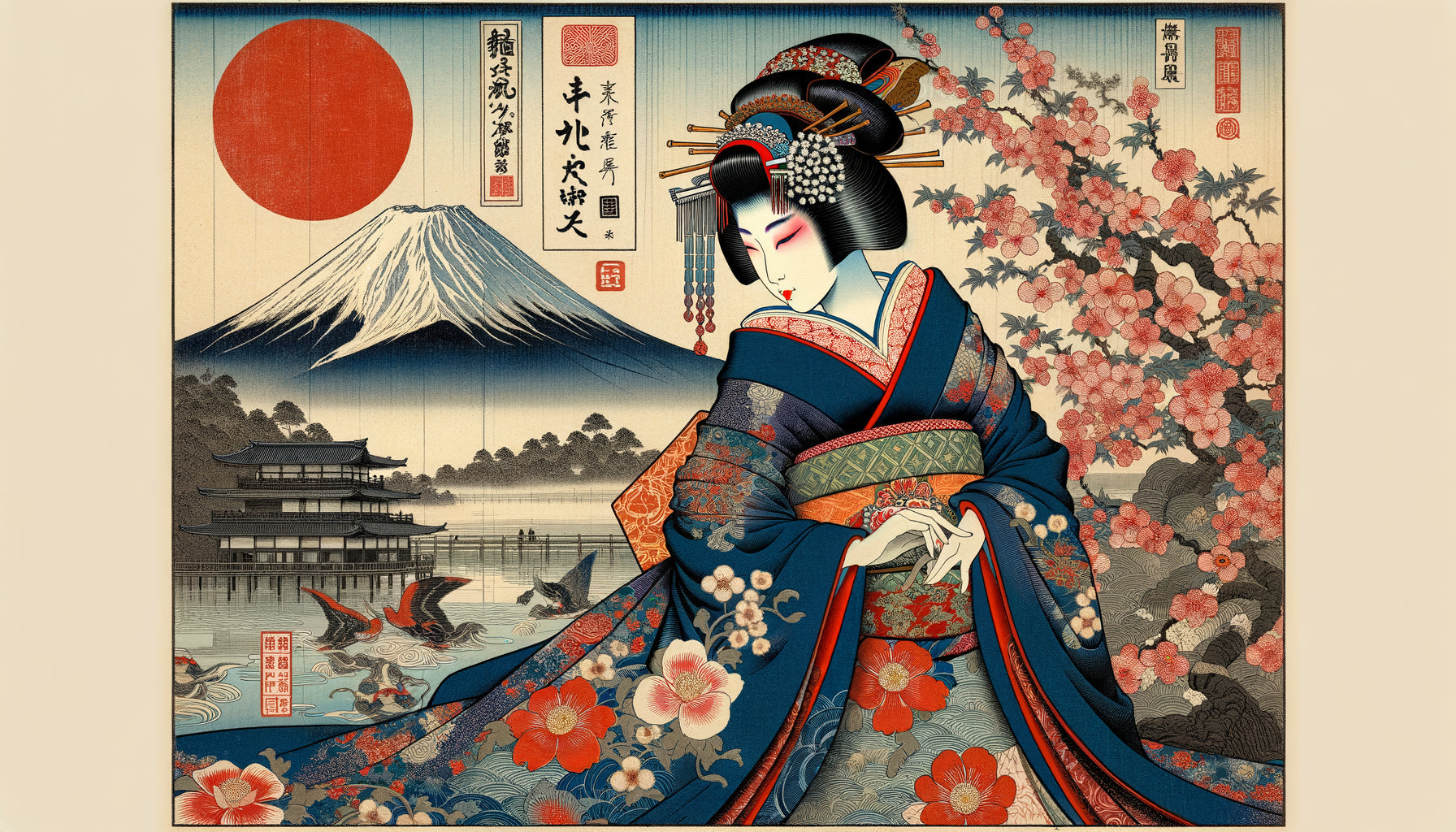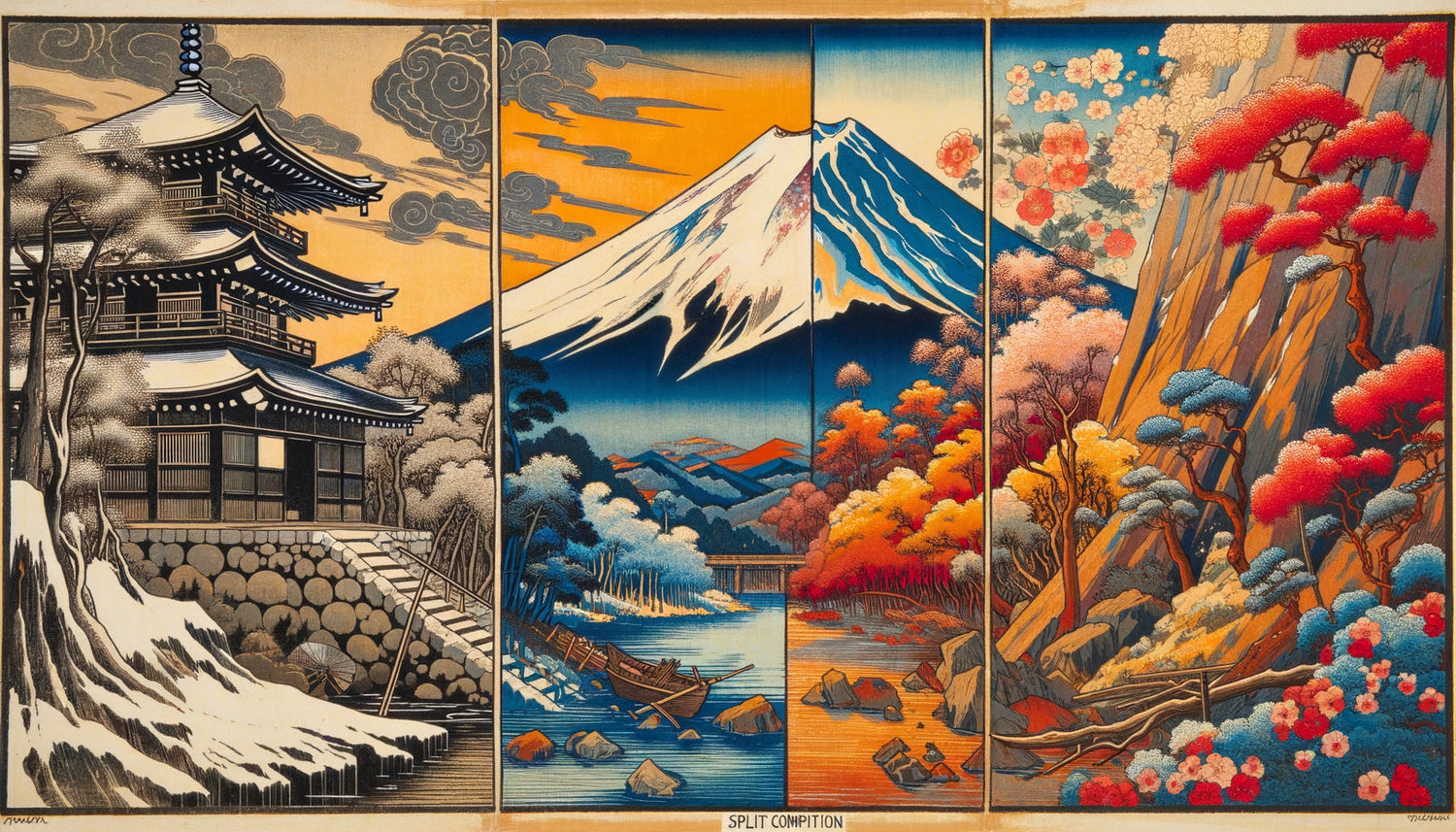
Paris, 1867. The Universal Exposition is in full swing. Amidst the pavilions dedicated to industrial machines, a small Japanese stand creates a sensation. Vibrant colors prints, bold compositions that defy all academic rules. Monet, Degas, Van Gogh crowd around, fascinated. In a few years, these ukiyo-e prints will revolutionize Western art and lay the foundations for the modern design we know today.
Here's what Japonism brings to your visual culture: an understanding of aesthetic codes that still influence our contemporary interiors, a new way of perceiving space and color, and the keys to recognizing this legacy in current art and design.
Perhaps you have admired these refined compositions, these bold blocks of color, without really understanding where this aesthetic revolution came from. How could Japanese prints radically transform Western painting, architecture, and design in just a few decades?
Rest assured: no need to be an art historian to grasp this fascinating metamorphosis. The history of Japonism is above all the story of a meeting, a visual shock that continues to permeate our daily aesthetic life.
I invite you on a journey through this extraordinary period when the West opened its eyes to another way of seeing the world.
1854: When Japan Emerges from Isolation
For more than two centuries, Japan remained closed off from the outside world. Only a few Dutch merchants were privileged to trade with the archipelago, from the trading post of Dejima. But in 1854, American ships commanded by Commodore Perry force the country open. This marks the beginning of the Meiji era.
The first ukiyo-e prints arrive in Europe almost as an afterthought. They serve as packaging for exported ceramics and porcelain. These “images of the floating world” – a literal translation of ukiyo-e – depict courtesans, kabuki actors, spectacular landscapes such as Hokusai's famous wave.
Parisian artists who discover these prints are amazed. Everything is different: perspective does not obey the rules of the Renaissance, colors are applied in uniform blocks without modeling, compositions cut figures boldly, empty space is not a defect but an element in its own right.
The Revolutionary Codes of Japanese Prints
What immediately strikes you about ukiyo-e prints is their visual modernity. Where Western academic painting favors central perspective, modeling of volumes and symmetry, Japanese masters such as Hokusai, Hiroshige or Utamaro offer a radically different grammar.
The plunging or bird's-eye view perspective creates unprecedented viewpoints. Figures are often framed boldly, cut off by the edge of the image. Space is not constructed according to a single vanishing point, but by superposition of planes.
The pure colors – this intense Prussian blue, these vibrant reds, these acidic greens – are applied without gradations. No chiaroscuro, no sfumato. Each colored area asserts its presence with a disconcerting frankness for the Western eye accustomed to tonal subtleties.
Asymmetry becomes a compositional principle. A cherry branch crosses the image diagonally, a character is relegated to a corner, the essential takes place in the voids. This use of ma – the interval, the active void – is totally foreign to the European tradition which seeks to fill pictorial space.

Discover this inspiring artwork
How the Impressionists Reinvented Their Art
Monet passionately collects ukiyo-e prints. In his Giverny home, you can still see today the 231 prints he hung in his studio and dining room. This daily immersion radically transforms his way of painting.
His famous Japanese bridge is not just an exotic motif: it's a direct application of the compositional principles discovered in Hiroshige's prints. The plunging perspectives on the water lilies, the asymmetrical framing, the attention paid to reflections in the water – all this comes from japonisme.
Degas, for his part, draws inspiration from the bold compositions of courtesan prints. His dancers are framed abruptly, cut off by the edge of the painting. His bird's-eye views on bathtubs directly borrow angles from Japanese masters.
Van Gogh goes so far as to directly copy prints. He reproduces Le Prunier en fleurs by Hiroshige, surrounds his canvas with invented ideograms. In his letters to his brother Theo, he writes: “All my work is based on Japanese art.”
The impact of japonisme extends far beyond the Impressionists. Toulouse-Lautrec adopts bright color blocks and stylized silhouettes for his posters. Whistler integrates asymmetrical compositions and subtle chromatic harmonies into his nocturnes.
From Easel to Home: The Invasion of Decorative Arts
japonisme does not remain confined to museums and artists' workshops. From the 1870s, Japanese fashion invades bourgeois interiors. People rush to buy fans, screens, ceramics, lacquers.
In Paris, the Japanese art shop La Porte Chinoise becomes a must-visit for collectors and artists. The Goncourt brothers accumulate objects, transforming their home into a cabinet of wonders. This trend goes beyond anecdote: it profoundly transforms Western conceptions of interior decoration.
The aesthetic principles of ukiyo-e prints influence architecture and furniture. Asymmetry becomes synonymous with elegance. Simplicity replaces ornamental excess. Emptiness is no longer perceived as a lack but as a breathing space.
This is the era when the first Japanese-style interiors appear: light latticework replacing heavy partitions, raised floors creating modular spaces, miniature gardens integrated into housing. These innovations seem obvious today – they were revolutionary at the time.

Discover this inspiring work
Art Nouveau: Child of Japonism
Without ukiyo-e prints, Art Nouveau would never have existed in the form we know it. Guimard's vegetal curves, Mucha's asymmetrical compositions, Gallé's furniture fluid lines – all come directly from Japanese influence.
Artists of Art Nouveau retain several essential lessons from japonisme: the unity between major and decorative arts, the stylization of natural forms rather than their faithful reproduction, the importance of line as an expressive element, the harmony between function and beauty.
This holistic vision of design – where prints, kimonos, and tea bowls participate in the same coherent aesthetic – overturns the Western hierarchy that placed painting at the top and relegated applied arts to craftsmanship. Japonism imposes the idea that beauty must permeate all aspects of daily life.
Toulouse-Lautrec's posters, with their blocks of color edged in black and their bold compositions, are unthinkable without the influence of ukiyo-e masters. This fusion between popular art and high culture is itself inspired by Japanese aesthetics.
The invisible legacy in your daily life
Even today, japonism structures our visual environment without us always being aware of it. This streamlined kitchen with its uncluttered countertop? It's the aesthetics of ma, empty space signifying. This logo with vibrant blocks of color? It’s a direct inheritance from ukiyo-e prints.
The Scandinavian design that we admire so much owes a great deal to japonism: clean lines, assumed functionality, respect for materials, dialogue with nature. Contemporary minimalism extends this quest for the essential initiated by the discovery of Japanese arts.
Even our screens are influenced by these principles. Modern graphic interfaces use dynamic asymmetry, active white spaces, blocks of color – all visual codes inherited from this aesthetic revolution that began more than a century ago.
Ukiyo-e prints taught the West that one could suggest rather than show everything, that emptiness was part of the composition, that beauty could be both sophisticated and accessible. These lessons continue to nourish our visual culture.
Extend this Japanese fascination in your interior
Discover our exclusive collection of Asian art that captures the spirit of ukiyo-e masters with a contemporary sensibility.
Look differently
The next time you admire an Impressionist painting in a museum, contemplate an Art Nouveau poster, or appreciate the streamlinedness of a minimalist interior, you will recognize the legacy of these ukiyo-e prints that changed everything.
Japonism is not a passing fad; it’s a revolution that continues. It has taught us to see differently, to compose space in another way, to appreciate beauty in simplicity and asymmetry. This invisible legacy still structures our view of the world.
Start with a detail: observe how a branch traverses space in a composition, how emptiness participates in the balance of a room, how pure colors dialogue without transitions. It is your entire perception that will be refined, enriched by this aesthetic revolution that transformed Western art more than a century ago.
Frequently Asked Questions About Japonisme
What is the difference between japonisme and japonaiserie?
The term japonaiserie refers to the superficial fashion for Japanese objects – a fascination with exoticism that accumulates fans, kimonos, and screens as simple decorative curiosities. Japonisme, on the other hand, is a profound aesthetic revolution: it is the assimilation and transformation of Japanese visual principles by Western artists. When Monet studies the compositions of Hiroshige to rethink his way of painting, he practices japonisme. When a bourgeois collects Japanese objects for their exotic character, he engages in japonaiserie. Japonisme transformed Western art from within, changing codes of representation, color usage, and space design. It was this structural influence that enabled the emergence of Impressionism, Art Nouveau, and ultimately modern design. Japonaiserie was a fashion, japonisme is a revolution that continues to act today.
Why did ukiyo-e prints have such an impact?
Ukiyo-e prints arrived at a crucial moment when Western academicism showed its limitations. Artists were seeking new avenues of expression, a way to break free from the rigid conventions of perspective and academic modeling. These prints offered exactly that: a radically different visual grammar with multiple perspectives, pure color planes, asymmetrical compositions, and the use of emptiness as an active element. Moreover, they demonstrated that popular art – ukiyo-e were produced in mass for a wide audience – could achieve remarkable aesthetic sophistication. This democratization of beauty profoundly influenced modern movements. The prints were also technically fascinating: the mastery of wood engraving, the subtle gradations of bokashi, the precision of color registration. They opened the eyes of Western artists to other possibilities, liberating their creativity from academic constraints.
How can you recognize the influence of japonisme in current art and design?
The legacy of japonism is everywhere in our contemporary visual environment, even if we don't always perceive it consciously. Look for these clues: the asymmetrical compositions where balance arises from imbalance, unlike classical Western symmetry. The use of empty spaces that are not considered a lack but as necessary breaths – think of clean interfaces, minimalist interiors. The color blocks without gradients in modern graphic design, directly inherited from ukiyo-e prints. The bold framing in photography and cinema, where subjects are cut off by the edge of the frame. Modern Scandinavian and Japanese design share this aesthetic of simplicity, elegant functionality, respect for materials. Even contemporary architecture with its large bay windows that dissolve the boundary between interior and exterior continues this japonisant sensibility. Japonism has taught us to see beauty in simplicity, to appreciate what is unsaid, to compose with emptiness.