

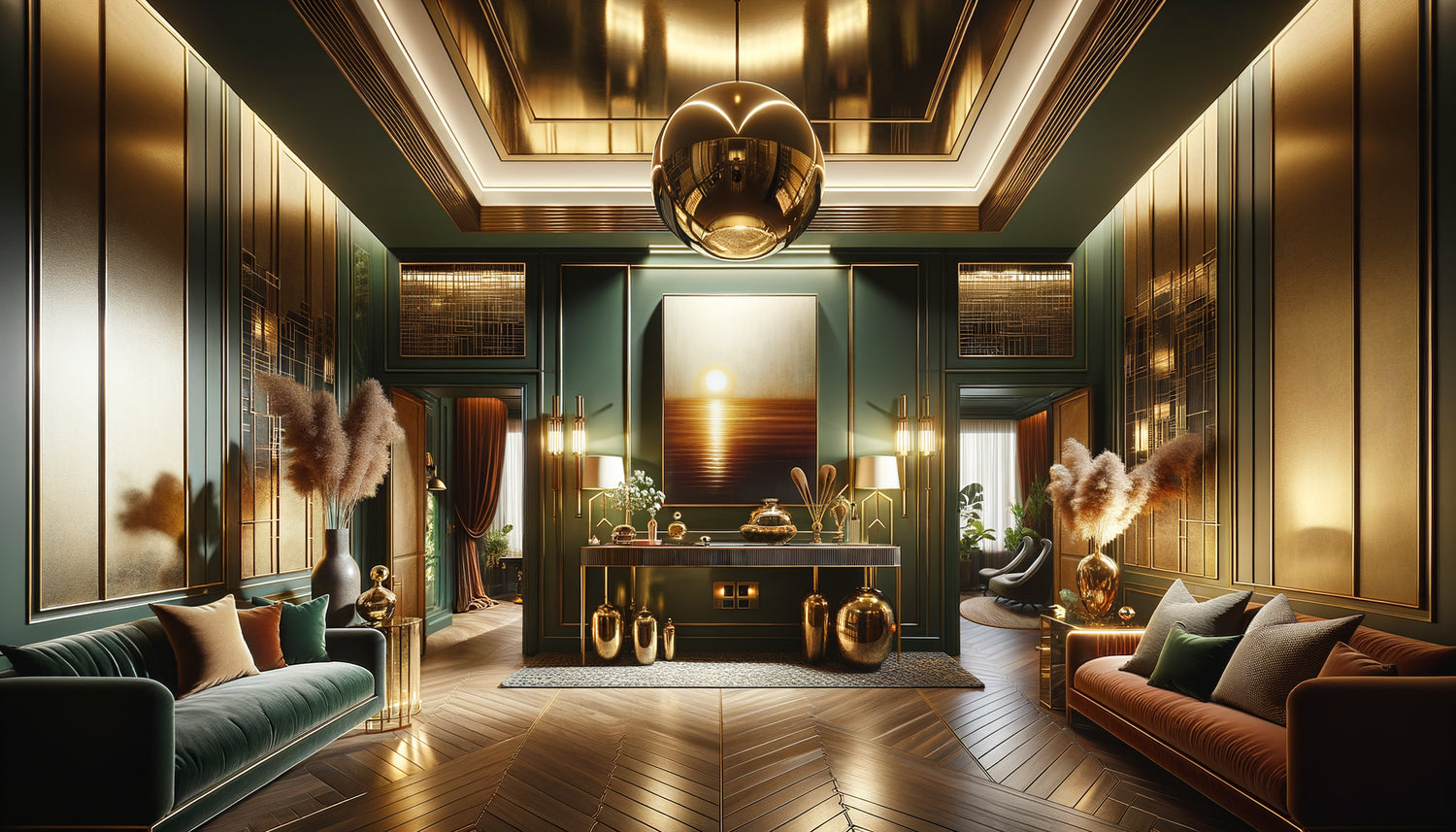
The handle turns. The door opens. And there, in a fraction of a second, everything happens. Crossing this threshold triggers a cascade of emotions that conditions the entire experience of your visitors. I have photographed more than 400 boutique hotel entrances throughout Europe, and I can assure you: the entrance is never just a simple passage. It's a visual prologue, a silent promise, the first chapter of a story that your guests haven't yet chosen to read.
Here's what an immersive visual experience from the moment of entry concretely brings: it transforms initial apprehension into instant wonder, it anchors a memorable first impression that will influence every subsequent judgment, and it creates an emotional engagement that naturally encourages your hosts to share their discovery.
Yet, how many entrances have I seen reduced to their utilitarian function? An anonymous shoe cabinet, an impersonal white wall, a bare light bulb that crushes any atmosphere. The problem is not the lack of space or budget. It's the absence of narrative vision. Rest assured: creating an immersive entrance does not require major renovations or excessive investment. It simply requires understanding the perceptual mechanisms that transform a banal space into a sensory experience.
I will reveal to you the exact strategies that I documented in the most captivating halls of Europe, adapted for your personal or rental entrance.
The golden triangle of immediate perception
During my photo shoots in five-star establishments in Barcelona and Amsterdam, I identified a recurring pattern: the human gaze systematically scans three areas in less than two seconds. First the frontal focal point (what is directly in front of the door), then the left peripheral area (our western eye reads from left to right), and finally the ceiling or dominant vertical element.
This visual choreography is not random. It stems from our ancestral neurological programming: quickly identifying the territory, spotting potential dangers, assessing the social status of the place. To create an immersive visual experience, you must therefore orchestrate these three points of contact with a coherent narrative intention.
Concretely, this means:
Placing a magnetic element on the wall facing the door: a large-format work of art, a sculpted mirror, a vertical plant composition. This visual anchor must tell the essence of your space at a glance. I photographed a Milanese entrance where an abstract fresco in terracotta tones instantly announced the color palette of the entire apartment. Immersion begins with this visual consistency.
Arrange the left lateral area with a tactile or interactive element: console with sculptural object, inviting bench, wall shelf displaying curiosities. This second layer enriches the experience without saturating the initial gaze. In a Parisian loft I documented, a simple vintage console held three carefully selected art books and a handcrafted candle. Minimalist, but infinitely evocative.
Exploit the verticality to amplify the feeling of space: sculptural lighting, climbing plant, frames arranged in an ascending gallery. Height automatically creates an impression of spaciousness, even in 4m². I measured this effect in a Barcelona studio of 28m² whose narrow entrance seemed majestic thanks to a woven rattan suspension hanging 180cm from the floor.
Light: Conductor of the immersive atmosphere
If I had to isolate a single factor radically transforming an entryway, it would be a multi-layered lighting strategy. After analyzing hundreds of spaces, one thing is clear: light doesn't just reveal space, it sculpts emotion.
The fatal mistake I see everywhere? A single central light source, usually too powerful, which flattens volumes and kills any atmosphere. The entryway becomes a functional corridor, never an immersive experience. The solution lies in layering three distinct types of lighting.
Ambient lighting forms the emotional foundation. Favor a temperature of 2700-3000K that warmly envelops. In a Lille guesthouse, I photographed an indirect wall sconce projecting soft light onto the side wall. Result: the entryway seemed twice as spacious and infinitely more welcoming than with the original ceiling fixture.
Accent lighting creates narrative points of interest. A discreet spotlight directed at your masterpiece, an LED reading lamp highlighting a shelf of curiosities, a light strip under a floating console. These targeted touches guide the eye and build the visual depth essential to any immersive experience.
Functional lighting remains indispensable but must remain invisible. Prefer concealed or dimmable sources. I documented a brilliant solution in Copenhagen: a motion sensor gradually triggering the lighting over 3 seconds, creating a theatrical transition between the exterior and interior.
The unsuspected power of dimmers
Installing dimmers on each light source radically transforms your ability to modulate the atmosphere. Dynamic morning at 80% intensity, intimate evening at 40%, nocturnal welcome at 20%. This flexibility allows you to adapt the visual experience to the time of day and the desired energy. Minimal investment, maximum emotional impact.

The color palette as an emotional signature
Each color triggers a specific emotional response, documented by decades of research in environmental psychology. Your entryway constitutes the ideal ground for asserting your chromatic identity without risking visual saturation, since your guests only spend a few focused moments there.
I photographed two strictly identical entrances in dimensions in Rotterdam. The first, entirely white with cold metallic accents, generated a clinical, almost inhospitable feeling. The second, with cream walls and touches of terracotta and natural wood, instantly radiated warmth. Same furniture, same lighting, but radically different immersive experience.
To create a true chromatic immersion from the entrance, adopt the rule of three colors: a soothing dominant (60% of the visual space), a secondary energizing color (30%), and a dramatic accentuation (10%). This formula, observed in all memorable boutique spaces I have documented, creates the perfect balance between coherence and visual interest.
Earthy tones (sand, ochre, terracotta) universally generate a feeling of anchoring and security. Deep blues and sage greens bring sophistication and serenity. Touches of matte black or brushed brass inject the necessary visual tension to maintain attention. But be careful: chromatic immersion requires consistency with adjacent rooms. Your entrance should announce the general palette, not contradict it.
Tactile textures: immersion beyond the visual
Here is a truth that my thousands of photos have taught me: authentic immersion engages all senses simultaneously. A visually perfect but texturally dead entrance remains an incomplete experience. The human brain unconsciously evaluates the quality of a space by anticipating tactile sensations, even without physical contact.
Deliberately layer contrasting materials. A hand-woven Berber rug underfoot, a raw wood console under the palm, a rattan framed mirror to the gaze, natural linen cushions on the bench. This textural diversity creates a sensory richness that exponentially amplifies the immersive experience.
In a Tuscan villa I photographed, the entrance combined a patinated terracotta floor, a smooth tadelakt wall, a knotty oak door and a blown glass luminaire. Result: a sensory density that instantly transported to the Mediterranean universe, before even discovering the rest of the property. That is exactly this emotional anticipation that you must orchestrate.
Textile as an amplifier of hospitality
Never forget this detail: a simple rug radically transforms the perception of welcome. It visually delimits the transition zone, acoustically absorbs footsteps (reducing unconscious anxiety related to noise), and tactilely signals the passage into the intimacy of the home. Favor natural fibers in 120x180cm minimum for sufficient visual impact.

Wall art: a silent narrator of your identity
After documenting hundreds of remarkable entries, I can state without hesitation: nothing creates a visual immersive experience as effectively as a strategically positioned work of art. Not a generic framed poster, not a stock photo, but an authentic artwork that carries a narrative intention.
The artwork facing your entrance is your visual signature. It should be large enough to anchor the gaze (minimum 70x100cm in a standard space), chromatically consistent with your overall palette, and emotionally aligned with the desired atmosphere. I photographed a Berlin entrance where a contemporary abstraction with touches of Yves Klein blue instantly created a memorable urban sophistication.
But beware of the mistake I regularly observe: hanging too high. The professional rule stipulates that the center of the artwork should be 145-150cm from the floor, which is the average height of human gaze. This technical precision radically changes the emotional impact and felt immersion.
For rental properties, prioritize universally appreciated but distinctive works: geometric abstractions in natural tones, black and white architectural photographs, stylized botanical compositions. These choices create aesthetic immersion without polarizing personal tastes.
Transform your entrance into a memorable experience today
Discover our exclusive collection of Airbnb wall art that instantly captures attention and creates the visual immersion your guests will never forget.
Olfaction and acoustics: the invisible dimensions of immersion
My years of photographic documentation have paradoxically taught me the importance of what the image does not capture. A visually perfect entrance can completely fail if it smells musty or resonates like a hospital corridor. Authentic immersive experience engages all sensory channels simultaneously.
Subtly install an ambient fragrance diffuser with a signature scent: fig tree for the Mediterranean, cedar for Scandinavian comfort, verbena for contemporary freshness. Caution: never use harsh chemical fragrances that saturate the sense of smell. Subtlety creates immersion; excess generates rejection.
Acoustically, tiled or parquet floors often resonate unpleasantly. A thick rug absorbs these echoes, but also consider wall textiles (decorative tapestry, design acoustic panel) which soften the sound ambiance without compromising aesthetics. In a Copenhagen apartment, I photographed a brilliant solution: a design felt wall panel absorbing sound while serving as a hanger for jackets and bags.
Functional personalization: when immersion meets pragmatism
The final mistake I regularly see: sacrificing functionality on the altar of aesthetics. An immersive entrance that doesn't allow you to easily place keys, bag or coat generates frustration and resentment. True immersion harmoniously integrates beauty and utility.
Always provide: a drop-off space within easy reach (console, wall shelf), a discreet but accessible hanging system (design hooks, minimalist valet), and ideally a seating area (bench, pouf) to comfortably take off your shoes. These functional elements must visually integrate with your aesthetic narrative, never contradict it.
I documented a particularly elegant solution in Stockholm: a suspended natural oak console supporting a brass tray for everyday objects, topped with a round mirror and flanked by two sculpted hooks. Perfectly functional, absolutely immersive. That's the balance you should aim for.
Creating a visually immersive experience from the entrance is ultimately just a matter of intentional gaze. You now orchestrate the light that sculpts emotion, the color that triggers resonance, the texture that engages the senses, and the art that tells your story. Your next door that opens will reveal more than a space: it will unveil an experience. Start this week by identifying your front focal point, and build your golden triangle around this visual anchor. Immersion begins with this first conscious decision.
Frequently asked questions about the immersive visual experience in entrance
What budget to plan to transform my entrance into an immersive experience?
Excellent news: creating an immersive visual experience depends more on your strategic intention than your budget. I’ve photographed captivating entries made with less than €200 (affordable but impactful artwork, second-hand designer suspension, natural woven rug, bold-toned wall paint) and others costing several thousand euros that completely failed due to a lack of narrative coherence. Start with the fundamentals: multi-layered lighting (dimmers + 2700K bulbs), an intentional color palette (wall paint), and a masterpiece facing the door. These three elements already create 80% of the immersion for a modest investment. Gradually add textural layers and functional refinements according to your means. Immersion is born from coherence, not the price of individual items.
How to create immersion in a tiny or non-existent entrance?
Spatial constraints simply require a different strategy, never the abandonment of immersion. In small spaces, focus your impact on the wall immediately visible from the front door. I’ve documented a Parisian studio of 18m² where the entrance was reduced to 80cm of hallway: the owner had created a spectacular immersion with a single large-format botanical print (90x120cm) above an ultra-thin console (15cm deep) holding a sculpted lamp. Result: maximum visual density on minimal footprint. For doors opening directly onto the living room, create a psychological transition zone with a distinctive rug, a decorative screen, or a color change on the side wall. Immersion works even on 50cm² if each element carries a clear narrative intention.
What mistake most often destroys the immersive experience of an entrance?
Without hesitation: decorative accumulation without a guiding thread. I’ve photographed countless entrances where each individual element was aesthetically pleasing, but their juxtaposition created visual chaos rather than immersion. Three frames in different styles, two plants with no chromatic relationship, a bohemian console with an industrial lamp and a Scandinavian rug. Result: narrative confusion and total absence of a coherent experience. Immersion requires a clear guideline: choose your target atmosphere (urban sophistication, Mediterranean warmth, Scandinavian serenity, confident eclecticism) and check that each element reinforces this unique narration. Fewer items but perfectly aligned create infinitely more immersion than incoherent accumulation. Before adding anything to your entrance, ask yourself this question: does this item reinforce my visual story or dilute it? This editorial discipline radically transforms the immersive impact.


