I still remember the precise moment when, during a research expedition in Nubia, I placed my hands on the cool walls of a medieval church. To the north, the faces of saints stared at me with an almost Byzantine intensity. A few hundred kilometers further south, in the ruins of Dongola, the same sacred figures seemed to dance in an explosion of warm colors and geometric patterns that immediately evoked traditional African fabrics. This artistic duality overwhelmed me.
Here's what the frescoes of historic Sudan reveal: a borderless frontier between two aesthetics, one turned towards Byzantine Mediterranean, the other rooted in ancestral African traditions, creating a unique wall heritage that dialogues with contemporary intercultural design issues.
You may admire African wall art without truly understanding its roots. Nubian frescoes remain little known, yet they constitute the missing link between Eastern Christian art and sub-Saharan artistic expressions. This ignorance deprives us of an extraordinary source of inspiration for our interiors.
Rest assured: by exploring these stylistic differences, you will discover how two regions close to each other have developed distinct visual languages, and above all how these aesthetic codes can enrich your vision of contemporary decor.
The color palette: when geography dictates colors
The frescoes in the north of historic Sudan, particularly in the Lower Nubia region, adopt a sober and austere palette that reflects direct Byzantine influences. Artists favored ochres, earthy browns, limestone whites, and sparse touches of brick red. This chromatic restraint created a meditative atmosphere, almost monastic.
I spent hours analyzing the frescoes of Faras, and this economy of colors was not accidental. Pigments came mainly from local lands and expensive Mediterranean imports. Lapis lazuli blue, for example, remained extremely rare and reserved for the most sacred elements.
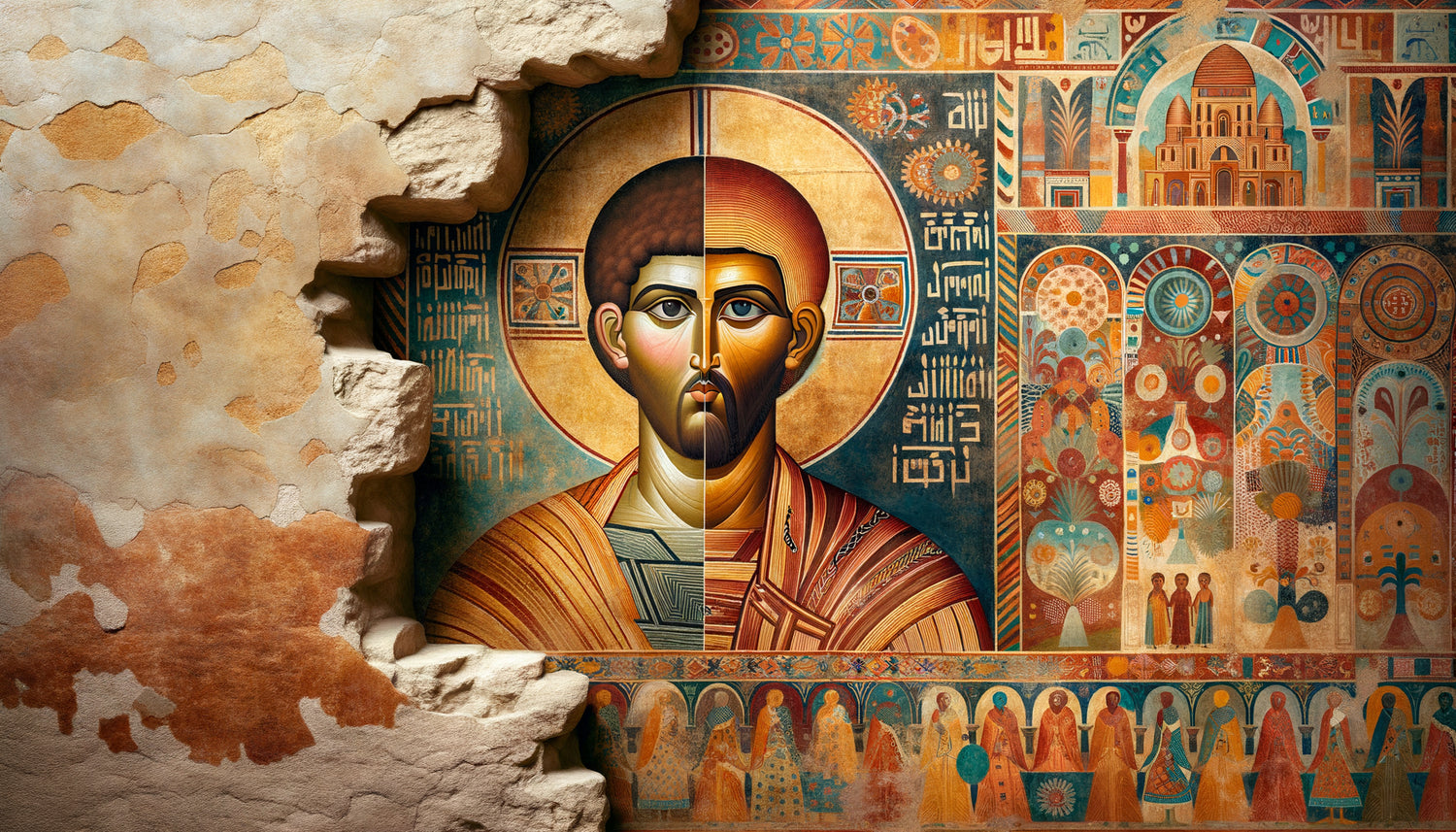
In contrast, the frescoes in the south, particularly around the region of Dongola and the kingdom of Makuria, literally explode with vibrant colors. Deep reds, solar yellows, emerald greens, and even touches of turquoise transform walls into true luminous tapestries. This chromatic exuberance is a testament to a more direct connection with sub-Saharan African artistic traditions.
This difference in palette creates two radically opposed atmospheres: the north invites silent contemplation, the south celebrates life in a sensory explosion that already foreshadows the aesthetics of kente fabrics and Maasai beads.
The treatment of faces: between hieraticism and humanity
In the northern frescoes, faces strictly follow Byzantine canons. The saints present stylized features, oversized almond-shaped eyes, straight noses, and tiny mouths. The expression remains frozen in a divine eternity, almost impenetrable. These faces never smile; they observe.
The northern pictorial technique favors sharp outlines, uniform color blocks, and absolute frontality. The characters seem to float in an undefined space, detached from any earthly contingency. This is the realm of the icon, where every stroke obeys a precise theology.
Southern frescoes reveal a radically different approach. Faces gain expressiveness, roundness, and life. Southern artists are not afraid to represent smiles, sidelong glances, expressions that suggest individual personality. Features gradually africanize: high cheekbones, fuller lips, darker complexions.
A progressive humanization
This humanization of sacred figures in southern frescoes is a testament to a fascinating cultural adaptation. Nubian artists from the kingdom of Makuria integrated their own vision of the divine, less distant, more incarnate. For a contemporary decorator, this lesson remains valuable: wall art gains impact when it reflects the cultural identity of its context.

Decorative motifs: Mediterranean geometry versus African symbolism
Borders and ornamental elements are perhaps the most striking difference between north and south. In the churches of Lower Nubia, geometric patterns follow the Greco-Roman tradition: meanders, intertwines, symmetrical rosettes, and architectural friezes that frame narrative scenes.
These northern ornaments respect a mathematical logic, a cold harmony that compartmentalizes sacred space. Each decorative element remains subordinate to the hierarchy of religious images, serving as a frame without ever rivaling the theological message.
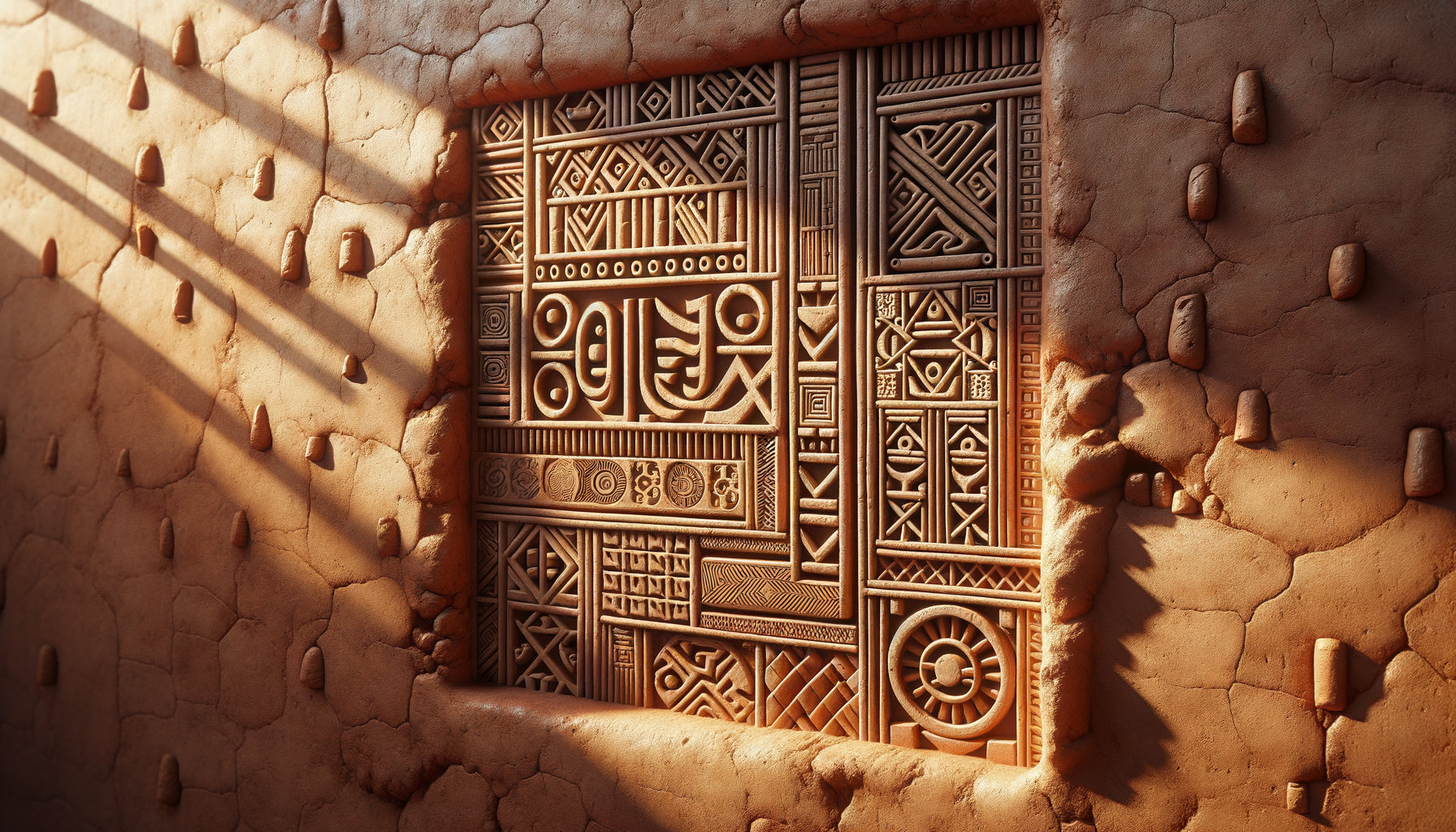
In the south, patterns explode with creative freedom. Artists integrate symbols borrowed from local traditions: cosmic spirals, lozenges evoking tribal tattoos, stylized plant motifs that recall African textile arts. These elements do not merely frame; they dialogue with sacred figures, creating visual rhythms that transform the wall into a total composition.
I was particularly fascinated by the use of checkerboards and grids in southern frescoes. These patterns, found in traditional fabrics from the continent, create an optical vibration that energizes the entire composition.
Spatial composition: Byzantine order versus narrative dynamism
Northern frescoes organize space according to a strict vertical hierarchy. Christ in majesty occupies the top of the apse, the apostles are neatly arranged in horizontal registers, and saints are distributed according to their theological importance. This organization reflects the Byzantine cosmic order.
Perspective remains nonexistent or symbolic. Figures overlap without real depth, in a gold or neutral space that denies the third dimension. It is the space of eternity, not that of everyday life.
Southern compositions, on the other hand, introduce an astonishing narrative dynamism. Scenes overflow from their frames, characters interact with more naturalness, and backgrounds integrate architectural or landscape elements that situate the action in a recognizable environment.
This compositional difference reveals two conceptions of the function of sacred art: in the north, it serves to elevate the soul towards the divine; in the south, it tells stories that speak to the faithful in their own cultural language.

Techniques and materials: standardization versus creative improvisation
Technically, northern frescoes follow classic Byzantine protocols: several layers of plaster, application of pigments to fresh mortar, use of cartoons prepared to reproduce canonical models. This standardization guarantees consistent quality but limits innovation.
Northern artists often worked from precise iconographic manuals, reproducing proven compositions. Creative individuality faded before the faithful transmission of a visual heritage.
In the south, we observe greater technical freedom. Artists adapt Byzantine methods to local materials, experiment with different binders, are not afraid to retouch dry, mix techniques. This flexibility explains the stylistic diversity of southern frescoes.
The impact of the environment
The warmer climate in the south also imposed technical adaptations. Pigments had to withstand higher temperatures, plasters dry faster. These constraints stimulated innovation rather than hindering it.
Let the Nubian heritage transform your interior
Discover our exclusive collection of African paintings that capture the chromatic and symbolic richness of sub-Saharan traditions.
What these frescoes teach us today
Beyond their historical value, the frescoes of historic Sudan offer a lesson in intercultural design that is still relevant. They demonstrate that a single system of beliefs can generate radically different visual expressions depending on the cultural context.
For our contemporary interiors, this north-south duality inspires two decorative approaches: the meditative sobriety of Mediterranean influences and the vibrant exuberance of African aesthetics. These two poles do not oppose each other; they complement each other.
The color codes of southern Nubia, in particular, find an extraordinary echo in current trends in maximalist design and Afro-contemporary interiors. These deep reds, sunny yellows, these superimpositions of geometric patterns resonate with our desire for more personal spaces, more meaningful spaces.
The northern frescoes, with their restrained elegance and mineral palette, appeal to lovers of sophisticated minimalism and contemplative aesthetics. They prove that you can create emotion with few chromatic means.
The essential to remember: the frescoes of northern historic Sudan favor a sober, hieratic and geometric Byzantine aesthetic, while those of the south embrace a more colorful, expressive and rooted in African traditions. This difference reflects the position of medieval Sudan as a cultural bridge between the Mediterranean and sub-Saharan Africa.
Imagine your living room transformed by this millennial aesthetic wisdom. An accent wall in the ochres and browns of the north for a soothing bedroom, or an explosion of southern colors in your living space. Nubian frescoes are not ancient history: they are a living source of inspiration to create interiors that tell your own cultural story.
Frequently asked questions about the historic Sudan frescoes
Why are the north and south frescoes so different?
This difference is mainly explained by the cultural geography. The north of historical Sudan, closer to Byzantine Egypt, maintained direct contact with Constantinople and the Mediterranean world. Artists there followed strict Byzantine iconographic models, imported certain pigments, and respected Mediterranean aesthetic canons. The south, particularly the kingdom of Makuria centered on Dongola, developed a more autonomous cultural identity. Distant from the major Byzantine centers, it naturally integrated local African artistic traditions into its Christian art. This geographical distance created creative freedom: southern artists adapted Christian themes to their own aesthetic sensibility, producing a unique visual syncretism that foreshadowed later Afro-Christian arts.
Can we still see these frescoes today?
Unfortunately, many of these treasures have disappeared, particularly in the north where the construction of the Aswan Dam in the 1960s submerged numerous Nubian sites. Fortunately, international archaeological missions saved some frescoes before the flooding. The National Museum in Warsaw holds an exceptional collection of Faras frescoes, while the National Museum of Sudan in Khartoum presents remarkable examples of both traditions. Some southern rock churches remain accessible to visitors, notably near Old Dongola. For decoration enthusiasts, these museum collections constitute an inexhaustible source of inspiration, documented photographically and accessible through specialized publications. It is this cultural heritage that inspires many designers working on Afro-Mediterranean aesthetics today.
How to integrate these influences into a modern interior?
The heritage of Nubian frescoes adapts wonderfully to contemporary interiors. For a Nordic approach, prioritize a muted earthy palette – ochres, browns, off-whites – with geometric accents inspired by Byzantine borders. This works particularly well in bedrooms, libraries or meditation spaces. For a southern inspiration, dare the saturated colors: a deep red wall, saffron yellow textiles, cushions with African geometric patterns. Mix influences by creating contrasts: a sofa with clean lines in a muted Nordic palette, enhanced with explosive southern-inspired cushions. Contemporary African art paintings are the ideal bridge between these ancestral traditions and your current decor. The essential thing is to respect the spirit of these frescoes: create spaces full of meaning, where each color and each pattern tells a cultural story.