Sonia Delaunay and the birth of colorful Orphism
Sonia Delaunay is among the co-founders of Orphism alongside her husband Robert Delaunay, an abstract movement born from Cubism and characterized by the association of very bright colors and geometric shapes. This pictorial revolution finds its roots in 1909 when Sonia meets Robert Delaunay in Parisian artistic circles, inaugurating an exceptional creative collaboration that will revolutionize modern art.
The term "Orphism" is proposed by Guillaume Apollinaire in 1912 to characterize this new form of painting which refers to the myth of Orpheus and resembles music, a perfectly abstract non-figurative art. Sonia Delaunay then develops a revolutionary approach where colors become a true pictorial language, a strong concept of her work which seeks to be an interpreter, translator of life, feelings in painting.
The colorful Orphism of Sonia is fundamentally distinguished by its ability to transform color into the main protagonist. Colors replace objects, the goal being to achieve pictorial harmony through the arrangement of colors and light, creating a new chromatic vocabulary in the history of art.
Orphism as an abstract language of colors by Sonia Delaunay
The revolutionary theorization of Sonia Delaunay revolves around a fundamental principle: color as a semiotic system. She wants with colors to say what the verb expresses, associating for example the musicality of vocalizations with the rhythms of colors. This synesthetic approach radically transforms art into a true abstract visual language.
Orphism uses entirely artist-created figurative elements; its works are constructed and have a meaning that constitutes their true "subject." It is an art of light created by color. For Sonia Delaunay, each hue becomes a colored morpheme capable of expressing complex emotions and sophisticated abstract concepts.
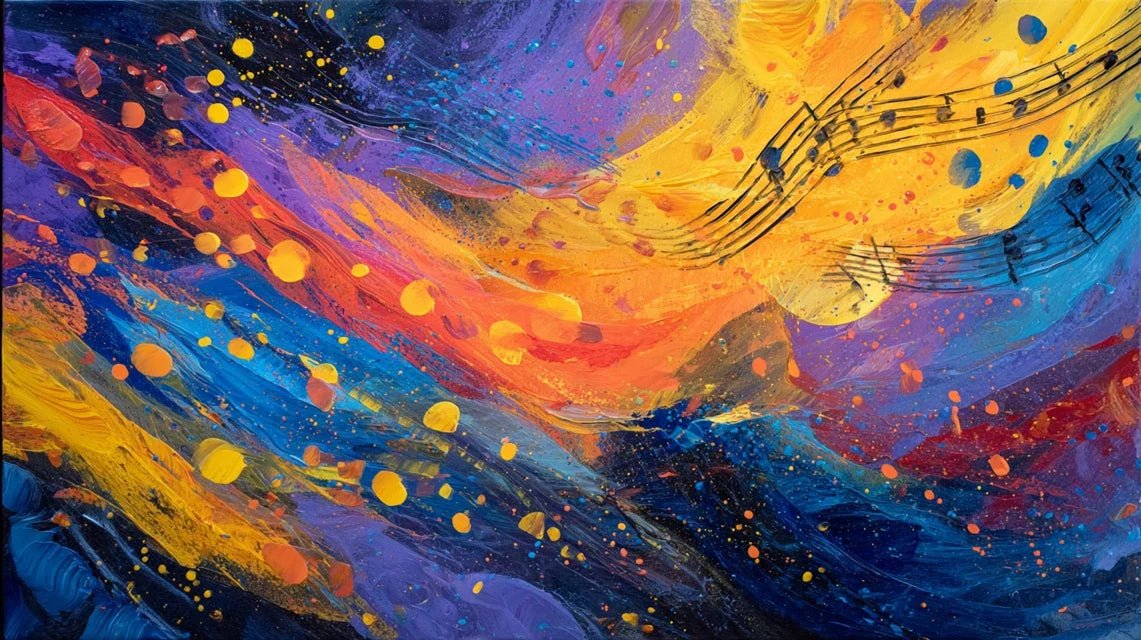
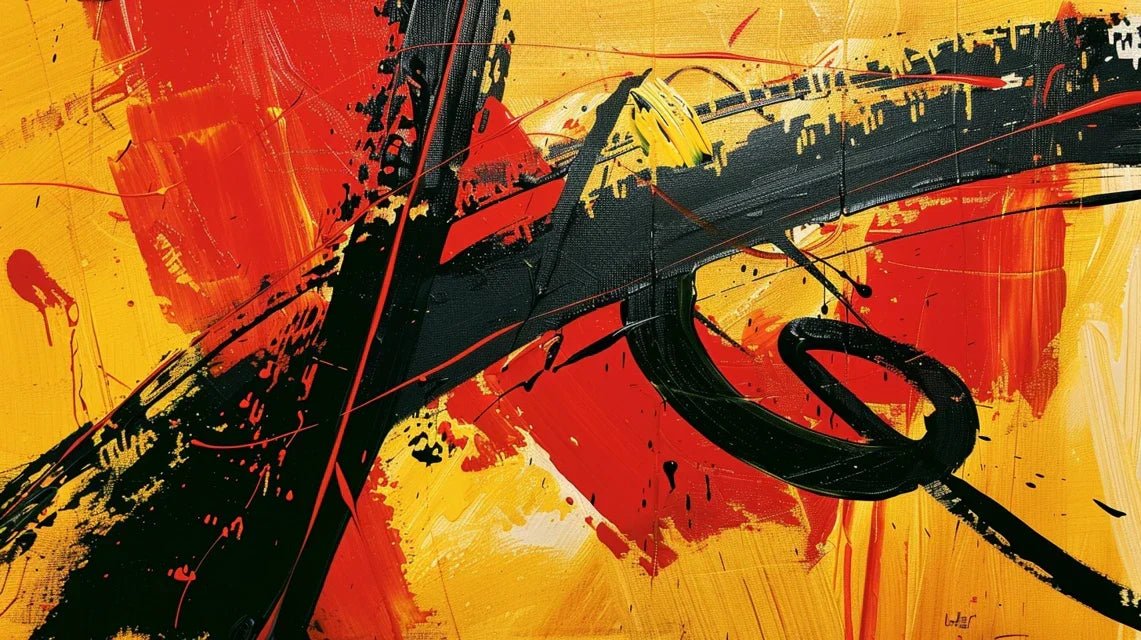
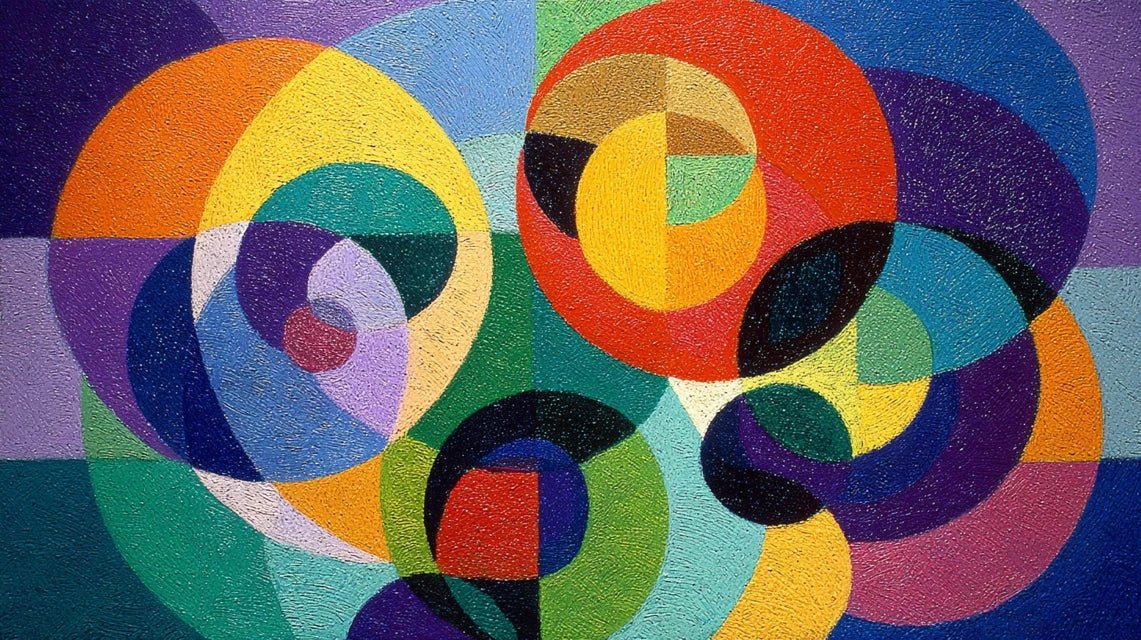
This collection of abstract paintings perfectly illustrates how contemporary art still draws inspiration from this revolutionary vision of abstract chromatic language. Orphism Delaunay establishes a communication system where pure color constitutes the basic vocabulary, contrasts create visual syntax, and harmonious coloring structures the plastic discourse.
Orphic techniques of Sonia Delaunay: from simultaneity to colored language
Sonia Delaunay draws inspiration from the "simultaneous contrast" law developed by chemist Michel-Eugène Chevreul, a principle according to which colors appear different depending on their color environment. This simultaneist methodology becomes the structuring grammar of her abstract language.
Sonia's orphic technique relies on precise and revolutionary processes: juxtaposition of complementary colors (blue/orange, yellow/violet, green/red) creating visual vibrations, a mosaic of planes overlapping each other, rotational movement of colored circles. These elements constitute the chromatic syntax of her artistic expression.
In the iconic work Simultaneous Contrasts (1912), Sonia explores how color perception is affected by the presence of adjacent colors, creating an inter-color dialogue where each hue establishes a visual conversation with its neighbors. This approach transforms the canvas into a true colored score where rhythms are born from simultaneous contrast.
Practical applications of Sonia Delaunay's colored language
Sonia Delaunay's applied orphism transcends the traditional boundaries of easel painting. She extends orphic principles to textiles, fashion, interior design, demonstrating the universality and transversality of her colored expressive system.
Her multidisciplinary innovations revolutionize several fields: simultaneous dresses (1913) transform clothing into wearable art, while simultaneous fabrics explore color contrasts and harmonies in decorative arts.
The major work Bal Bullier (1913) crystallizes this transversal approach. This work evokes Parisian "dancing", the composition being sequenced by different color contrasts that compose the bodies in movement as well as the space. Sonia translates musical temporality into a colorful language where colored circles evoke vibrations and waves of music, creating a remarkable plastic synesthesia.
Evolution and perfection of Orphic language in Sonia Delaunay
Sonia Delaunay's mature Orphism undergoes constant refinement. In the 1930s, the plastic language almost completely reinvents Orphism: simplification of geometric shapes, particularly the circle and triangle, rhythmic variations thanks to color.
This stylistic evolution is characterized by several innovations: purification of essential geometric forms, increased sophistication of color relationships and expansion towards monumental wall art. This period marks the culmination of her chromatic research.
Sonia Delaunay is among the pioneers of abstraction and has left her mark on an entire century of creation. Her artistic legacy endures in contemporary art where artists like Olafur Eliasson continue to explore the effects of color and light on our perception.
Sonia's accomplished Orphic language definitively establishes color as an autonomous expressive medium, creating a communication system where color becomes a true universal abstract idiom, capable of directly dialoguing with human sensitivity without figurative mediation.