


Polo Watercolor Wall Art
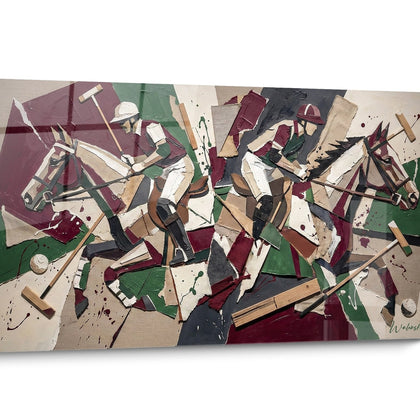
The Polo Painting Aquarelle gracefully captures the sporty elegance of polo in delicate artistic compositions. This collection celebrates the nobility of equestrian sport in watercolor, where each work reveals the power of the horses and the agility of the riders through fluid and colorful touches. Perfect for enhancing refined interiors, this selection of paintings polo style watercolor brings a touch of authenticity and dynamism to your decoration.
 Polo Sunset Painting - Golden Ride - Polo Edition242,90 €
 Polo Watercolor Painting - Intense Match - Polo Edition242,90 €
 Equestrian Polo Painting - Riders in Action - Polo Edition273,90 €
Explore further
In Polo Watercolor Wall Art


All about Polo Watercolor Wall Art
- Polo Watercolor Painting Presentation
- Equestrian Watercolor Inspiration
- Refined Sports Atmospheres
- Polo Artistic Expression
A polo watercolor painting transforms the elegance of equestrian sport into a diluted and nuanced artistic composition, where each brushstroke captures the velocity of riders and the intensity of matches. This large-scale wall decoration transposes the athletic and aristocratic universe of polo into a delicate pictorial aesthetic, offering a refined alternative to traditional photographic or graphic representations. Perfect for upscale residential spaces, private clubs, or professional offices seeking equestrian sophistication, this type of creation brings a cultural and sporting dimension simultaneously.
Watercolor in Service of Equestrian Dynamics
The polo watercolor painting distinguishes itself through its unique ability to translate the perpetual movement of polo horses into fluid and transparent washes. Unlike static representations, the watercolor technique naturally restores the dust raised during charges, splashes of wet grass, and the physical intensity of confrontations on the field. The diluted chromatic nuances create smooth transitions between equestrian silhouettes and background, generating atmospheric depth impossible to reproduce with other artistic mediums.
How does watercolor capture the energy of polo matches?
The layering of translucent pigments allows speed to be suggested without freezing action in a static representation. Artists specializing in this field exploit controlled runs to evoke the perspiration of mounts, while strategically preserved unpainted areas suggest light flashes on helmets and mallets. This pictorial approach is particularly suited to large wall formats intended for spacious living rooms or private galleries, where the eye can appreciate chromatic subtleties from a distance.
Decorative associations with the aristocratic equestrian universe
A polo watercolor painting naturally harmonizes with decorative elements borrowed from British and Argentine equestrian heritage: vintage aged leather tack, silvered sporting trophies, libraries containing works on breeding and equestrian competition. This decorative synergy works particularly well in contemporary interiors seeking to integrate sporting references without falling into commercial imagery. The characteristic earthy tones of polo watercolor – ochres, deep greens, warm browns – dialogue with noble materials such as dark oak or veined marble.
Stylistic variations in watercolored polo representation
Some creations favor an impressionistic approach where riders almost entirely dissolve into evocative colored masses, while others maintain more precise definition of equine anatomies and athletic postures. Collectors seeking a large-format polo watercolor painting often opt for panoramic compositions restoring the amplitude of the playing field, with a low horizon line accentuating the monumentality of silhouettes. To complement a thematic sports gallery, association with a polo abstract painting creates an interesting dialogue between watercolored realism and conceptual interpretation.
Integration into Exclusive Professional and Residential Spaces
Corporate environments related to luxury, finance, or upscale real estate sectors find in the polo watercolor painting an appropriate symbol of performance, tradition, and social exclusivity. Unlike generic abstract works, this specific theme instantly communicates values of competitive excellence and belonging to a restricted circle. Law firms specializing in equestrian law, corporate headquarters of premium brands, and private clubs use these large wall compositions to reinforce their distinctive visual identity.
What typology of buyers specifically seeks these watercolored creations?
Typical purchasers include stud farm owners, amateur or professional polo players seeking to extend their passion into their domestic décor, and sports art collectors wishing to diversify their acquisitions beyond classical equine imagery. Secondary residences located near Argentine, British, or American equestrian centers constitute privileged locations for these large-format works. Investment in a polo watercolor painting also responds to a search for originality against the saturation of photographic reproductions in the equestrian decorative sector.
Specific architectural enhancement for watercolor format
Installing a large-scale polo watercolor painting requires particular consideration of natural light exposure, as watercolor pigments can undergo chromatic degradation under prolonged direct UV. North-east facing walls offer stable luminosity preserving delicate nuances long-term. The reduced depth of frames, characteristic of watercolored works mounted under protection, allows elegant integration even in contemporary architectural spaces with refined lines. Double heights and reception areas particularly benefit from these vertical compositions capturing the elevation of riders brandishing their mallets.
Aesthetic evolution and decorative permanence
Unlike ephemeral decorative trends, the polo watercolor theme possesses timelessness anchored in the cultural history of equestrian sport. This aesthetic stability guarantees decorative relevance over several decades, particularly in classical renovated interiors or neo-traditional arrangements. Watercolored tones age with an aristocratic patina that strengthens the exclusive character of the work, unlike digital prints whose chromatic saturation may appear dated after a few years. Buyers conscious of patrimonial value consider these acquisitions as decorative elements capable of accompanying multiple successive rearrangements across generations.
Pictorial Expression of Aristocratic Sporting Heritage
The polo watercolor painting perpetuates an iconographic tradition dating back to the first British equestrian representations of the nineteenth century, while updating visual language through contemporary pigment dilution techniques. This historical continuity confers particular cultural legitimacy to these works, distinguishing them from generic decorative productions. Artists specialized in this niche not only master watercolor technique but also possess profound knowledge of equine anatomy in motion and specific gestural codes of polo – mallet swing, lateral balance postures, rider-mount coordination.
Why choose a watercolored representation over another pictorial technique?
The transparency characteristic of watercolor generates an aerial lightness sensation perfectly adapted to the fluidity of gallop and the amplitude of sporting gestures. This atmospheric quality radically differentiates these creations from dense oils or opaque acrylics, creating visual vibration that maintains attention without saturating space. For collectors seeking authentic polo watercolor wall decoration, this technical specificity guarantees an immediately recognizable aesthetic signature in a residential or professional environment.
Authenticity criteria in the watercolored equestrian art market
Discerning buyers examine several qualitative indicators: the tonal gradation demonstrating mastery of successive dilutions, the spontaneity of controlled splashes suggesting match energy, and the anatomical precision of horses despite pictorial stylization. Limited editions signed by artists recognized in the international equestrian circles constitute sounder investments than digital reproductions, offering traceability and potential patrimonial appreciation. Documented provenance – exhibition in specialized galleries, mention in equestrian catalogs – adds a collection dimension to the decorative acquisition.
Complementarity with other equestrian artistic expressions
A sophisticated decorative strategy combines different registers of polo representation: watercolor for its poetic and atmospheric dimension, sports photography for its documentary realism, and contemporary abstract interpretations for their conceptual boldness. This multi-register approach allows construction of complex visual narrative in spaces with multiple hanging spaces or interior galleries. Owners of grand estates thus develop thematic pathways where each room explores a different facet of the polo universe, the watercolor painting typically occupying noble spaces such as the main living room or library.
Does a polo watercolor painting suit minimalist modern interiors?
Absolutely. The chromatic delicacy and compositional lightness of watercolor integrate harmoniously into refined architectures, functioning as organic counterpoint to strict geometric lines. The contrast between pictorial fluidity and architectural rigor creates sophisticated visual tension appreciated in upscale contemporary design.
Which dimension to favor for a polo watercolor painting in a residential space?
Horizontal panoramic formats of 120 to 180 cm width ideally restore the amplitude of the polo field and the lateral dynamics of riders. For vertical spaces such as stairwells, compositions in height of 150 to 200 cm effectively capture game phases where mallets are brandished in maximum extension.
How to maintain the chromatic vibrancy of a large-format polo watercolor painting?
Avoid direct sun exposure by favoring indirect museum-quality LED lighting at low temperature. Light monthly dusting with an antistatic feather duster preserves the glass protection without direct contact with the painted surface. For valuable works, annual inspection by a specialist restorer in paper art guarantees the permanence of watercolor pigments.
Further reading
Our articles on this topic
- Equestrian painting in classic style: elevating an elegant entrance
- Polo and horse wall decor theme for an elegant adult bedroom
- Watercolor horse painting: calming decor for a serene adult bedroom
- Polo Horse Riding Painting for an Elegant Living Room: How to Choose the Right One
- Gymnast watercolor painting: the grace of movement in minimalist style
- Colorful watercolor eagle painting: showcasing a bright room
L'art qui suscite l'envie
Maison belge d'art mural grand format
14 jourspour changer d'avis*
Protection Walenskyincluse
Fabriquéen Italie
FormatXXL
Kit de fixationtoujours fourni
* Hors tableaux personnalisés et tailles personnalisées


