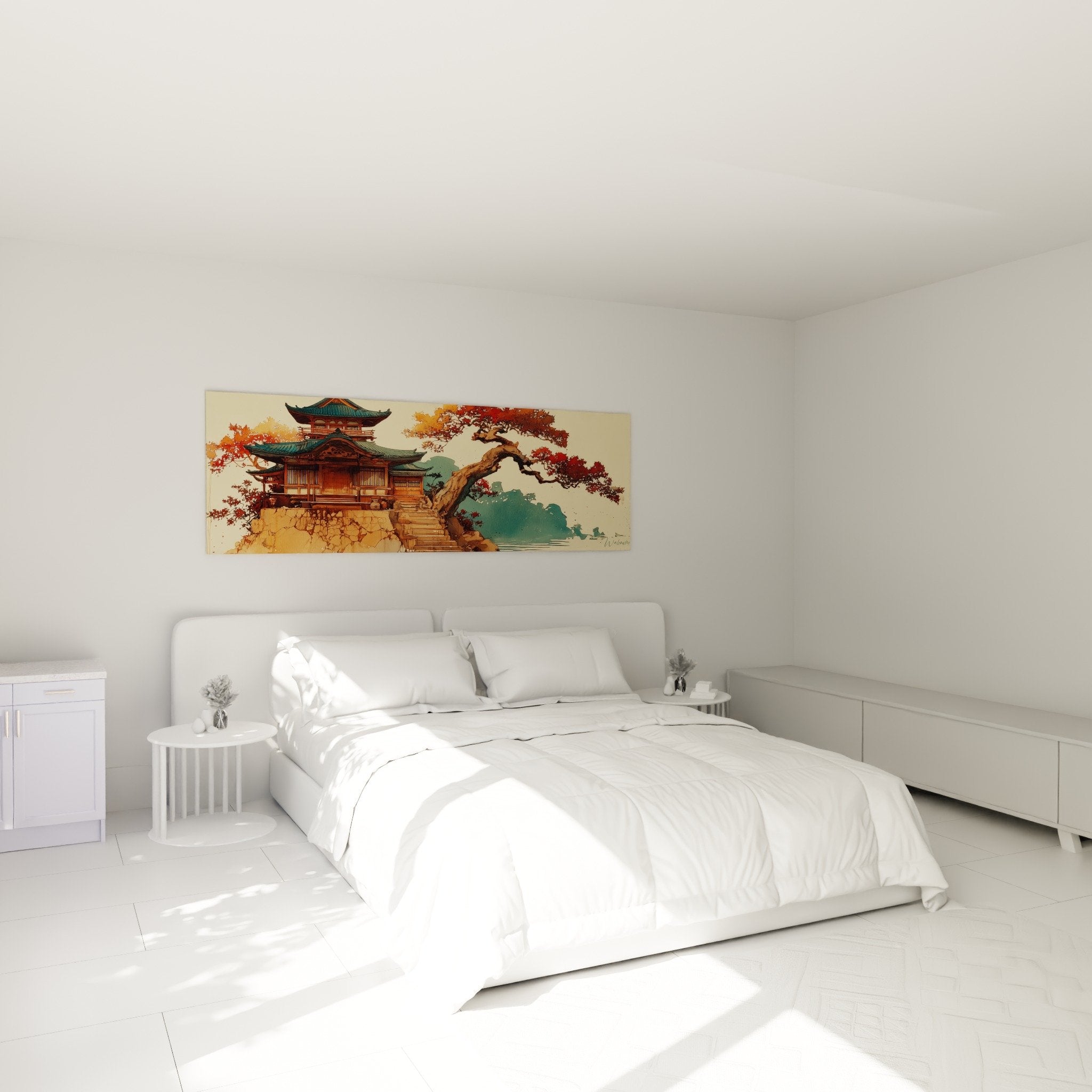
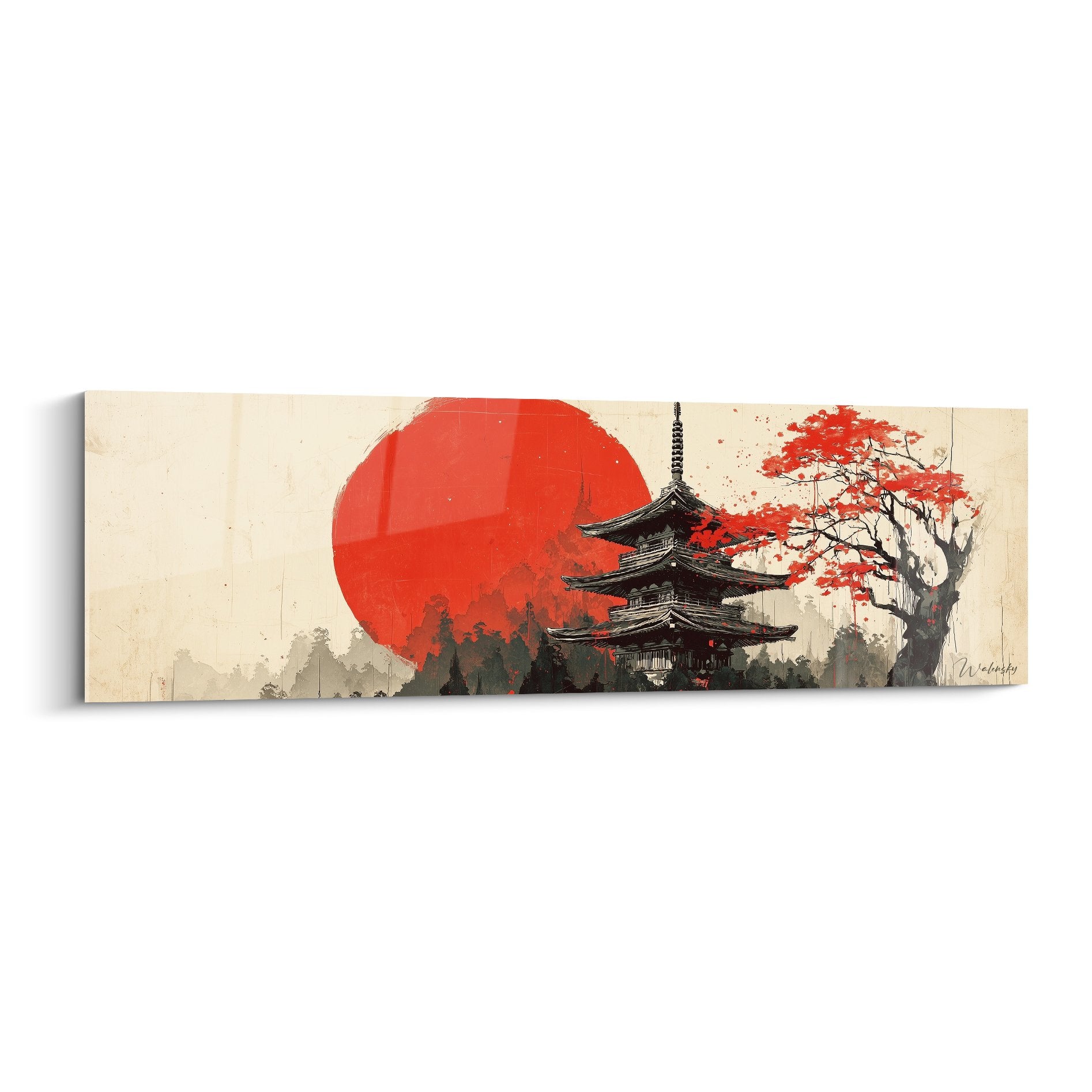
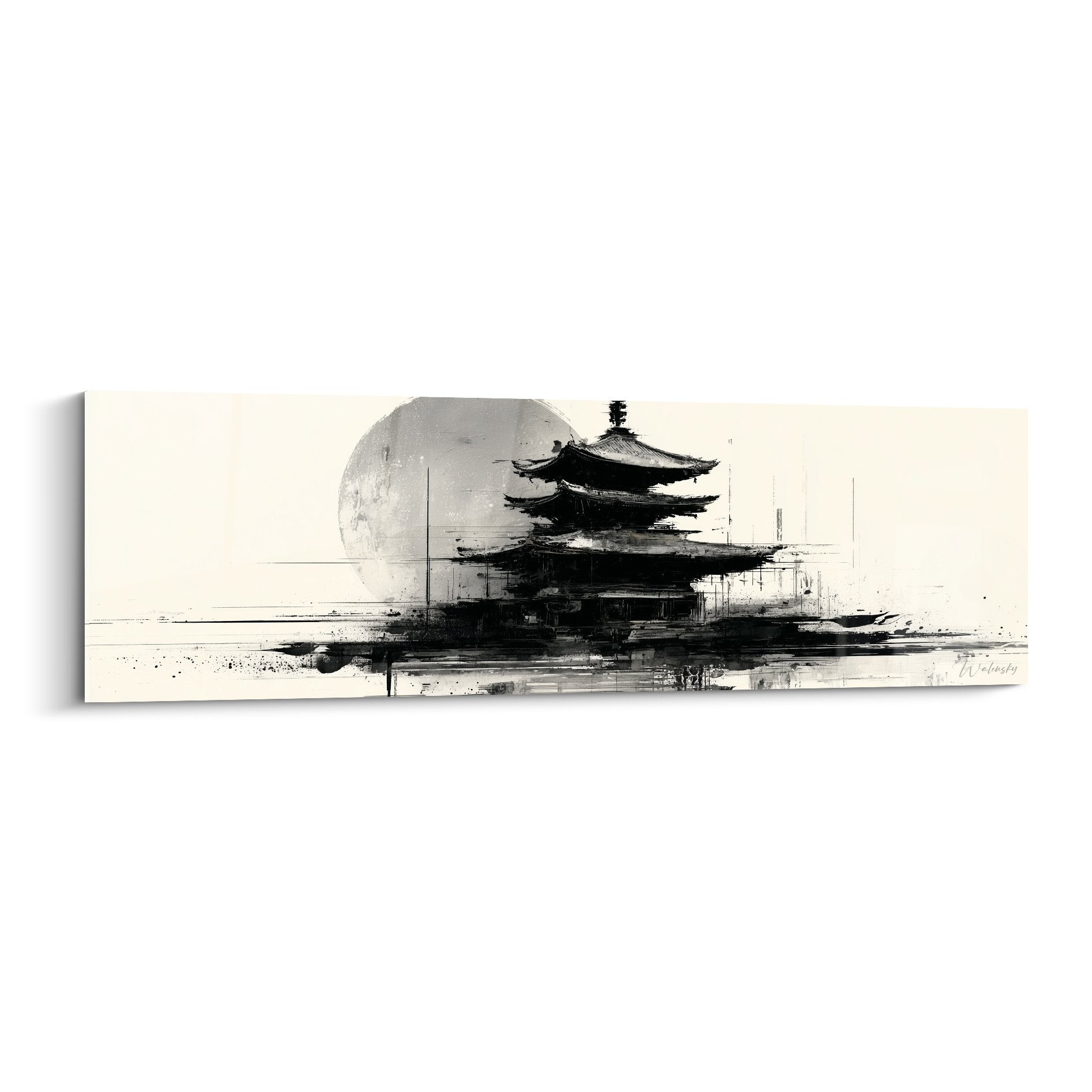
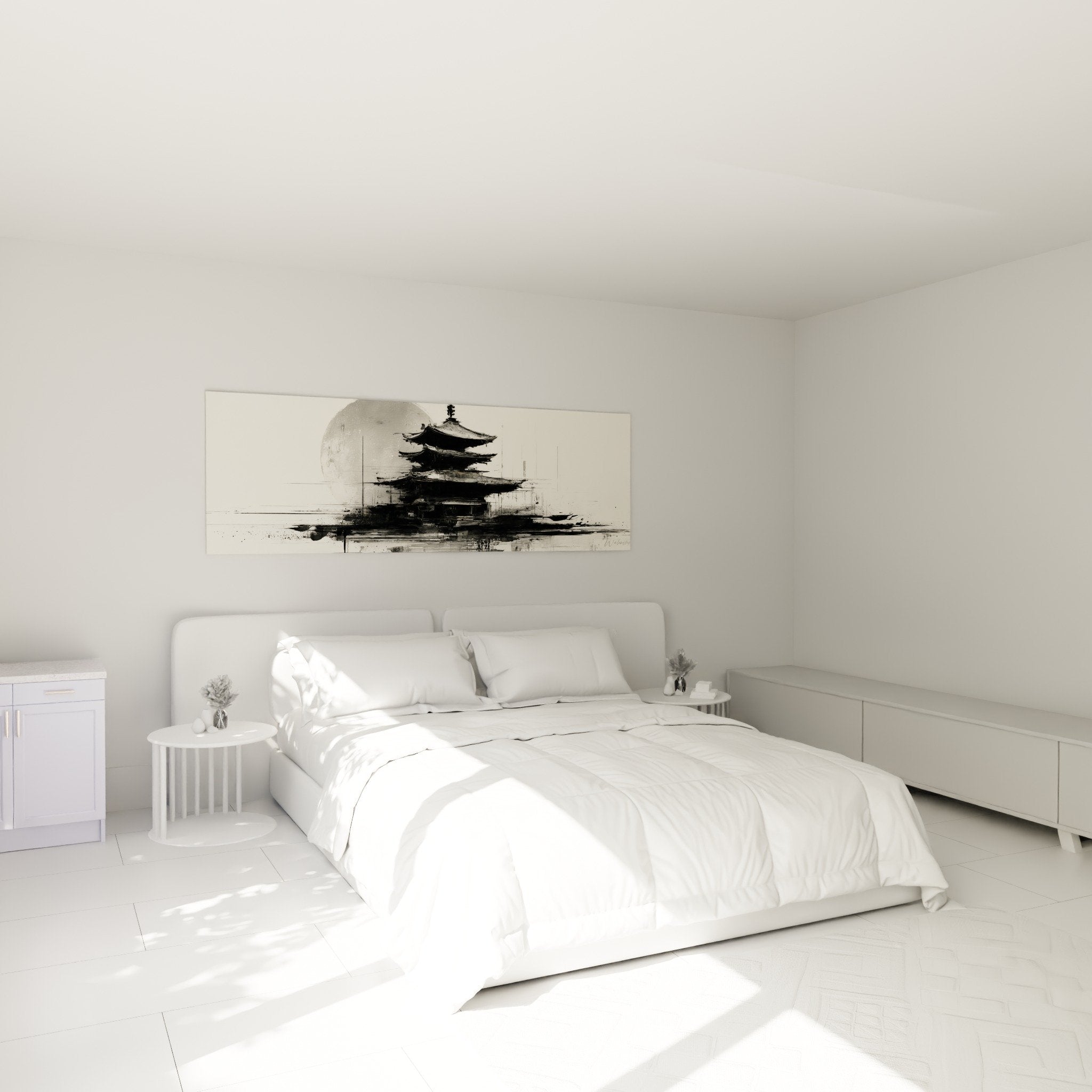
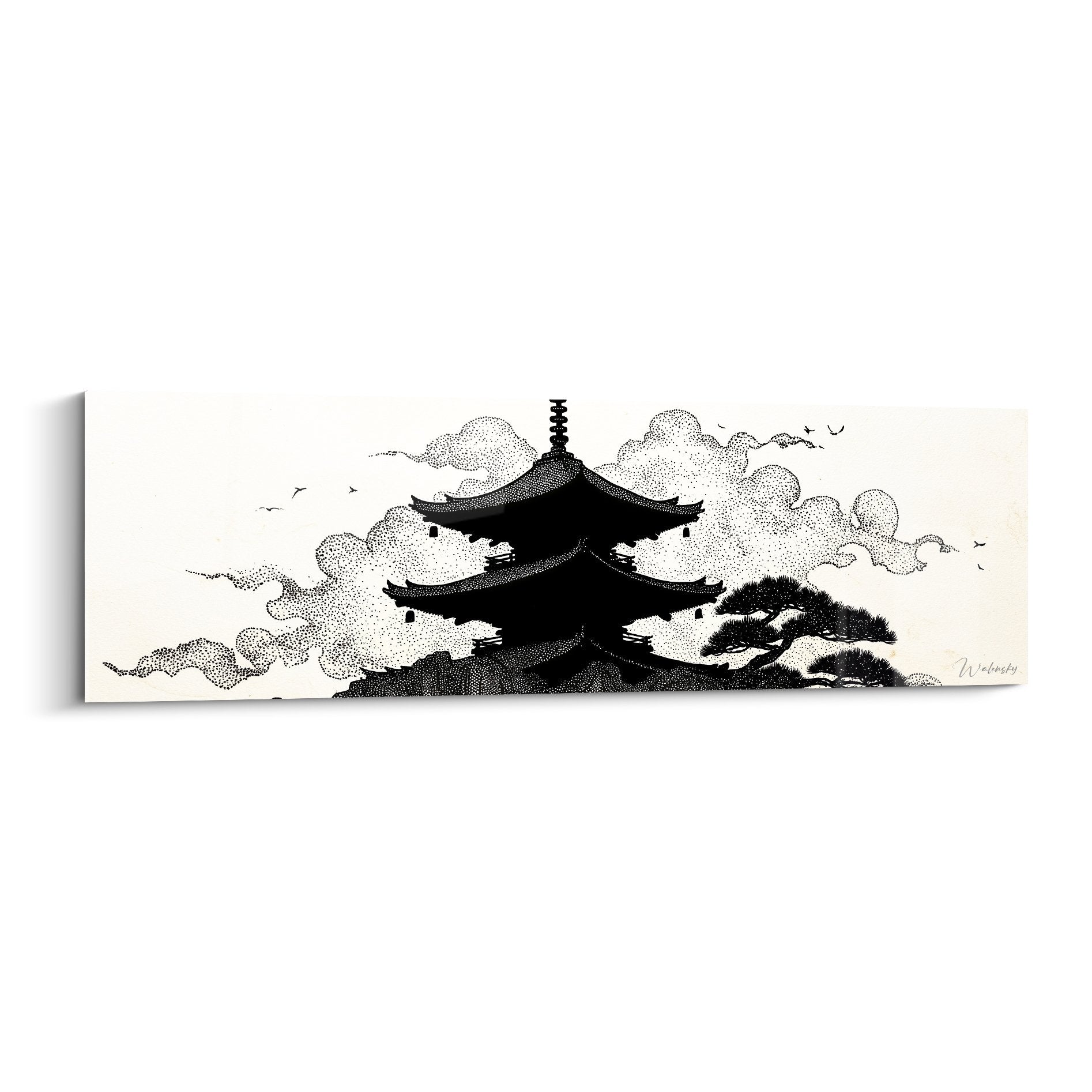
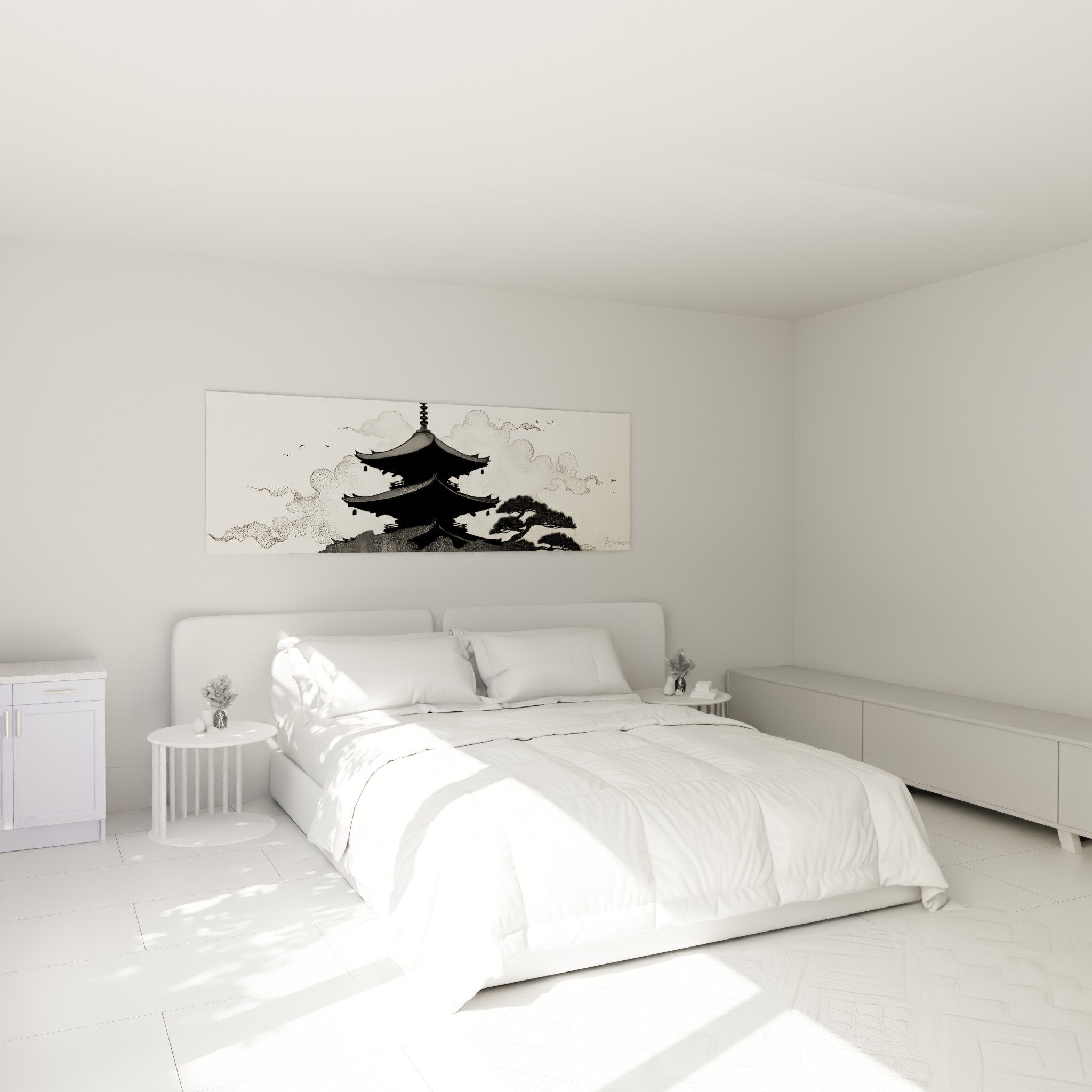
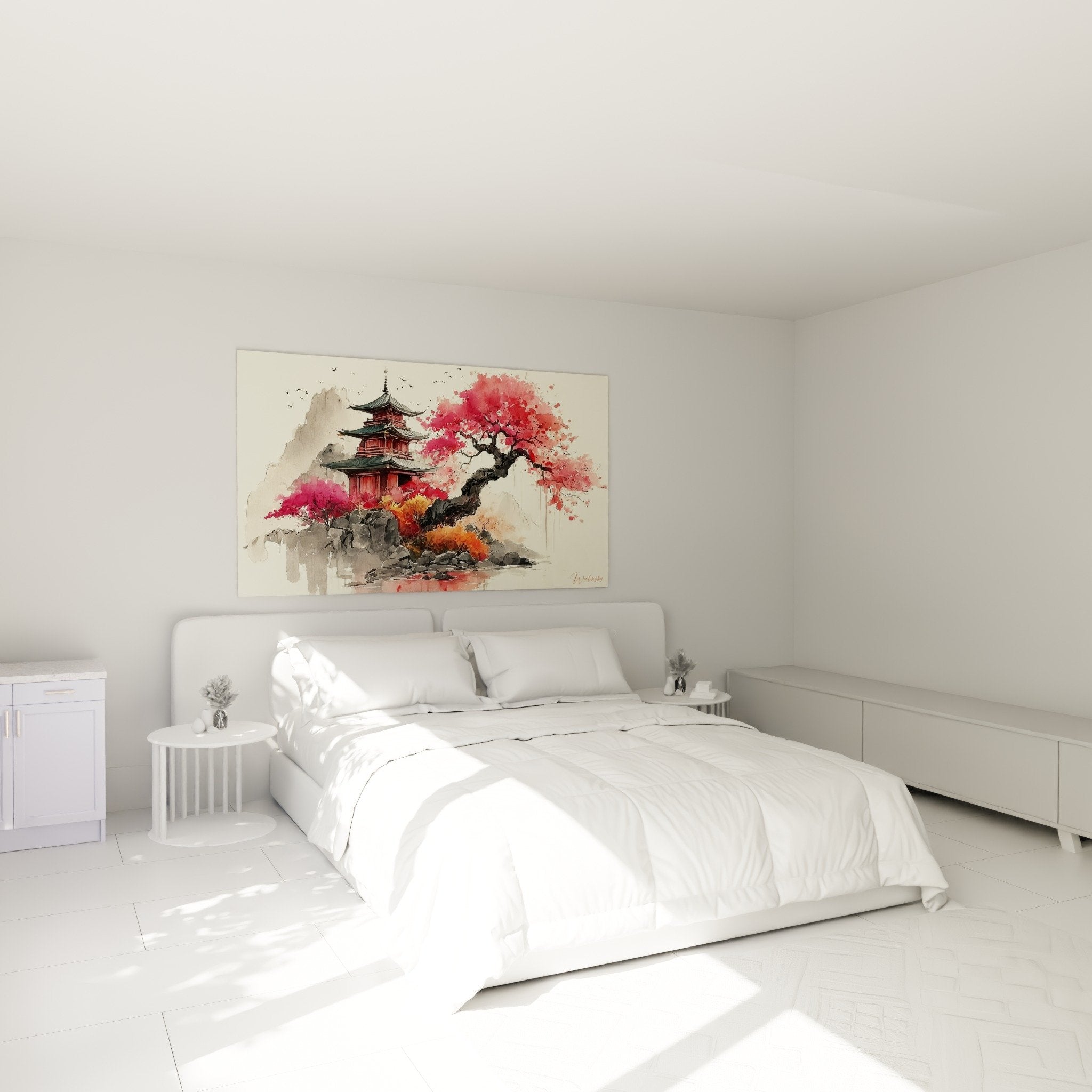
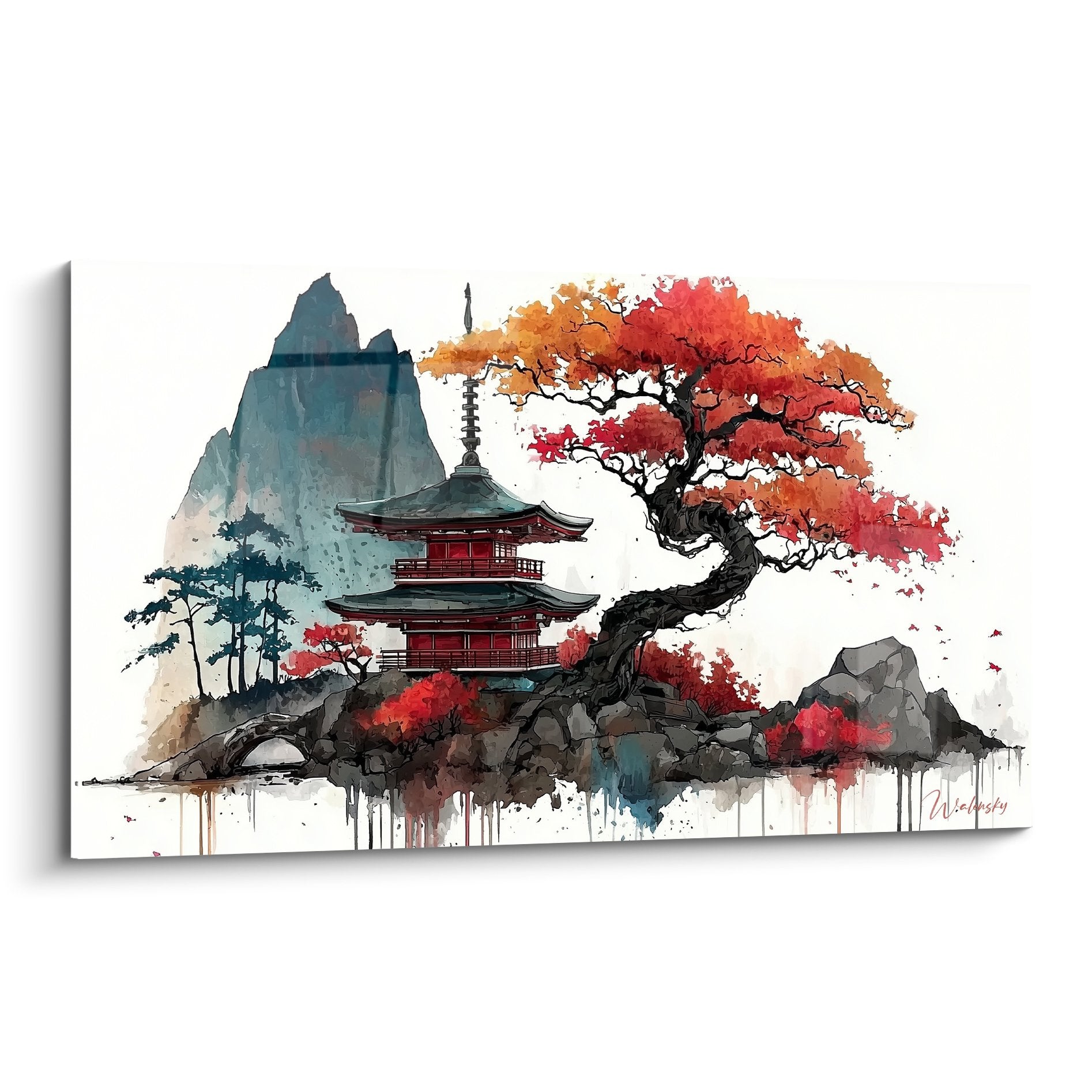
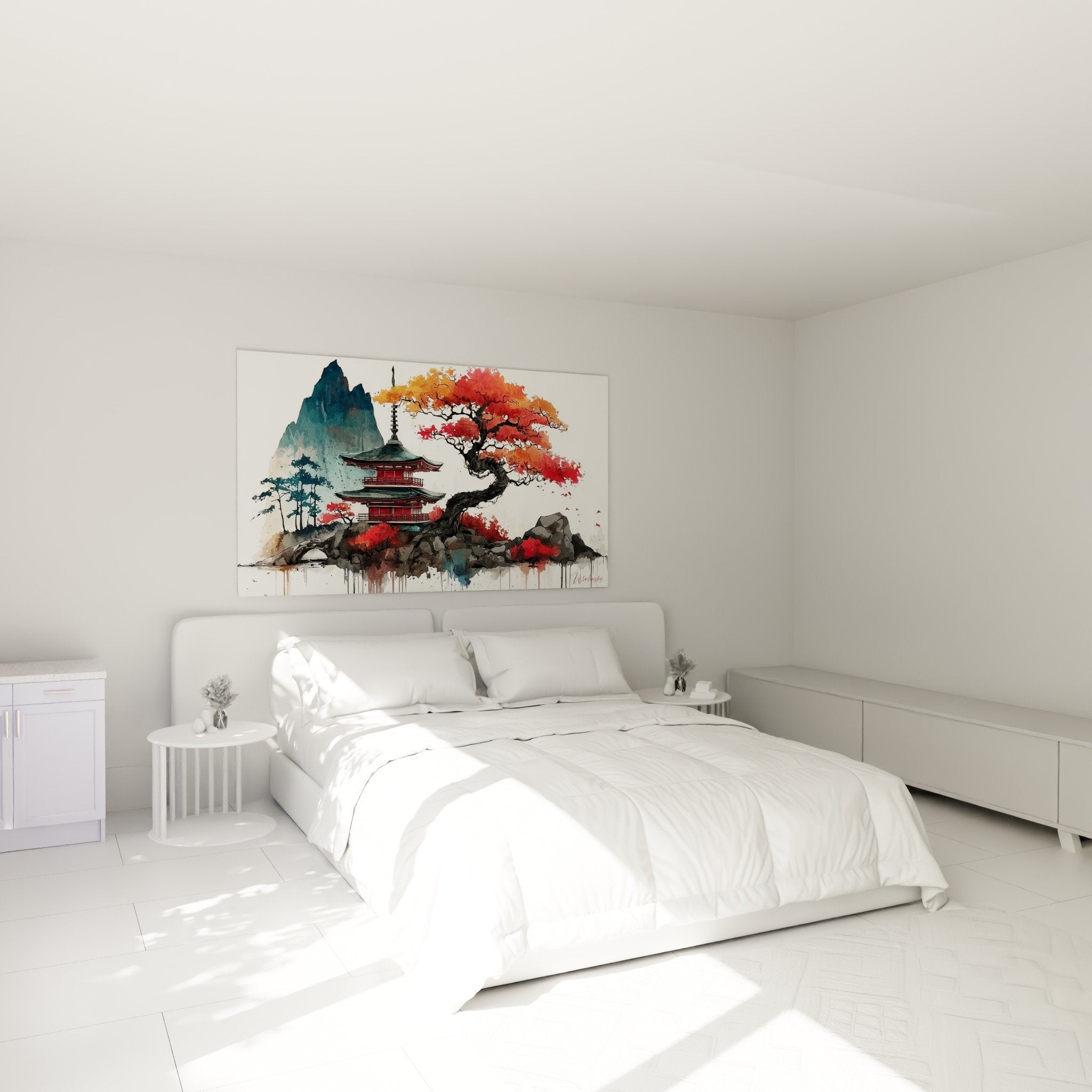
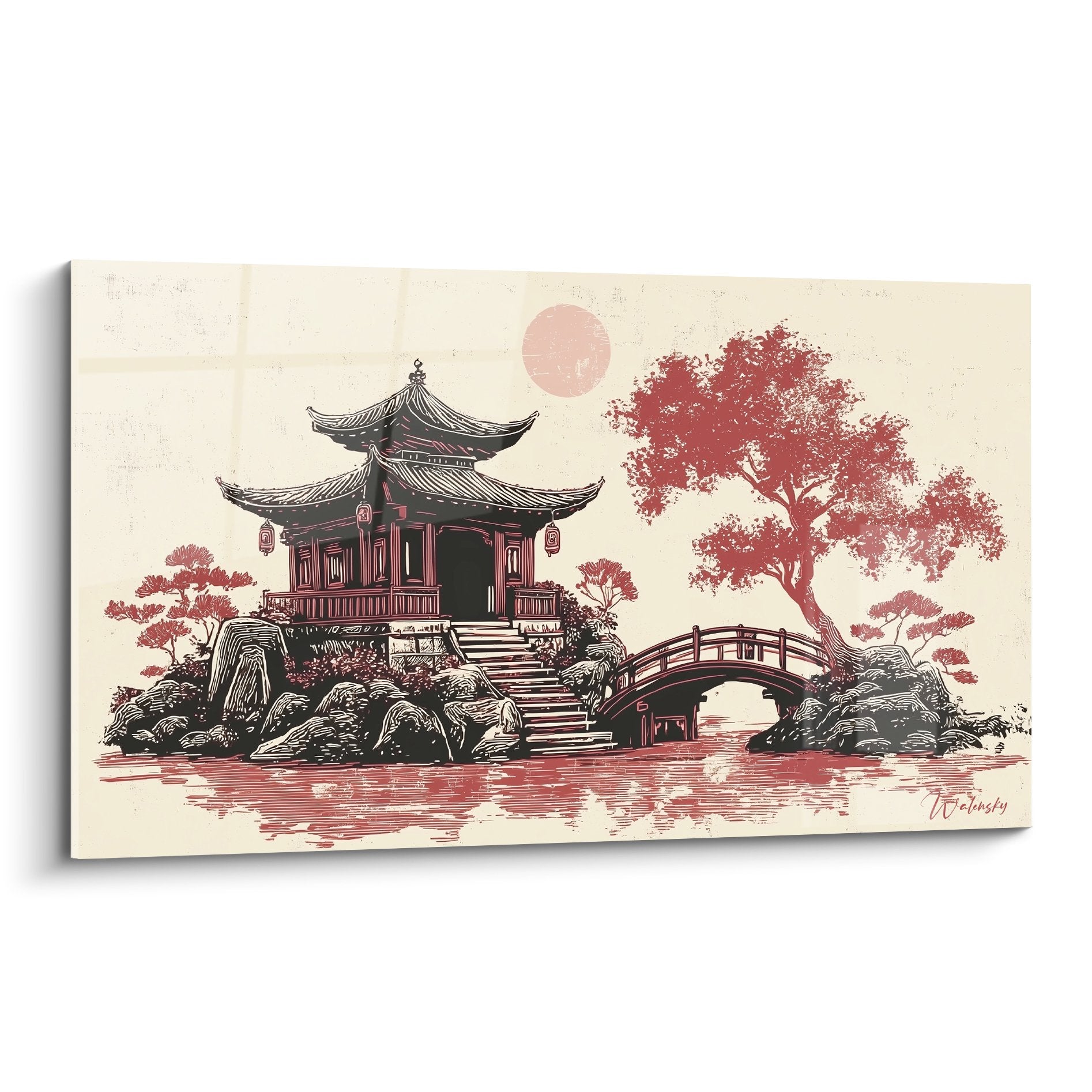
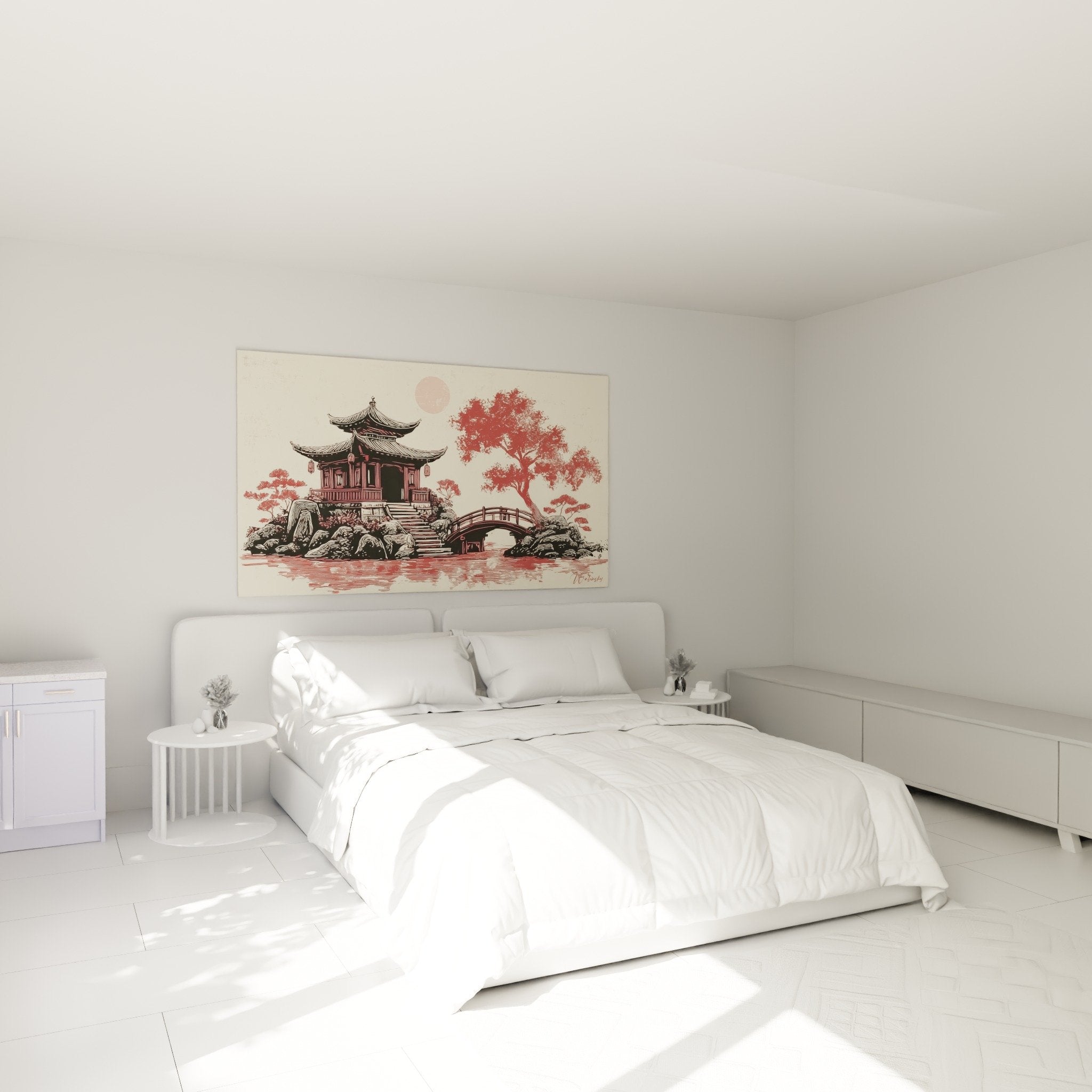
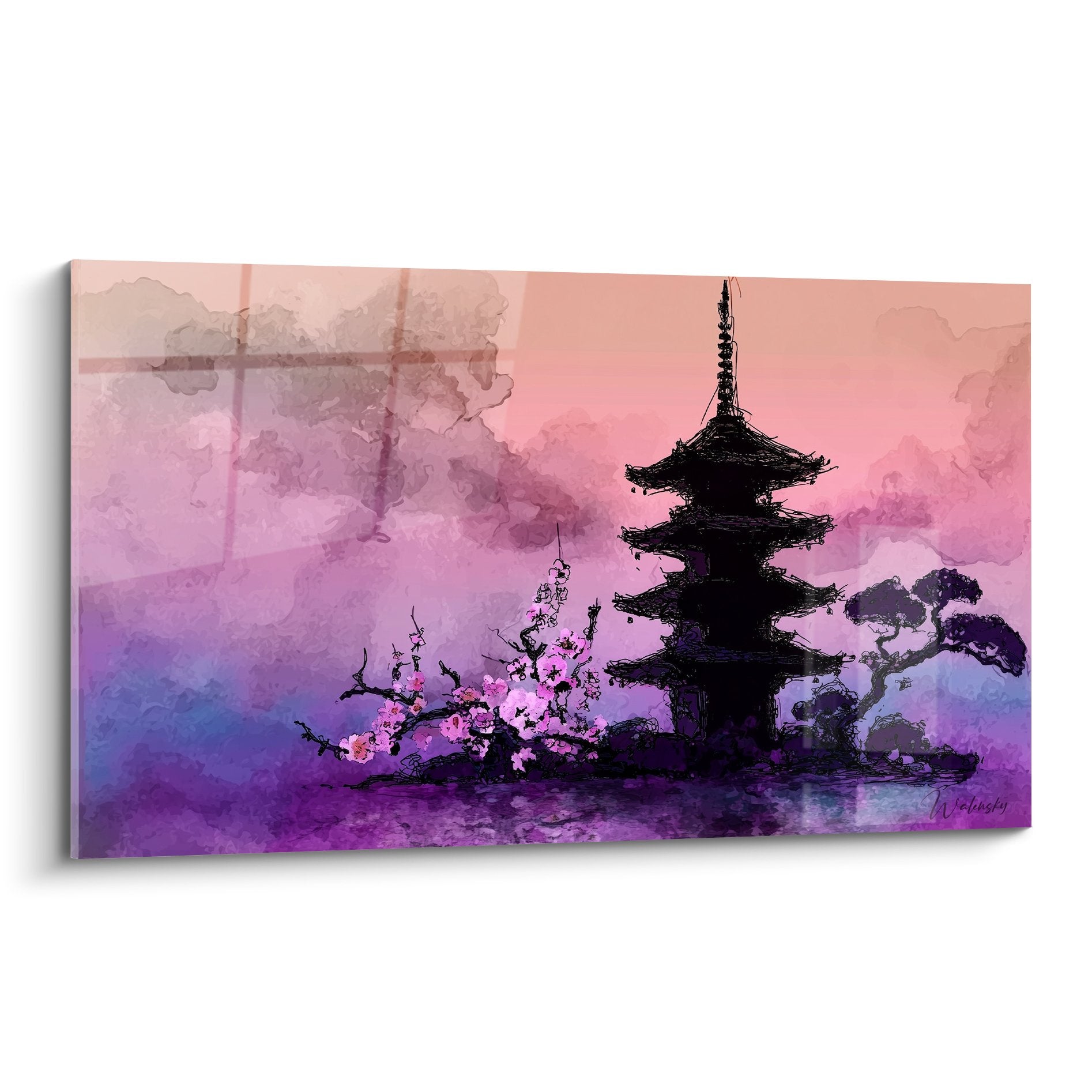
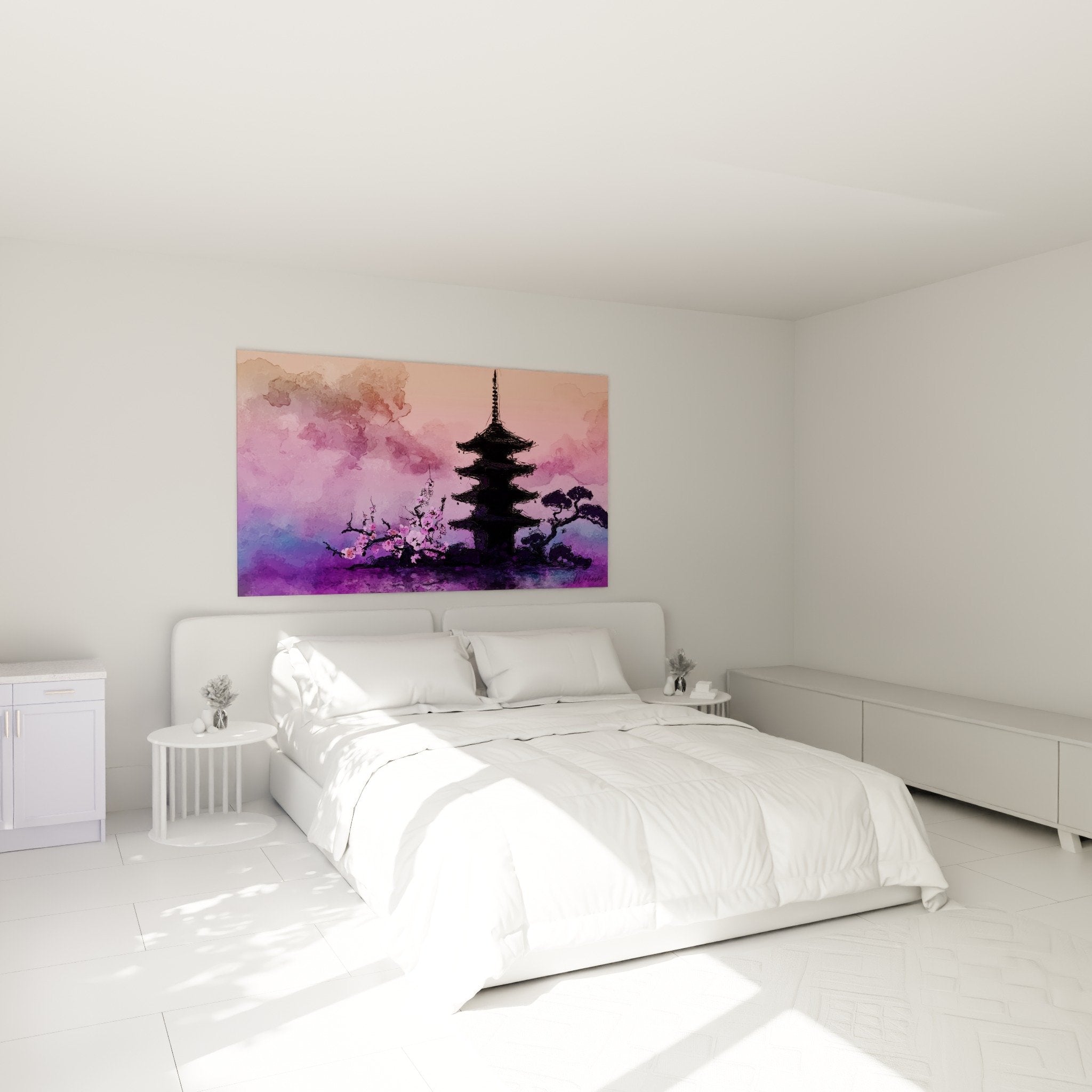
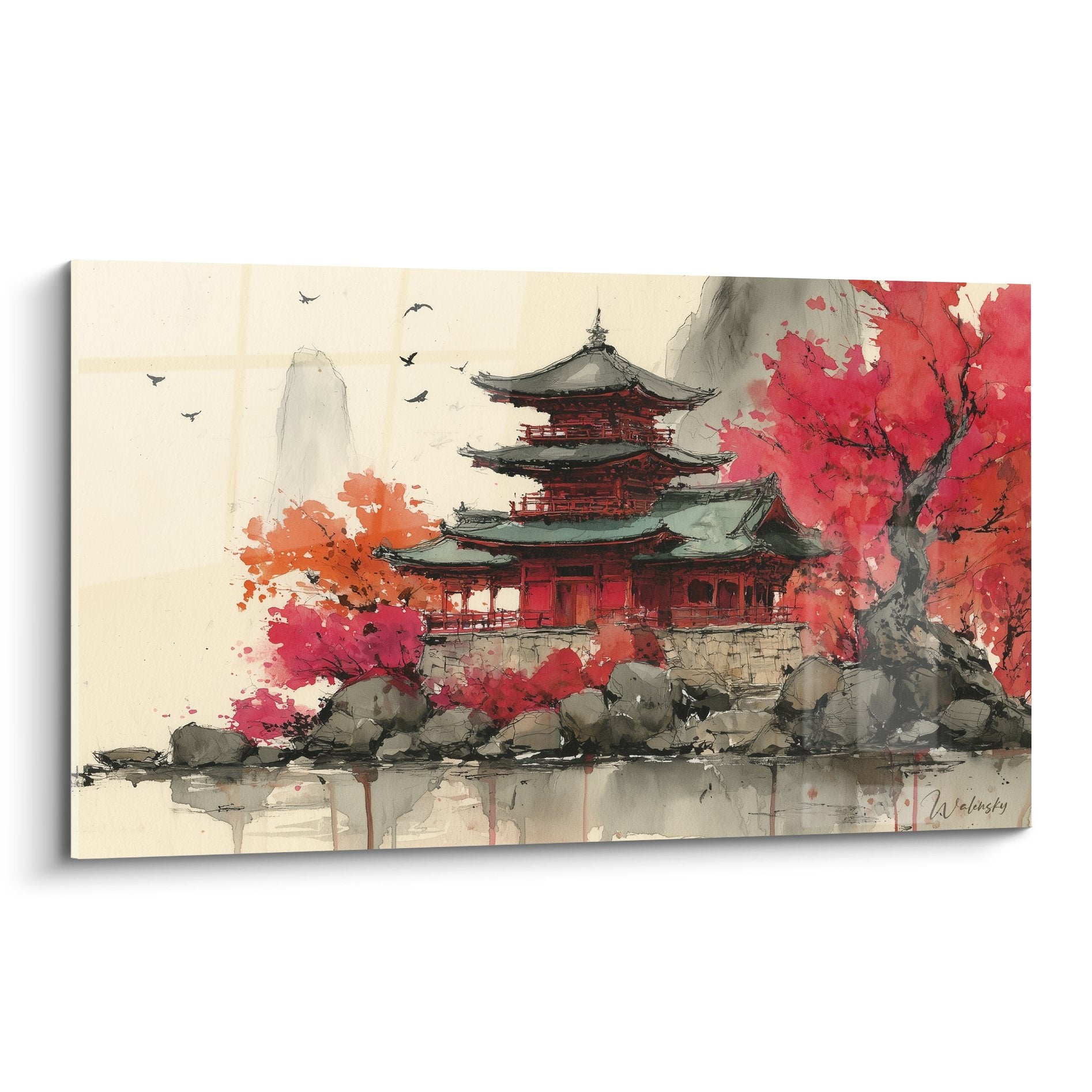
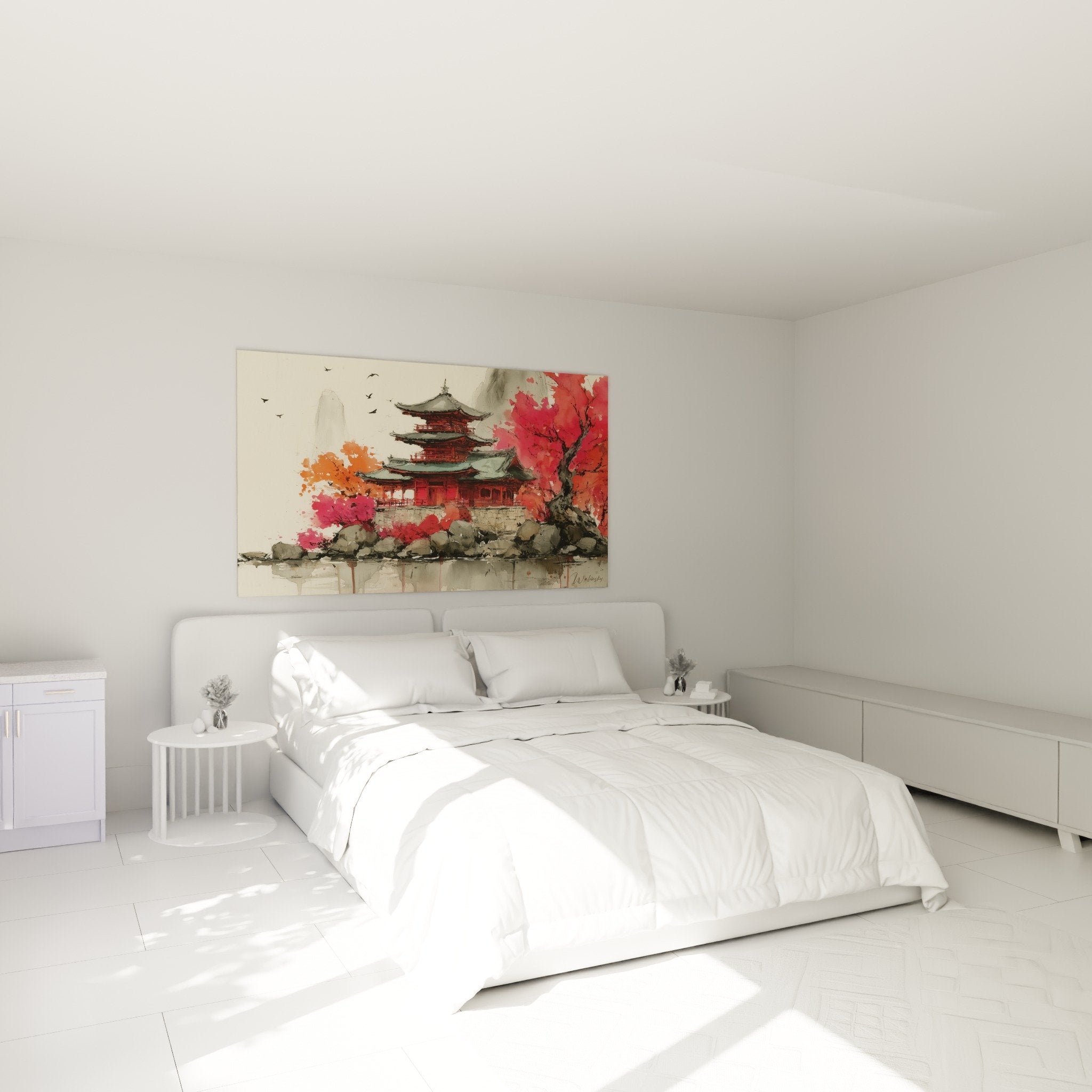
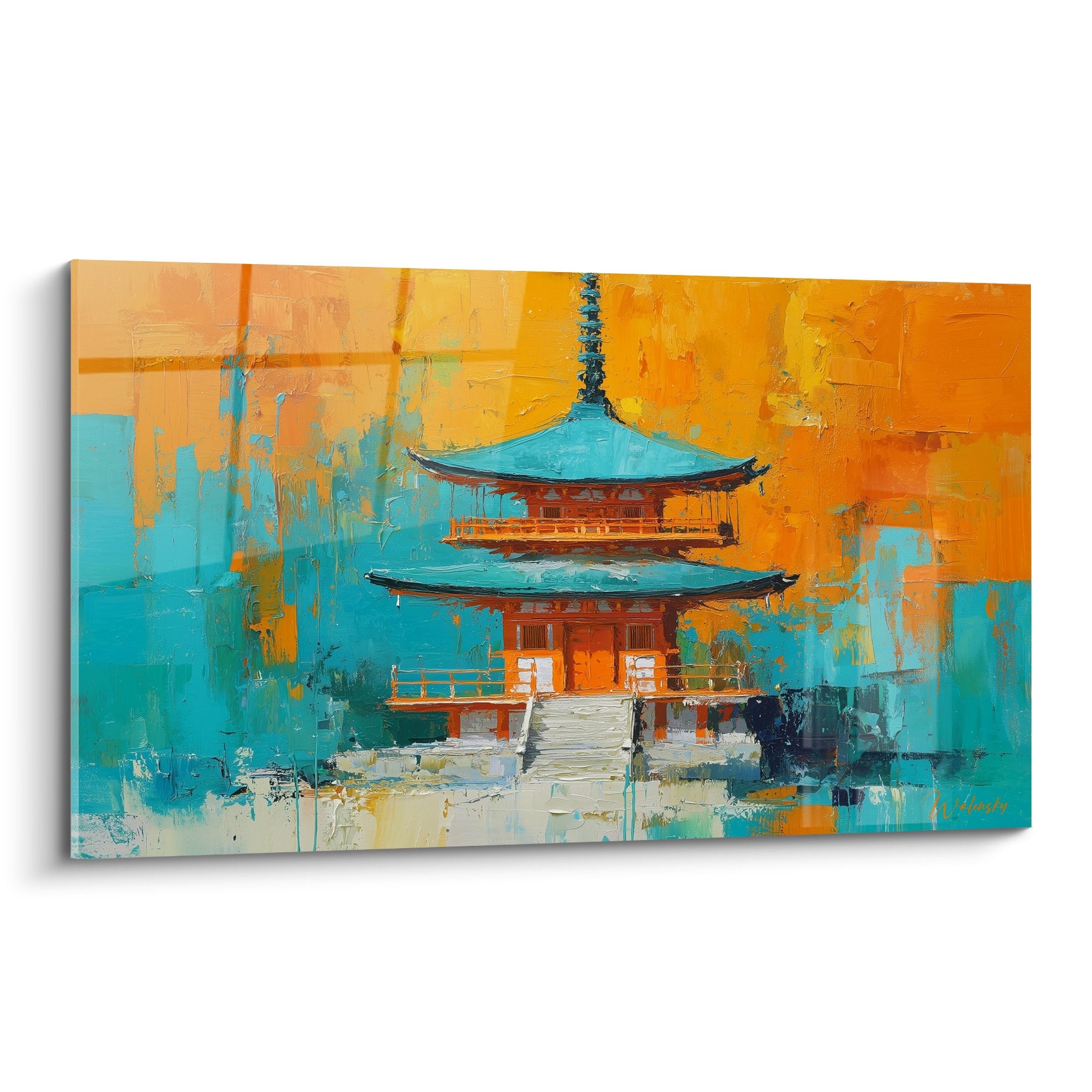
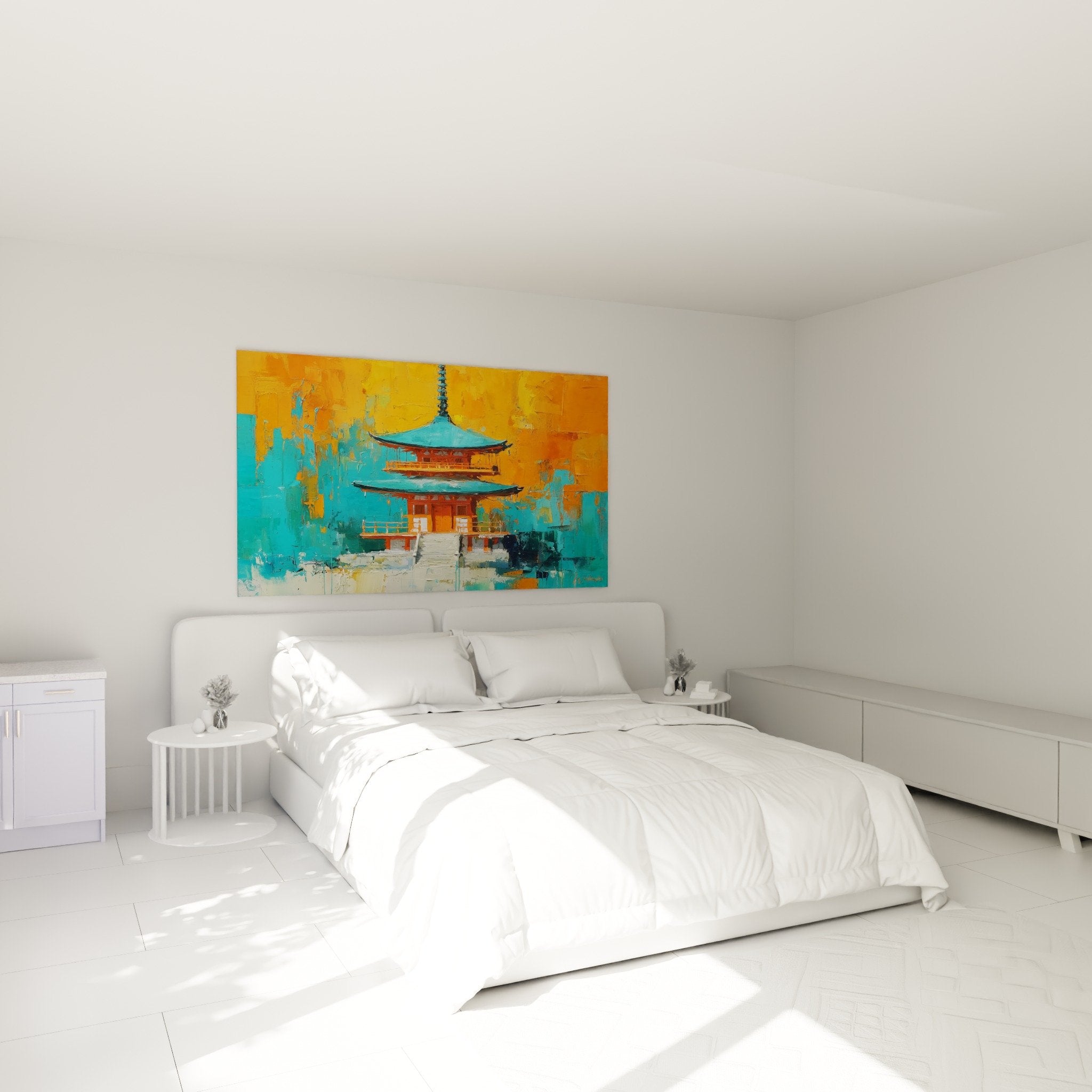
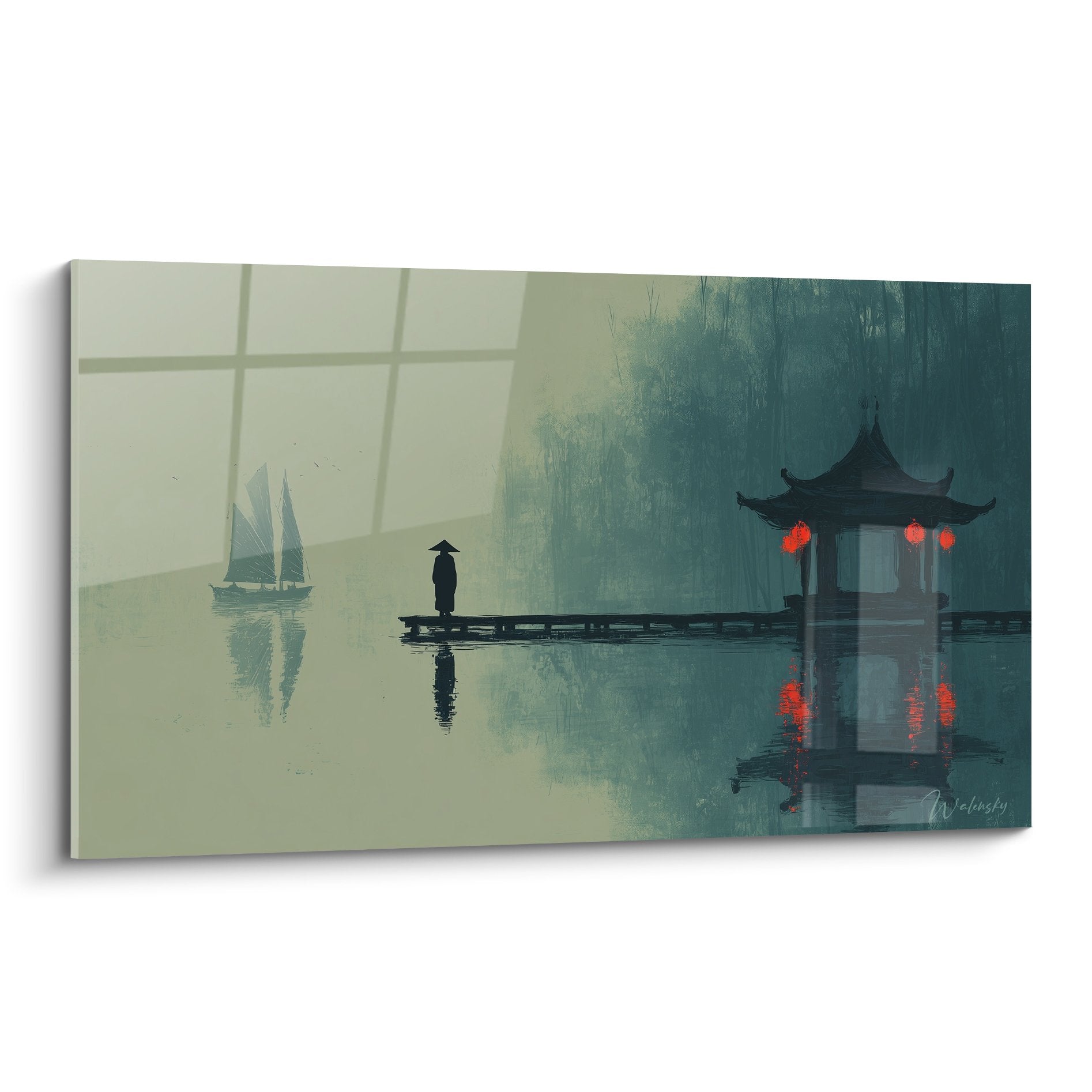
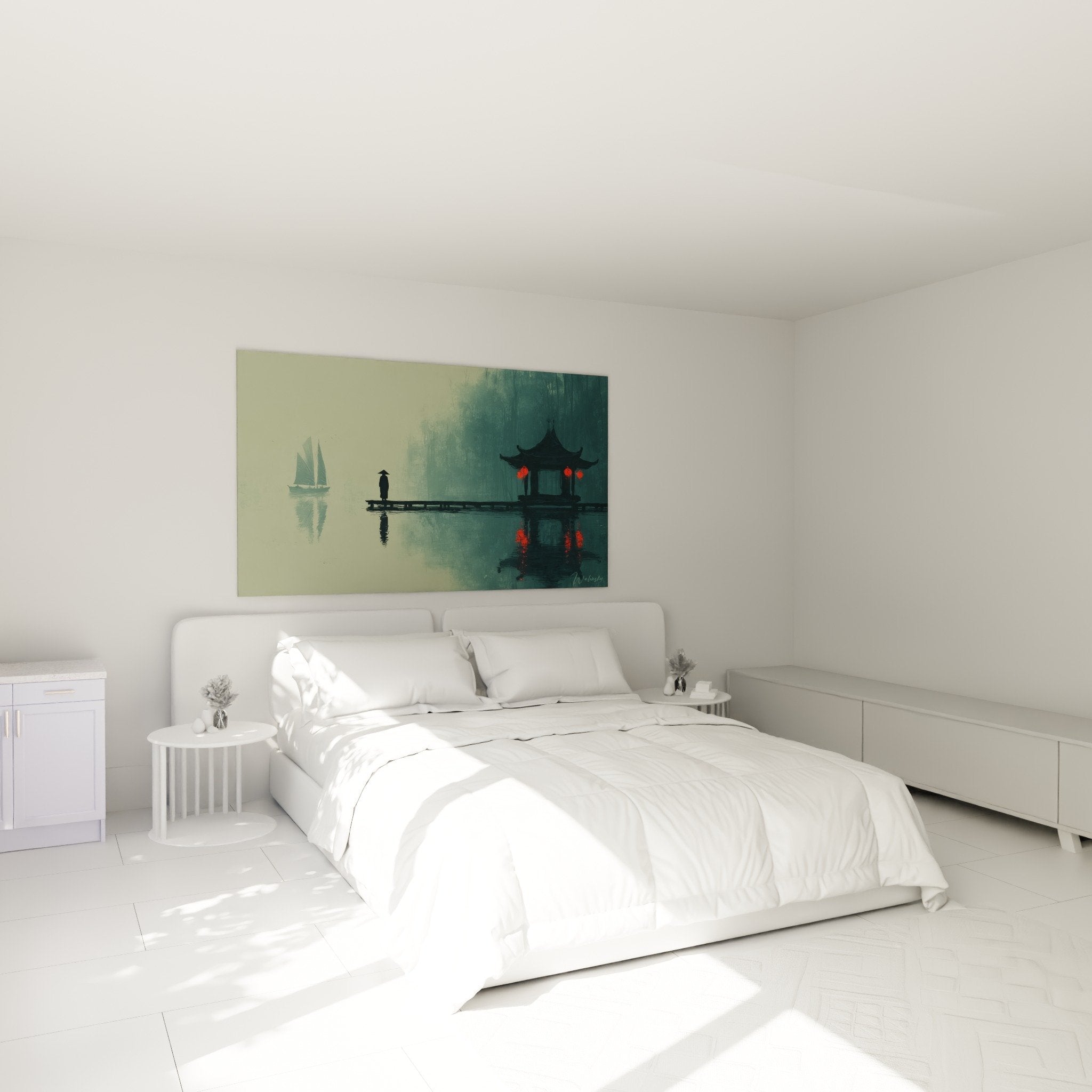
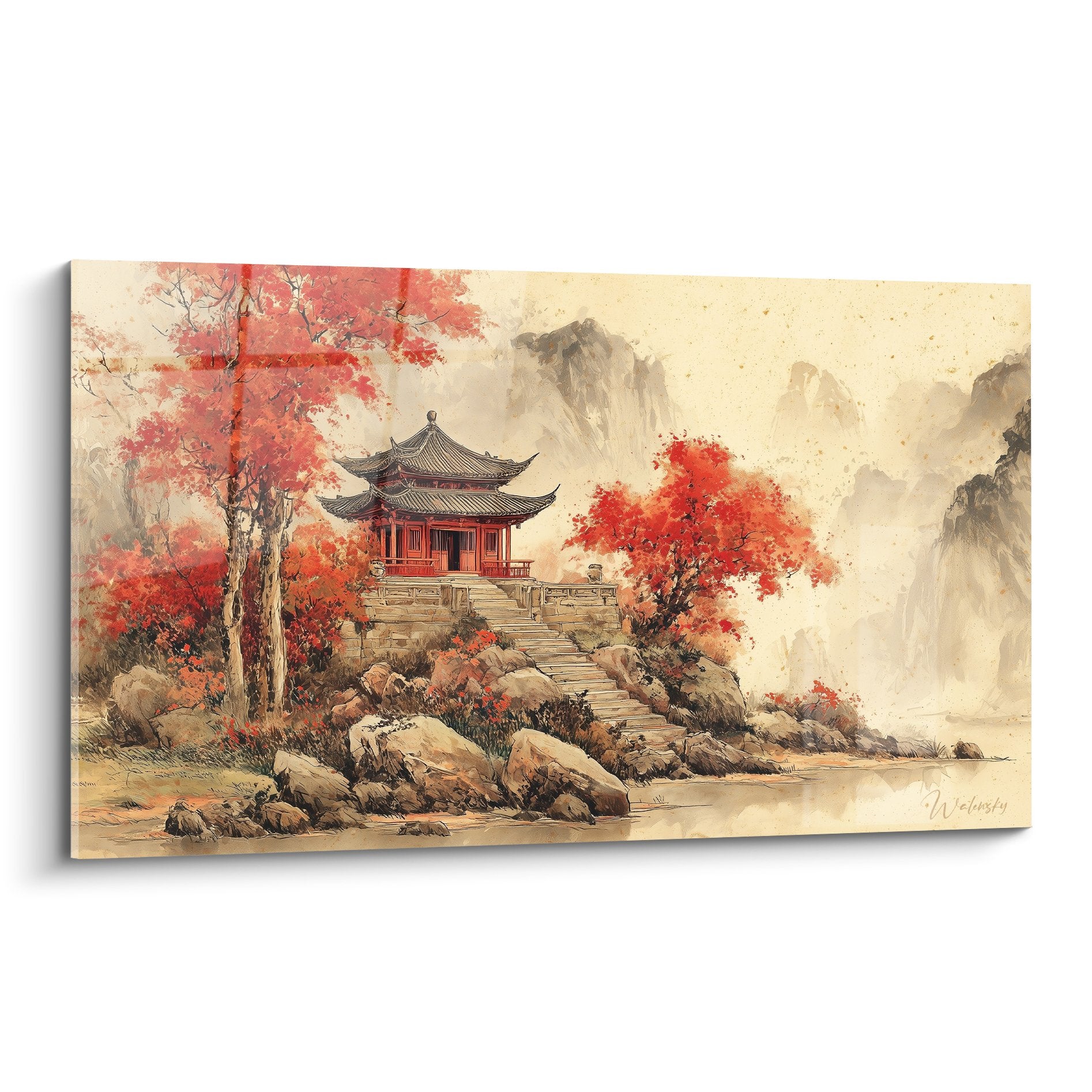
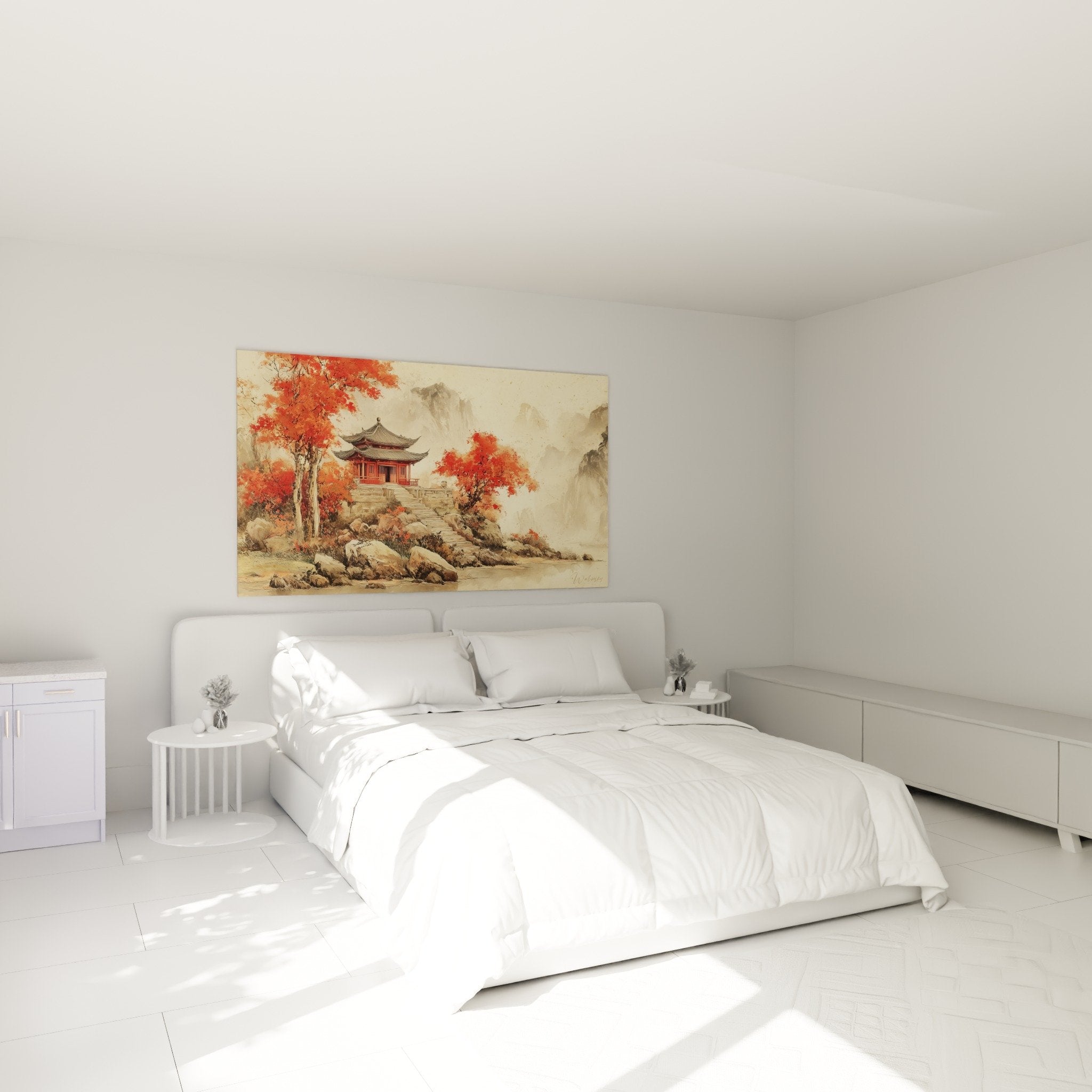
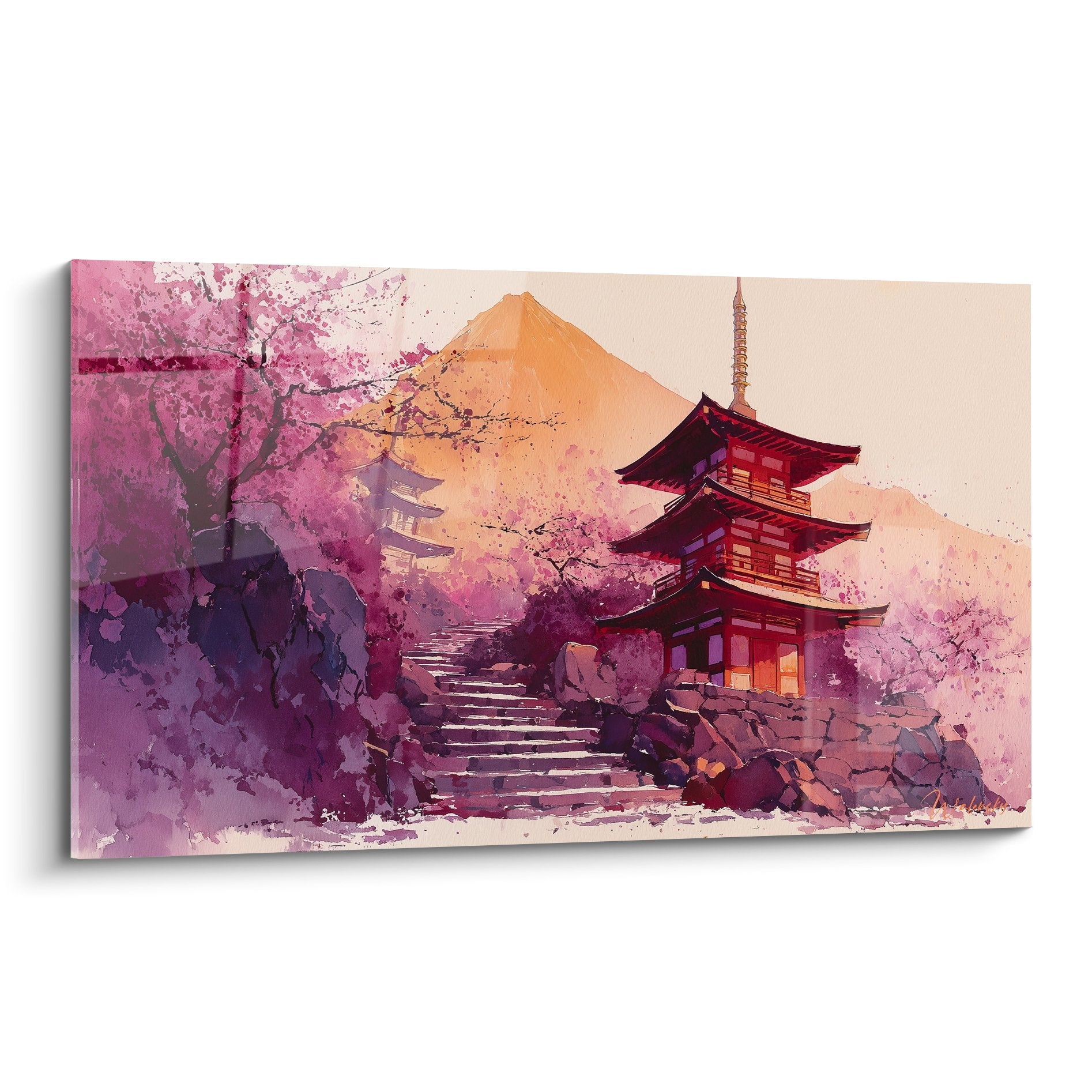
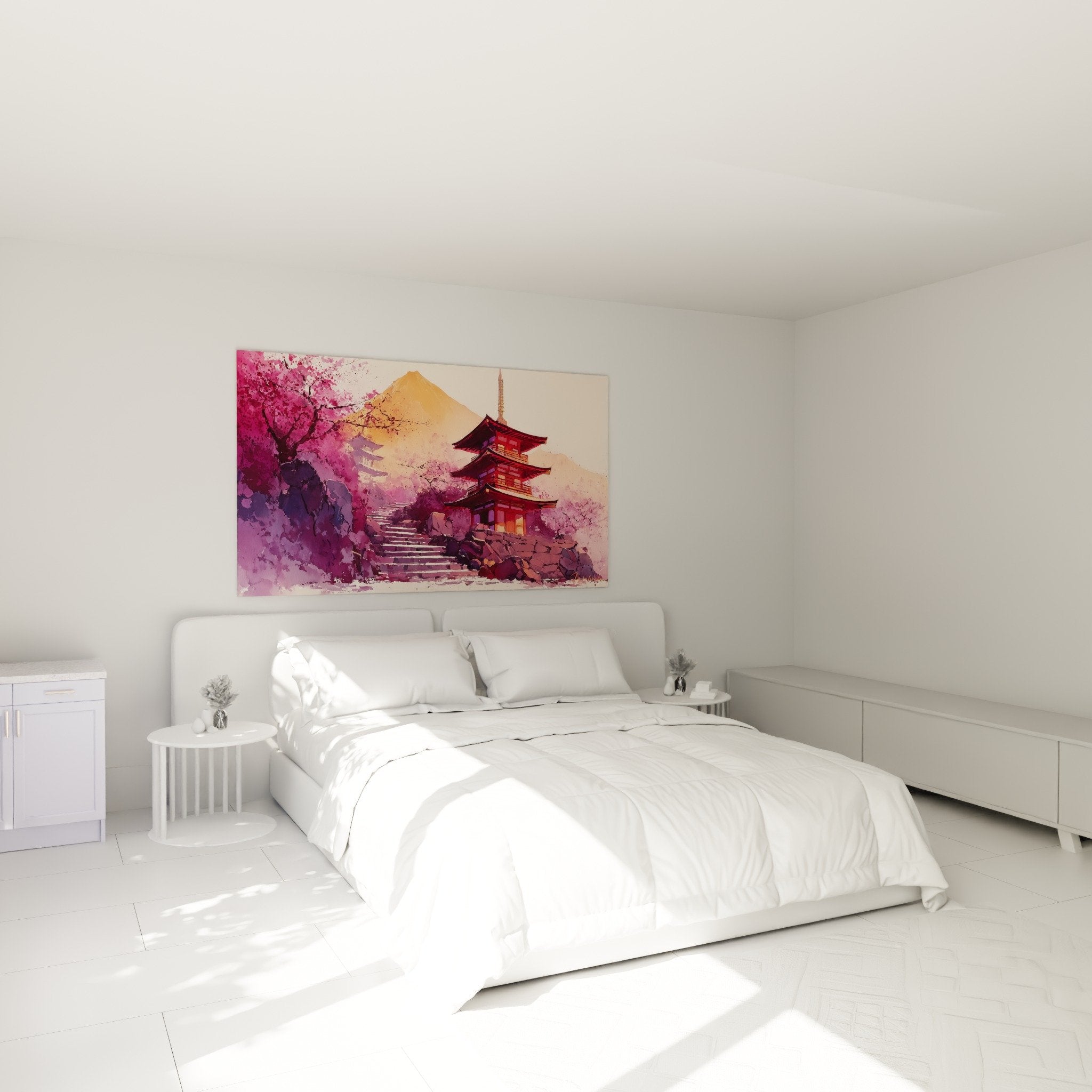
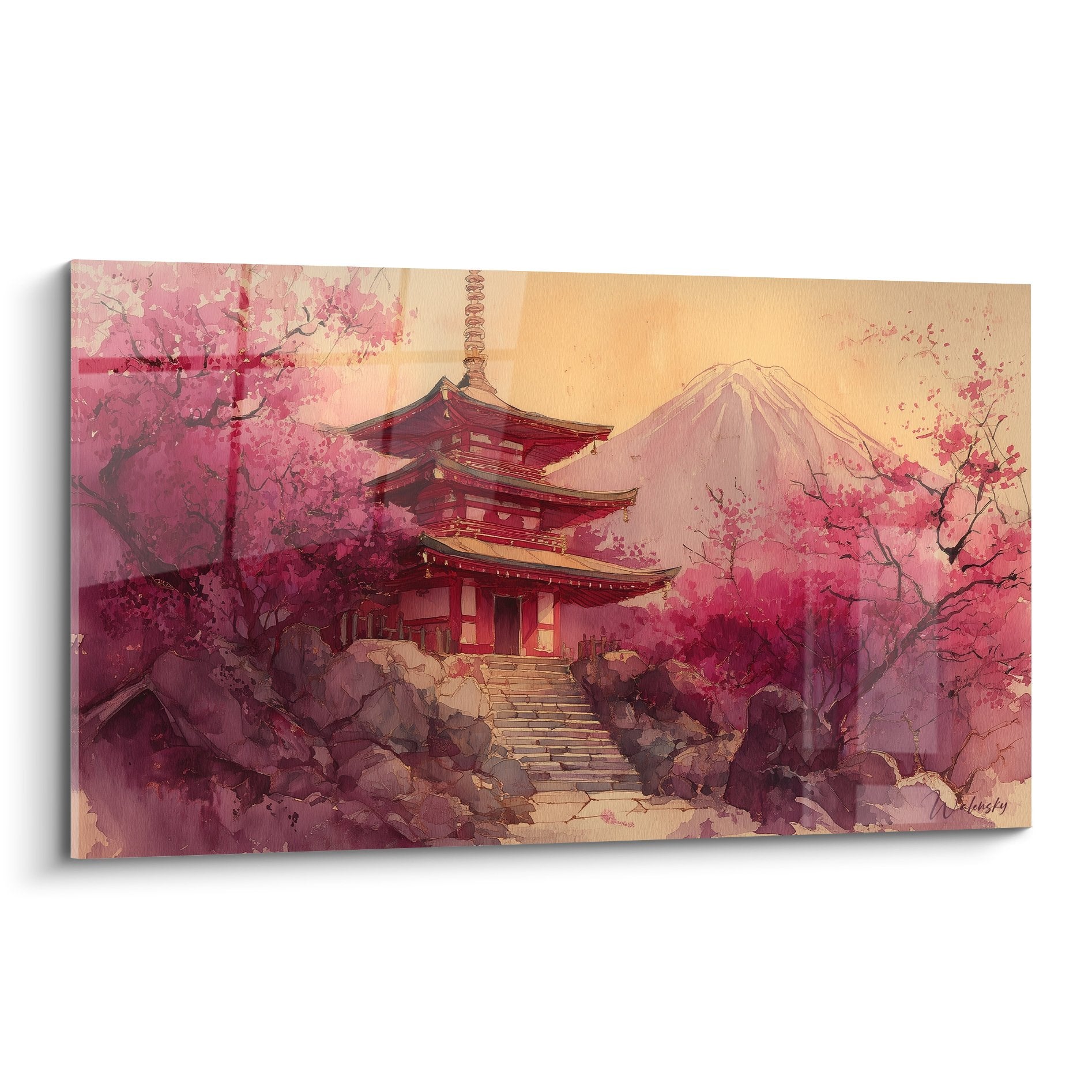
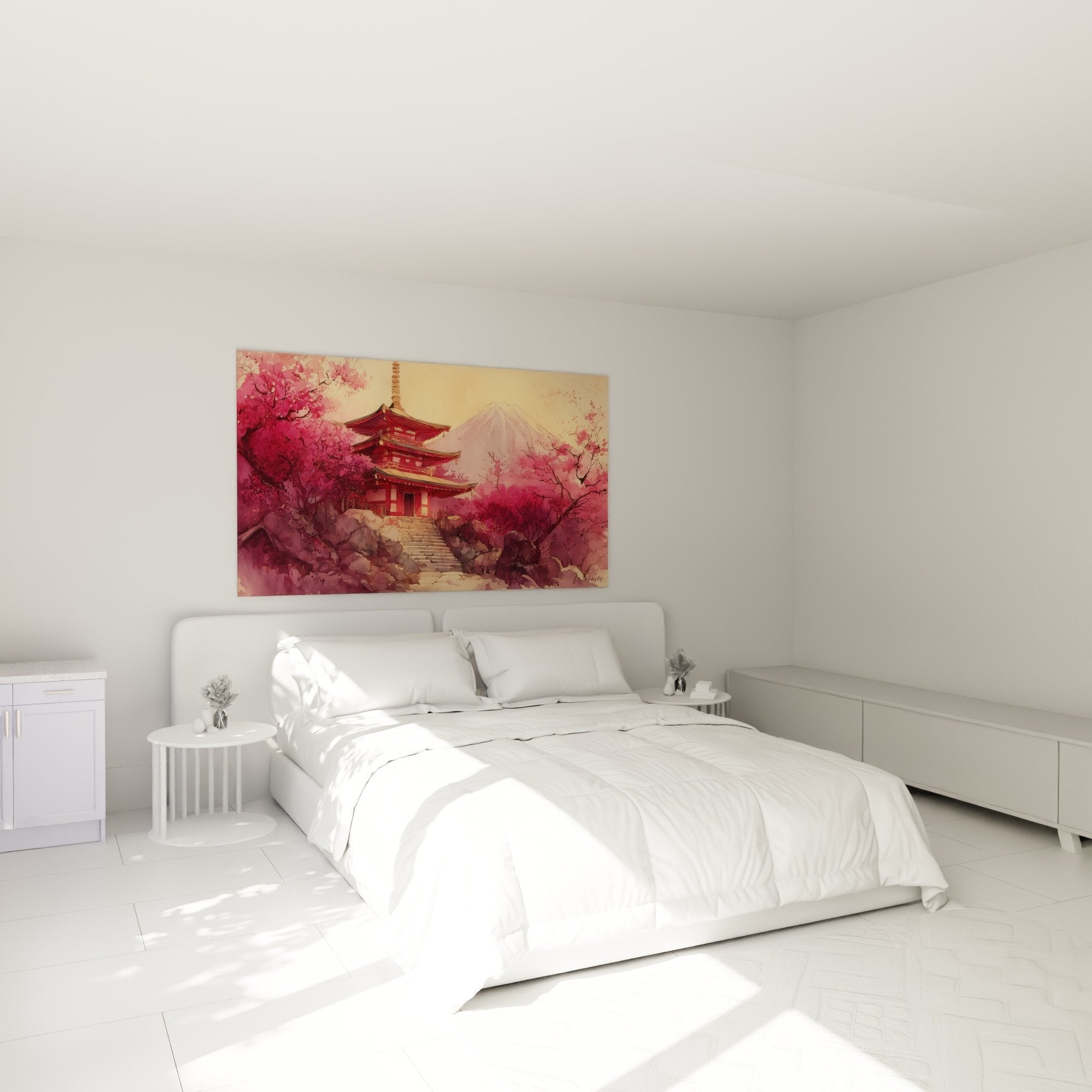
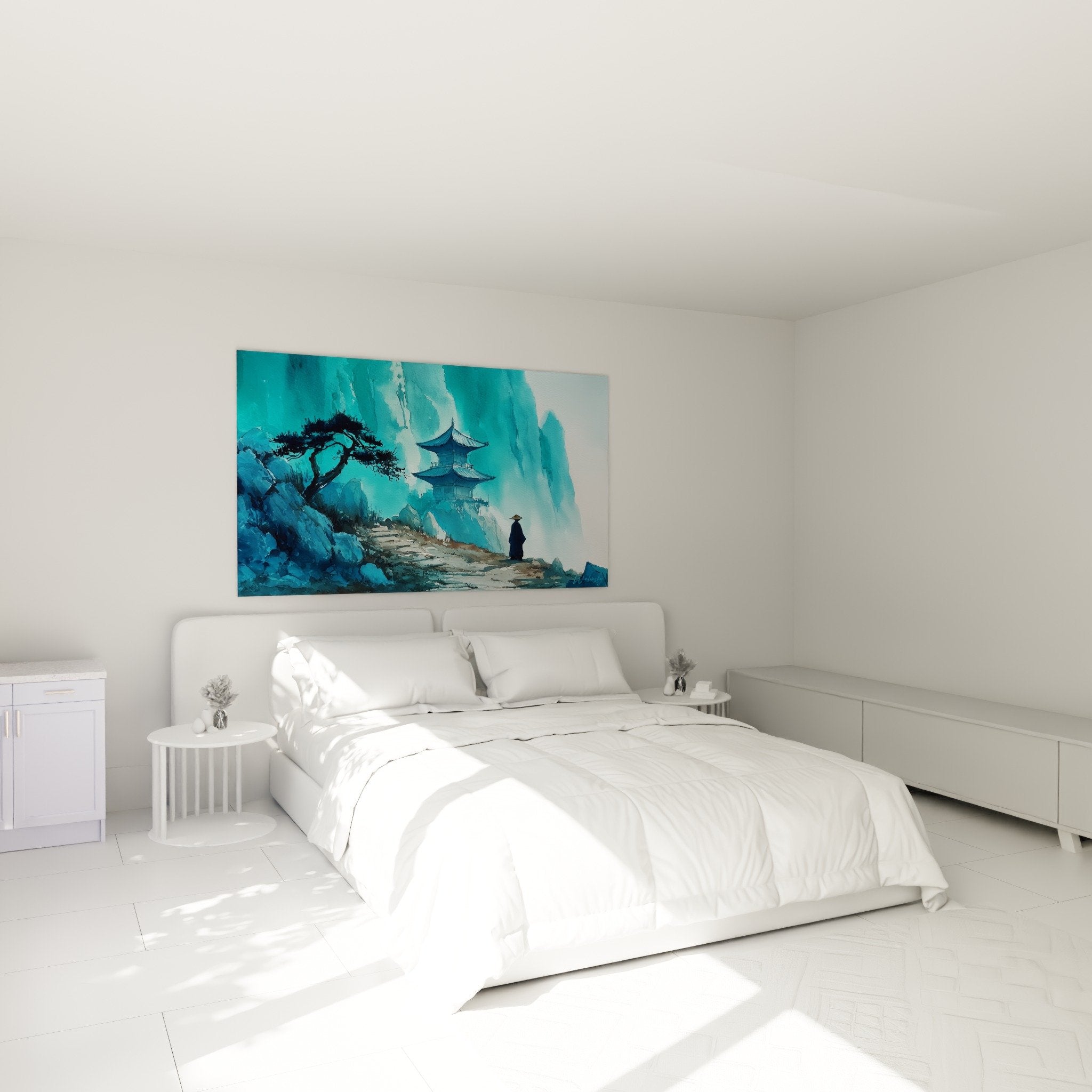
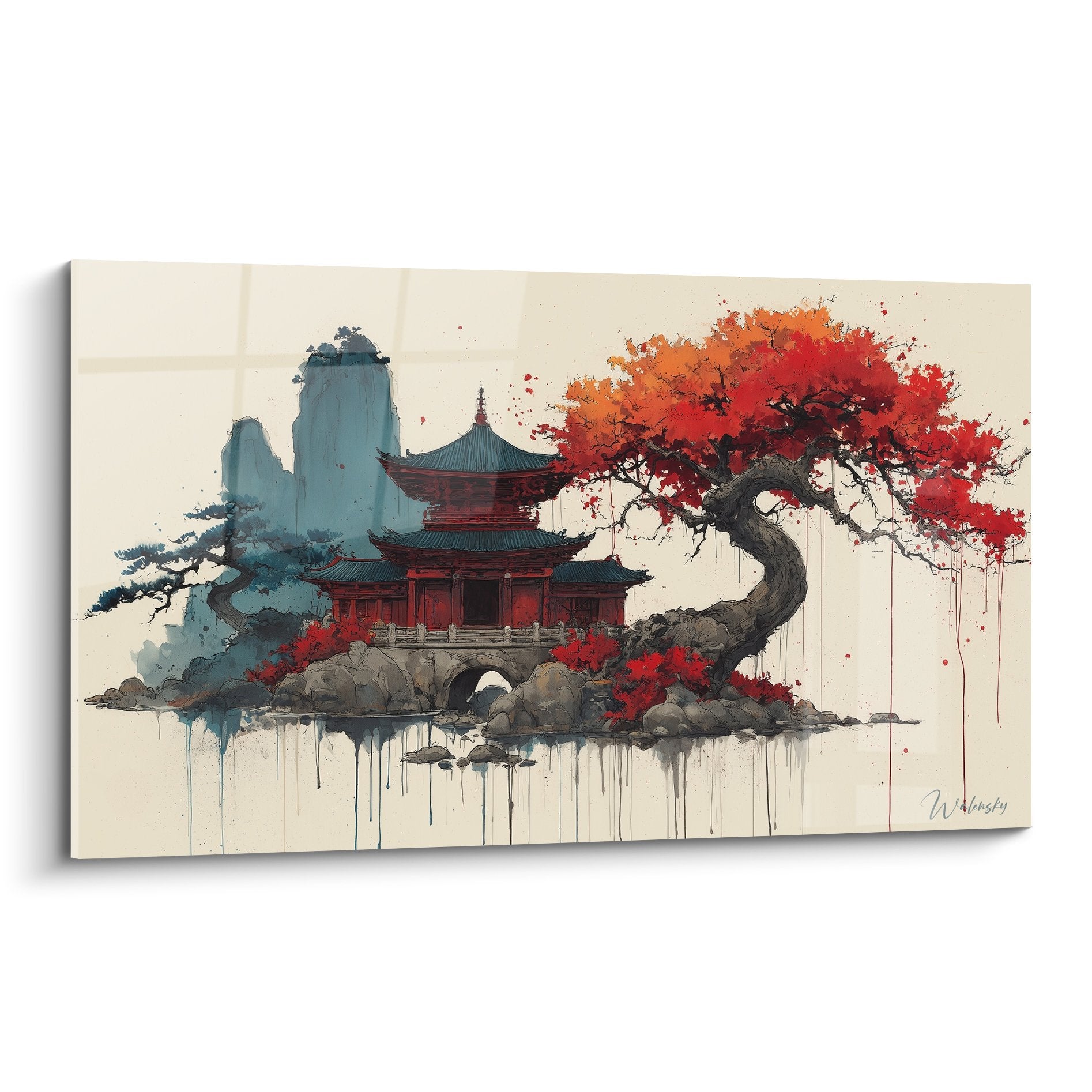
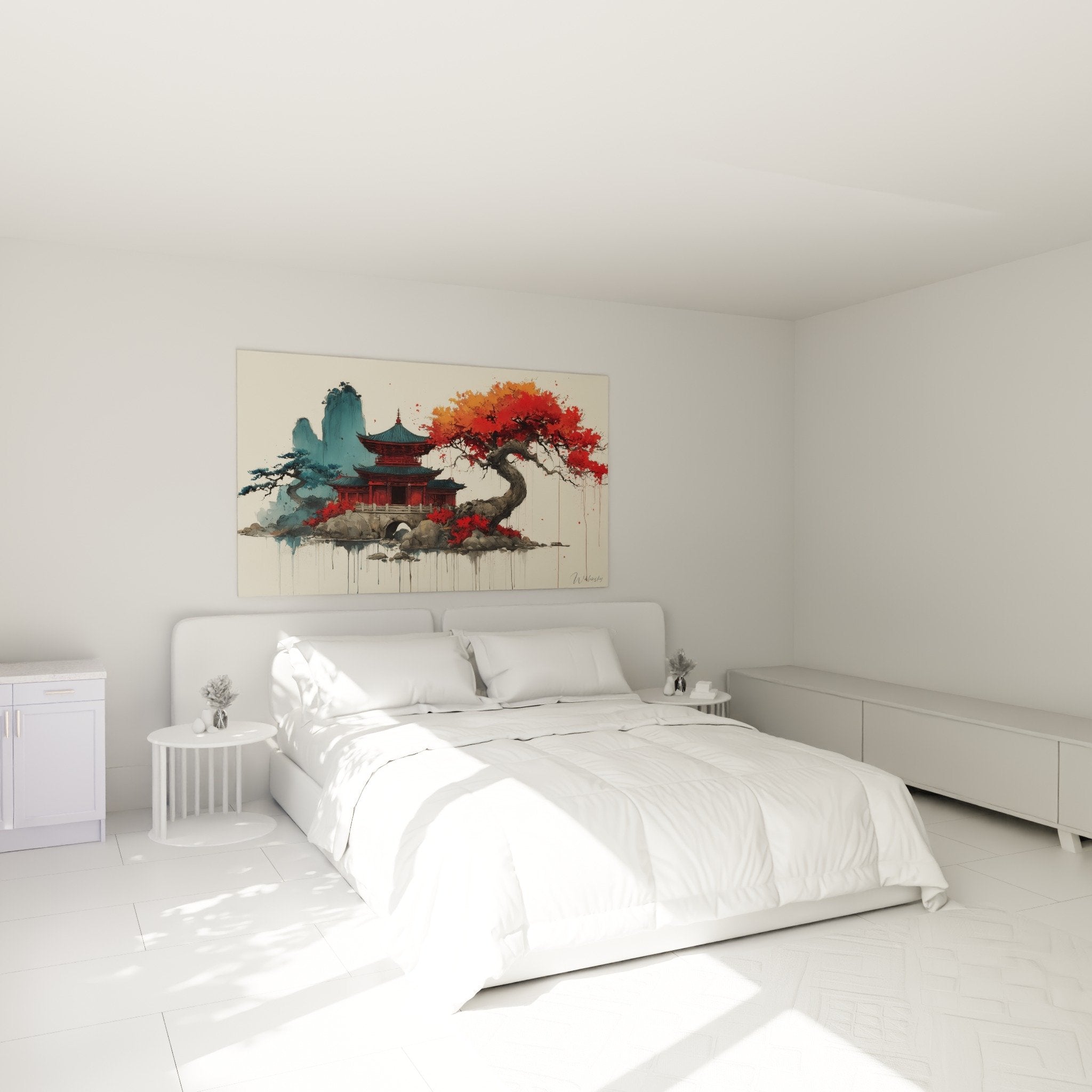
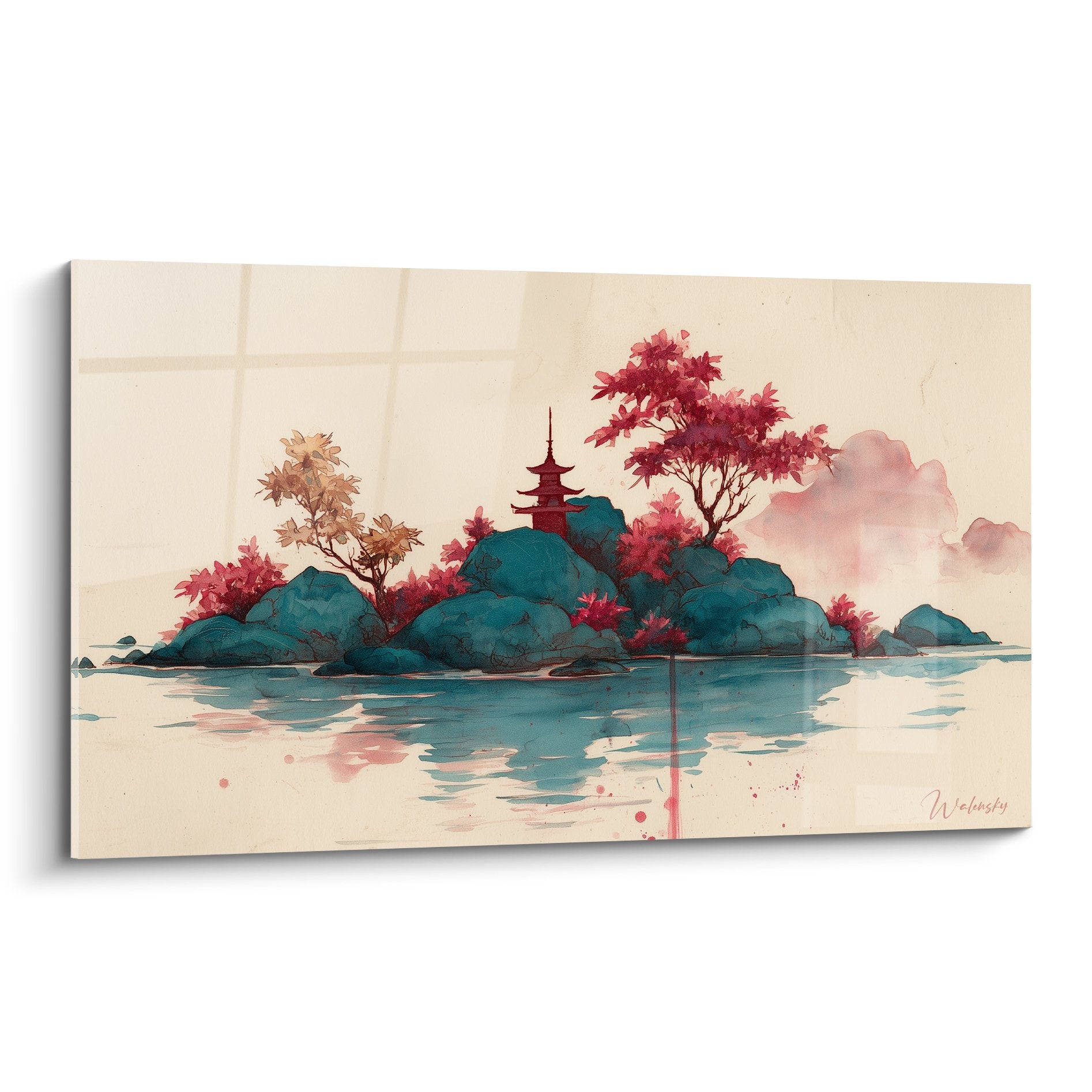
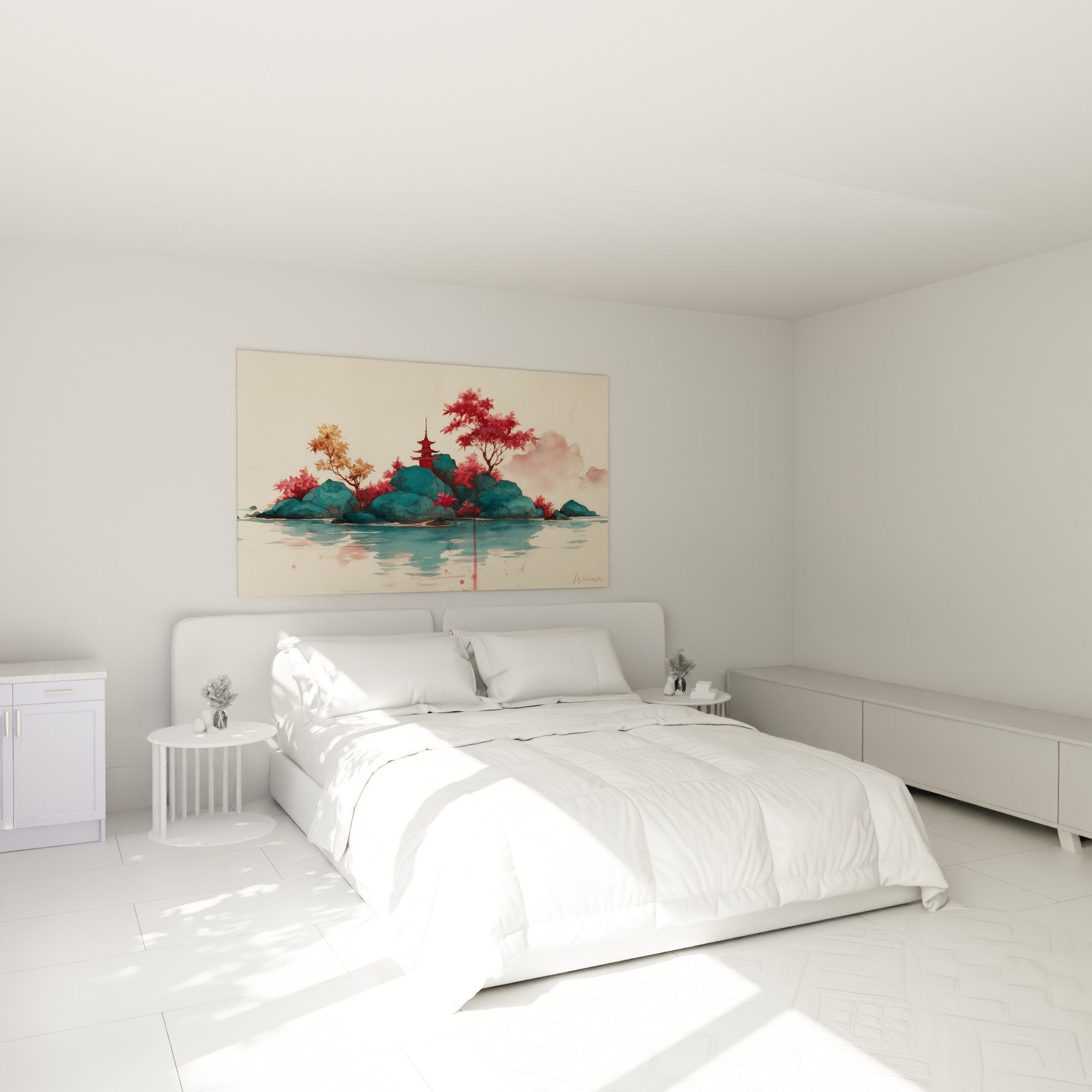
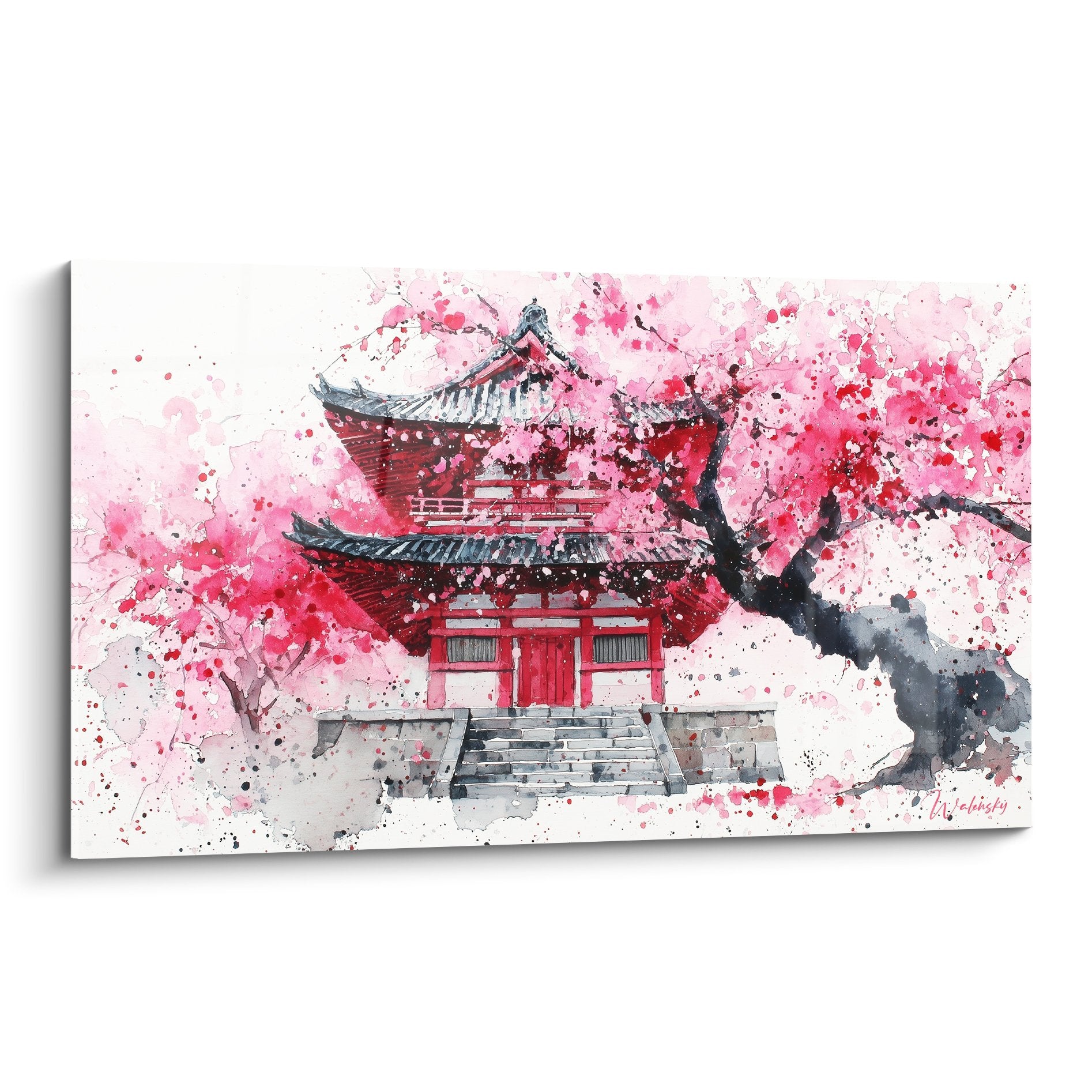
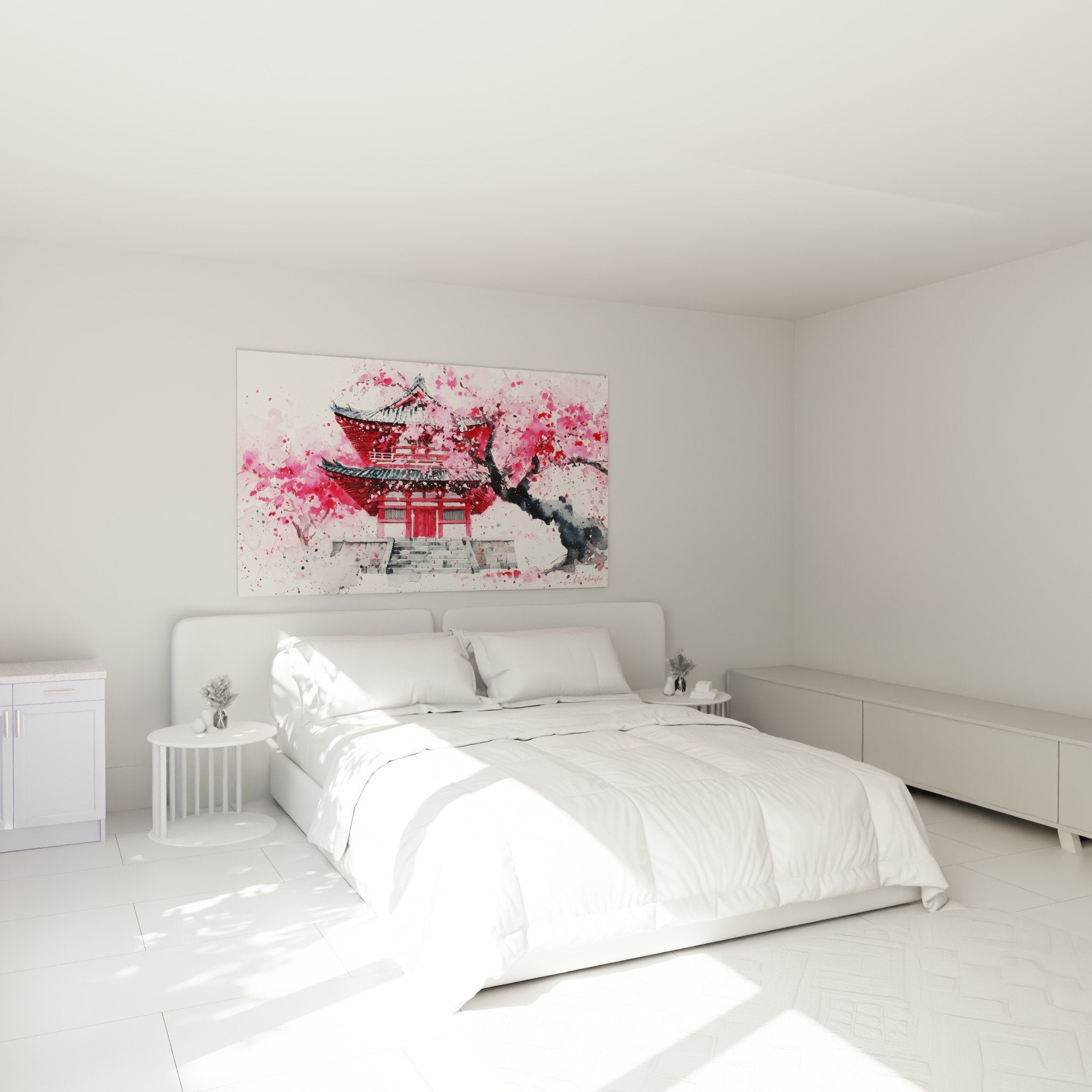
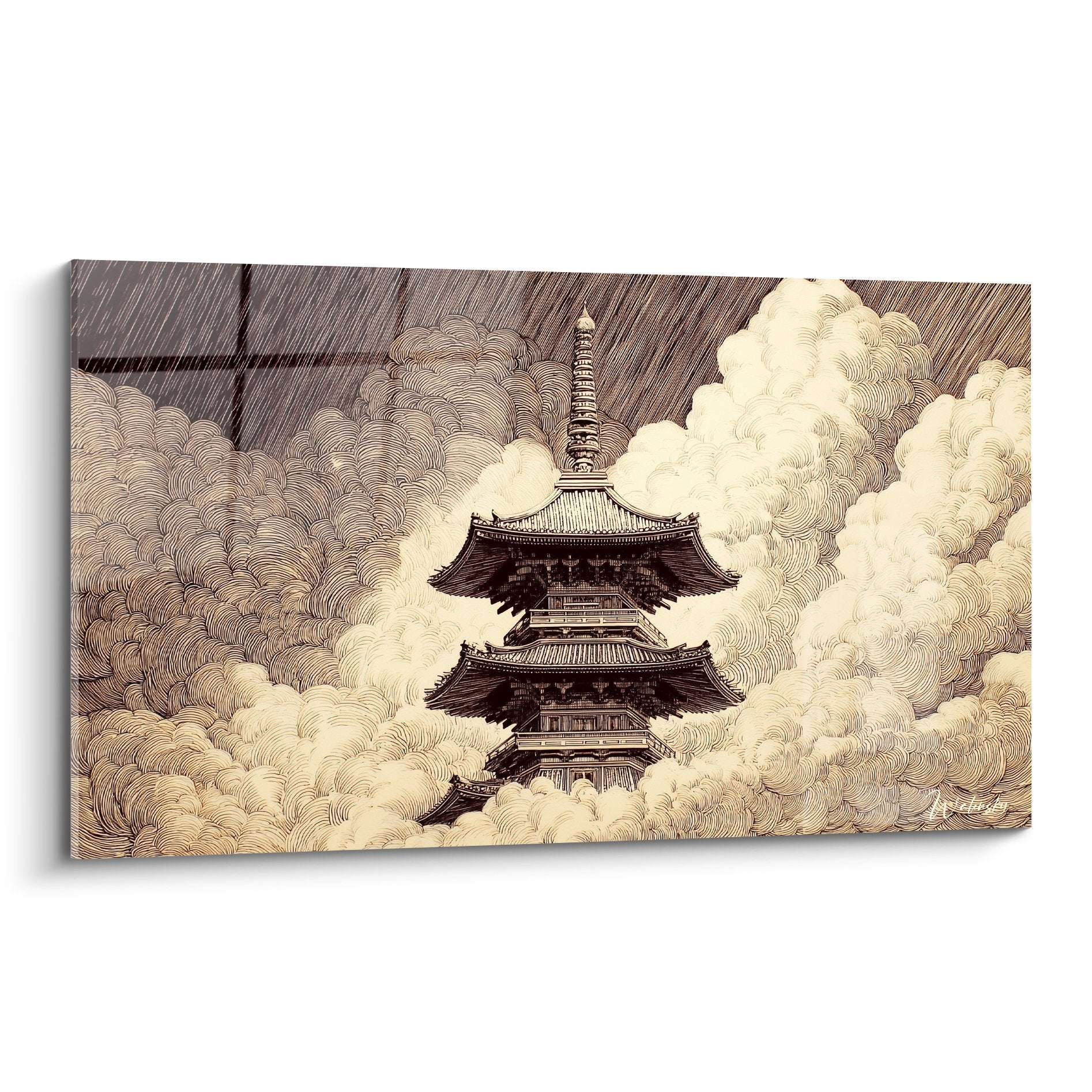
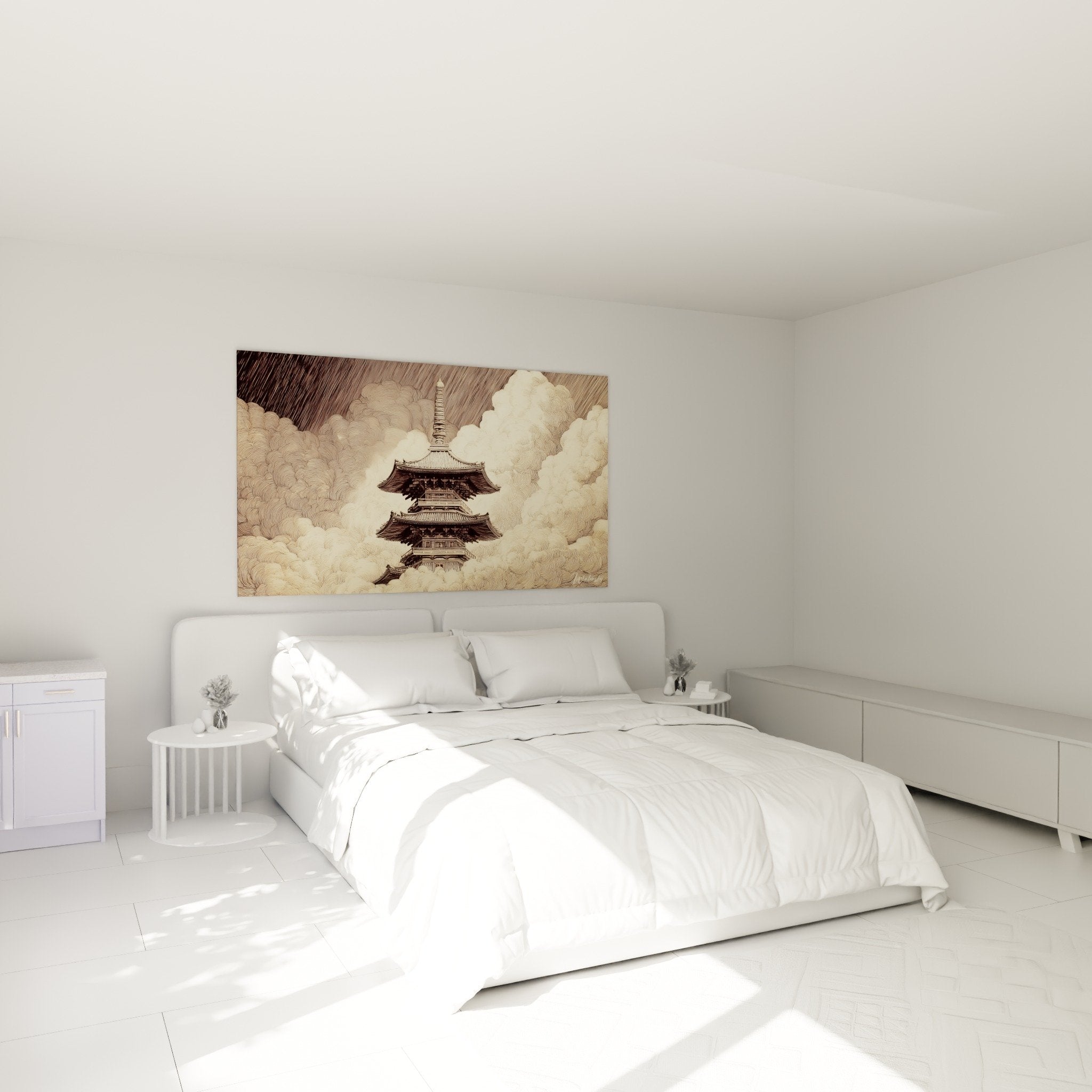
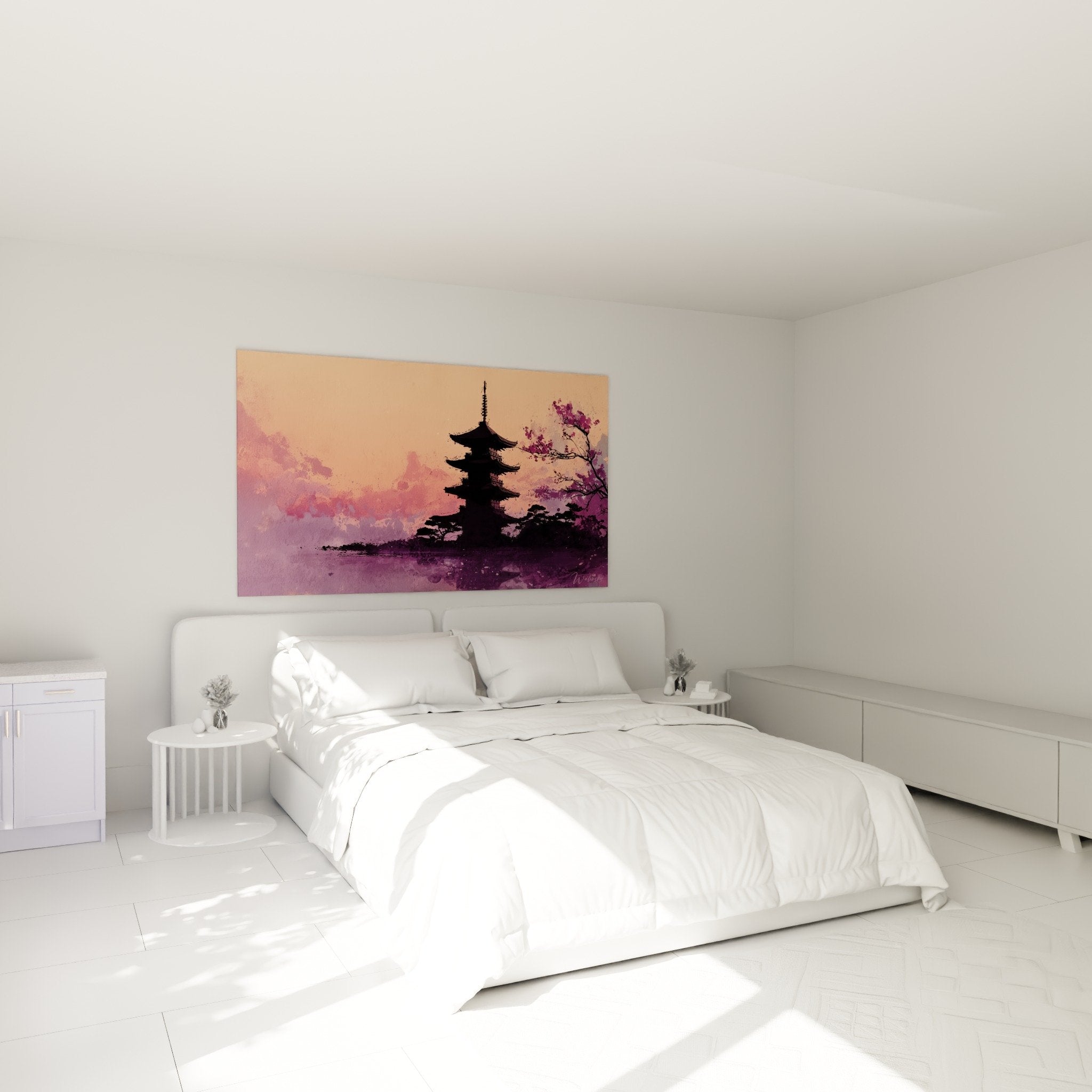
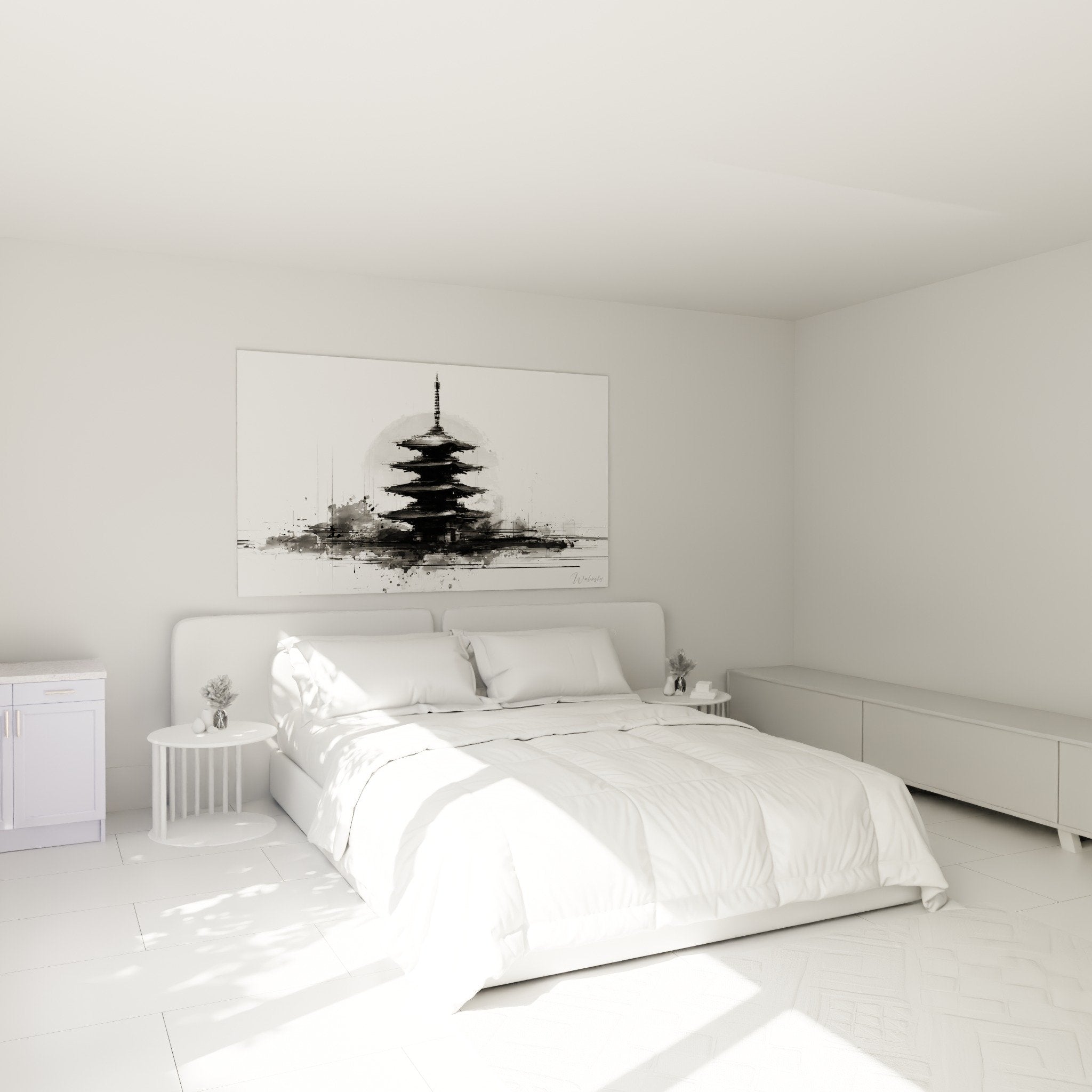
The pagoda wall art transforms your space into a visual sanctuary inspired by sacred Asian architecture. These monumental representations of tiered temples capture the spiritual essence of Buddhist and Shinto edifices that dot the landscapes of Japan, China, and Southeast Asia. Each level of the pagoda symbolizes a step toward enlightenment, creating metaphysical depth that resonates far beyond simple wall decoration. Our generous formats magnify these ancestral vertical structures, allowing you to appreciate every architectural detail, from cascading roofs to sculpted ornaments that characterize these millennia-old monuments.
Sacred Architecture at the Service of Your Interior Decoration
The symbolic levels of the pagoda in your space
A pagoda wall art reproduces the ascending verticality characteristic of these religious edifices where each floor represents a distinct spiritual level. This tiered construction, typically composed of five to thirteen levels, materializes the Buddhist initiatory path from earth to celestial illumination. In your contemporary interior, this vertical symbolism creates an upward visual dynamic that naturally elevates the gaze and transforms an ordinary wall into a meditative focal point.
The slender proportions of Japanese pagodas like Hōryū-ji or Chinese ones such as the Yellow Crane Pagoda find new expression in our monumental formats. This architectural elevation integrates particularly well in spaces with high ceilings or narrow vertical walls, optimizing areas often underutilized. The repetitive structure of superimposed roofs generates a soothing visual rhythm that balances minimalist interiors as well as more decorated settings.
What architectural elements distinguish an authentic pagoda representation?
Authentic architectural details include characteristic curved eaves (mokoshi), cantilever beams that support each level, and the ornamental central spire (sorin) adorned with superimposed metal rings. Quality pagoda wall art restores these constructive specificities that differentiate regional styles: pronounced roofs with upturned angles for Chinese pagodas, cleaner lines for Japanese versions, golden ornamentations for Burmese or Thai temples.
The integration of natural environment in pagoda representations
Pagodas are rarely represented in isolation: twisted pine trees, blooming cherry blossoms, misty mountains, or peaceful lakes compose a complete visual ecosystem. These contextual elements reinforce the philosophy of harmony between human constructions and nature that underlies Asian aesthetics. In a large-format pagoda wall art, this environmental composition creates multiple reading planes that considerably enrich daily contemplative experience.
The atmospheric conditions represented—morning mist enveloping lower levels, sunrays crossing the roofs, or moonlight bathing the structure—add a poetic dimension that evolves with your room's natural light. This interaction between the artwork and ambient lighting transforms your wall art into a living element that metamorphoses throughout the day.
Creating an Authentic Asian Atmosphere with Pagoda Wall Art
Association with traditional feng shui principles
In feng shui arrangement, the pagoda represents spiritual protection and ascending stability. Placing a pagoda wall art in the knowledge sector (northeast) of your home stimulates wisdom and learning, while its presence in the reputation zone (south) strengthens your social and professional radiance. The five traditional levels correspond to five fundamental elements (earth, water, fire, metal, wood), creating complete energetic balance.
Impressive formats amplify the energetic impact of this sacred iconography. Unlike small decorative representations, a monumental pagoda wall art powerfully anchors the vertical chi energy that circulates in your living space. This dimension makes this type of wall decoration far more than simple ornament: it becomes an energetic regulator according to millennia-old Asian geomantic principles.
How to compose a coherent decorative ensemble around a pagoda?
The Japanese wabi-sabi aesthetic that celebrates natural imperfection harmonizes perfectly with an ancient pagoda representation with patinated textures. Pair your wall art with raw natural elements: bamboo branches in a cylindrical vase, pebbles arranged on an aged wood console, or slate tray supporting a cast iron teapot. This composition creates visual continuity between the artwork and its immediate environment.
For a more contemporary approach, the contrast between traditional pagoda representation and minimalist Scandinavian furniture generates sophisticated aesthetic tension. A complementary zen wall art representing ensō circles or stone gardens can dialogue harmoniously with your pagoda, creating a meditative visual journey across multiple walls.
Traditional color palettes of Asian temples
Historic pagodas display highly symbolic colors: vermillion red for protection against evil spirits (Japanese Shinto temples), gold and saffron orange for spiritual wealth (Buddhist temples), black and white for Zen sobriety. A pagoda wall art adopting these authentic tones instantly injects these cultural meanings into your decoration.
Monochrome or sepia versions evoking ancient prints suit particularly well to pared-down interiors where subtlety takes precedence over saturation. These graphic interpretations transform the complex architecture of the pagoda into a play of shadows and lines that integrates naturally into contemporary spaces while preserving the symbolic depth of the original edifice.
The Spiritual Dimension of Pagoda Wall Art in Modern Homes
The pagoda as support for daily meditation
Beyond its decorative impact, pagoda wall art functions as a focal point for contemplative practices. The vertical structure naturally guiding the gaze upward reproduces the meditative movement of consciousness elevation. Installing this representation in your meditation space, facing your zafu cushion, creates a three-dimensional architectural mandala that facilitates concentration and grounding.
Yoga practitioners can use the perfect symmetry of the pagoda as a visual reference for working on postural alignment. Each level of the edifice corresponds metaphorically to ascending chakras, transforming your session into a visualized spiritual journey. This functional dimension makes pagoda wall art a personal development tool integrated into your permanent decoration.
Why do pagodas resonate particularly well in care spaces?
Alternative therapy offices, shiatsu studios, reiki centers, or energy practice spaces frequently adopt pagoda iconography for its scientifically documented soothing properties. The rhythmic repetition of the levels induces a slowing of heart rate and promotes the production of alpha brain waves associated with deep relaxation.
In a professional wellness context, monumental format reinforces the credibility and sacred atmosphere essential to therapeutic practices. Clients immediately perceive the spiritual positioning of the space, which facilitates their surrender to the proposed treatments. This psychological dimension transforms a simple decorative element into a genuine professional tool.
The evocation of pilgrimage and inner quest
Pagodas traditionally mark pilgrimage paths in Buddhism, materializing progressive steps toward illumination. Contemplating a pagoda representation daily symbolically reminds us that existence itself constitutes a spiritual journey. This permanent visual metaphor nourishes a philosophical perspective on daily life, transforming routines into meaningful rituals.
Representations of pagodas isolated atop misty mountains particularly evoke this dimension of solitary quest and personal elevation. For people in life transitions, career changes, or existential questioning, this imagery offers powerful symbolic support that comforts and inspires perseverance. The wall art becomes a silent companion to an inner journey.
FAQ - Frequently Asked Questions about Pagoda Wall Art
Does pagoda wall art suit all interior styles or only Asian decors?
Contrary to common misconceptions, pagoda wall art integrates remarkably well into contemporary, industrial, or even Scandinavian interiors thanks to its vertical geometric structure and architectural dimension. The contrast between Asian tradition and Western modernism creates sophisticated aesthetic tension particularly appreciated in current decoration. Monochrome or minimalist versions facilitate this cross-functional integration.
What orientation should be prioritized to maximize the spiritual impact of pagoda wall art?
According to feng shui principles, orienting your pagoda wall art toward the east captures the energy of the rising sun and encourages new beginnings, while a south orientation reinforces recognition and visibility. For meditation spaces, prioritize a wall facing where you naturally settle, transforming the pagoda into a contemplative focal point. What matters most is coherence with your daily circulation and visual pause moments.
Do snowy pagoda representations have particular significance?
Wintry scenes of snow-covered pagodas symbolize spiritual purity preserved despite adverse conditions, as well as the serene beauty of contemplative solitude. This iconography particularly prized in Japanese art (notably ukiyo-e prints) evokes resilience and the permanence of spiritual values despite life's vicissitudes. From a decorative perspective, these representations bring a soothing visual freshness particularly suited to overheated spaces or temperate climates.