


Kurilian Bobtail Cat Portrait Wall Art
The Painting Kurilian Bobtail Cat Portrait celebrates the authenticity of a feline breed from the Kuril Islands. This collection captures the intense expression and piercing gaze characteristic of this cat with a unique tail. Each portrait of Kurilian cat reveals the natural nobility and asserted temperament of this little-known breed. Ideal for lovers of artistic feline decoration, this universe transforms your space into a gallery dedicated to one of the most fascinating breeds in the feline world.
 Sleeping Cat and Dog Painting - Tenderness and Complicity - Kurilian Bobtail Cat Edition273,90 €
 Cat Portrait with Golden Eyes Painting - Hypnotic Gaze - Kurilian Bobtail Cat Edition273,90 €
 Cat Painting with Fish in Broken Mirror - Golden Reflections - Kurilian Bobtail Cat Edition228,90 €
Explore further
In Kurilian Bobtail Cat Portrait Wall Art
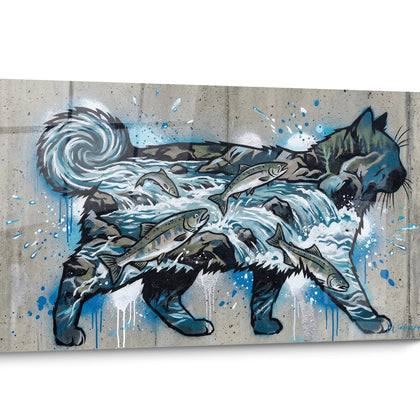
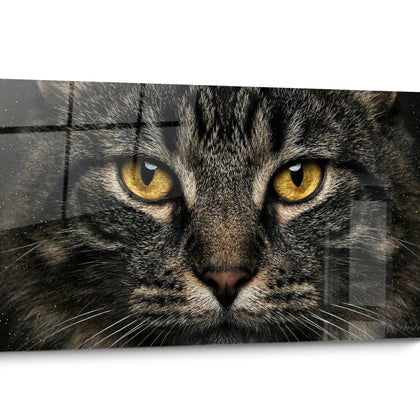
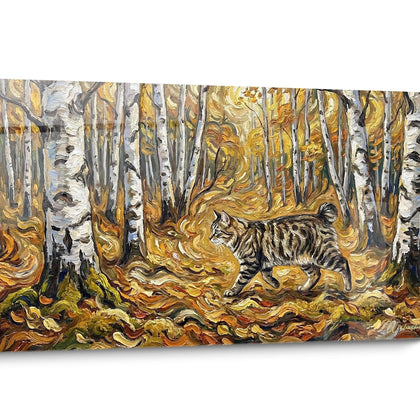
All about Kurilian Bobtail Cat Portrait Wall Art
- Kurilian Bobtail Cat Portrait Wall Art Presentation
- Feline Expressiveness in Portrait
- Distinctive Kurilian Morphology
- Portrait Decorative Integration
The Kurilian Bobtail cat portrait wall art captures the intensity of gaze and distinctive morphology of this rare Russian breed. Unlike representations in natural environments, portrait format concentrates attention on the Kurilian's characteristic features: expressive walnut-shaped eyes, short pompom tail, and compact musculature. This vertical orientation enhances the feline's noble posture while creating direct visual connection with the observer, ideal for collectors of specific breeds or Kurilian Bobtail owners wishing to celebrate their companion. Close framing reveals anatomical details specific to this island breed, offering an alternative to landscape compositions available in our complete Kurilian Bobtail cat wall art collection.
Capturing the Intensity of the Kurilian Gaze in Portrait Format
Why does portrait format better reveal the Kurilian Bobtail's personality?
The Kurilian Bobtail cat portrait wall art privileges frontal or three-quarter framing that showcases the penetrating expression characteristic of this breed originating from the Kuril Islands. Unlike horizontal compositions that disperse attention across the environment, this vertical format immediately directs the eye toward the feline's golden or green pupils, creating direct emotional interaction. The Kurilian's slightly oblique eyes, positioned at medium distance, generate psychological depth absent from flat-faced breed portraits.
The Kurilian's prominent bone structure—high cheekbones, strong chin, slightly rounded forehead—benefits from lateral lighting that sculpts facial volumes. Collectors specifically seek this anatomical definition to visually distinguish the Kurilian from other semi-long-haired breeds. Large-format portrait amplifies chromatic nuances of the coat, whether tabby, tortoiseshell, or solid, while preserving sharpness of patterns around ocular and nasal zones.
Transmission of northern rusticity through facial portraiture
Vertically-oriented wall art accentuates the Kurilian's morphological adaptations to harsh climates: medium-sized ears with rounded tips resistant to frostbite, dense double coat with abundant undercoat visible even in two-dimensional representation, thick whiskers indicating genetic robustness. These anatomical details, lost in wide shots, become focal points of vertical composition designed for contemporary living spaces.
The absence of a long tail—absolute breed signature—finds particular aesthetic valorization in portrait format. Rather than requiring wide framing to show the pompom tail, portrait can subtly integrate this attribute in the background or leverage vertical space for a seated posture where the tail pompom becomes a composition element balancing upper visual mass. This approach particularly suits buyers seeking authentic breed representation without documentary effect.
Which pose best translates the Kurilian's balanced temperament?
Effective Kurilian Bobtail portraits privilege seated or semi-upright postures reflecting the breed's calm yet attentive character. Unlike hyperactive breeds requiring dynamic compositions, the Kurilian fully expresses itself in vigilant stillness—ears oriented forward, compact body slightly leaning, fixed yet non-aggressive gaze. This static gesture translates ideally into portrait format for libraries, home offices, or guest rooms, where feline presence provides visual companionship without visual agitation.
Specimens showing a moderately alert Kurilian—slightly turned head, one front paw raised in anticipation—capture the reactive intelligence of this semi-wild domesticated breed. For professional spaces seeking refined aesthetics, this intermediate gesture between rest and action projects mastery and strategic observation. Our golden Kurilian Bobtail cat wall art collection explores these posture variations with specific chromatic palettes.
Distinctive Anatomy of the Kurilian in Vertical Representation
How does portrait format emphasize the Kurilian's compact musculature?
The Kurilian Bobtail cat portrait wall art exploits vertical orientation to accentuate the stocky construction characteristic of this island breed. Unlike slender felines requiring horizontal framing, the Kurilian presents near-square proportions—shoulder height equivalent to body length—perfectly adapted to vertical composition. This compact yet powerful morphology reads immediately in close-up portrait, where neck thickness, chest width, and robust paws naturally occupy frame space.
Knowledgeable buyers specifically seek representations emphasizing developed dorsal musculature and muscular thighs—genetic heritage of island ancestors climbing coastal cliffs and trees. A half-body portrait reveals these anatomical volumes better than an overall view, creating immediate visual impact in narrow entryways where horizontal formats would be disproportionate. Large artwork size amplifies the feline's physical presence without requiring excessive viewing distance.
Valorization of the pompom tail in portrait composition
The Kurilian's defining attribute—its short tail of 2 to 10 vertebrae forming a flexible pompom—finds organic integration in well-designed vertical portraits. Rather than marginalizing this element at frame edge as in horizontal compositions, portrait allows positioning the Kurilian seated three-quarter view, tail curved laterally forming visual counterpoint to the gaze. This arrangement creates triangular compositional balance—head, shoulders, tail—guiding visual journey in circular manner.
Morphological tail variations (spiral, hook, spherical pompom) constitute individual identification markers appreciated by owners commissioning personalized works. Portrait format authorizes sufficient enlargement to distinguish these anatomical particularities, transforming a genetic trait into unique visual signature. For domestic spaces valuing originality, this focus on a rare genetic characteristic offers conversation point distinct from conventional feline representations available in our Kurilian Bobtail cat forest environment wall art range.
Can coat variations be distinguished in large-format portrait?
The Kurilian Bobtail cat portrait wall art in large dimensions allows appreciation of subtle chromatic nuances of recognized coats: classic tabby with frontal M markings, tortoiseshell tortie with red-black blends, smokes revealing silver undercoat upon movement. Coat density semi-long—particularly full around the neck forming natural ruff—benefits from close framing to reveal three-dimensional texture, accentuated by contemporary rendering techniques creating tactile depth effects.
Breed-specific collectors privilege portraits clearly showing distinctive facial patterns: tabular cheek stripes, peri-ocular circling accentuating expression, dark dorsal line of mackerel tabbies. These details, essential for precise breed identification, require sufficient resolution and size to remain legible at normal viewing distance, justifying large format acquisition for specialized veterinary offices, feline breeders, or collector salons.
Placement Strategies for Vertical Feline Portraits
Which domestic spaces maximize the value of Kurilian vertical portrait?
The Kurilian Bobtail cat portrait wall art finds maximum relevance in vertical circulation spaces: stairwells, narrow wall panels between windows, wall sections flanking fireplaces or built-in bookshelves. Unlike horizontal landscapes requiring uncluttered wall spans, portrait format inserts into architectural interstices often underexploited, creating unexpected focal points that enliven domestic visual circulation.
Bedrooms particularly benefit from feline portraits positioned facing the bed at eye height when seated—configuration reproducing natural mutual observation between human and cat. The Kurilian's direct gaze establishes calming presence without excessive visual activity of action scenes, promoting ambiance conducive to rest. Natural coat tones of Kurilians (browns, grays, reds) harmonize with contemporary neutral palettes without requiring complete chromatic overhaul.
Decorative associations specific to rare breed portraits
Kurilian Bobtail owners frequently integrate their companion's portrait into thematic Russian or Nordic wall compositions: antique maps of the Kuril Islands, Kamchatka volcanic landscape photography, Ainu cultural artifacts evoking the breed's geographic origin. This narrative contextualization transforms animal artwork into element of larger visual narrative about island biodiversity and genetic preservation, particularly relevant for eco-responsible interiors valuing natural breed conservation.
Professional spaces—specialized veterinary clinics, certified catteries, premium feline accessory boutiques—use breed-specific portraits as quality visual signage. Large-format Kurilian Bobtail immediately signals expertise in rare breeds, differentiating from generalist establishments displaying common domestic felines. This positioning strategy through iconography proves particularly effective in saturated urban markets.
How do portraits interact with architectural lighting?
The Kurilian Bobtail cat portrait wall art reacts differently to light sources according to vertical positioning. Placement facing an east-facing window captures raking morning light that sculpts the represented feline's facial reliefs, creating daily intensity variations mimicking observation of a real cat upon waking. Owners report this natural light dynamic maintains long-term visual interest, preventing perceptual saturation of constantly-lit static images.
Directed lighting systems—orientable rail spotlights, lateral wall sconces—allow modulating portrait emotional ambiance. Zenith lighting emphasizes gaze and upper skull, reinforcing vigilant expression; low lateral lighting creates dramatic shadows under chin and cheekbones, highlighting robust bone structure. This scénographic flexibility justifies investment in substantial formats for modular spaces, offering renewed visual experiences according to chosen lighting configurations, as illustrated by our mountain environment Kurilian Bobtail cat wall art compositions.
Is Kurilian Bobtail cat portrait suitable for small spaces?
Paradoxically, large vertical formats function effectively in space-restricted interiors with low ceilings, as they exploit underutilized vertical dimension rather than encumbering horizontal wall surfaces already occupied by furniture and windows. An imposing portrait in a studio creates perceptual enlargement effect by directing gaze upward, counterbalancing horizontal spatial compression.
What optimal viewing distance appreciates large-format Kurilian Bobtail cat portrait?
Kurilian Bobtail portrait compositions benefit from dual readability: immediate visual impact at distance (10-13 feet) where silhouette and gaze distinguish clearly, then progressive detail revelation of anatomical features and coat texture at proximity (3-6 feet). This perceptual stratification suits multifunctional rooms where observation distances vary according to activities.
Do Kurilian Bobtail portraits integrate into contemporary minimalist décor?
The Kurilian's refined morphology—compact lines, near-geometric form, absence of long tail creating superfluous curves—naturally harmonizes with minimalist aesthetics privileging essential forms and restricted palettes. Tight portrait framing eliminates decorative environmental context, reducing artwork to formal study compatible with spare interiors valorizing animal presence without narrative overload.


