


Himalayan Cat Baroque Wall Art
The Painting cat Himalayan Baroque sublimates feline aristocracy in a sumptuous decorative universe. This exclusive collection celebrates the grace of the cat Himalayan through Baroque compositions of exceptional visual richness. Each work combines the nobility of this blue-eyed feline with the ornamental exuberance of the Baroque style. Gold lace, baroque cat wall decoration and royal atmospheres combine to create majestic pieces. Perfect for enhancing a refined interior, this Baroque cat Himalayan art brings character and sophistication.
 Himalayan Cat on Victorian Sofa Wall Art - Aristocratic Elegance - Himalayan Cat Edition242,90 €
 Himalayan Cat Painting with Blue Eyes - Baroque Majesty - Himalayan Cat Edition228,90 €
 Himalayan Cat Painting Royal on Baroque Chair - Feline Majesty - Himalayan Cat Edition228,90 €
Explore further
In Himalayan Cat Baroque Wall Art
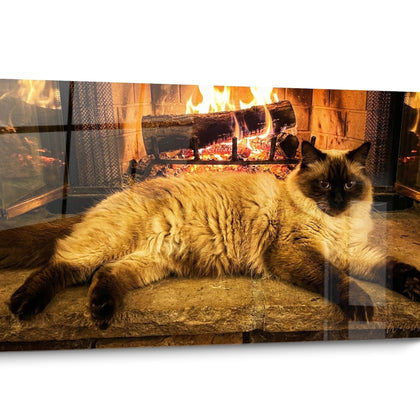
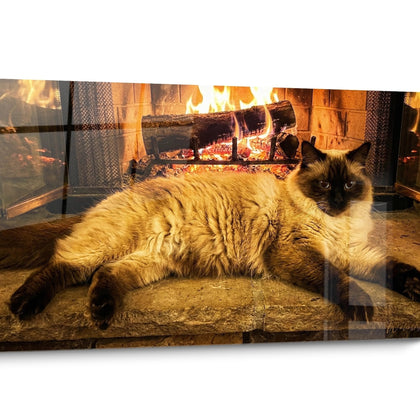
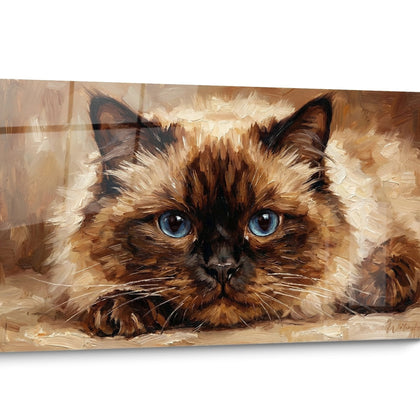
All about Himalayan Cat Baroque Wall Art
- Himalayan Baroque Cat Wall Art Presentation
- Baroque Feline Aesthetics
- Aristocratic Decorative Integration
- Visual Impact & Prestige
The Himalayan Baroque cat wall art represents a bold fusion between the feline elegance of the Himalayan breed and the ornamental sumptuousness of Baroque style. This artwork transforms your living space into an aristocratic gallery where the characteristic azure gaze of the Himalayan merges with the gilding and scrollwork typical of the 17th century. Unlike classical representations available in our Himalayan cat wall art collection, this Baroque interpretation celebrates the natural majesty of the feline through the prism of European historical opulence. Each detail evokes Parisian salons where nobility displayed their animal portraits as symbols of refinement. The generous format of these mural creations immediately captures attention in contemporary residential spaces seeking a heritage dimension.
Baroque Opulence in Service of Himalayan Grace
The Himalayan Baroque cat wall art transcends simple animal representation to become a decorative manifesto where each visual element dialogues with the heritage of great Flemish masters. The characteristic silky coat of the Himalayan, with its distinctive color points on the face, ears and paws, is magnified by golden ornaments evoking Louis XIV period frames.
How does Baroque style enhance the distinctive traits of the Himalayan?
Artisans specializing in this movement integrate ornamental cartouches, scrollwork and volutes around the feline subject, creating a theatrical mise-en-scène reminiscent of court portraits. The contrast between the immaculate coat of the Himalayan and metallic accents generates visual depth absent from minimalist compositions. This approach aligns with the Golden Himalayan Cat Wall Art collection while pushing ornamental complexity toward more dramatic territories.
The aristocratic symbolism of Baroque feline compositions
In 17th-century bourgeois interiors, owning an animal portrait testified to elevated social status. The Himalayan Baroque cat wall art reactivates this tradition by positioning the feline as a subject worthy of the grand formats once reserved for sovereigns. The chiaroscuro light play, typical of Baroque, sculpts the animal's volume and creates an almost three-dimensional presence.
Signature decorative elements of Baroque feline art
- Golden arabesques naturally framing the cat's silhouette
- Textured backgrounds evoking period brocades and velvets
- Dramatic lighting reminiscent of Caravaggio's paintings
- Integration of stylized heraldic motifs reinforcing the subject's nobility
This aesthetic suits residential spaces particularly well when seeking to balance modern architecture with heritage references. Collectors appreciating eclectic interiors find in these works a bridge between feline passion and fine arts culture.
Creating a Palatial Ambiance with Himalayan Baroque Cat Wall Art
Integrating a Himalayan Baroque cat wall art piece into a contemporary environment requires understanding the spatial dynamics specific to large ornamental compositions. Unlike streamlined artworks, these creations dialogue with existing architecture to generate a private gallery effect instantly transforming a room's volumetric perception.
Which residential spaces benefit most from this aesthetic?
Living rooms with significant ceiling height constitute the ideal setting for deploying the dramatic verticality of these compositions. Personal libraries and executive offices also benefit from the intellectual dimension associated with Baroque, historically linked to cultural patronage. In spacious entry halls, the imposing format creates a memorable impact from the moment one crosses the threshold.
The color palette of Himalayan Baroque cat wall art – dominated by creams, sépias and aged golds – harmonizes naturally with dark woodwork, veined marble and luxurious textiles such as crushed velvet or damask silk. This material synergy avoids the pitfall of pastiche by anchoring the artwork in coherent dialogue with its furnishing environment.
Lighting strategies to magnify Baroque details
The virtual reliefs and luminous contrasts inherent to Baroque style require strategic lighting different from standard approaches. Directional spots with warm temperature (2700-3000K) reveal golden nuances without creating harsh reflections, while lateral indirect lighting accentuates the depth of visually sculpted ornaments.
- Positioning at 30-45° angle relative to the surface to reveal textures
- Intensity variation allowing adaptation of ambiance according to time of day
- Avoidance of cool sources that distort characteristic warm tones
- Installation of dimmers to create intimate evening atmospheres
Can one blend Baroque with contemporary design?
The seemingly paradoxical alliance between Himalayan Baroque cat wall art exuberance and minimalist contemporary furnishings generates precisely the creative tension sought by avant-garde interior architects. This neo-eclectic approach valorizes each element through contrast, avoiding the monotony of mono-stylistic interiors. The pure lines of a Bauhaus sofa find a fascinating counterpoint in the organic volutes of the feline artwork, creating a temporal dialogue across centuries.
The Evocative Power of Himalayan Baroque Cat Wall Art in Premium Decoration
Beyond its decorative function, the Himalayan Baroque cat wall art acts as a cultural marker signaling membership in a circle of enlightened enthusiasts mastering the historical codes of visual arts. This symbolic dimension considerably amplifies its perceived value compared to conventional animal representations, explaining its growing adoption in prestigious residences.
The Himalayan as a Baroque subject: why this specific breed?
The particular morphology of the Himalayan – flattened face, expressive round eyes, contrasting bicolor coat – offers visual structure naturally suited to Baroque treatment. Its accentuated features support the addition of ornaments without disappearing into the composition, unlike breeds with more uniform profiles. The calm and composed temperament of this breed transpires in the majestic poses chosen by creators, reinforcing the impression of aristocratic dignity.
This specificity clearly distinguishes these works from interpretations available in the Realistic Himalayan Cat Wall Art collection, where photographic fidelity takes precedence over historical artistic interpretation. Baroque allows expressive stylization while maintaining the recognizable identity of the breed.
Psychological impact of large ornamental compositions
Environmental psychology research demonstrates that imposing artworks with high visual density stimulate the brain differently than minimalist compositions. The Himalayan Baroque cat wall art, through its ornamental richness, encourages prolonged visual exploration where the eye progressively discovers new details, generating renewed cognitive engagement with each observation.
- "Slow looking" effect favoring meditative contemplation
- Activation of brain areas associated with complex aesthetic pleasure
- Creation of a dominant focal point structuring space mentally
- Triggering of conversations and social interactions around the artwork
How do these artworks valorize residential heritage?
In the premium residential market, personalized decoration now constitutes a differentiating argument during property transactions. An harmoniously composed interior including masterpiece elements like Himalayan Baroque cat wall art projects an image of sophistication increasing the perceived value of the property. Real estate photographers systematically privilege these distinctive elements during promotional shoots.
Frequently Asked Questions about Himalayan Baroque Cat Wall Art
What dimension should one prioritize for Himalayan Baroque cat wall art in a standard living room?
Formats of 120x80 cm to 150x100 cm offer the presence necessary for Baroque details to remain perceptible without visually saturating a 25-35m² space. The empirical rule consists of occupying approximately 60-75% of the width of the supporting furniture (console, sideboard) to create balanced visual anchoring.
Does Baroque style suit minimalist Scandinavian interiors?
This audacious association works precisely through its unexpected character: the Himalayan Baroque cat wall art becomes the unique statement piece punctuating Nordic neutrality, bringing warmth and historical depth without requiring complete transformation of existing décor. The "Baroque accent" approach is currently gaining popularity among Nordic designers.
How does one maintain large-format Himalayan Baroque cat wall art?
Monthly dusting with antistatic microfiber generally suffices. For textured surfaces, a soft duster prevents accumulation in visual reliefs. Avoid aggressive chemicals and maintain stable humidity levels (45-55%) to preserve the chromatic saturation of characteristic golden pigments over time.


