


Geisha Wall Art
Discover our Traditional Geisha Wall Art collection, a series of captivating artworks that celebrate the grace and elegance of Japanese Geishas. Each piece in this collection captures the essence of ancient Japan, with exquisite details that highlight the subtleties of traditional Japanese art. Perfect for creating a refined and serene atmosphere, these acrylic glass wall paintings add a touch of mystery and timeless beauty to your space. Immerse yourself in a world where Geisha art meets modernity to elevate your interior décor.
 Painting Woman in Gold and Amber Kimono - Moment of Grace - Geisha Edition273,90 €
 Geisha Painting in Blue Kimono Holding a Fan - Silent Elegance - Geisha Edition273,90 €
 Painting Kimono Pink and Coral with Hair Flower - Delicate Adorned Hairdo - Geisha Edition273,90 €
 Golden Geisha Painting with Black Kimono and Fan - Ceremonial Silence - Geisha Edition273,90 €
 Painting Fan Black and Gold with Swirling Volutes - Ribbons Suspended in the Wind - Geisha Edition242,90 €
 Geisha Painting in Gold Kimono on Amber Staircase - Golden Ascent - Geisha Edition273,90 €
 Geisha Leaning on a Balcony with Blue Night - Nocturnal Dream - Geisha Edition273,90 €
 Kimono Painting Ivory and Brown on Bamboo Path - Sleeve Raised by the Wind - Geisha Edition273,90 €
 Painting Pink and Grey Lantern under Rain - Reflection on Wet Ground - Geisha Edition273,90 €
 Geisha Painting in Black and Gold Before a Temple - Moment of Contemplation - Geisha Edition273,90 €
 Painting Woman in Pink and Fuchsia Kimono - Lunar Clarity - Geisha Edition273,90 €
 Golden Geisha Painting with Fan and Bells - Breath of Twilight - Geisha Edition273,90 €
 White Pine Painting Touched by a Beige and Turquoise Hand - Ford Stones - Geisha Edition273,90 €
 Wall Art Dancer in Blue and Orange Kimono - Nocturnal Whirlwind - Geisha Edition273,90 €
 Geisha Praying Under a Red Torii - Evening Prayer - Geisha Edition273,90 €
 Geisha Umbrella Blue and Golden Garden Painting - Silent Promenade - Geisha Edition273,90 €
 Geisha Ochre and Gold Painting on Staircase - Suspended Light - Geisha Edition228,90 €
 Geisha Leaning on a Blue Night Balcony Painting - Nocturnal Reverie - Geisha Edition228,90 €
 Geisha Painting in Gold Kimono in Bamboo Grove - Silent Passage - Geisha Edition228,90 €
 Geisha in Pink Kimono Lighting a Lantern Painting - Flame Under the Rain - Geisha Edition228,90 €
 Geisha Painting with Blue and Ivory Kimono Fan - Suspended Moment - Geisha Edition228,90 €
 Geisha Painting in Black and Gold with Fan - Silent Grace - Geisha Edition228,90 €
 Geisha Praying Before a Red Torii Painting - Prayer at the Shrine - Geisha Edition228,90 €
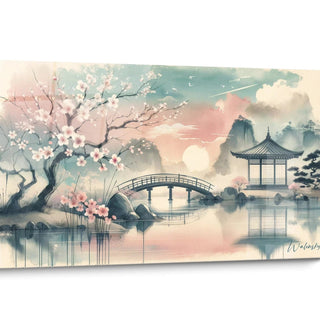
 Spring Elegance Painting - Chinese Asia Edition273,90 €
In the same family
Also explore the theme Asia


All about Geisha Wall Art
- Geisha Wall Art Presentation
- Geisha paintings Japanese symbolism
- Geisha wall art zen decoration
- Geisha paintings artistic modernity
Geisha wall art represents far more than simple wall decoration—it embodies an entire Japanese cultural and artistic universe that instantly transforms a room's atmosphere. These refined artworks capture the very essence of Japanese tradition through the representation of these emblematic artists known as geishas, whose timeless elegance and mystery continue to fascinate the Western world.
True portals to the refined world of traditional Japan, these inspiring artistic compositions bring profound cultural dimension to your interior. Each geisha painting tells a silent story through graceful postures, elaborate kimonos, and subtle expressions that characterize these legendary Japanese artists.
Geisha wall art distinguishes itself through its ability to create a sophisticated focal point in your living space while introducing elements of authentic Japanese culture. Whether represented in traditional style or contemporary interpretation, these paintings bring discreet elegance and incomparable cultural depth to any interior seeking refined exotic appeal.
Cultural Symbolism of Geisha Wall Art in Japanese Art
Geisha wall art represents far more than simple wall decoration—it carries a rich Japanese symbolic heritage that transcends its aesthetic value. In Japanese tradition, each element composing a geisha representation is charged with profound meanings that tell the story of a fascinating thousand-year-old culture.
What hidden meanings are found in traditional geisha paintings?
The umbrella (wagasa) frequently represented in geisha wall art symbolizes protection and refined isolation from the outside world. Floral patterns adorning kimonos are never chosen randomly—cherry blossoms (sakura) evoke the ephemeral beauty of existence, while chrysanthemums represent longevity and nobility. In authentic Japanese art, these visual codes create silent narration that only connoisseurs can fully appreciate.
The graceful postures adopted by geishas in these artistic representations also communicate an entire codified body language. The subtle inclination of the neck, considered particularly captivating in traditional Japanese aesthetics, evokes modesty and grace. The lowered or averted gaze in many geisha paintings is not a sign of submission, but rather an expression of refinement and emotional restraint highly valued in Japanese culture.
The evolution of geisha painting symbolism through the ages
The Edo period (1603-1868) witnessed the height of traditional geisha representation in Japanese art, with particular emphasis on the richness of detail and scrupulous respect of dress codes. Geisha paintings from this period serve today as precious historical testimonies of feudal Japanese artistic traditions, offering contemporary collectors an authentic window into a vanished world.
The Meiji era (1868-1912) marked a decisive turning point in the artistic representation of geishas, with the introduction of Western influences that subtly transformed their symbolism. Geisha wall art created during this transitional period reflects the cultural tension between tradition and modernity that characterized Japan of the time. These works constitute today particularly sought-after pieces for their historical value and testimony of a culture in full metamorphosis.
- Fans (sensu) represented in the hands of geishas symbolize non-verbal communication and the art of suggestion
- Hand positioning in these paintings follows precise codes derived from traditional Japanese dance
- Crane motifs on kimonos evoke longevity and good fortune
- Seasons represented in the background add symbolic temporal dimension
Interpretation of chromatic elements in geisha paintings
In traditional Japanese art, the chromatic palette used to represent geishas is never left to chance. Bright red symbolizes passion and vitality, but also protection against malevolent spirits. The white characteristic makeup (oshiroi) represents purity and elegance, while creating a mask that transcends the geisha's individuality to make her a timeless cultural symbol.
Indigo and deep blue tones often present in geisha wall art hold particular significance in Japanese symbolism, representing spiritual depth and inner tranquility. These hues create a meditative atmosphere that transforms these works into true supports for contemplation, far beyond their immediate decorative value. A geisha painting dominated by these tonalities brings subtle spiritual dimension to your interior.
The juxtaposition of black and red in many geisha paintings creates striking contrast that symbolizes the balance of opposing forces—a fundamental concept in Japanese philosophy. This visual duality subtly recalls the principles of yin and yang adapted to Japanese aesthetics, making these paintings not only decorative objects, but also supports for philosophical meditation.
Integration of Geisha Wall Art in Contemporary Zen Decoration
Geisha paintings constitute ideal masterpiece elements for creating an authentic zen space, bringing profound Japanese cultural dimension to your interior. Unlike generic Japanesque decorations, these artworks transmit the very essence of zen philosophy through the meditative posture and serene presence of the represented geishas.
Strategic positioning of geisha wall art in the meditative space
The placement of a geisha painting in a space dedicated to meditation follows specific principles derived from Japanese feng shui. Ideally, these artworks should be positioned facing east, a direction symbolizing renewal and illumination in Japanese tradition. This specific orientation creates energetic harmony conducive to contemplation and reflection, transforming your geisha painting into a true spiritual anchor.
The hanging height holds particular importance for geisha wall art integrated in a zen space. Unlike Western conventions, Japanese tradition favors slightly lower positioning, corresponding to eye level of a person seated on a zabuton (traditional meditation cushion). This specific arrangement fosters contemplative connection with the artwork during meditation sessions, creating silent dialogue between the observer and the spiritual essence of the represented geisha.
How to create energetic balance around a geisha painting?
Arranging a zen space around a geisha painting requires particular attention to complementary elements. Ikebana (Japanese floral art) constitutes ideal accompaniment, with a minimalist composition of cherry branches or orchids strategically placed near the painting. This juxtaposition creates visual dialogue between fixed pictorial art and the living, ephemeral beauty of floral arrangements.
Geisha wall art finds its perfect expression in a room where "ki" (vital energy) circulates freely. Avoid accumulation of competing decorative objects that would create visual saturation contrary to zen spirit. A geisha painting should breathe in its space, surrounded by intentional voids that amplify its presence. This minimalist approach, directly inspired by "ma" (negative space) principles in Japanese aesthetics, strengthens the artwork's meditative impact.
- Accompany your geisha painting with a pine bonsai to symbolize longevity and resilience
- Favor indirect lighting reproducing the soft luminosity of traditional lanterns
- Integrate a discreet water element such as a Suikinkutsu fountain to create soothing sonic ambiance
- Use authentic tatami mats to define the contemplation space facing the painting
Seasonal transformation of geisha wall art environments
Japanese tradition places particular importance on seasonal change, a concept you can integrate into enhancing your geisha paintings. In spring, surround your artwork with elements evoking cherry blossom blooming—a few delicate branches or dried petals in a simple container. This practice, inspired by the "shiki" (seasonal awareness) concept, creates dynamic decorative experience that constantly renews your relationship with your geisha painting.
In winter, Japanese tradition suggests accompanying geisha representations with elements evoking snow and inner contemplation. A minimalist arrangement of bare branches or a few carefully arranged white stones suffice to create this seasonal resonance. This approach transforms your geisha painting into a focal point of living decoration that naturally evolves with seasonal cycles, reflecting Japanese philosophy of impermanence (mujō).
Autumn offers unique opportunity to enrich the visual experience of your geisha painting by introducing elements evoking "momijigari" (contemplation of autumn leaves). A few Japanese maple leaves carefully arranged on a black lacquered tray near the painting create seasonal visual dialogue that amplifies the artwork's contemplative dimension. This traditional practice transforms your geisha painting into a catalyst for authentically Japanese aesthetic experience.
Contemporary Reinterpretation of Geisha Wall Art in Modern Art
Geisha wall art is currently experiencing remarkable artistic renaissance, transcending its traditional status to become a vector for contemporary expression. Avant-garde artists reinterpret these emblematic figures through innovative mixed techniques, fusing traditional Japanese elements and modern artistic expressions to create works that establish fascinating dialogue between cultural heritage and contemporary sensibility.
How are contemporary artists transforming geisha iconography?
The emerging neo-ukiyo-e movement profoundly renews geisha wall art aesthetics by incorporating urban graphic elements and advanced digital techniques. These bold creations preserve the spiritual and symbolic essence of geishas while transporting them into resolutely current artistic dimension. This fusion creates pieces particularly sought by collectors who appreciate dialogue between authentic Japanese tradition and contemporary expression.
Digital layering techniques allow contemporary artists to create multidimensional geisha paintings where the traditional image is fragmented and reassembled through different visual layers. This artistic deconstruction reflects modern fragmented perception of tradition, while creating visually striking artworks that immediately captivate attention. These innovative geisha paintings become dynamic focal points in contemporary interiors, constantly stimulating new interpretations.
- Large-format aluminum prints offer striking contemporary dimension to geisha representations
- Glitch art technique introduces visual perturbation symbolizing tension between tradition and modernity
- Incorporation of street art elements in geisha paintings creates striking cultural contrast
- Composite photography allows juxtaposing authentic modern geishas and contemporary urban contexts
The evolution of materials in modern geisha painting creation
Material innovation transforms the contemporary geisha wall art experience with integration of reflective surfaces that modify artwork perception according to viewing angle and ambient lighting. This interactive dimension adds conceptual depth to representations, symbolizing the elusive and changing nature of geisha tradition in the modern world. These evolving paintings create visual experience that constantly renews throughout the day.
Printing techniques on tempered glass and high-definition acrylic have revolutionized the visual aspect of contemporary geisha paintings by creating depth and luminosity impossible to achieve with traditional mediums. These technological innovations allow capturing the subtlety of expressions and richness of kimono patterns with extraordinary precision, offering immersive visual experience that transcends limitations of conventional reproductions.
Integration of geisha wall art in contemporary minimalist interiors
In an interior with clean lines characteristic of contemporary Scandinavian design, a large-format geisha painting creates striking cultural contrast that enriches the space without compromising aesthetic coherence. The balance between the symbolic complexity of Japanese representation and the structural simplicity of Nordic design generates sophisticated visual tension particularly appreciated in high-end contemporary interior design.
Open-plan living spaces typical of contemporary architecture particularly benefit from the presence of a monumental geisha painting that becomes a visual anchor in potentially unstructured environment. The serene and meditative presence of the traditional Japanese figure introduces a contemplation element into these dynamic spaces, creating refined counterpoint to contemporary design energy.
FAQ on geisha paintings
What is the difference between an authentic geisha painting and a modern reproduction?
An authentic traditional geisha painting is generally created according to ancestral Japanese techniques such as ukiyo-e or silk painting, using natural pigments and rigorously respecting historical iconographic codes. Modern reproductions, while often visually faithful, use contemporary printing techniques and may take certain artistic liberties with traditional representations.
How to identify superior quality geisha wall art?
Superior quality geisha painting distinguishes itself through fine detail, particularly in face representation and kimono patterns. The precision of facial expressions, quality of printing materials, and fidelity to Japanese cultural codes are essential indicators. Also seek high image resolution that allows appreciating the subtleties of gradients and textures.
What are ideal dimensions for a geisha painting in a modern living room?
In a contemporary living room with standard ceilings (approximately 2.5m), a large-format geisha painting measuring 80x120cm or 100x150cm creates optimal visual impact without excessively dominating the space. For larger rooms with open walls, monumental formats up to 150x200cm can be considered to create a major artistic focal point.
L'art qui suscite l'envie
Maison belge d'art mural grand format
14 jourspour changer d'avis*
Protection Walenskyincluse
Fabriquéen Italie
FormatXXL
Kit de fixationtoujours fourni
* Hors tableaux personnalisés et tailles personnalisées


