


Colorful Drawing Wall Art
Our Drawing Colorful collection celebrates vibrant art and creative expression through dazzling works. Each artistically drawn, vibrant colors brings a touch of energy and dynamism to your interior decoration. These unique creations blend contemporary graphic techniques and bold palettes to transform your walls into true modern art galleries. Perfect for lovers of colorful and expressive art, these paintings bring joy and personality to all your living spaces.
 Expressive Abstract Canvas - Pink and Blue Emotion - Drawing Edition273,90 €
 Modern Woman Portrait Wall Art - Colorful Sketch - drawing edition273,90 €
 Abstract Geometric Forms Canvas - Colorful Symphony - Drawing Edition273,90 €
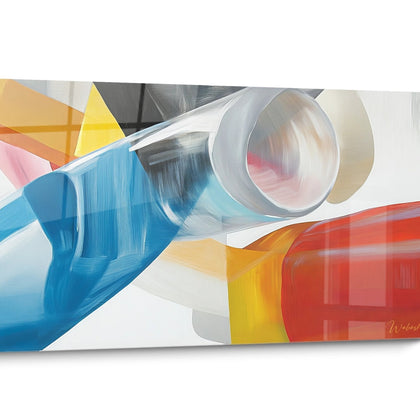
 Colorful Abstract Canvas - Free Expression - Drawing Edition228,90 €
 Abstract landscape wall art - Pink floral explosion - drawing edition273,90 €
 Abstract Flower Canvas - Modern Bloom - Drawing Edition273,90 €
 Abstract Eyes Canvas - Colorful Expression - Drawing Edition273,90 €
 Expressive Face Canvas - Colorful Emotions - Drawing Edition228,90 €
 Colorful abstract artwork - Color explosion - drawing edition273,90 €
 Abstract art artwork - Colorful circular movement - drawing edition273,90 €
 Abstract Geometric Painting - Colorful Expression - Drawing Edition273,90 €




All about Colorful Drawing Wall Art
- Presentation Painting Colorful
- Decorative Chromatic Explosions
- Modern Visual Dynamism
- Psychological Impact of Tones
A painting colorful radically transforms the atmosphere of a living space thanks to the visual intensity of its vivid and contrasting shades. These large-scale wall creations instantly capture attention with their exceptional chromatic saturation, creating focal points that completely redefine the spatial perception of a room. The use of saturated pigments in graphic compositions allows to infuse an immediate positive energy, stimulating creativity and favoring a dynamic atmosphere particularly sought after in contemporary interiors. These works are distinguished by their ability to generate strong emotions while visually structuring large architectural volumes.
The Art of Chromatic Saturation in Large-Scale Wall Compositions
The colorful painting is characterized above all by its exceptional pigment intensity which creates striking contrasts on large wall surfaces. This maximum chromatic saturation makes it possible to generate complex visual gradients that capture natural light differently depending on the hours of the day, thus offering an evolving decorative experience. Saturated shades of red, yellow, electric blue or magenta create optical vibrations that energize neutral spaces while serving as a powerful visual anchor in spacious living rooms.
What color combinations maximize the visual impact of a colorful painting?
The association of complementary colors such as turquoise and orange or violet and lemon generates a particularly effective visual tension in large-format compositions. These combinations create remarkable perceptual depth effects, where some areas seem to advance while others recede, literally sculpting the wall space. For creative professional environments or industrial lofts, the use of balanced chromatic triads brings a contemporary sophistication while maintaining a constant stimulating energy.
The influence of the pigmented surface on spatial perception
A painting of large size acts as a space modulator by visually redistributing architectural volumes. Expansive multicolored compositions can perceptually enlarge a room when light shades dominate, or create a warm intimacy with deep and saturated pigments. This visual manipulation is particularly valuable in modern open spaces where the definition of functional zones requires powerful visual cues without physical partitions. The colorful graphic tracings establish guidelines that naturally direct the gaze and structure the spatial experience.
Decorative synergies with bold contemporary styles
The integration of a painting with intense pigments naturally harmonizes with maximalist decorative approaches that celebrate visual abundance and chromatic exuberance. These works effectively dialogue with design furniture with clean lines, creating a balanced contrast between structural minimalism and visual richness. In modernized Scandinavian interiors, the injection of a vibrant multicolored composition breaks the monotony of neutral palettes while respecting the Nordic functional spirit. For those who also explore more conceptual expressive dimensions, an abstract painting can complement this approach by bringing an additional intellectual dimension.
Energetic Dynamics of Large-Format Polychromatic Compositions
The imposing formats of a colorful painting generate an energetic presence that directly influences the psychological atmosphere of an environment. This chromatic monumentality creates immersive visual fields where viewers experience a true sensory envelope rather than a simple decorative observation. Dynamic lines associated with extended pigment ranges produce a constant perceptual movement that maintains visual interest and prevents aesthetic fatigue, a phenomenon common with monochromatic or limited-contrast compositions.
How does polychromy transform creative workspaces?
In studios, creative agencies, or collaborative spaces, the installation of a large-scale multicolored composition directly stimulates the cognitive processes associated with innovation and lateral thinking. Neuroscience demonstrates that exposure to chromatic diversity simultaneously activates several brain areas, favoring unusual neuronal connections that underpin creativity. A painting with saturated pigments becomes a functional tool as much as a decorative element, particularly valued in professional environments focused on design, visual communication, or interior architecture.
Integration strategies for minimalist architectures
The apparent paradox between architectural minimalism and chromatic exuberance is brilliantly resolved when a unique colorful painting becomes the exclusive focal point of a purified space. This "maximum accent on a minimal background" approach creates a sophisticated aesthetic tension that characterizes high-end contemporary interiors. The white or gray volumes of modern lofts perfectly welcome these pigment explosions, which, by contrast, acquire a multiplied intensity. The absence of visual competition allows each nuance to fully express itself, creating a pure chromatic experience rarely accessible in visually charged environments.
Perceptual evolution according to lighting conditions
The richness of a polychrome composition is gradually revealed through daily variations in natural lighting. Warm tones intensify during direct sunlight exposure while cool tones emerge in diffuse or twilight lights, offering a constantly changing decorative experience. This perceptual variability transforms a unique decorative investment into a virtual collection of distinct atmospheres, maximizing the functional value of the acquisition. Owners of west-facing spaces particularly appreciate how the golden lights of the evening enhance orange and red pigments, creating spectacular warm atmospheres.
Chromatic Psychology and Environmental Well-being
The psychological impact of a colorful painting extends far beyond its decorative function to directly influence the emotional states and energy levels of occupants. Environmental chromotherapy recognizes that prolonged exposure to balanced multicolored compositions regulates circadian rhythms and stimulates the production of neurotransmitters associated with well-being. Saturated pigments act as visual activators that effectively combat the sensory monotony of standard urban environments, bringing a stimulating diversity particularly valuable in confined residential spaces.
What emotional benefits does a large-format multicolored composition offer?
Research in environmental psychology demonstrates that visually enriched spaces with polychrome compositions significantly reduce stress markers compared to monochromatic environments. A painting with multiple vibrant hues creates moderate cognitive stimulation that keeps the mind engaged without causing sensory overload, a delicate balance particularly beneficial in multifunctional domestic spaces. Families with children find that these artworks promote visual stimulation and exploratory curiosity, indirectly contributing to perceptual development while positively structuring the daily environment.
Sector-specific optimization according to spatial functions
The choice of chromatic dominants in a colored drawing painting should strategically align with the primary function of the space concerned. Energizing shades like vermilion red or cadmium yellow are ideally suited to social or creative activity areas, stimulating communication and interaction. Conversely, compositions dominated by deep blues and emerald greens naturally soothe, proving relevant in parental bedrooms or meditation spaces. This functional personalization transforms the acquisition of a wall art into a strategic decision of ambient architecture rather than a superficial aesthetic choice.
Real estate enhancement through aesthetic differentiation
High-end real estate professionals recognize that an interior characterized by bold and consistent decorative choices stands out memorably during visits, significantly accelerating sales or rental processes. A painting with exceptional pigments immediately positions the property in an aspirational segment, signaling particular attention to detail and a developed aesthetic sensibility. This visual differentiation justifies higher valuations by creating a unique spatial identity difficult to reproduce with standard furniture or conventional architectural finishes.
Is a colored drawing painting suitable for formal professional spaces?
Absolutely, when the chromatic balance favors sophistication over raw exuberance. Law firms, executive offices, and high-end reception areas are gradually adopting these compositions as markers of modernity and cultural openness, effectively counterbalancing the austerity traditionally associated with corporate environments.
What maintenance does a large-format colored drawing painting require?
Quality wall art simply requires gentle periodic dusting and protection from prolonged exposure to direct sunlight, which could gradually alter certain sensitive pigments. The use of invisible UV protections preserves the original chromatic intensity durably without altering the visual appearance of the artwork.
How to integrate multiple colored drawing paintings without creating visual cacophony?
The optimal strategy is to establish a clear hierarchy with a dominant masterpiece complemented by harmonized but not identical secondary compositions. Respecting sufficient visual distances between the artworks allows each to perceptually breathe while creating a coherent chromatic dialogue on a global scale.
Further reading
Our articles on this topic
- Custom-Colored Artwork: A Good Idea?
- Artwork That Steals the Show in Trendy Home Tours
- Colorful painting for a neutral living room: which color to choose based on your existing tones
- Colorful DNA painting: which palette to choose based on the light and mood of your apartment
- Create a custom artwork 100% to your image
- Bright-colored geometric painting: the ideal choice for a creative office or design agency
L'art qui suscite l'envie
Maison belge d'art mural grand format
14 jourspour changer d'avis*
Protection Walenskyincluse
Fabriquéen Italie
FormatXXL
Kit de fixationtoujours fourni
* Hors tableaux personnalisés et tailles personnalisées


