


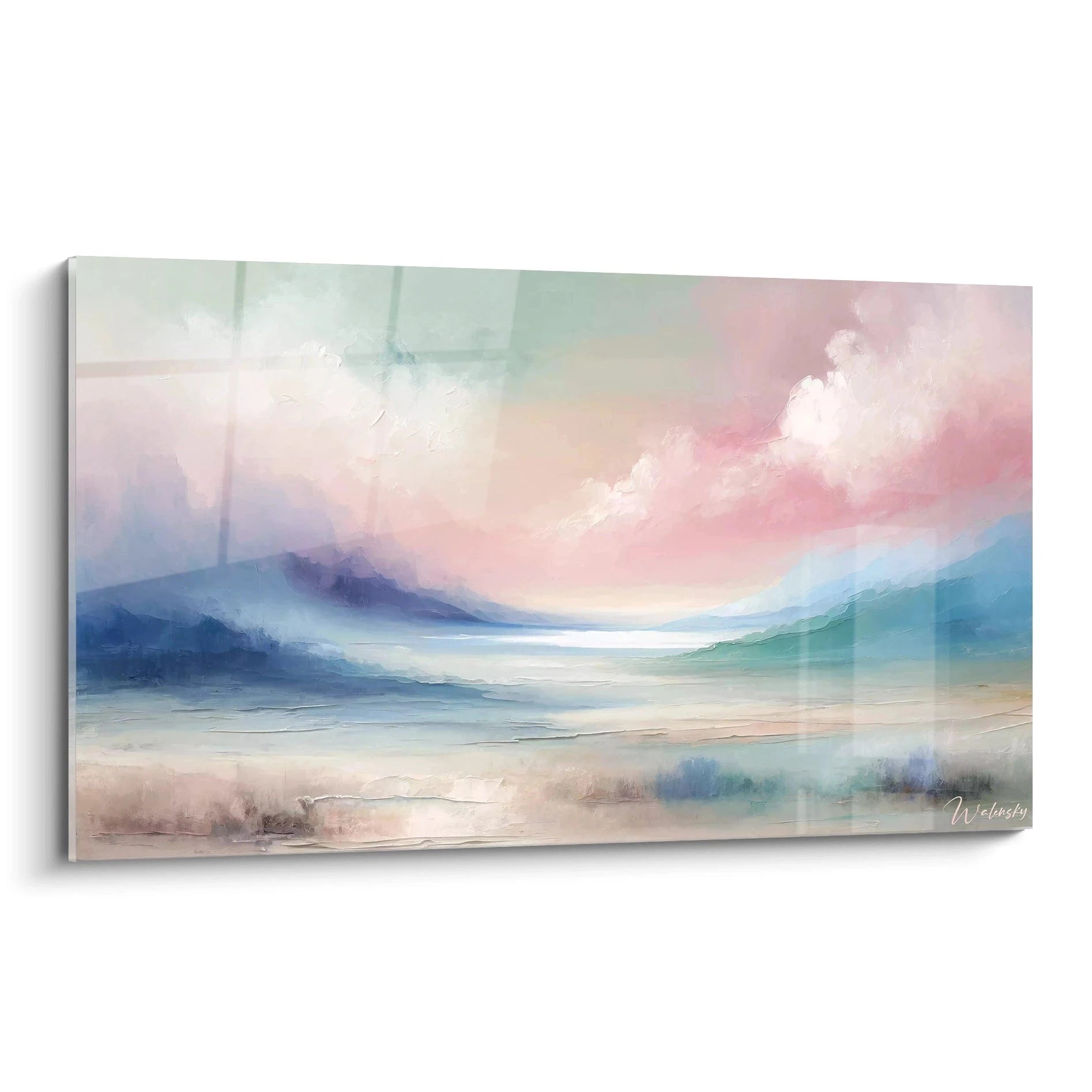

Should the artwork be positioned facing practitioners or behind them?
December 11, 2025 · 8 min read · by Walensky
I’ve observed this hesitation in over fifty studios I’ve accompanied: that moment when the gaze rests on the empty wall, artwork in hand, and where a seemingly innocuous question arises. Yet, this choice of orientation determines much more than the aesthetics of your practice space. It influences concentration levels, room energy, and even the depth of sessions held there.
Positioning an artwork in a yoga or meditation space responds to a specific logic: create a visual anchor for the instructor facing the group, offer a focal point during certain postures, and establish an atmosphere conducive to introspection. Contrary to popular belief, there is not one right answer, but an informed decision based on your practice and space.
Many hesitate for weeks, fearing they will create a distraction or disrupt the harmony of their studio. Others multiply temporary hangings, never finding a layout that feels right. This indecision is not trivial: it reveals the importance placed on the environment in the quality of practice.
The good news? Once you understand the energetic and practical function of each orientation, the choice becomes obvious. You will discover how to transform your space into a true sanctuary, where every element supports the intention of your sessions.
Artwork facing practitioners: anchoring the instructor’s presence
In most professional studios, the artwork is positioned behind the instructor, and therefore facing the students. This arrangement is no coincidence: it responds to an ancestral logic found in Buddhist temples as well as traditional dojos.
When you guide a class, your position naturally defines the focal point of the space. The artwork placed behind you then becomes a visual extension of your teaching. It does not attract attention distractingly, but rather creates a soothing frame that encompasses your presence. Practitioners keep their eyes open in certain standing postures, and what they perceive in the background subtly influences their inner state.
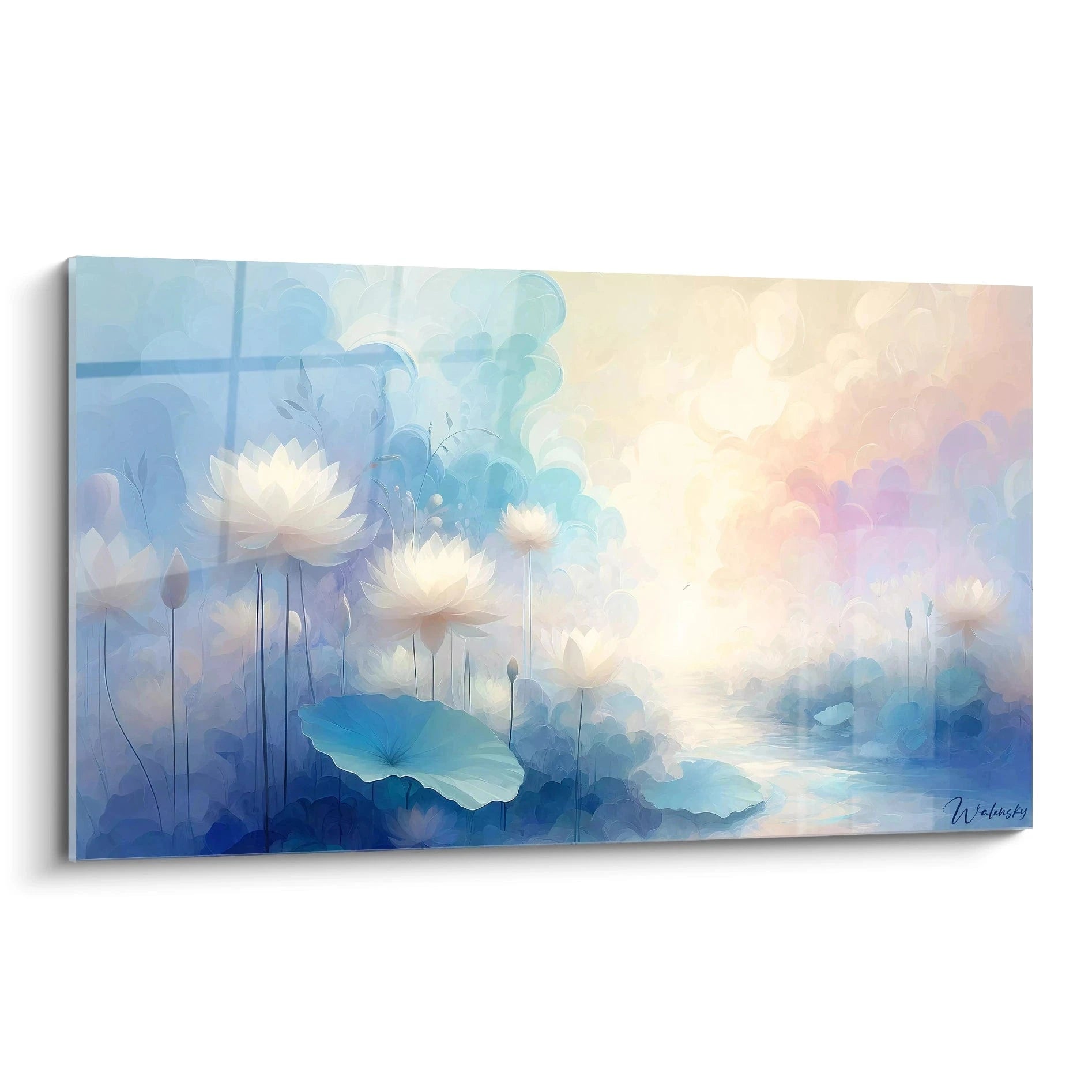
I have found that sacred geometric patterns or representations of natural landscapes work particularly well in this configuration. They offer visual depth without creating excessive stimulation. A mandala with soft hues, for example, can become an anchor point for the gaze without ever capturing it intrusively.
The energetic mirror effect
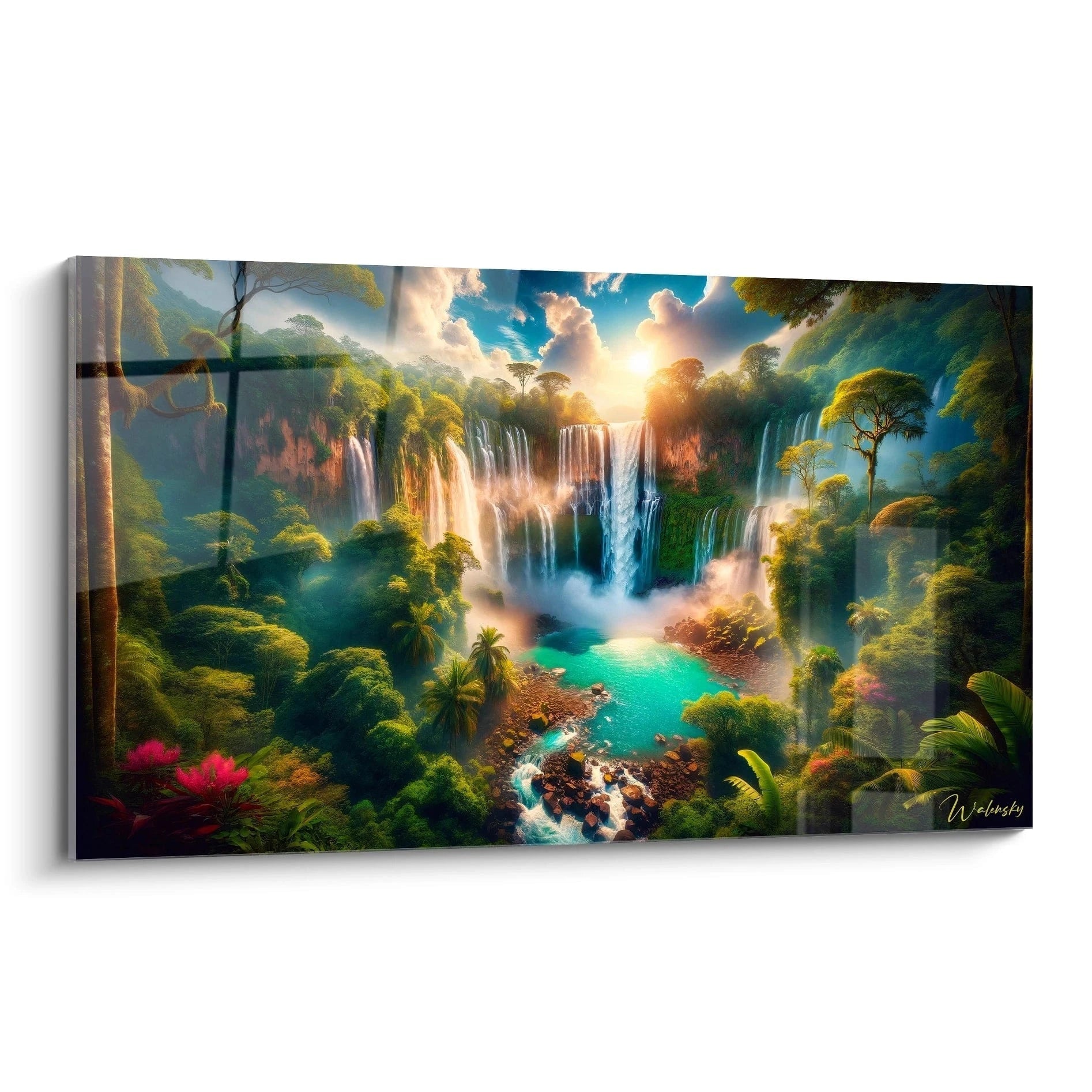
What few people realize is that this orientation creates what I call an energetic mirror effect. The artwork reflects the intention you, as an instructor, bring to the session. If you choose a work representing the serenity of a mountain lake, that quality will be unconsciously imprinted in the minds of participants throughout the duration of practice.
This configuration is particularly well-suited for dynamic classes where students frequently change position and orientation in space. The artwork remains a stable reference point, a visual constant that accompanies movement without ever disrupting it.
Behind the practitioners: creating an inner sanctum
The reverse orientation, with the artwork positioned behind the students, responds to a radically different philosophy. This arrangement favors absolute interiority and is particularly suitable for meditative practices, yin yoga or deep relaxation sessions.
In this configuration, the artwork becomes your point of contemplation as an instructor. While you observe your group, your gaze can rest on this work that centers you and reconnects you to your own presence. It's a valuable resource during long posture holds or meditative silences.
The practitioners, for their part, no longer see the artwork during the session. Their attention naturally turns forward, towards you, or retreats completely inward. This absence of visual stimulation promotes increased concentration and a deeper dive into bodily sensations.
The arrival and departure ritual
What makes this arrangement particularly interesting is that it transforms the artwork into a transition element. Students discover it upon entering the room and find it again when leaving. It thus marks the threshold between the outside world and the sacred space of practice, then accompanies the gradual return to everyday reality.
I have observed in several studios that this configuration creates spontaneous moments of contemplation after the session. Practitioners take the time to roll up their mats while quietly observing the work, naturally extending the meditative state beyond formal practice.

The hybrid solution: adapt according to the type of session
Some versatile spaces benefit from adopting a flexible approach. If your room hosts both dynamic classes, seated meditation sessions and contemplative workshops, why not provide two possible locations for your artworks?
Modular mounting systems now allow artworks to be easily moved without creating multiple holes in the walls. You can position your artwork facing the group for an energetic vinyasa class, then move it behind the practitioners for a yoga nidra session in the evening.
This flexibility is particularly well suited to paintings pour centre de yoga of medium size, which are easier to handle and reorient as needed. It certainly requires a little more organization, but offers valuable adaptability in multi-purpose spaces.
The decisive criteria for making a decision
Beyond philosophical considerations, some practical aspects deserve your attention before permanently fixing your artwork. Let's start with natural lighting: an artwork exposed directly to sunlight will gradually lose its colors and luster. If your wall facing the practitioners receives direct light in the afternoon, it is better to choose the opposite orientation.
The ceiling height also plays a decisive role. In a space with generous volumes, a large painting positioned facing the group creates a feeling of amplitude and breath. In a more intimate room, the same work could seem overwhelming, while it would flourish harmoniously behind the practitioners.
The intention of your space
Ask yourself what experience you want to create. Is your studio intended to be a protective cocoon that promotes introspection? Or rather a space for openness and expansion? A painting facing the students invites them to maintain a connection with the outside environment, even subtle. A painting behind them encourages sensory withdrawal and meditative immersion.
This reflection should also integrate your teaching style. If you mainly guide with your voice, moving around the space a lot, the location of the artwork is less important. If you practice at the same time as your students, facing them, the painting behind you reinforces your visual presence.

When the painting becomes practical: the case of inversions
Here is a rarely mentioned but nonetheless significant aspect: certain postures completely change the perception of space. During an inversion such as downward-facing dog, practitioners see the room upside down. A painting positioned facing them in standing poses is then behind them in this inverted perspective.
This shift in perception can create fascinating moments. I've heard several students share that they discover unsuspected details of a work by seeing it inverted during their sun salutations. This multiplicity of viewpoints enriches the experience and recalls that practice invites us to look at reality from new angles.
For this reason, abstract paintings or symmetrical patterns work particularly well. They retain their visual coherence regardless of the direction of the gaze, unlike figurative representations which may seem strange when viewed upside down.
Transform your practice space into a true sanctuary
Discover our exclusive collection of wall art for yoga studios that adapts to all orientations and creates the perfect atmosphere for your sessions.
The mistake to absolutely avoid
After accompanying so many spaces in their layout, I notice that one error consistently recurs: multiplying paintings in the hope of creating an atmosphere. Four small works on the side walls, a large one facing the practitioners, another behind... This accumulation creates exactly the opposite of the desired effect.
A practice space requires visual emptiness, breathing room for the eyes and mind. A single painting, judiciously positioned, will have infinitely more impact than several works competing for attention. This rule of less-is-more applies with particular force in environments dedicated to meditation and yoga.
The other trap is to choose a painting for its general aesthetics without considering the practitioner's experience. A magnificent work in a living room can turn out to be too stimulating, too detailed for a yoga space. Always prioritize contemplative simplicity over decorative complexity.
Your space, your intuition
Now imagine yourself in your studio, in the place of a student arriving for the first time. Your gaze sweeps the space, looking for where to put the mat. What would naturally call to you? What would invite you to slow down, to breathe deeper?
The position of your painting participates in this decisive first impression. It is neither accessory nor purely aesthetic: it shapes the experience you offer. Listen to your feelings, test both orientations for a few days if possible, and observe how your own practice and that of your students react to each configuration.
The right positioning is the one that disappears, becoming so obvious that you no longer question it. It is the one that silently supports each inspiration, each moment of presence, without ever imposing itself. You will recognize it by that feeling of evidence that settles in from the first sessions in your harmonized new space.
Frequently asked questions about artwork placement
Can I place multiple artworks in my yoga room?
I strongly recommend limiting yourself to one main artwork, or a maximum of two in very large spaces. The goal of a practice environment is to promote concentration and introspection, which requires a certain visual sobriety. Several artworks create multiple points of attention that can disperse the mind rather than soothe it. If you really want to integrate several works, be sure they share chromatic and thematic coherence, and absolutely avoid saturating all the walls. Empty spaces are just as important as decorative elements in creating an atmosphere conducive to meditation.
At what height should I hang a painting in a yoga studio?
The ideal height differs from that recommended in a classic living space. In a living room, you generally center the artwork at eye level when standing, or about 1.60 meters from the floor. In a yoga studio, your practitioners spend a lot of time sitting or lying on their mats. I suggest positioning the center of the artwork slightly lower, between 1.40 and 1.50 meters from the floor. This allows for comfortable contemplation from a seated position, while remaining harmonious for standing postures. Also consider the viewing angle: if you hang it too high, the painting will only be visible by looking up, which creates cervical tension contrary to the spirit of practice.
Should I change my artwork according to the seasons or course themes?
This idea appeals to many teachers, but I invite you to be cautious. The permanence of the same artwork creates reassuring landmarks for your regular students. They develop an intimate relationship with this visual element that is part of their practice ritual. Changing too frequently can disrupt this connection. That said, if you organize specific thematic workshops or retreats, temporarily adapting the decoration can enrich the experience. An intermediate solution is to have a permanent main artwork and occasionally add a discreet seasonal element on a secondary wall. The essential thing is to preserve consistency and stability in the space, while allowing touches of renewal that maintain interest without disrupting the anchoring.
Explore our collections


