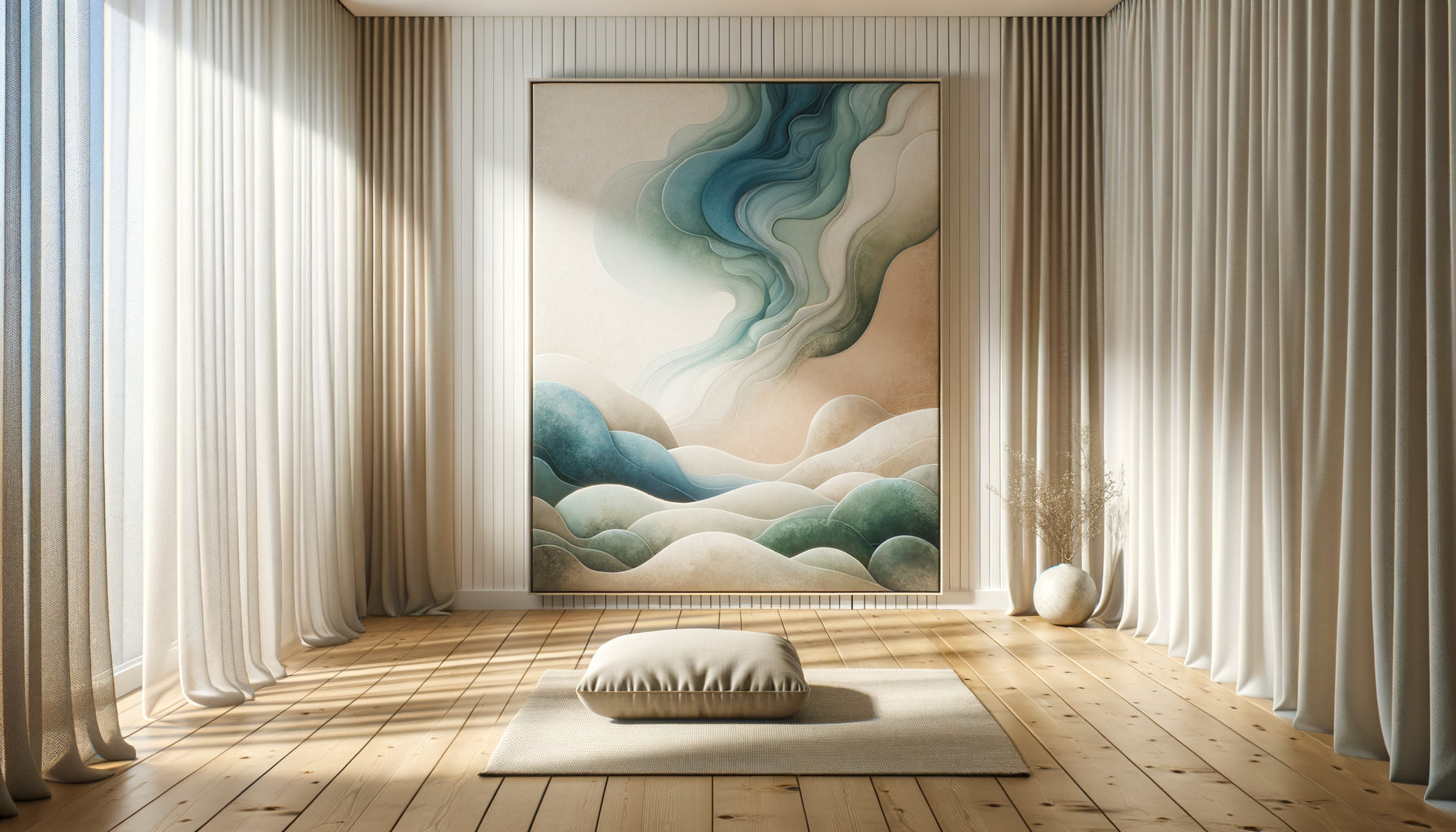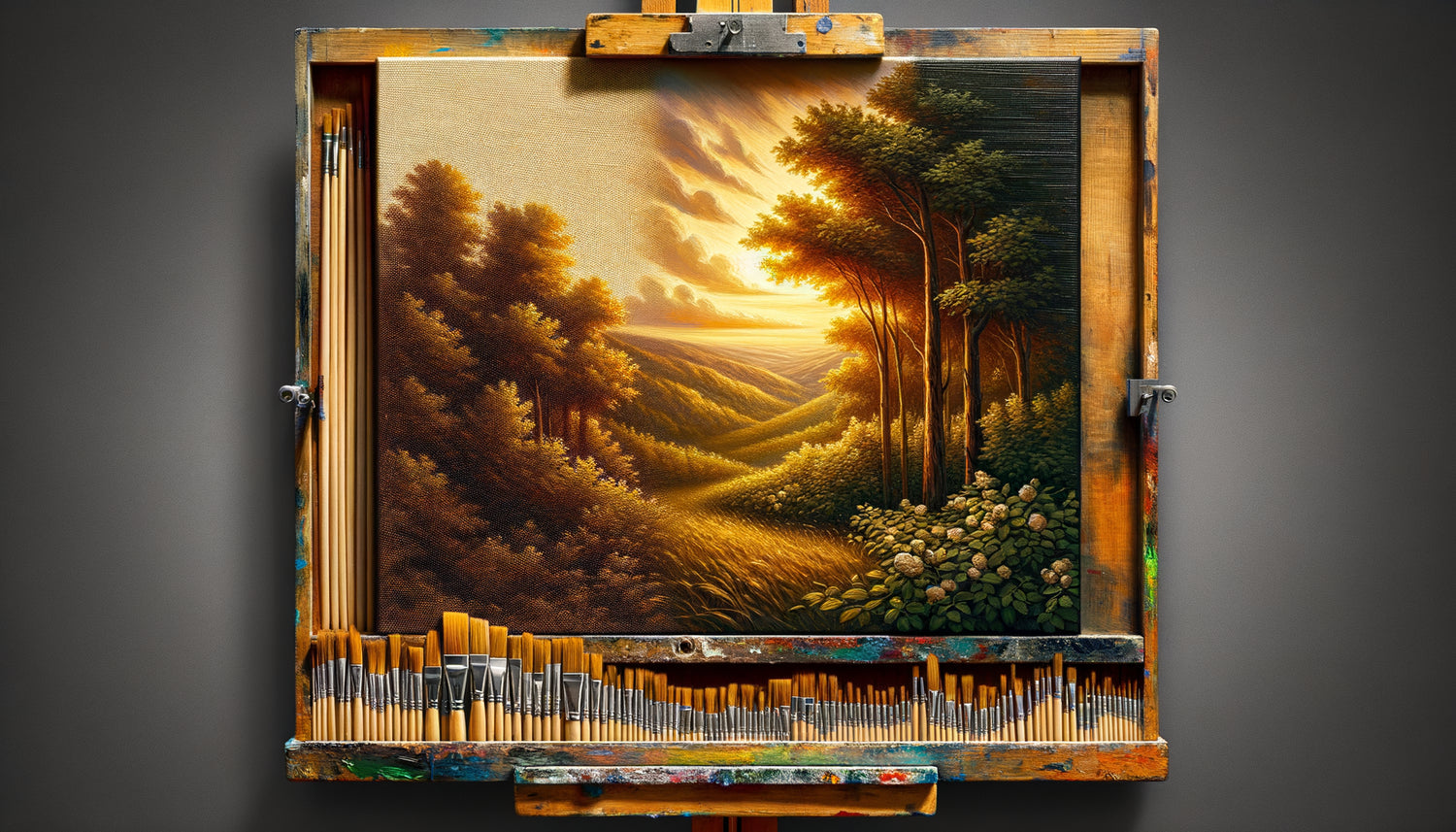
Last week, a client walked into my gallery with a photo she found online. "I saw the same thing for €29 online, why pay €850 here?" Her gaze shifted between fascination for the original artwork hanging on the wall and incomprehension at the price difference. I simply offered her a white glove: "Touch." Her fingers brushed against the paint reliefs, slid over the texture of the linen, felt the artist's intentional cracks. Silence. Then: "It’s not the same thing at all."
Here's what an artisanal painting brings compared to a print: an irreplaceable physical presence that transforms the atmosphere of a room, a lasting investment that increases in value over time, and an authentic emotional connection with the creative gesture. Three dimensions that no printing algorithm will ever reproduce.
You are facing this dilemma: invest in an artisanal artwork or opt for an affordable reproduction? You fear overpaying for something that nobody will notice, or conversely, regretting an economical choice that will sound wrong in your interior. This hesitation is legitimate. In a market saturated with offers, where high-definition prints visually rival originals on online photos, how to distinguish true value?
After twelve years of supporting collectors and decorators in their acquisitions, I have developed an evaluation method that goes far beyond the price per square meter. Let me guide you through the tangible criteria that justify – or not – the price difference between these two universes.
The material presence: what your eyes don't see in a photo
On a screen, a professional giclée print can indeed look identical to a hand-painted painting. But step through the threshold of a room, and the difference becomes palpable before even your brain consciously analyzes it.
The three-dimensional texture of an artisanal painting creates plays of light and shadow that evolve according to the time of day and your viewing angle. Paint impasto captures the grazing morning light differently from the zenithal midday lighting. A print, even on textured canvas, remains stubbornly flat – a fact that my clients often discover with disappointment after online purchase.
During a recent appraisal, I compared a high-end print for €180 and the original for €950 side by side. Three meters away, striking similarity. At fifty centimeters? The print revealed its mechanical nature: microscopic ink dots perfectly aligned against the organic, unexpected, vibrant brushstrokes of the original. This “visual vibration” is what makes you keep looking at an artisanal painting day after day, while a print quickly becomes invisible in our daily landscape.
The five senses test
An exercise I consistently practice: evaluate the artwork with all your senses. Sight captures chromatic nuances – a handcrafted painting contains dozens of tonal variations where a print reproduces a limited, frozen palette. Touch (with the vendor's permission) reveals the grain of the support, variable thickness of material. Smell even – yes – sometimes detects traces of natural mediums in recent works. This complete sensory experience justifies a substantial portion of the price difference.
The hidden economic equation: real cost versus investment
Let's talk numbers with pragmatism. A decent quality print costs between €50 and €250 depending on the format. A comparable handcrafted painting generally starts at €400 and can reach several thousand. But this direct comparison ignores a crucial parameter: temporal durability.
Inkjet prints, even with pigment inks, have an expected lifespan of 50 to 100 years under optimal conditions – away from heat sources, without direct sunlight exposure. The reality of real interiors? I've seen prints lose their saturation in less than five years on a wall receiving two hours of sun daily. Traditional oil paintings, properly prepared on suitable support, last through the centuries. Paintings I have appraised dating back to 1920 retain their chromatic brilliance.
Let’s do the math: a €120 print replaced every ten years represents €360 over thirty years. A painting at €800 not only retains its appearance but often increases in value if the artist gains recognition. I resold last year a canvas acquired for €650 in 2015 for €1200 – the artist having since exhibited in recognized institutions. Try doing that with a print.
Resale value: a decisive criterion
No secondary market exists for decorative prints. Zero liquidity. A handcrafted painting, even by an emerging artist, retains a minimum resale value corresponding to the materials and creation time. Consider this as a form of aesthetic savings – a concept that discerning collectors systematically integrate into their evaluation of quality-price ratio.

The technical criteria that justify the artisanal price
No esoteric musings here: let's examine the concrete factors that build the value of a handmade painting.
The support forms the invisible foundation. Pure linen canvas with a tight weave versus industrial cotton canvas, traditionally prepared solid wood panel versus low-grade MDF – these choices directly impact longevity. A serious artist invests €30 to €80 in the support alone for a 60x80cm format. A print often uses synthetic canvas at €5 per meter.
The pigments represent an invisible but decisive difference. Artist-grade paints cost between €15 and €60 per tube of 40ml depending on the pigments. A true ultramarine blue, ground from semi-synthetic lapis lazuli, offers depth and permanence unattainable by a CMYK print blue. For a medium canvas, count €80 to €200 in paint materials alone.
The creation time – often minimized – ranges between 15 and 80 hours for a handcrafted work of average size. At a modest artisanal hourly rate of €25 (lower than many manual trades), this represents €375 to €2000 in legitimate labor. A print? Fifteen minutes of machine setup.
Traceability and Authenticity
A handcrafted painting is ideally accompanied by a certificate of authenticity, a signature, sometimes a numbering within the artist's body of work. This documentation transforms the decorative object into a traceable cultural asset. Some of my clients even insure their acquisitions beyond €1500 – impossible with a print which legally remains a manufactured product without individuality.
When to Choose a Print: Legitimate Use Cases
Intellectual honesty obliges: prints have their relevant contexts. I regularly recommend this option in specific situations where the quality-price ratio actually favors them.
High-turnover spaces such as seasonal rentals, temporary offices or children's rooms rarely justify an artisanal investment. The risk of degradation or the need for frequent renewal makes printing more economically rational.
Monumental formats represent a borderline case. A handcrafted painting of 150x200cm easily costs €3000 to €8000 – out of reach for many. A quality large-format giclée print (€300 to €600) offers an acceptable visual impact from a distance, particularly in commercial or public spaces.
Discovering one's style is also a legitimate use. Before investing in a handcrafted work that will engage you emotionally and financially for years, testing different atmospheres with temporary prints at €50-€100 proves to be a prudent strategy. Several clients have thus defined their preferences before taking the step of artisanal acquisition.
The key lies in the intention: temporary or functional decoration versus emotional and heritage investment. This clear distinction naturally illuminates the decision.

My evaluation method in five questions
Faced with a handcrafted artwork whose price raises questions, I systematically apply this analysis grid which quickly reveals whether the value for money is justified.
1. Is the price per square meter consistent? For an emerging or intermediate artist, count between €350 and €800 per square meter of canvas. Below that, question the quality of the materials or the seriousness of the approach. Above that, verify the notoriety and track record justifying this valuation.
2. Are the materials transparent? A professional artist documents their process: type of support, nature of paints, protective varnish. Opacity on these aspects often signals quality compromises to maximize margin.
3. Does the artwork generate an emotional reaction after five minutes of observation? Implacable test. If your gaze drifts away after a few seconds, the artwork does not justify a handcrafted investment – whatever its technicality. Sustainable emotional connection is non-negotiable.
4. Does the artist's track record demonstrate a serious approach? Training, exhibitions, publications, presence in collections - these markers do not guarantee a crush but attest to a reassuring professionalism for the long-term of your investment.
5. Would you accept this price for three hours of consultation with an expert? Useful analogy: you are paying for the expertise, experience, unique vision of the artist as much as the physical object. This perspective often relativizes prices that initially seemed high.
The invisible factor: daily psychological impact
Last element, difficult to quantify but fundamental: the cumulative effect on your daily well-being. A dimension that calculators ignore but experience reveals.
We cross our wall decor between ten and fifty times a day depending on the rooms. An impression gradually becomes indifferent - my brain notes this in clients who, after six months, « no longer see it ». A handcrafted painting, by its material richness and subtle variations according to the light, continues to capture attention, offering those micro-moments of contemplation that punctuate a day.
An informal study I conducted with fifty buyers shows that 92% of owners of handcrafted artworks always notice their piece after two years, compared to 31% for prints. This lasting presence transforms the lived space – an intangible but real value that enters into the quality-price equation.
Handcrafted artwork also establishes a natural conversation starter with visitors, creating social connection where a print rarely elicits comments. Several clients report to me that their painting has become an identity piece in their interior, participating in their personal expression in a way that no industrial object can match.
Transform your space with a piece that resonates
Discover our exclusive collection of paintings for yoga studios that combine handcrafted presence and visual serenity, designed to enrich your daily life.
Conclusion : investing with intention
The quality-price ratio of a handcrafted painting versus a print is never reduced to a simple division of the price by the surface area. It integrates material durability, potential for appreciation, daily emotional impact and patrimonial dimension – factors absent from the equation of a print.
Your decision ultimately depends on your intention: are you looking to fill a wall or enrich your universe? A temporary solution or a visual companion for years? An expense or an investment?
My recommendation after these years of observation: prioritize one quality handcrafted artwork in your main room rather than five prints scattered throughout your home. This concentration of value will truly transform your daily experience. You will notice the difference every day. Your guests will feel it without necessarily being able to explain it. And in ten years, you will not regret this investment – unlike the faded prints that you will have long since taken down.
True art does not cost cheap. It is worth a lot. Decisive nuance.
FAQ : Your questions about choosing between handcrafted and print
How to recognize a quality print that is worth its price?
A print deserves its price when it combines several verifiable technical criteria. Prioritize giclée prints on fine art paper (minimum 300g/m²) or 100% cotton canvas with certified lightfast pigment inks (ISO 9706 standard). The print certificate should mention the limited numbered edition – generally under 100 copies to maintain value. Also require a white margin signed by the artist creator of the original image. Count at least €150 for a 50x70cm format meeting these standards. Otherwise, you are buying an industrial reproduction without guarantee of durability. The fundamental difference with the artisanal remains that even a premium print is mechanically reproducing an existing image, whereas each painted canvas is absolutely unique with its organic variations.
From what budget can we acquire a real quality artisanal painting?
The entry threshold for an authentic artisanal painting with professional materials and a serious approach is around €350-400 for a 40x50cm format. This price covers quality materials (prepared support, fine paints, robust frame), creation time and minimal artist compensation. Beware of "hand-painted canvases" sold for €80-150: these are generally semi-industrial productions made in series in low-cost workshops, with economical materials and express techniques. To start a collection with good value for money, aim for emerging artists regularly exhibiting in associative galleries or local fairs. Their prices remain accessible (€400-800) while guaranteeing a real artistic approach. Always prioritize the emotional connection with the work rather than the size – it is better to have a small format that touches you than a large impersonal format for the same budget.
Do prints of famous works have a particular value?
Reproductions of masterpieces (Monet, Van Gogh, Klimt...) have only a decorative and educational value, never patrimonial. Even with a high-fidelity museum print at €200, you are acquiring a sophisticated poster without rights or authenticity. The original resides in a museum or private collection. These reproductions excellently serve a pedagogical purpose – introducing children to art, creating an atmosphere inspired by an artistic movement – but do not expect any appreciation. The secondary market is non-existent. For optimal value for money, prefer a handcrafted painting by a living artist within the same budget. You obtain a unique work, potentially valuable, and directly support a creator. The satisfaction of owning an original, even by an unknown artist, far outweighs that of displaying yet another copy of Starry Night. Your interior deserves better than what already exists in ten thousand other homes. If your heart truly leans towards a classic, invest in a very high-quality museum print (€300-€500) which will do justice to the original, rather than a degraded version at €50 which will detract from the work and your space.