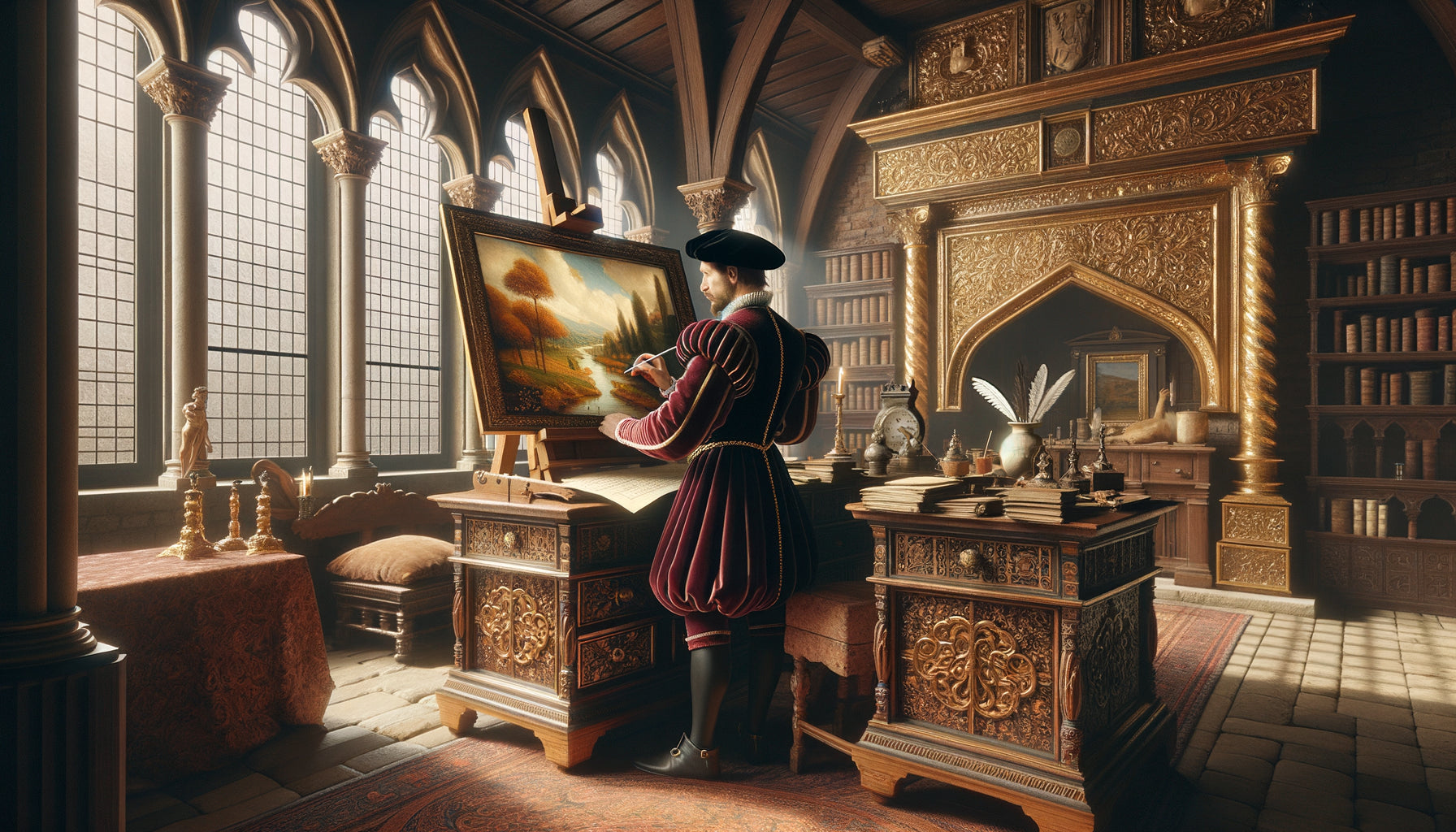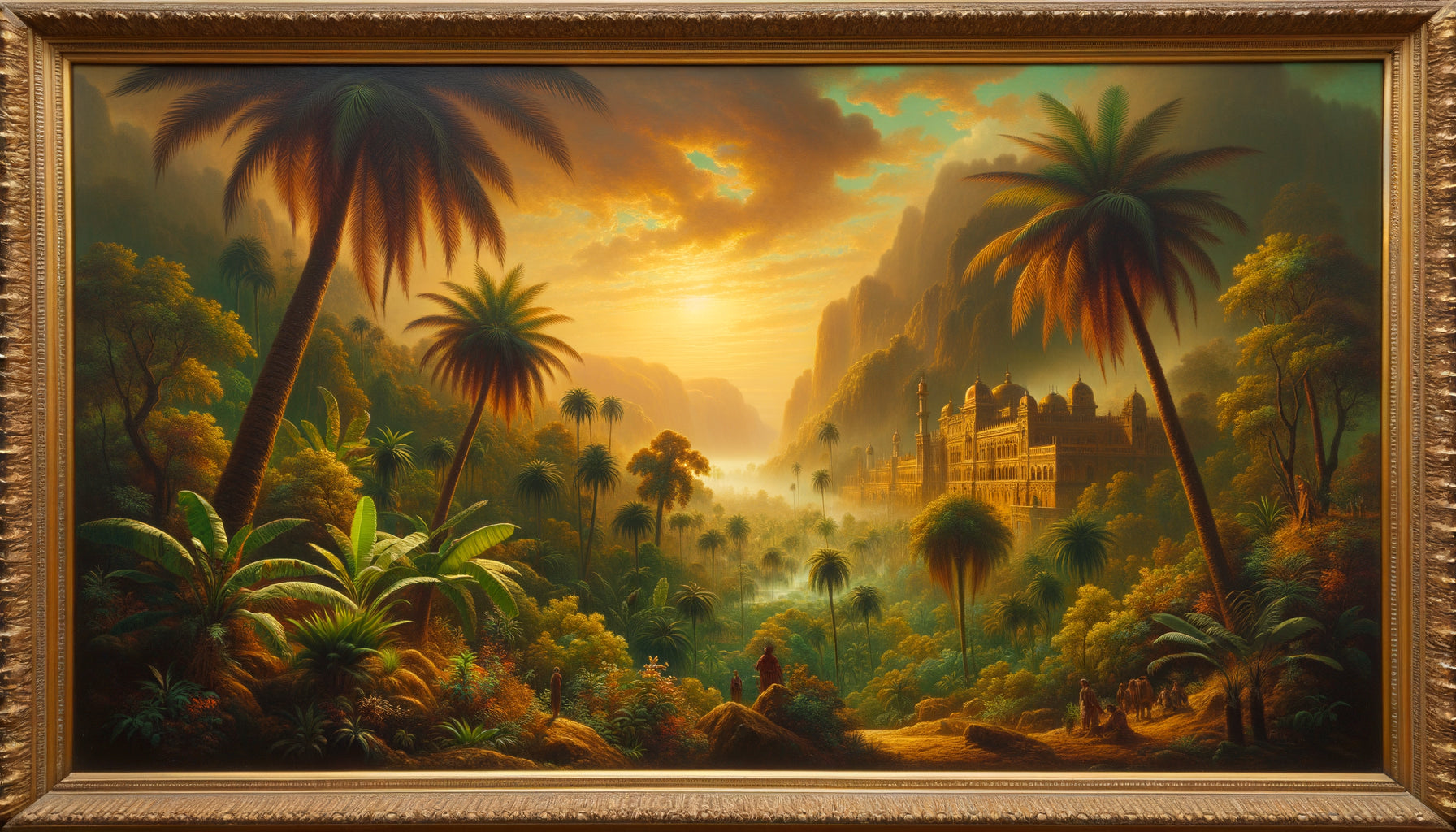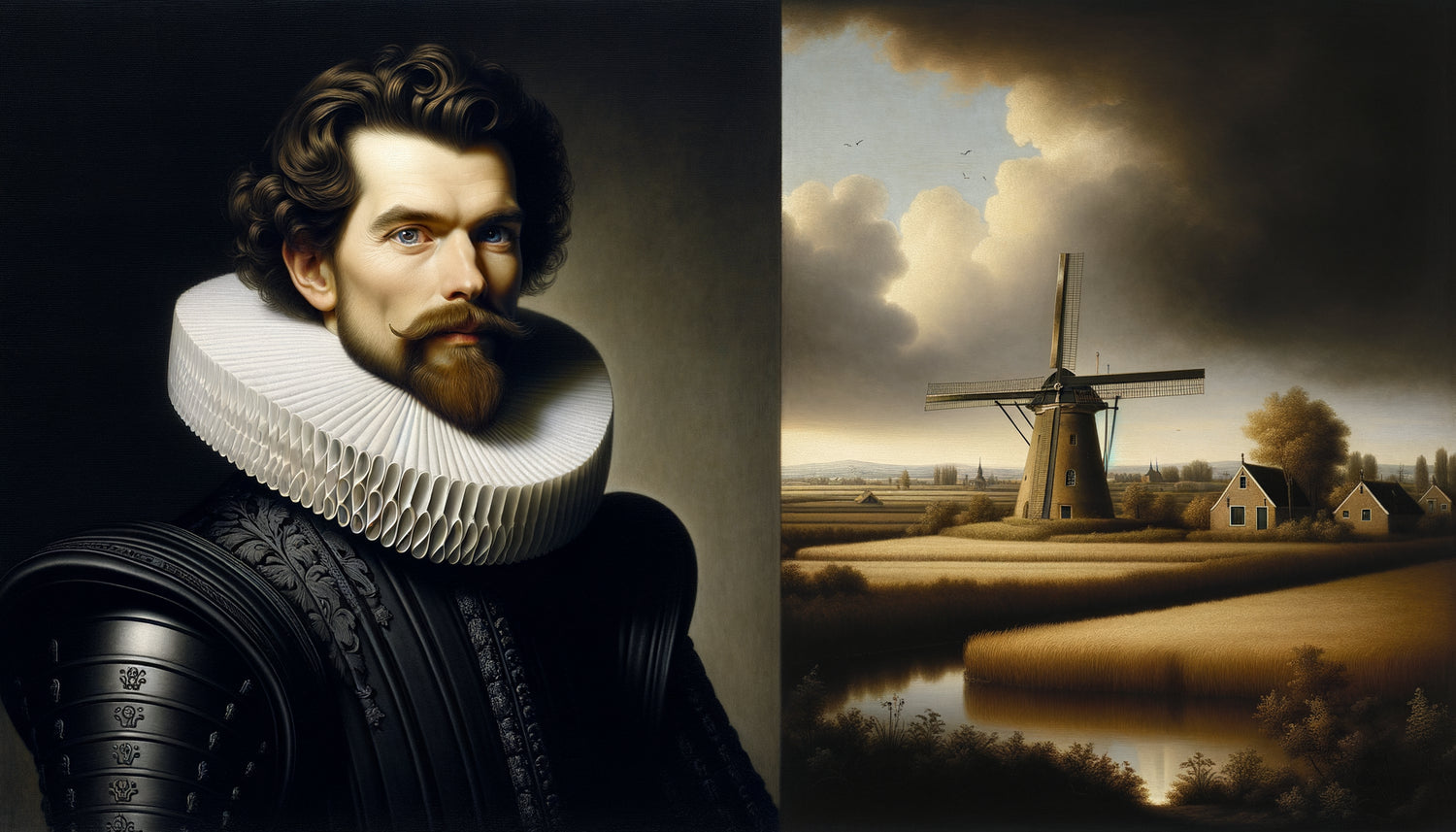
Imagine the scene: Amsterdam, 1650. In the workshop of an art dealer, a wealthy fabric merchant contemplates two canvases. To his left, a misty landscape by Jacob van Ruisdael, masterfully capturing the stormy skies of Holland. To his right, his own portrait in ceremonial attire. Without hesitation, he orders the portrait and pays three times the price of the landscape. This price hierarchy, which may seem absurd to us today, reveals a fascinating truth about the values of the Dutch Golden Age.
Here's what this difference in price reveals: a society obsessed with social status, an art market structured by strict rules, and a conception of artistic value radically different from our own. Understanding these mechanisms allows us to decipher not only the artistic economy of that era, but also our own relationship to decorative art.
Today, we admire Dutch landscapes in our most prestigious museums. We are captivated by these bucolic scenes, dramatic skies, peaceful rivers. Yet, in the 17th century, these works represented the low end of the art market. How can we explain this paradox? And above all, what does it teach us about our current way of valuing art in our interiors?
The hierarchy of genres: when portraiture reigns supreme
In 17th-century Holland, the art market obeyed a rigid classification called the hierarchy of genres. This scale of values, inherited from Italian artistic theory, placed historical and religious paintings at the top, followed by portraits, then genre scenes, and finally, at the bottom, landscapes and still lifes.
This hierarchy was not arbitrary. It reflected a deep conviction: the value of a work depended on the nobility of its subject. Painting man meant celebrating divine creation. Representing a face required capturing the soul, personality, social status. The portraitist had to master anatomy, expressions, and the textures of precious fabrics. It was a technical and intellectual feat.
The landscape, on the other hand, was seen as a mere copy of nature. No moral reflection, no complex narrative, no enhancement of humanity. Just trees, rivers, skies. An exercise in observation certainly pleasant, but considered intellectually inferior. Art theorists like Samuel van Hoogstraten believed that painting a landscape required only talent for imitation, while creating a portrait required invention and genius.
Portraiture as social investment
But the price hierarchy was not explained solely by aesthetic considerations. It responded to an implacable social and economic logic. Ordering one's portrait was an act of social affirmation, an investment in one's own public image.
In the prosperous Dutch Republic of the 17th century, a new merchant class was emerging. These merchants, bankers and shipowners had accumulated considerable fortunes but did not belong to traditional nobility. Portraiture became their tool for legitimization. By having themselves portrayed in their finest attire, surrounded by symbols of wealth and virtue, they engraved their success into history.
A family portrait by a recognized master such as Rembrandt or Frans Hals could cost between 500 and 1500 florins, the equivalent of an annual salary for a skilled craftsman. This considerable expense was justified: the portrait would pass down through generations, reminding descendants of the honorability of their ancestors. It was an investment in eternity.
Landscapes, on the other hand, offered no social return on investment. They pleasantly decorated an interior but told nothing about its owner. A landscape by Jan van Goyen or Salomon van Ruysdael sold for between 10 and 50 florins. Accessible, certainly, but lacking this essential social function that justified the high prices of portraits.

The question of time and personalization
Another factor explains the difference in price: the creation time and level of personalization. Painting a portrait required numerous posing sessions. The client had to visit the studio regularly, sometimes for weeks. The painter had to capture not only physical features but also the personality of their model.
Each portrait was a unique commission, created specifically for a client. The painter adapted the composition, chose the symbols, adjusted the lighting to flatter the model while respecting a certain resemblance. This personal relationship between artist and commissioner justified a high price.
Dutch landscapes, on the other hand, were often painted speculatively, without prior order. Artists created works that they then exhibited on the open market, at fairs, in shops or directly from their studios. This mass production made it possible to reduce costs but also diminished the perceived value.
Some landscape painters were incredibly prolific. Jan van Goyen, for example, is said to have produced more than 1200 paintings during his career. This impressive productivity met a strong popular demand but also helped maintain low prices. Scarcity, already at the time, increased value.
When landscape democratizes art
Paradoxically, this price difference allowed the Dutch landscape to become the most popular genre of the Golden Age. Financially accessible, landscapes democratized art ownership. Artisans, modest merchants, innkeepers could now decorate their interiors with genuine oil paintings.
Inventory lists from the time reveal that even modest households owned several paintings. A baker in Amsterdam might have five or six landscapes hanging in his home. This massive dissemination of art throughout all layers of society represents an unprecedented cultural revolution in Europe.
Landscapes also responded to a psychological need. In a largely urbanized country, where cities were growing rapidly, these rural scenes offered a visual escape. They allowed city dwellers to maintain a connection with nature, to contemplate infinite horizons from their living room. This decorative and soothing function remains relevant today.
Art dealers quickly understood the potential of this mass market. They developed efficient distribution channels, offering landscapes at all prices. Works could be found for 5 florins for those on a tight budget, up to 100 florins for paintings by recognized masters such as Jacob van Ruisdael. This stratification allowed everyone to find something to their liking.

Exceptions that prove the rule
Not all landscapes were sold at low prices. Some painters managed to transcend this hierarchy and obtain respectable prices for their works. Jacob van Ruisdael, considered the greatest Dutch landscape painter, managed to sell his canvases for between 50 and 150 florins, an honorable price although still lower than portraits.
These exceptions were explained by several factors. First, the artist's reputation: a famous painter could impose their prices. Second, the complexity of the composition: a monumental landscape with many details was worth more than a simple scene. Finally, the presence of human figures: paradoxically, the more characters a landscape contained, the closer it became to genre painting and gained in value.
Italianate landscapes, depicting idealized Mediterranean scenes with ancient ruins and golden light, also sold for more than local views. They benefited from the prestige associated with Italy, the cradle of classical art. A painting by Nicolaes Berchem or Jan Both could fetch 200 florins, almost rivaling some portraits.
The legacy for our contemporary interiors
This historical price hierarchy sheds light on our own relationship with decorative art. Even today, we value works differently according to their subject and function. A personalized photographic portrait will often cost more than a high-quality landscape reproduction.
But our era has reversed some values. Dutch landscapes of the 17th century, once scorned, are now among the most sought-after works by collectors. A Ruisdael or a Hobbema reaches millions at auction. This reassessment proves that artistic value is never definitive: it evolves with tastes, cultural contexts, fashions.
For our contemporary interiors, this history reminds us of an essential lesson: choose art that speaks to you personally, regardless of established hierarchies. A landscape that soothes you, inspires you, transforms your daily life is worth infinitely more than a master portrait that leaves you indifferent. The true value of a work lies in the emotion it evokes in you.
Be inspired by the serenity of Dutch masters
Discover our exclusive collection of nature paintings that will capture in your interior the same timeless contemplation sought by 17th-century Dutch artists.
Creating your own hierarchy of values
The history of prices in Dutch art ultimately teaches us a liberating truth: there is no objective hierarchy when it comes to taste. The merchants of the 17th century were wrong to devalue landscapes. Their misjudgment reminds us to remain humble in the face of our own aesthetic certainties.
When decorating your interior, forget arbitrary rules. A soothing landscape in your bedroom is worth a thousand times more than an expensive portrait that oppresses you. A natural scene evoking your travel memories has immeasurable sentimental value. Your home should reflect your sensitivity, not social conventions.
Start by identifying the emotions you want to feel in each room. Serenity in the bedroom? Opt for a landscape with soft tones. Energy in the office? Choose a dynamic composition with dramatic skies. Friendliness in the living room? Perhaps prefer an animated scene with characters. Your interior then becomes a cartography of your inner world.
The Dutch of the 17th century were ultimately right about one thing: art should be accessible to all. Their democratized market allowed everyone to live surrounded by beauty. This philosophy remains more relevant than ever. You don't need a collector's budget to transform your living space into an inspiring and personal place.
Frequently Asked Questions
Were Dutch landscapes really considered minor art in the 17th century?
Yes, absolutely. In the hierarchy of genres established by art theorists, landscapes occupied the lower rungs. This devaluation did not mean that landscapes were poorly executed or without quality. On the contrary, Dutch painters admirably mastered light, atmospheric perspective and naturalistic details. But according to conventions of the time, representing nature was considered less intellectually noble than representing man or historical scenes. This perception reflected a worldview where humans took precedence over nature. Landscapes were appreciated for their decorative beauty, but not recognized as the highest expression of artistic genius. Fortunately, this vision has radically evolved, and we now recognize the profound poetry and technical mastery of Dutch landscape painters.
How much did a Dutch landscape actually cost compared to a portrait?
The price differences were considerable and revealing. A landscape by an average artist cost between 10 and 50 florins, while a portrait by an established painter sold for between 500 and 1500 florins, or ten to thirty times more expensive. To put these figures into perspective, a skilled craftsman earned about 500 florins per year. A landscape therefore represented the equivalent of a few days' wages, making it accessible to the middle classes. A portrait was equivalent to several months, or even a full year of income, reserving it for the elite. These differences explain why almost every Dutch household owned landscapes, while only the wealthy commissioned portraits. Landscapes by recognized masters such as Jacob van Ruisdael could reach 100 to 150 florins, a respectable price but still far less than portraits.
How to choose a landscape for my interior inspired by the Dutch?
Dutch artists of the 17th century developed a pragmatic and sensitive approach to art selection that we can adopt today. First, prioritize personal emotion over reputation. A landscape that evokes your own memories or aspirations will create a much deeper connection than a famous work that leaves you indifferent. Next, consider the function of each space: the Dutch placed peaceful scenes in bedrooms and more animated compositions in reception rooms. Also observe the natural light in your room: a landscape with cool tones suits bright spaces, while scenes with warm tones warm dark rooms. Finally, don't be afraid of quantity: Dutch interiors were richly decorated with multiple paintings. Creating a small personal gallery of landscapes can radically transform the atmosphere of your home and offer you daily that soothing contemplation sought by our ancestors from the Golden Age.