In Marina Abramović's studio in 2019, a photograph captivated me: an artist embraced a hundred-year-old oak tree, her body merging with the bark, in a silent but vibrant performance of meaning. This image perfectly embodied this artistic movement that inextricably links ecological and feminist struggles: ecofeminism in art.
Here's what ecofeminism in contemporary art reveals: a profound reinterpretation of the link between women and nature, a visual language that denounces parallel dominations, and an invitation to rethink our place in the ecosystem through shocking works.
Too often, engaged contemporary art remains inaccessible, perceived as elitist or militant without nuance. One fears not understanding the codes, missing the message, or reducing these works to simple political slogans. Yet, artistic ecofeminism offers a sensitive, embodied approach that speaks directly to our intuition and emotions. These creations require no theoretical background to touch us deeply. Let me guide you through this universe where nature and femininity dialogue to create visceral and transformative art.
When nature becomes manifest: the roots of artistic ecofeminism
Ecofeminism in contemporary art emerges in the 1970s, at the confluence of two liberation movements. Artists like Ana Mendieta then create performances where their bodies dialogue with the earth, literally. Mendieta covers herself in mud, lies down in indentations dug into the ground, lets natural elements cover her silhouette. These Siluetas are not just works of art: they materialize a spiritual reconnection with Mother Earth, while questioning the historical erasure of women.
This artistic approach is based on a crucial observation: the same structures of domination that exploit nature enslave women. Ecofeminism in art makes this double oppression visible through organic materials, cyclical forms, growth and decomposition processes. Ecofeminist artists reject the culture/nature dichotomy that places men on the side of civilization and women on the side of primitive nature.
In my career as a curator, I have accompanied many artists who reinvest this nature-femininity relationship without falling into essentialism. They do not celebrate an innate feminine nature, but denounce a system that naturalizes exploitation of both.
Living materials as language: earth, plants and bodies
Ecofeminism in contemporary art is characterized by a specific material vocabulary. Artists work with organic elements: earth, water, plants, menstrual blood, breast milk, plant fibers. These materials are not chosen at random – they embody vulnerability, transformation, fertility and decomposition.
Agnès Denes plants a two-acre wheat field facing the towers of Manhattan in 1982. Wheatfield – A Confrontation spectacularly juxtaposes nurturing agriculture and financial speculation. This ecofeminist work questions our collective priorities: what are we really cultivating in our urban societies? The golden wheat waving in front of Wall Street's skyscrapers creates a striking contrast that questions the value of life.
The body as territory
In artistic ecofeminism, the female body becomes landscape, ecosystem, threatened territory. VALIE EXPORT's performances in the 1970s denounce both the objectification of women and the commodification of nature. Her work Aktionshose: Genitalpanik confronts the viewer with their own violent gaze.
More recently, artists like Cecilia Vicuña weave fragile sculptures from natural fibers that evoke both ancestral female techniques and the fragility of ecosystems. Her suspended quipus create visual poems where each thread tells a story of transmission, memory and resistance.

Ecofeminist art in your space: creating a daily dialogue
Integrating ecofeminism into art into your interior is to welcome works that tell a story of connection. These creations transform your space into a place of daily reflection, where every glance at the work reactivates a questioning of our relationship with life.
The photographs of Corine Vermeulen documenting the resurgence of vegetation in Detroit's urban ruins perfectly illustrate this resilience that ecofeminism celebrates. Wild gardens emerge from abandoned houses, plants reclaim rights over concrete – a powerful metaphor for regeneration in the face of industrial collapse.
In a living room, such a photograph does not simply decorate: it initiates a conversation. It reminds us that nature does not wait for our permission to persist, that life always finds a way, that feminine forces of creation surpass structures of destruction.
Choosing works that breathe
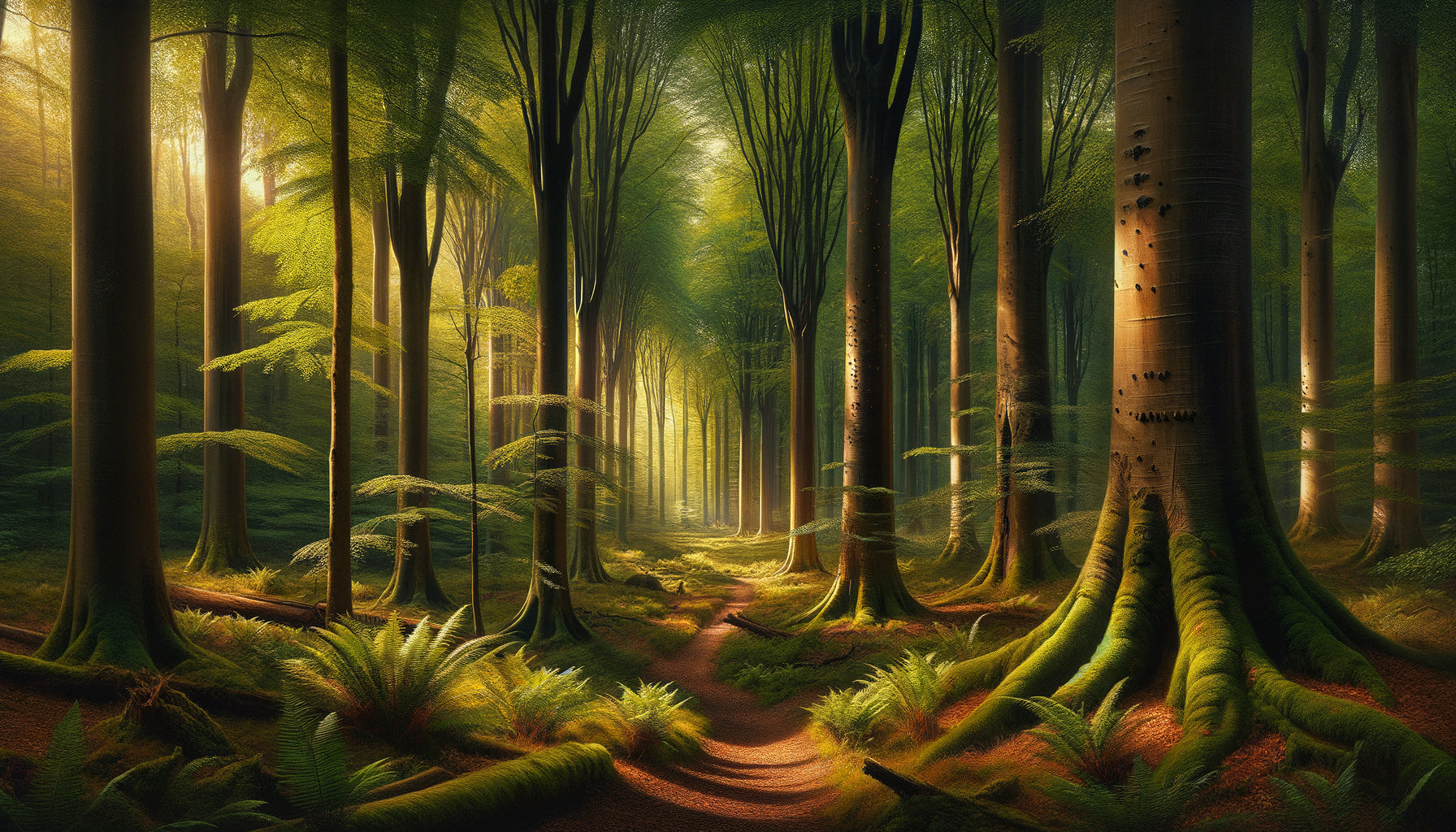
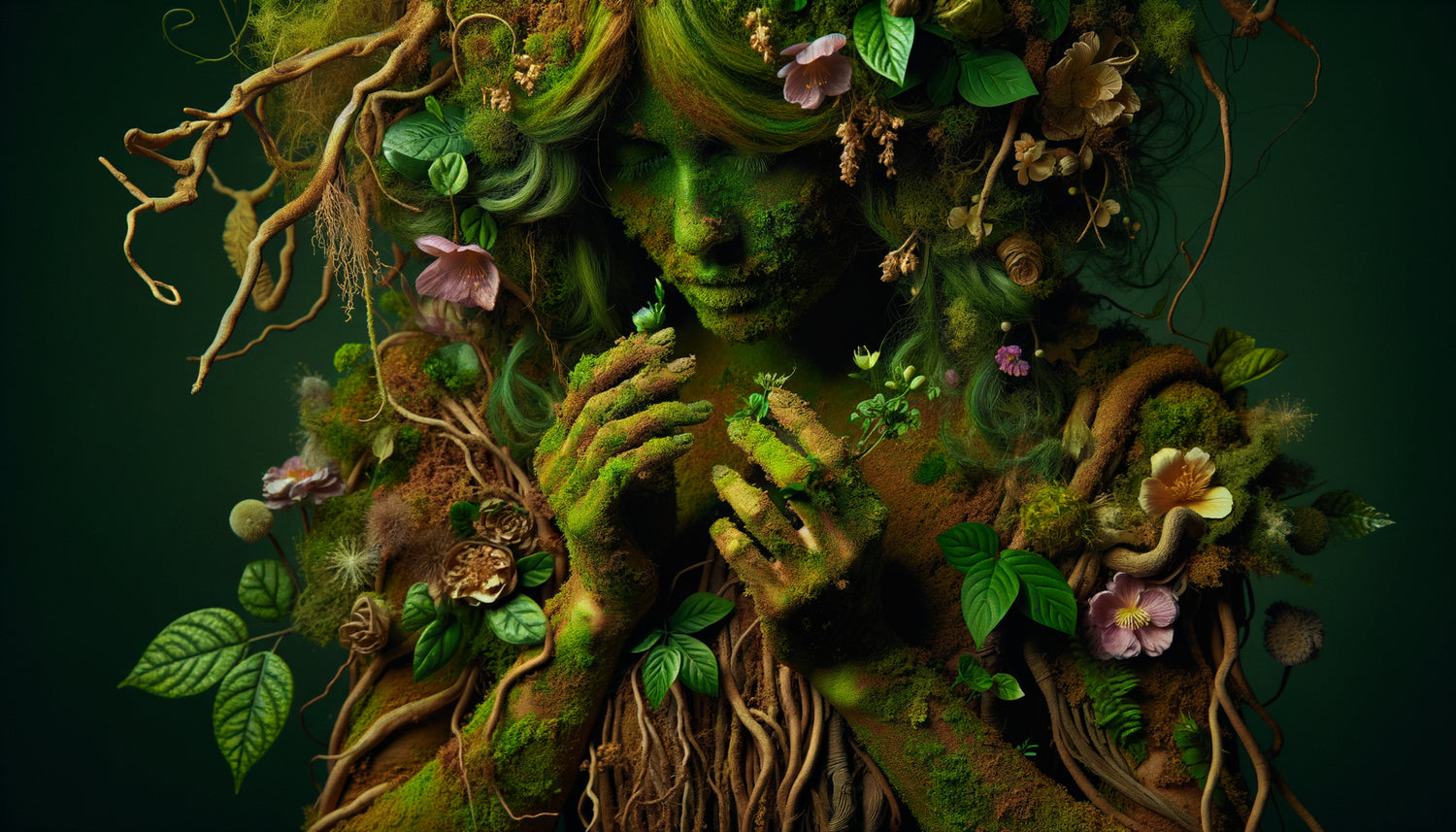
Artistic ecofeminism favors representations where nature and female presence coexist without hierarchy. Look for works where vegetation is not simply decoration but a full-fledged actor: roots crossing the frame, bodies merging into landscapes, organic forms evoking both plant growth and physicality.
Botanical prints reinterpreted by contemporary ecofeminist artists offer a fascinating alternative to classic representations. They show plants in their systemic complexity – roots, mycelium, reproductive cycles – rather than as isolated specimens classified according to masculine taxonomy.
Leading figures of ecofeminism in art today
Ecofeminism in contemporary art has experienced a spectacular revival since the 2010s. Faced with the climate emergency, many artists are reactivating this language to denounce extractivism and propose other relational models with living beings.
Ursula Biemann creates hypnotic video essays documenting threatened ecosystems and communities – often female – who protect them. Her work Forest Law follows indigenous Amazonian women in their fight to preserve the forest, revealing how traditional feminine knowledge and ecology converge.
Otobong Nkanga works with minerals, earth and textiles to question the colonial extraction of natural resources. Her monumental installations weave striking parallels between exploitation of territories and domination of racialized female bodies. Ecofeminism in Nkanga becomes a tool for visual decolonization.
Vegetation as an artistic collaborator
Artists like Emilie Baltz go even further by making vegetation a co-creator of the work. She creates edible installations where aromatic plants and fermentation processes become artistic mediums. Ecofeminism in art goes beyond representation here to become a sensory and metabolic experience.
This approach transforms the very status of the artwork: it is no longer an inert object but a living process, requiring care, attention and time – qualities traditionally associated with femininity and systematically devalued in Western art history.

Creating an ecofeminist sanctuary at home
Your interior can become a space of gentle resistance by welcoming artistic ecofeminism. It is not about transforming your living room into a militant gallery, but about choosing works that embody these values of connection, interdependence and respect for life.
Favor works with organic tones – deep greens, ochres, earthy browns – which evoke the natural palette without falling into decorative sentimentality. Asymmetrical compositions that mimic organic growth rather than imposed geometric order create a more vibrant visual dynamic.
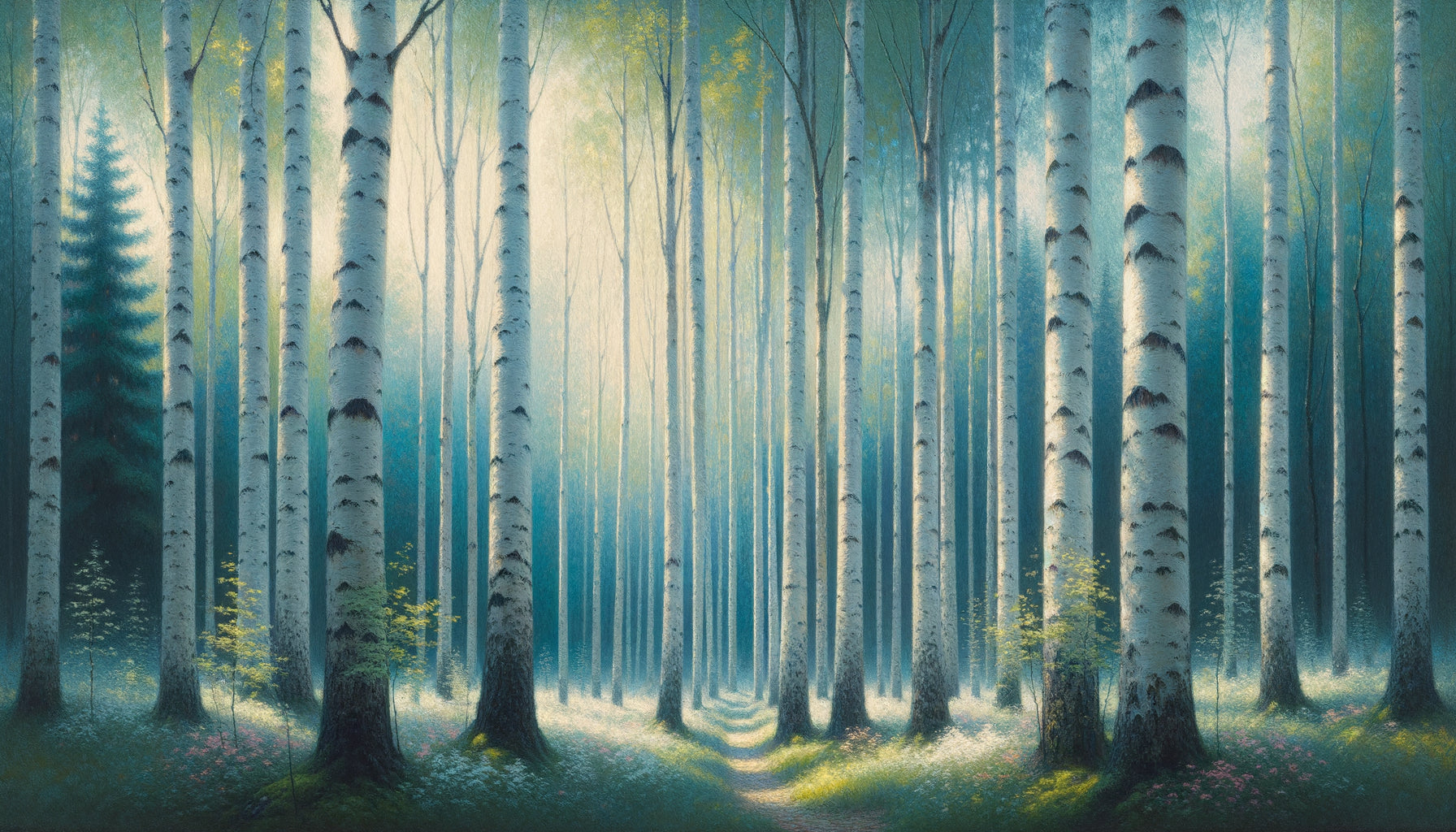
Large-format photographic prints depicting primary forests, root systems or plant cycles bring this presence of nature while serving as a daily reminder of our interconnectedness with ecosystems. In a bedroom, they create a soothing atmosphere that promotes rest while nourishing ecological awareness.
Transform your interior into a living manifesto
Discover our exclusive collection of nature wall art that celebrates the power of vegetation and invites you to rethink your relationship with life.
Ecofeminism in Art as a Daily Practice
Beyond acquiring works, ecofeminism in contemporary art invites us to transform our gaze. It teaches us to see systems of interdependence rather than isolated objects, to value processes over finished products, to recognize the agency of the non-human.
This ecofeminist sensitivity is cultivated by observing how artists treat their materials: with respect, collaboration, attention to natural cycles. It encourages us to question our own consumption of art – where do the materials come from? Who was exploited in the production chain? Does the work honor or exploit its subject?
In my work as curator, I have seen collectors gradually transform their approach after incorporating ecofeminist works. They begin to prioritize artists using sustainable materials, to value slow processes over mass production, to seek creations that honor rather than dominate nature.
Ecofeminism in art ultimately offers us an alternative model of beauty: not frozen and controlled perfection, but organic vitality, fertile imperfection, constant transformation. It is a beauty that welcomes vulnerability, celebrates interdependence and recognizes that we are nature, not separate from it.
By hanging an ecofeminist artwork in your entrance hall, you create a symbolic threshold. Each passage becomes a reminder: crossing this door is entering a space that honors all forms of life, that recognizes the value of natural cycles and that rejects destructive hierarchies. Your interior then becomes more than just a place to live – it becomes a territory of resistance and regeneration.
Start simply: choose a photograph of a forest that speaks to you, a botanical drawing that soothes you, an abstract work with organic shapes that evokes plant growth. Let it imperceptibly transform your daily gaze. Ecofeminism in art does not require grand gestures – it settles into the gentle repetition of those moments when you stop in front of the artwork, when you breathe deeper, when you remember that you are part of a larger ecosystem.