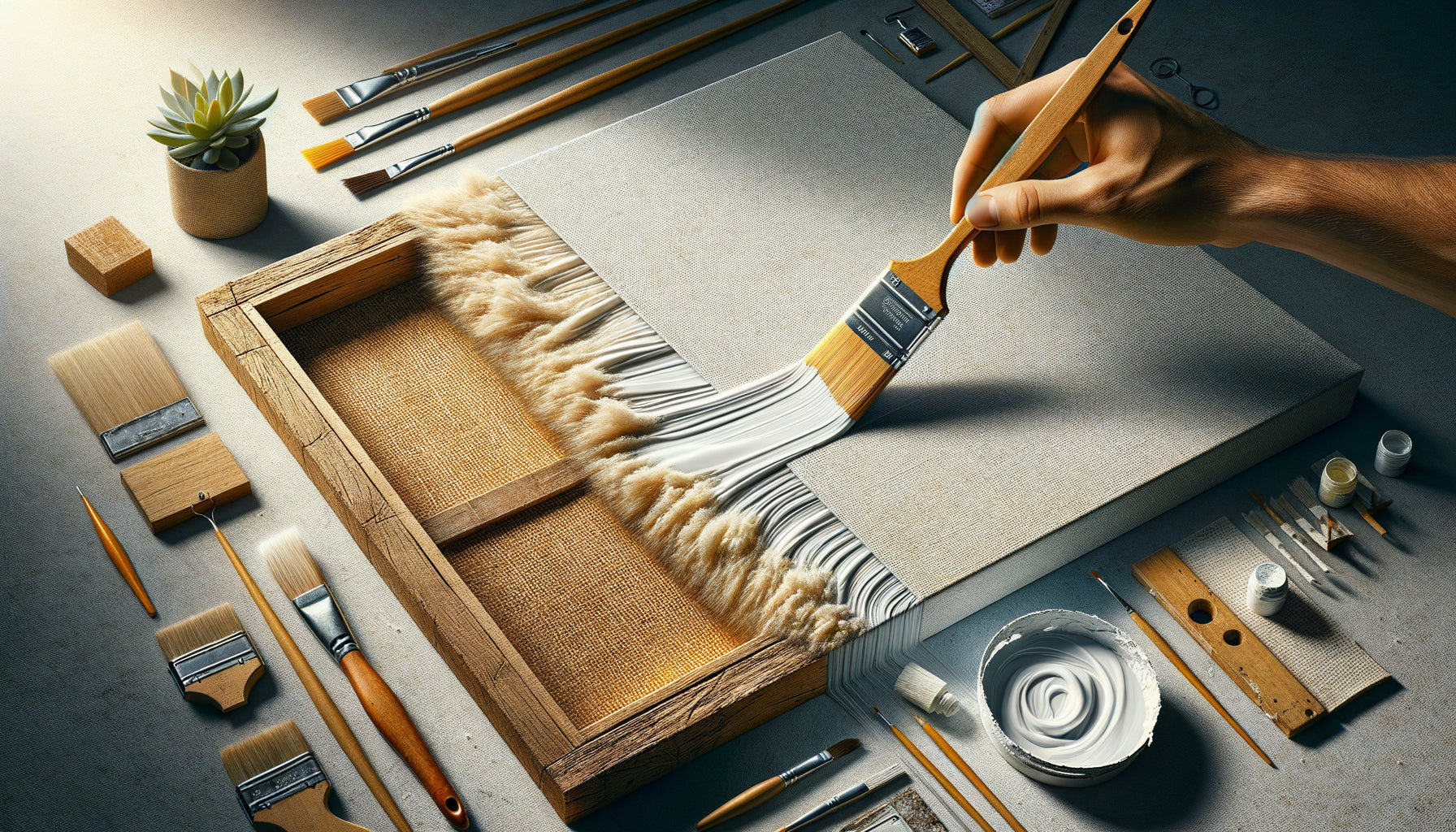
Three months ago, a client called me back in tears. The fashion sketches she had framed for her shop were showing yellowish spots. Just six months after installation. The paper, supposedly 'high quality', had deteriorated. Her investment – and the aesthetics of her space – were ruined.
Here's what an archive quality support brings: preservation for over 100 years, intact vibrant colors, and the certainty that your investment will last through generations.
When you choose a fashion sketch reproduction to decorate your interior, you are looking for this timeless elegance, this delicate line that captures the essence of movement and style. But how can you be sure that this beauty will endure? That the paper won't fade, that the ink won't pale, that the artwork will remain as vibrant in twenty years as it is today?
Rest assured: understanding the criteria for an archive quality support does not require a degree in conservation. It just takes knowing a few essential guidelines to make informed choices that will protect your fashion sketch reproductions for decades to come.
I promise you that by the end of this article, you will know exactly what to ask your supplier – and which traps to absolutely avoid.
Neutral pH: The first line of defense against time
In my textile and paper conservation workshop, I have analyzed hundreds of reproductions. The first thing I test? The support's pH. This is the fundamental criterion, which determines whether your fashion sketch will survive or deteriorate.
An archive quality support must be acid-free, with a neutral or slightly alkaline pH (between 7 and 8.5). Why? Because acidity is paper's mortal enemy. It triggers a chemical decomposition process that yellows, weakens, and ultimately destroys the fibers.
Acidic papers – often made from untreated wood pulp – may seem perfect at purchase. But in a few years, sometimes even just a few months under certain conditions, damage appears: discoloration, cracks, brown spots. I have seen magnificent fashion sketch reproductions, purchased at high prices, completely ruined by low-quality paper.
Archive quality supports use cotton rag paper or purified alpha-cellulose paper. These materials, naturally neutral, guarantee chemical stability over the long term. When you invest in a reproduction, demand this information. A serious seller will immediately confirm the pH of their supports.
Fiber composition: cotton versus wood
Not all papers are created equal. The very composition of the fibers determines the longevity of your fashion sketch reproduction.
100% cotton paper represents the pinnacle of archive quality support. Used for centuries for valuable documents, it has long and resistant fibers, free from lignin – this substance present in wood that degrades over time and causes yellowing.
I have restored original sketches from the early 20th century printed on cotton paper. Despite being a hundred years old, these supports remained flexible, white, and intact. In contrast, modern reproductions on ordinary paper showed signs of aging after only five years.
Alpha-cellulose papers are an excellent alternative. Made from highly purified wood pulp, they eliminate lignin and impurities. Their durability approaches that of cotton, with a slightly lower cost. For a fashion sketch reproduction intended to enhance your interior decor, this is quite a valid choice.
Beware of generic 'fine art' papers without specification of composition. Without guarantee of fiber purity, it is impossible to predict their behavior over time.

Lightfastness: When Pigments Confront Time
Archive quality support does not only concern paper. Inks and pigments play an equally crucial role in preserving your fashion sketches.
Lightsfastness – or light stability – measures the ability of colors to resist fading caused by exposure to UV rays. Archive quality reproductions use pigment inks with a ISO Blue Wool Scale rating of 7 or 8 (on a scale of 1 to 8).
Dye-based inks, common in home printing, may appear vibrant initially. But exposed to natural light, they fade within a few months. I have seen reproductions of fashion sketches lose all their chromatic subtlety in a single summer season near a window.
Pigment inks, on the other hand, encapsulate color particles in a protective resin. This technology guarantees decades of stability, even in bright rooms. For a reproduction intended to dress your living room or dressing room, this difference makes all the difference between a lasting investment and a fleeting purchase.
Always check that your supplier uses inks certified for archiving. Giclée prints on archive quality paper are the standard for museum-quality art and fashion reproductions.
Thickness and Weight: The Invisible Armor of Your Sketches
A detail often overlooked: the weight of the paper. Yet, this characteristic directly influences the durability and presentation of your fashion sketch reproduction.
Archive quality papers typically have a weight between 200 and 310 g/m². This thickness offers several advantages: resistance to handling, stability in the frame without warping, and protection against humidity variations.
Paper that is too thin (less than 150 g/m²) creases easily, deforms with moisture, and reveals imperfections in the mounting. For fashion sketches – with their delicate lines and blocks of color – the flatness of the support is essential. The slightest warp creates unsightly shadows and disrupts the reading of the work.
I have framed hundreds of reproductions. Heavy papers, beyond 250 g/m², retain their perfect shape for years. They are more resistant to thermal shocks and humidity variations. This is particularly important if you hang your fashion sketch in an entrance hall, bathroom, or any space subject to environmental changes.

Certifications: deciphering quality labels
Faced with technical jargon, how can you quickly identify a genuine archive quality support? Certifications offer valuable shortcuts.
The 'acid-free' label is the absolute minimum. But be careful: some papers become acidic over time, even when initially treated. Look for the 'buffered' mention instead, which indicates the addition of alkaline agents such as calcium carbonate. These alkaline reserves neutralize acids that may form over time or come from external sources (pollution, handling).
The ISO 9706 standard guarantees a permanent paper, suitable for long-term archiving. Compliant papers resist accelerated aging equivalent to several centuries under normal conditions.
For inks, the Wilhelm Imaging Research certification provides durability estimates based on rigorous testing. A reproduction on archive quality support should display a conservation estimate of over 100 years in indoor exposure conditions.
These certifications are not just marketing arguments. They represent years of research in conservation science. When you choose a fashion sketch reproduction for your interior, these labels assure you that your piece will remain a decorative asset, not a budgetary regret.
Texture and rendering: when quality meets aesthetics
Beyond durability, an archive quality support profoundly influences the aesthetic of your fashion sketch reproduction.
The paper texture – smooth, velvety, or slightly grainy – interacts with the lines and colors. For fashion sketches, I particularly appreciate fine-grain papers such as 'cold press' or 'satin'. They capture the light subtly, giving depth and dimension to the drawing.
Too glossy a paper creates unpleasant reflections. Conversely, high-quality matte paper absorbs light, creating that elegant presence that attracts the eye without dazzling it. This is particularly important in a bedroom, dressing room, or office, where you want a refined atmosphere rather than a flashy effect.
The whiteness of the paper also deserves attention. Archive quality supports offer different shades: bright white, natural white, or cream. For reproductions of fashion sketches, natural white brings warmth that recalls vintage paper, creating an aesthetic consistency with the spirit of the original illustrations.
These choices never compromise archival quality. They prove that a support can be both durable and beautiful – exactly what a reproduction deserves to sublimate your interior.
Give yourself the certainty of a lasting investment
Discover our exclusive collection of fashion wall art that combines timeless elegance and professional archival quality.
Preserving your investment: simple daily gestures
Even an exceptional archive quality support deserves a few precautions to fully express its potential for longevity.
The frame plays a crucial protective role. Always use anti-UV glass that filters 97% of ultraviolet rays. This invisible barrier multiplies the lifespan of colors by ten. I compared two identical reproductions: one protected by anti-UV glass remains impeccable after fifteen years, while the other, under ordinary glass, shows clear signs of discoloration.
The mat (mounting) must never touch the reproduction directly. Request an acid-free cardboard mat, ideally buffered. This physical barrier prevents acids from migrating to your fashion sketch and creates a beneficial air circulation.
Avoid hanging reproductions in direct sunlight. Even the most resistant inks will eventually weaken under a daily onslaught of intense UV rays. Prefer walls perpendicular to windows or spaces with indirect lighting.
Finally, maintain a stable relative humidity between 40 and 50%. Extreme variations cause the fibers to swell and shrink, creating tensions and deformations. In humid rooms (bathrooms), prefer reproductions under sealed glass.
Do these precautions seem restrictive? They quickly become second nature. And they guarantee that your fashion sketch reproduction will be as captivating in thirty years as it is today.
Your decoration deserves longevity
Imagine: in twenty years, you are still admiring the fashion sketch that has welcomed your guests, inspired your outfits, and accompanied your mornings. Its lines remain sharp, its colors vibrant. It has become an integral part of the history of your home.
This vision is not utopian. It is the concrete promise of an archive quality support: to transform a decorative purchase into a lasting legacy.
Today, when you choose your next reproduction, you will ask the right questions: fiber composition, paper pH, type of inks, certifications. You will immediately recognize a serious seller from an opportunist. And you will confidently invest in a piece that will outlast trends and years.
Because a true fashion sketch on archive quality support is not simply a decoration. It is a testament to your taste, your requirements, and your respect for beauty that lasts.
Frequently Asked Questions
Do reproductions on archive quality supports cost much more?
The price difference exists, but it remains reasonable: generally 30 to 50% more than a standard print. Consider this investment as insurance. For the price of a restaurant dinner, you guarantee that your fashion sketch reproduction will last for decades rather than a few years. I calculated the cost per year of use: an archive quality support at €80 that lasts fifty years costs €1.60 per year, against a standard support at €50 that lasts five years, or €10 per year. Archive quality is ultimately seven times more economical. Not to mention the frustration of having to replace a degraded reproduction and the waste it represents. For a piece intended to embellish your interior durably, it is an investment that is fully justified.
How to check if a reproduction is truly on archive quality support?
Systematically request the technical specifications of the paper used. A professional seller will provide you with the specifications: composition (cotton or alpha-cellulose), pH, weight, certifications (ISO 9706, acid-free). For inks, ask for the type (pigment or dye) and lightfastness index. If the seller is vague or unable to answer, it's a warning sign. Truly archive quality reproductions are documented precisely because this information represents their main value proposition. Don't hesitate to ask for references as well: how long has the supplier been working with these materials? Can they show examples of old reproductions that have aged well? A serious professional will be happy to demonstrate their expertise.
Can I transform an ordinary print into archive quality material after purchase?
Unfortunately not. Archive quality features must be present from the initial printing. You cannot retroactively modify the paper composition or replace dye inks with pigment inks. That's why choosing the right medium at the time of purchase is crucial. However, you can maximize the lifespan of an ordinary print through protective framing: UV-protective glass, acid-free matting, positioning away from direct light. These measures will slow down degradation without completely preventing it. If you already own a reproduction that you particularly like but which is not on archive quality paper, consider having it professionally reprinted on appropriate paper. The cost will be less than complete replacement and will guarantee the longevity of this piece you cherish.