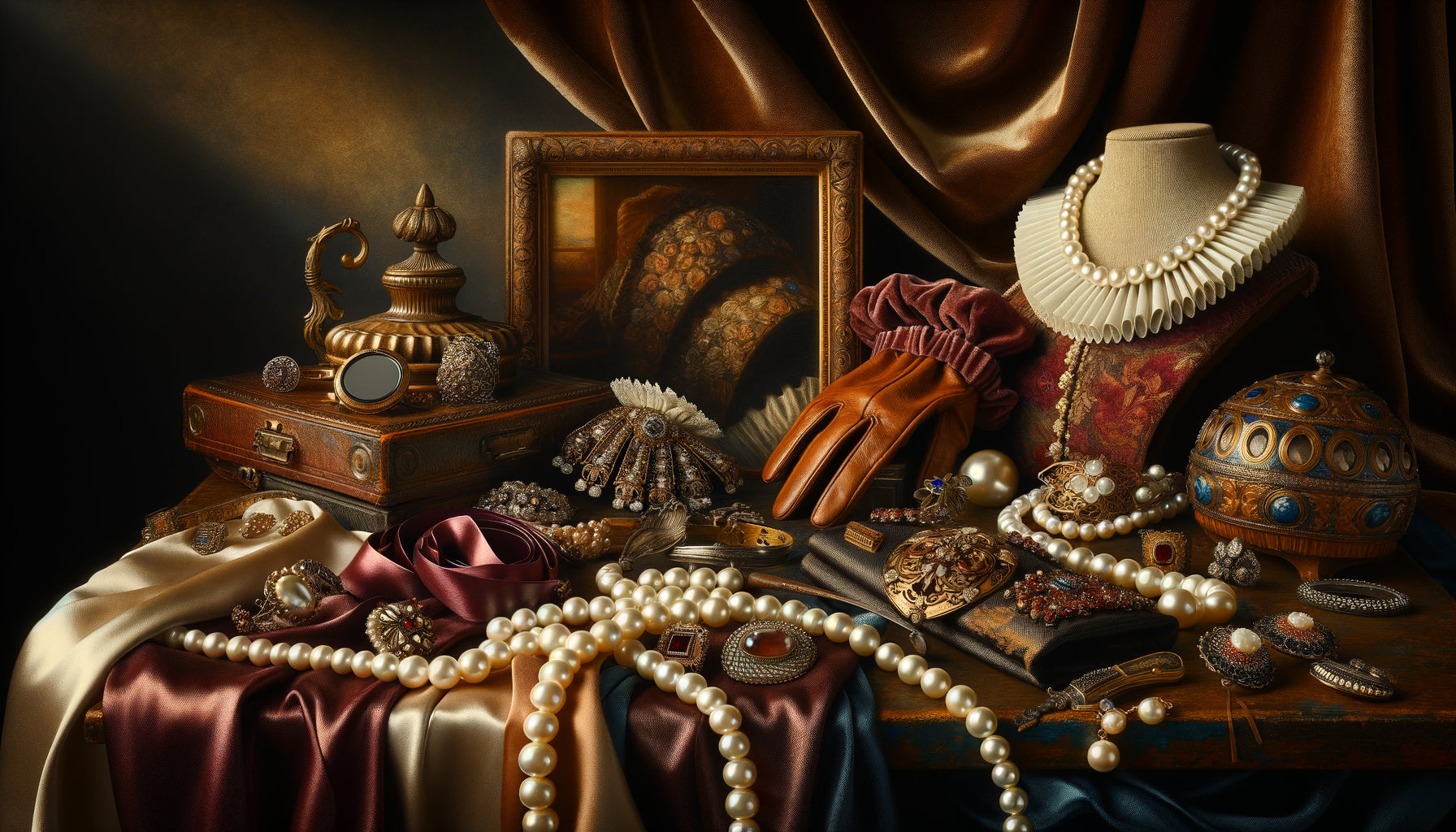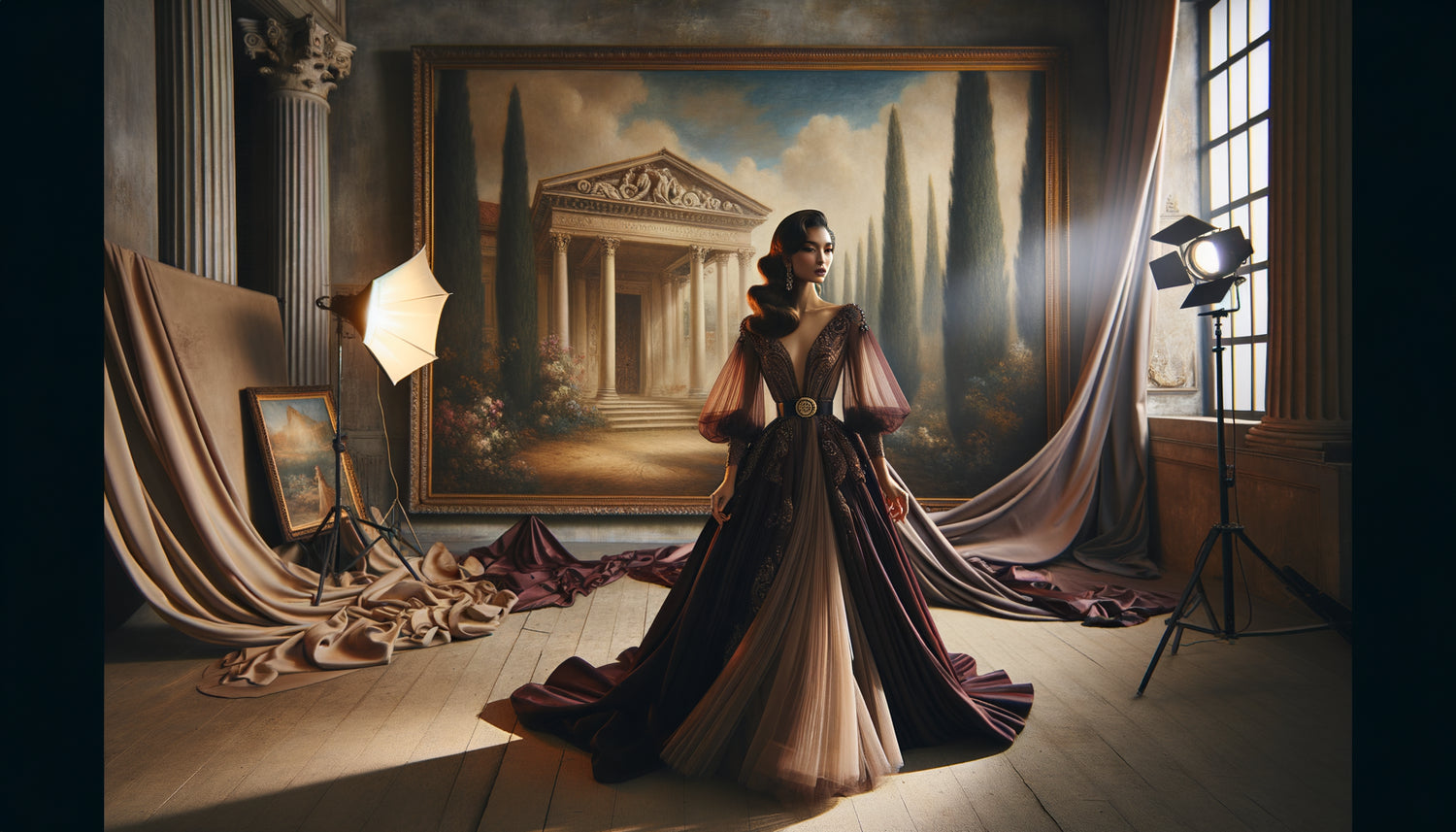
Within the archives of the most prestigious fashion houses, a visual constant repeats itself like an aesthetic mantra: contemporary models posing in front of Venetian drapes, romantic landscapes, or mythological scenes. This unlikely encounter between modern clothing and decor from another time tells more than just a fleeting trend.
Here's what this artistic alliance brought: an elevation of fashion to the rank of timeless art, a narrative dimension transcending the simple garment, and a visual refinement instantly distinguishing prestigious campaigns from ordinary advertising. A coded language that only exceptional brands dared to master.
Faced with current fashion imagery, often stripped down to coldness, one can feel this nostalgia for an era when each campaign told a story. These photographs resembled living paintings, where the dress dialogued with a pictorial background as in an imaginary museum. Why did this practice become a signature of authentic luxury?
Rest assured: understanding this creative approach requires no training in art history. It is the story of a meeting between two worlds, that of visionary photographers who transformed the way we look at beauty.
This article reveals the deep reasons behind this aesthetic choice which continues to influence contemporary creation, and how these masterful compositions have shaped our perception of luxury.
The legacy of portraitists: when fashion joined pictorial nobility
Fashion photographers from the 1950s to the 1990s did not invent this approach by chance. They drew directly from the tradition of great royal portraitists – those painters who immortalized aristocrats and monarchs in front of sumptuous tapestries and idealized landscapes. Velázquez, Gainsborough, Reynolds: all used elaborate pictorial backgrounds to magnify their subjects.
By choosing these classic settings, photographers established an obvious visual lineage. A Dior dress posed in front of a Turner-esque landscape was no longer just a photographed garment, but an aristocratic appearance worthy of European courts. The clothing instantly inherited five centuries of pictorial refinement.
This strategy responded to a specific ambition: to elevate fashion beyond commerce. Haute couture houses were not only selling dresses, but a social status, belonging to a cultural elite. Pictorial backgrounds served as a visual certificate of authenticity, proclaiming: “This is not ephemeral fashion, it is timeless art.”
Valentino, Yves Saint Laurent or Givenchy campaigns in the 1980s perfectly illustrated this philosophy. Their models seemed to emerge from a museum painting, as if the Renaissance met modernity in a harmonious dialogue. The pictorial background thus became the temporal bridge between two eras of splendor.
Visual storytelling: creating a story without words
A plain background or a neutral contemporary decor presents the garment. A classic pictorial background tells a story. This fundamental distinction explains why the most ambitious photographers favored these backgrounds full of meaning and atmosphere.
Imagine an evening gown photographed against a white background: you see a product. Place the same dress in front of a twilight landscape reminiscent of 19th-century canvases: suddenly, you imagine a ball in a castle, a moonlit encounter, a romantic existence. The pictorial background activates the viewer's narrative imagination.
The visual archetypes that consistently worked
Certain pictorial motifs constantly reappeared in these campaigns, each carrying a precise subliminal message. Venetian drapes evoked textile wealth and historical luxury trade. Pastoral landscapes in the style of Watteau suggested aristocratic innocence and gallant pastorals. Palatial interiors directly affirmed prestige and exclusivity.
These visual codes were not chosen at random. They corresponded to archetypes deeply rooted in our collective visual culture. A viewer, even without artistic training, instinctively felt the nobility and refinement emanating from these compositions. The pictorial background worked on an emotional level, long before rational analysis.
Photographers like Paolo Roversi or Sarah Moon masterfully exploited this narrative dimension. Their images resembled fragments of larger stories, where clothing became a character in a timeless tale. This approach transformed each campaign into a contemplative work, inviting reverie rather than impulsive purchase.

Distinction through culture: a photographic social marker
In the ruthless world of luxury, differentiation remains the permanent obsession. How does a brand prove that it truly belongs to the restricted circle of exceptional houses? Pictorial backgrounds offered an elegant answer to this existential question.
Using these sophisticated decors required a deep visual culture. It was necessary to know the artistic references, understand the aesthetic codes of different periods, and master complex compositional balances. This cultural requirement naturally created a barrier to entry: only brands possessing this artistic legitimacy could venture onto this terrain.
The pictorial background functioned as a visual shibboleth, a test of recognition between initiates. The informed public immediately identified the references – a composition reminiscent of Vermeer, a light evoking Caravaggio – and this recognition created a sense of belonging to a cultural elite. Buying these brands meant joining that circle of connoisseurs.
This strategy radically opposed standard commercial fashion photography, which prioritizes clarity and immediate readability. The pictorial backgrounds deliberately introduced visual complexity, a richness of reading that fostered loyalty among a cultivated audience capable of appreciating these aesthetic subtleties.
Timelessness as resistance to obsolescence
Fashion lives in a permanent contradiction: creating the desire for the new while asserting its permanence. How can this impossible equation be solved? Classical pictorial backgrounds offered an ingenious visual solution to this paradox.
By anchoring their compositions in the imagery of old masters, photographers subtracted their campaigns from linear time. A photograph resembling an 18th-century painting could not really age: it already existed outside of time. This strategy protected campaigns from the rapid obsolescence that usually affects fashion advertising.
Look today at campaigns made thirty or forty years ago with these pictorial backgrounds: they retain an aesthetic dignity that photographs too anchored in the codes of their time do not have. Timelessness was not a side effect, but the main objective of this approach.
This approach also reflected the philosophical vision of traditional haute couture: to create pieces that cross seasons, are passed down, and acquire a precious patina. The pictorial background visually translated this resistance to disposability, this ambition of permanence in a world of ephemerality.

Technique at the service of illusion: how were these decors created?
Behind the visual magic lay considerable technical expertise. Photographers didn’t simply place their models in front of reproductions of paintings. They orchestrated complex compositions blending different techniques to create the perfect illusion.
Some used real canvases painted by hand by decorative artists, specially commissioned for each campaign. Others favored image projection onto curved backgrounds, a technique inherited from Hollywood cinema. The most daring created three-dimensional sets inspired by famous paintings, literally recreating a pictorial universe in three dimensions.
Light played a crucial role in this visual alchemy. It was necessary to illuminate both the model and the pictorial background simultaneously to create an atmospheric coherence, giving the impression that the subject naturally inhabited this imaginary space. This technical mastery required years of experience and explained why only a few exceptional photographers excelled at this exercise.