Imagine being able to recognize the origin of a painted landscape simply by observing its colors. That's exactly what color codes developed by European painting schools allow! For centuries, each region has created its own "colored signature" to represent nature, establishing true pictorial techniques passed down from master to student.
The Flemish innovations that changed everything
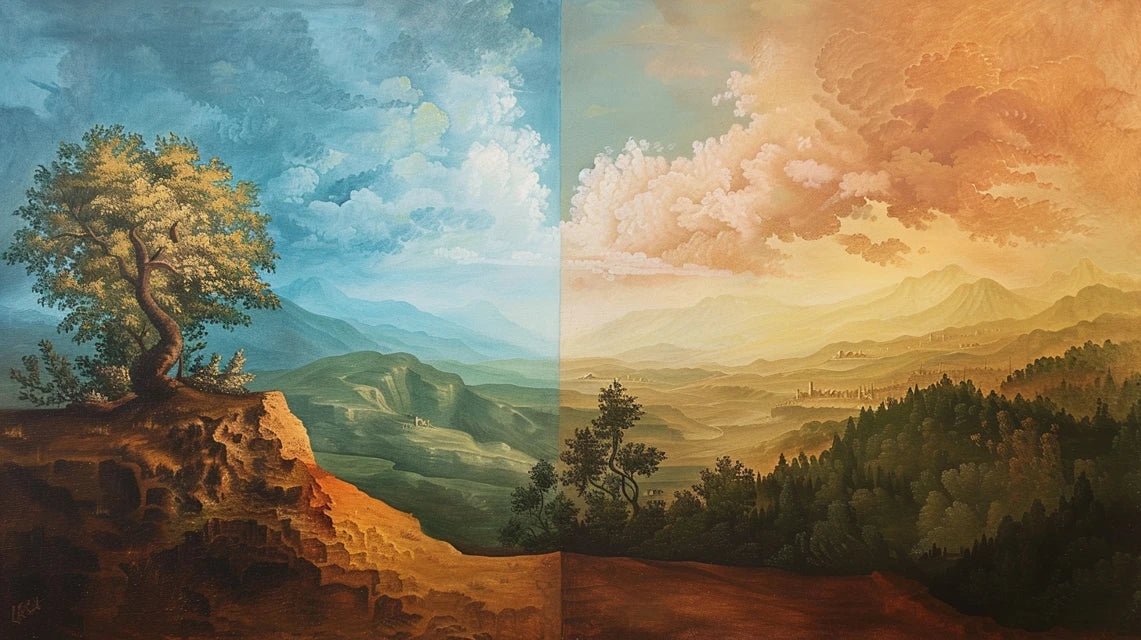
In the 15th century, Flemish painters revolutionized art by inventing a simple but ingenious rule: the three-plane technique. Brown foreground, green middle ground, blue background. This magic recipe instantly creates depth and becomes a reference classic art!
But their true secret? Oil painting. Thanks to this innovation, Jan van Eyck and his contemporaries achieved unprecedented vibrant colors. Their transparent glazes create breathtaking effects of light, especially in those famous bluish distances that seem to melt into the sky. This artistic mastery influences all of Europe.
- The cool shades (blues, purples) to distance the gaze
- The warm tones (browns, ochres) to bring elements closer
- The verdaccio, this green preparation that brings life to the modeling
Italy and its thousand shades of Renaissance art
While the Flemish are perfecting their technique, Italy develops its own colorful recipes during the Italian Renaissance. In Florence, earth earth tones reminiscent of the Tuscan hills are preferred: golden ochres, burnt sienna, deep shadows.
Siena surprises with its flamboyant Byzantine heritage. Here, no half-tones! Painters dare to use explosive orangey hues, vermilion reds and almond greens that burst like fireworks on the canvas, creating a truly unique artistic style.
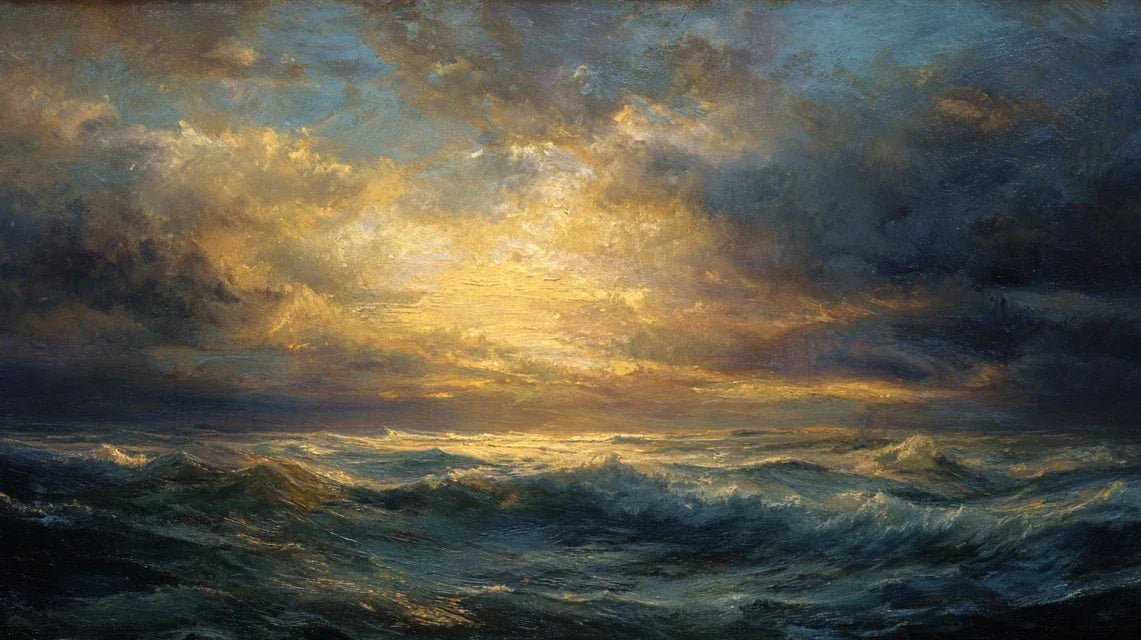
But it is Venice that makes a splash. Giovanni Bellini discovers how to unify all colors through light. His golden glazes create that unique atmosphere of the lagoons where everything seems bathed in honey, marking the history of European art.
Surprising statistic: 78% of Venetian landscapes from the 16th century use these characteristic golden tones (Source: Institute of Art History of Venice).
These ancestral techniques continue to inspire contemporary artists. To discover wall art landscapes that perpetuate these traditions, this collection offers a journey through these artistic legacies.
The French revolution of order and harmony
The 17th century in France brings method and system to traditional painting. Poussin and Claude Lorrain, these giants of art, codify everything! The royal academy imposes its golden rule: brown-green-blue, from the nearest to the furthest. No improvisation!
This chromatic discipline hides a passionate search for perfect beauty. Claude Lorrain becomes the absolute master of subtle nuances. His dawns and sunsets transform landscapes into golden symphonies of incomparable poetry.
The result? This French approach becomes THE European reference. Everywhere, this elegance, this restraint that characterizes the grandeur of classical style is copied.
The North and its poetry of greys
Northern schools choose a completely different path. In the Netherlands, Jacob van Ruisdael and his contemporaries create a restrained palette perfectly suited to their climate: silvery greys, deep browns, muted greens.
This economy of means is not a limitation, it's an art! Dutch marine paintings subtly play with pearly tones, modulating from blue-grey to green-grey according to the moods of the sky. This finesse of observation permanently influences European art.
Romanticism liberates colors
The 19th century explodes! The Barbizon school throws the rules out the window. Théodore Rousseau leaves his studio, sets up his easel in the forest and really observes nature. Revolution!
No more conventions: place for expressive colors! Flamboyant reds for sunsets, mysterious purples for shadows, multiple greens for each season. This liberation prepares for the impressionist explosion.
Turner goes even further. Inspired by Goethe, he makes pure yellow his favorite color, the one that best captures light. His research revolutionizes landscape art forever.
FAQ - Everything you need to know about landscape color codes
How to recognize a Flemish landscape?
Look for the famous rule of three planes: brown in front, green in the middle, blue in the background. More colors of extraordinary richness thanks to oil paint and transparent glazes that create this particular luminosity.
Why did the French school so influence Europe?
The royal academy created a perfect system: harmonious colors, clear rules (brown/green/blue), no violent contrast. This method was so effective that it became the basis of European art education.
What makes Italian colors so special?
Each region has its identity: Florence and its earthy tones, Siena and its dazzling Byzantine colors, Venice and its revolutionary golden harmonies. This diversity creates a unique richness in Europe.